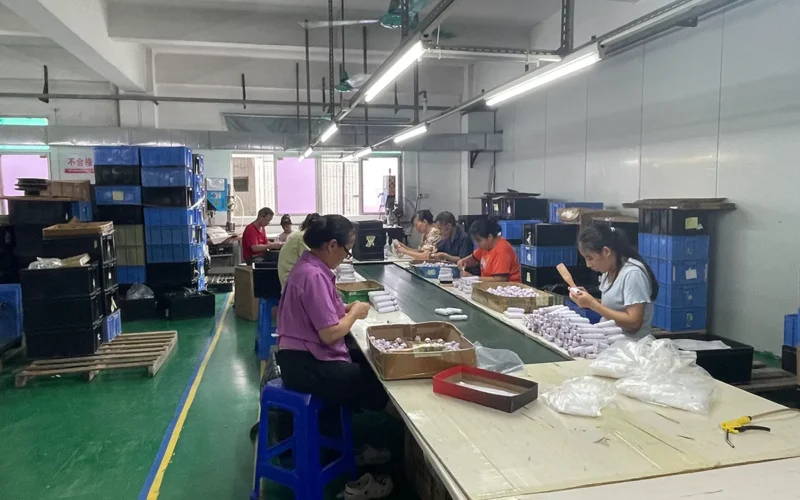
Ask a Chinese hair accessory factory for a lead time and you will get a number like “25 to 45 days.” That number is production. It is not the date your stock is sellable, and the gap between the two is where most first orders go wrong — a buyer plans a launch around day 45 and the cartons arrive on day 85.
Nothing dishonest happened. The factory answered the question that was asked. Below is the whole calendar instead: what each block costs in days, which blocks you control, and which ones no supplier can compress no matter what they promise.
The four blocks of a hair accessory lead time
Every order, whatever the product, moves through the same four blocks. Only the third one is what people mean when they say “lead time.”
| Block | Typical days | Who controls it |
|---|---|---|
| Quotation and specification | 1–3 | Shared |
| Sampling and approval | 7–20 + your review time | Mostly you |
| Bulk production | 15–45 | Factory |
| QC, packing and freight | 4 + 12–40 | Neither — the ocean decides |
Blocks two and four are the ones buyers leave out of the plan. Together they are usually longer than production. Our own standard schedule, from confirmed order to loaded container, is 62 days: 18 days sampling, 5 days for your approval, 35 days production, 4 days QC and loading. Freight is on top of that.
Why the same factory quotes 7 days to one buyer and 20 to another
Sample lead times look inconsistent across supplier websites, including ours, because “sample” covers three different jobs:
| What you are asking for | Days | Why |
|---|---|---|
| Existing shape, stock acetate pattern, your logo | 7–10 | The mould exists and the sheet is on the shelf. We cut, finish and print. |
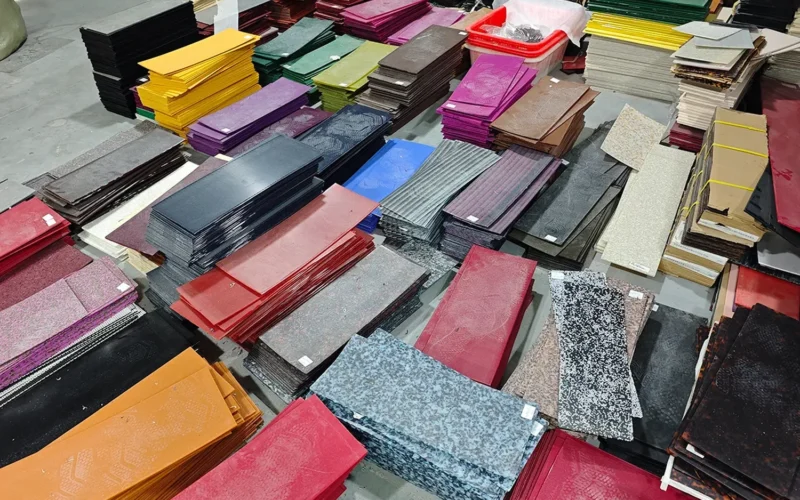
| Existing shape, custom colourway | 14–20 | The sheet has to be pressed for you first. That alone is 7–10 days. |
| New shape, new tooling | 15–20 after the drawing is signed off | The die has to be cut before anything can be made. |
| Wood or bamboo | 10–15 | No sheet pressing step. |
If a supplier quotes you seven days without asking which of these you want, they have not understood the enquiry. The fastest route to a first order is almost always an existing shape in a stock pattern. You skip tooling entirely, which removes both the cost and the 15–20 days. If you do need your own shape, the timing and ownership of that tooling is covered in what you pay for and what you own in a mould.
Why cellulose acetate is slower than plastic — and why that is the point
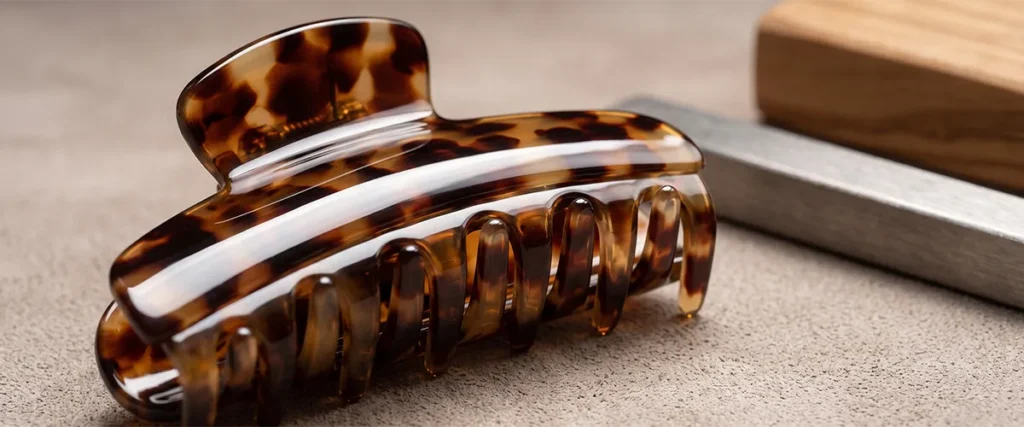
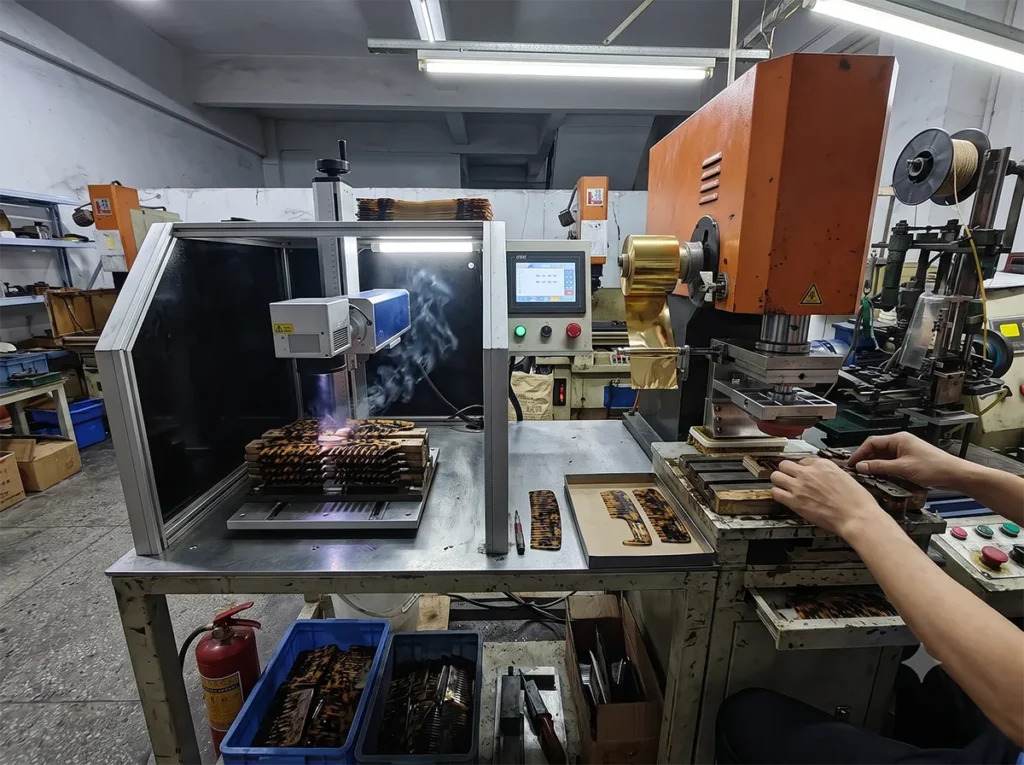
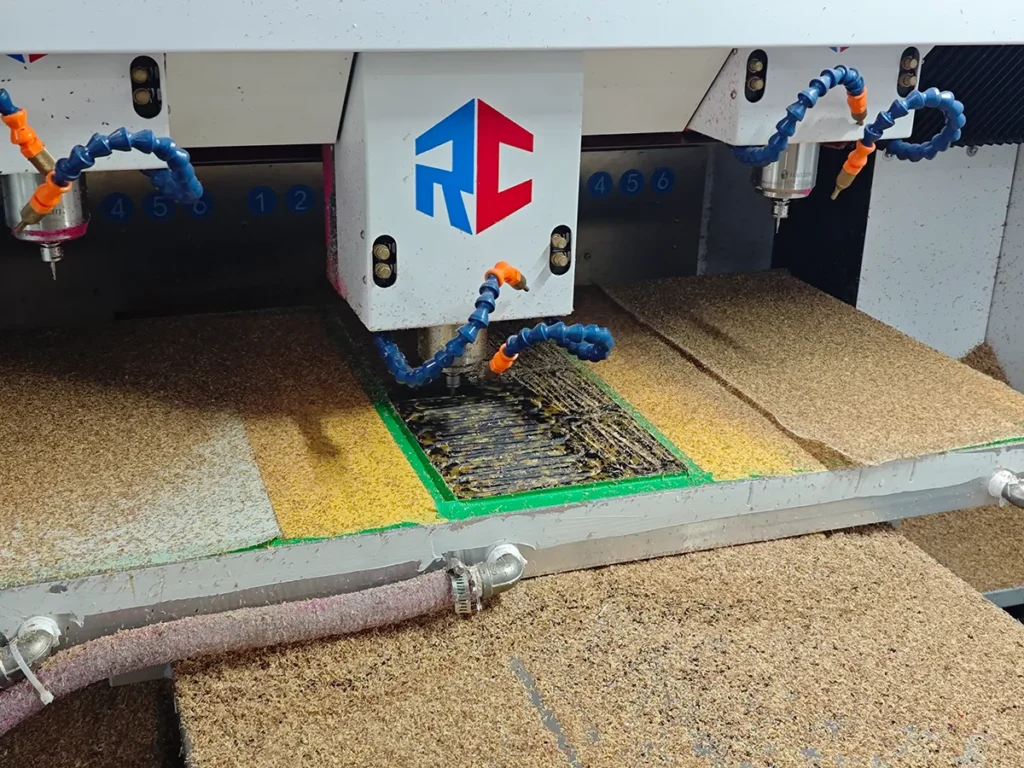
An injection-moulded plastic clip comes out of the machine every few seconds, finished. Acetate cannot work that way. It starts as a solid pressed sheet and every piece is cut, shaped and finished as an individual object.
- Heat forming and cooling. The blank is warmed, formed against the mould, then held while it cools. Rush the cooling and the piece relaxes back out of shape a week later in a warehouse.
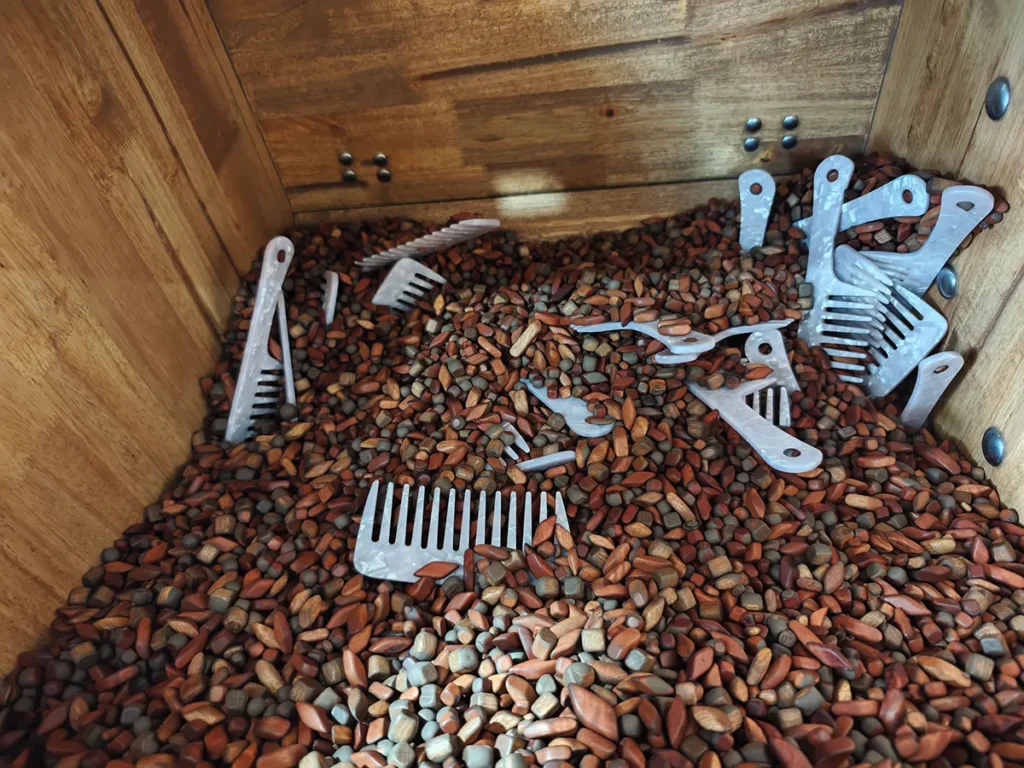
- Barrel tumbling. Six or more hours per batch, then days through progressively finer media. This is the step that decides whether a clip snags hair, and it is the first thing a cheap quote removes.
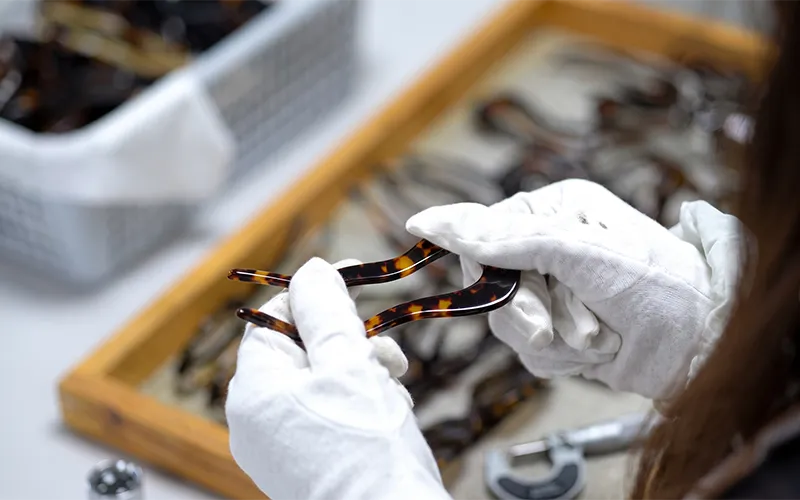
- Hand finishing. Deburring and edge checks are done by hand because a machine cannot feel a rough edge.
These are hours of elapsed time, not hours of labour. No amount of extra staff shortens them. When you compare an acetate quote against a plastic quote, you are partly paying for those days.
Production: 15 to 45 days, and what pushes it to 45
A repeat order in a stock pattern runs about 16–21 days on the floor. A first order with custom colour, custom packaging and a logo runs 25–45. The difference is not the quantity. Doubling from 500 to 1,000 pieces of the same design barely moves the date, which is also why minimums work the way they do — see why the minimum is 500 for clips and 1,000 for combs.
What actually adds days:
- A custom-pressed sheet — 7–10 days before production can start
- Custom packaging — often the real bottleneck, because boxes are made by a separate supplier on their own schedule. Details in packaging MOQ, cost and lead time
- Metal components — springs, pins and plates are bought in, and a non-standard spring has its own lead time
- A second sample round — the single most common cause of a late order, and the one nobody plans for
The five days that belong to you
Our schedule allows five days for sample approval. In practice this block is where orders lose the most time, and it is the only block a buyer fully controls.
A sample posted on a Friday reaches most of Europe or the US the following Wednesday. If it then sits while three people at your end form an opinion, and the verdict comes back as “can it be slightly warmer,” you have spent two weeks and produced no decision the factory can act on. Deciding in advance who signs off, and against what reference, is worth more days than any factory can give you. What to check before you approve is covered in sampling costs and what to check before you approve.
Freight: the block nobody can compress
| Method | Transit | Sensible use |
|---|---|---|
| Courier (DHL, FedEx, UPS) | 5–10 days | Samples and urgent top-ups |
| Air freight | 12–15 days | Launch stock, or a season you cannot miss |
| Sea express | ~25 days | Time-sensitive reorders |
| Sea standard | 30–40 days | Most bulk orders |
Transit only. Customs clearance and inland delivery at your end sit on top, and vary far more by country than by supplier. Who pays for which part of this, and where responsibility transfers, is set by the Incoterm on your contract rather than by the factory — the ICC Incoterms rules define exactly what FOB, CIF and DDP each cover. Agree it before the deposit, not when the goods are ready.
A realistic calendar for a first order
| Stage | Days | Running total |
|---|---|---|
| Quote and spec confirmed | 2 | 2 |
| Sample made (existing shape, custom colour) | 18 | 20 |
| Sample shipped and approved | 5 | 25 |
| Production | 35 | 60 |
| QC, packing, loading | 4 | 64 |
| Sea standard to a US or EU port | 35 | 99 |
Roughly 14 weeks from first enquiry to goods at your door. The quoted “35 days production” is barely a third of it. Air freight instead of sea takes this to about 11 weeks. An existing shape in a stock pattern, approved first time, takes it to about 9.
One date that moves everything: Chinese New Year
Chinese factories close for Chinese New Year, and the practical shutdown is longer than the official holiday — workers travel home, and lines return to full speed over a week or two after reopening. The date moves each year between late January and mid-February.
The practical rule: an order that has not started production six weeks before the holiday will ship after it. If you need stock for spring, place it in November. Every experienced buyer in this industry knows this; every first-time buyer learns it once.
How to actually compress the timeline
- Start from an existing shape. Removes 15–20 days of tooling and the cost with it.
- Take a stock pattern for order one. Custom colourways are worth doing — on the reorder, when the deadline is not on top of you.
- Send a physical reference, not a photo. Screens lie about colour. A physical reference removes most second sample rounds.
- Decide who approves before the sample ships. One named person, one reference, one deadline.
- Order packaging in parallel, not after. Boxes routinely take longer than the product.
- Book freight when production starts. Not when it finishes.
What to ask before you commit to a date
- Does your quoted lead time start from the deposit or from sample approval?
- Is the acetate sheet for my colour in stock, or does it need pressing?
- Who makes the packaging, and what is their lead time?
- Which components are bought in rather than made here?
- What happens to my date if I need a second sample?
A supplier who answers the second and fourth questions precisely is working from their own production schedule. One who cannot is quoting you somebody else’s — which is a useful signal in itself, and one of several covered in our guide to sourcing from China.
We quote within 24 hours and will give you the full calendar, freight included, rather than the production number on its own. If a date is fixed at your end, tell us the date first and we will tell you honestly whether it is achievable.