Packaging is where hair accessory programmes quietly lose their margin. The product is quoted carefully, negotiated, and signed off — and then the packaging is decided in a hurry two weeks later, at a minimum order that does not match the product order and a unit cost nobody modelled. On a piece that lands at a couple of dollars, an extra eighty cents of box is not a detail.
This page covers what each packaging format actually costs, the minimums that apply to each, and the mismatch that catches most first-time buyers out.
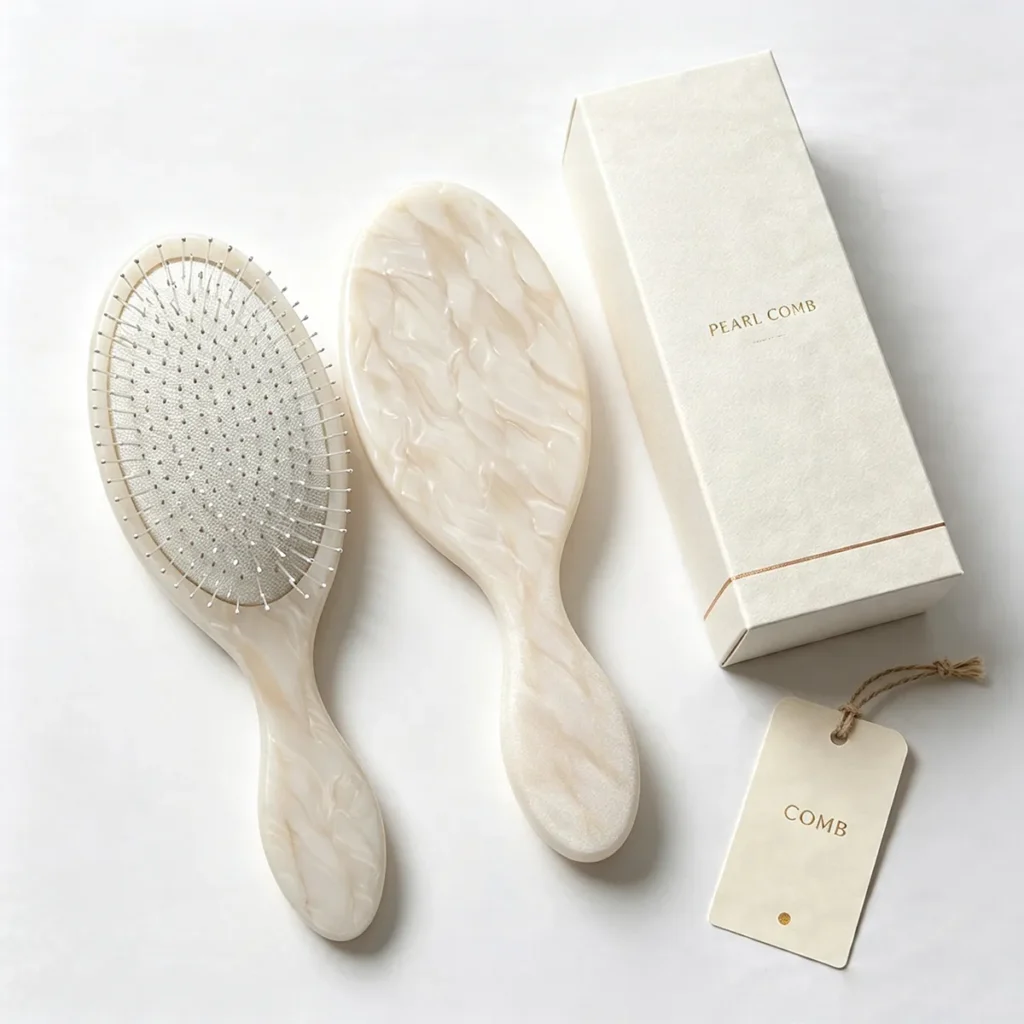
The Two Families, and Why They Behave Differently
Almost everything you will be offered falls into one of two groups, and they differ in minimum order, cost and lead time for the same underlying reason: whether the format needs its own tooling.
| Format | Typical MOQ | Indicative unit cost |
|---|---|---|
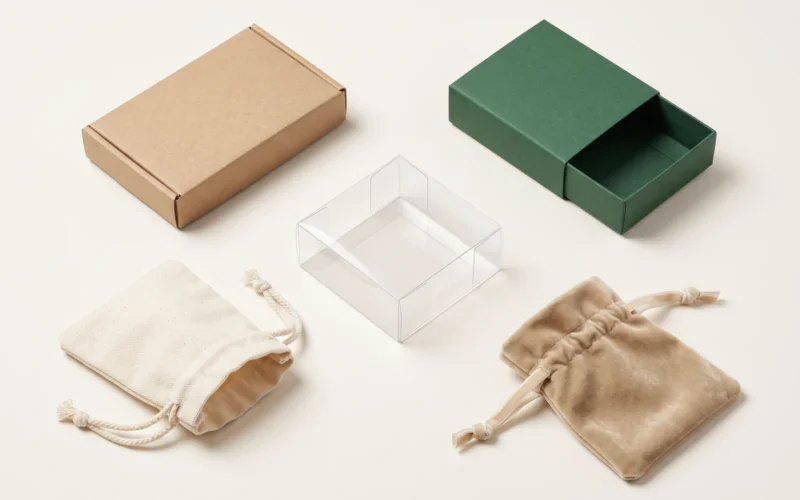
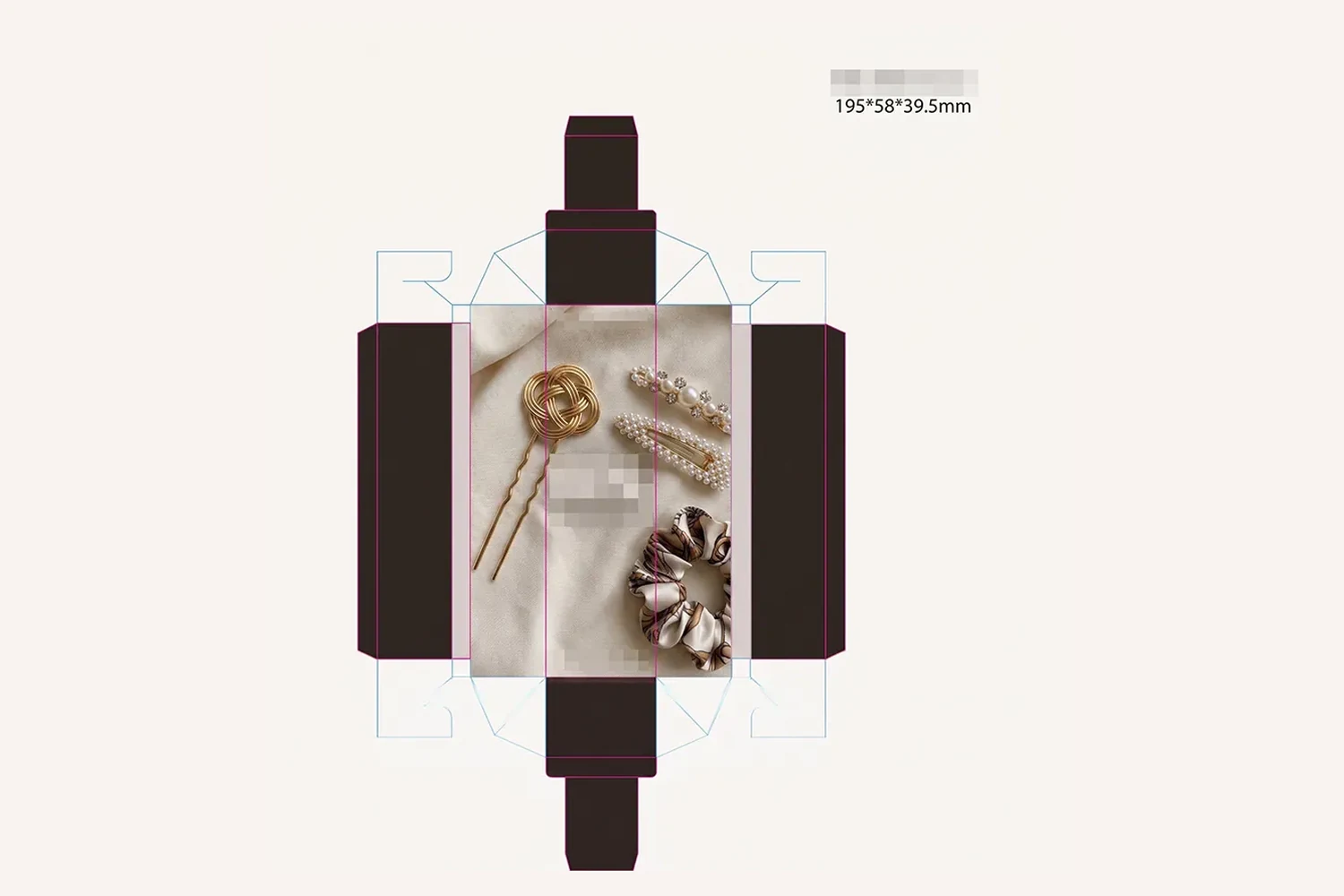
| Rigid boxes — tuck-end cartons, sliding drawer boxes, clear PET boxes | From 1,000 pcs | From USD 0.80 |
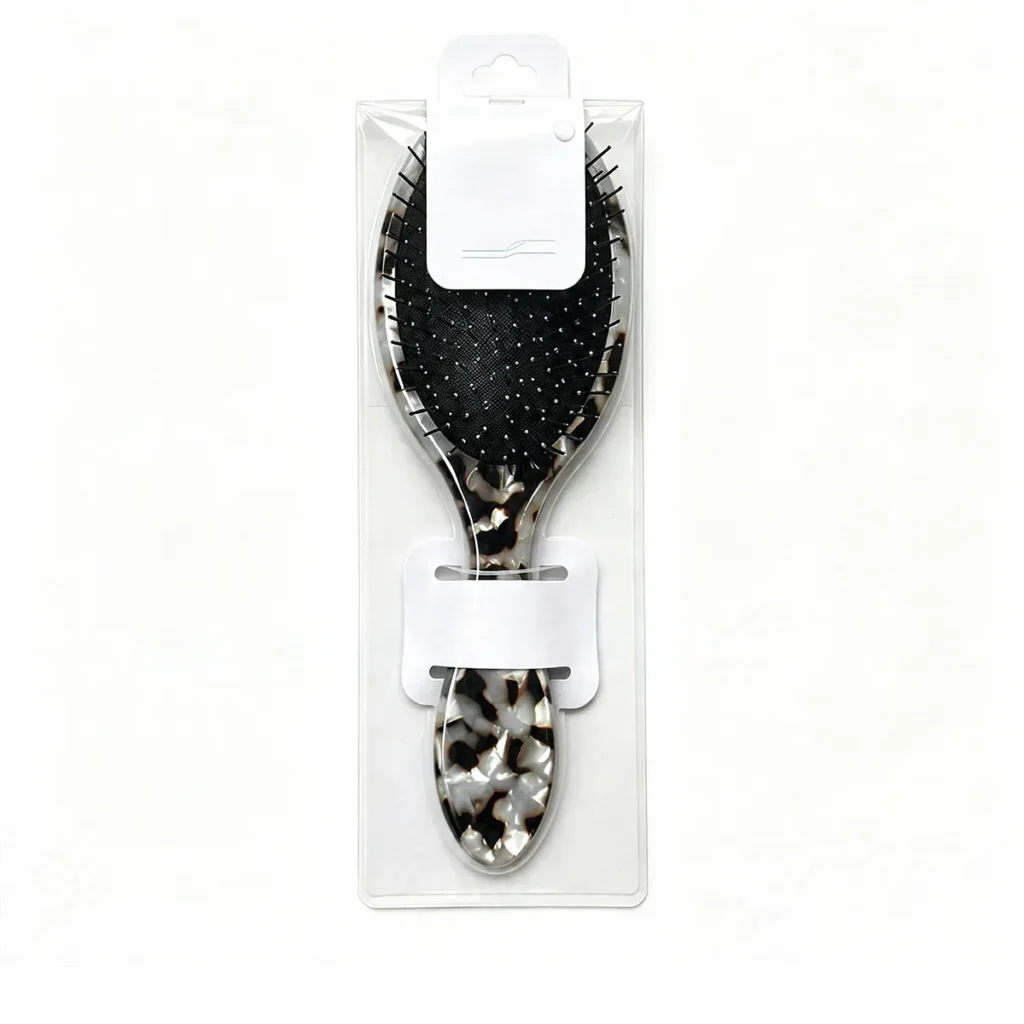
| Pouches and bags — cotton canvas, velvet, EVA, PVA | 500–1,000 pcs | Around USD 0.70 |
Both figures are starting points. Print coverage, foiling, inserts and material weight move them upward quickly. Boxes carry the higher minimum because a rigid box needs a cutting die for its specific dimensions. Change the box size and you change the die. Pouches are cut and sewn from roll goods, so a size change is a pattern change rather than a tooling change — which is why the minimum starts lower and why a pouch programme can flex mid-season in a way a box programme cannot.
The Mismatch That Catches People Out
Here is the trap, and it is arithmetic rather than anything sinister.
The minimum for acetate clips, claws and barrettes is 500 pieces per design. The minimum for a rigid box is 1,000. Order 500 clips in a rigid box and you have just bought 500 boxes you will not use — and the cost of those spare boxes lands entirely on the 500 pieces you did order. That is roughly USD 0.80 of dead packaging on every unit, which on a small first order can quietly halve the margin you modelled.
Three ways out, in the order we would suggest them:
- Match the format to the quantity. A pouch at 500 pcs aligns with a 500 pc clip order. No dead stock, no orphaned inventory.
- Spread one box across several designs. If the box is not printed with a design-specific image, 1,000 boxes can carry two 500 pc designs. This is the most common fix and it costs nothing to plan for.
- Order 1,000 of the product. Only sensible if you are confident in the sell-through — otherwise you have moved the dead stock from the box to the product.
The second option is the one most buyers miss, and it needs a decision before artwork is finalised: keep the outer packaging design-neutral and put the design-specific information on a hangtag or a label. It costs a few cents and buys you flexibility for the whole season.
What Actually Moves the Cost
The figures above are entry points for plain, unprinted packaging. Four things move them, and only one is usually worth paying for.
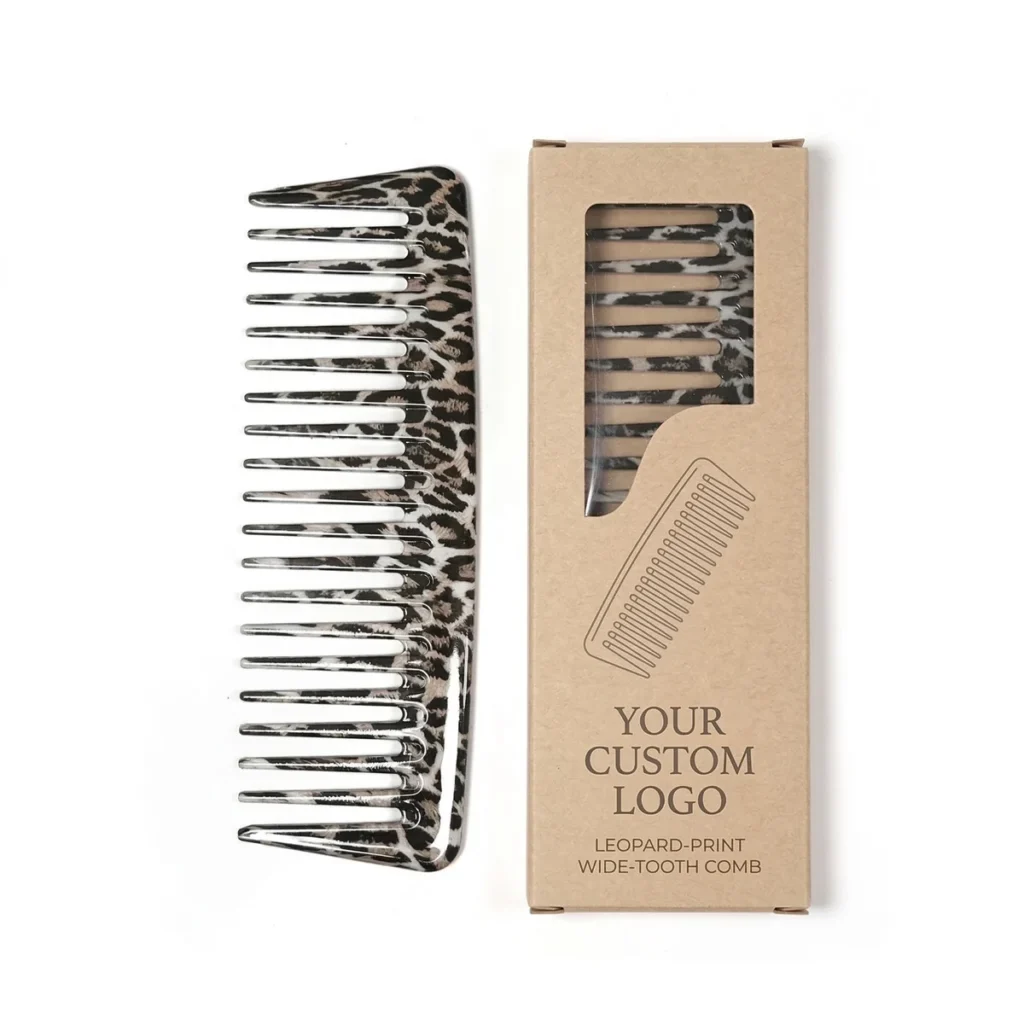
Packaging artwork is only one part of the approval: the product logo, placement and artwork file need to be fixed at the same time. See our guide to custom hair clips with logo before finalising either brief.
Print coverage
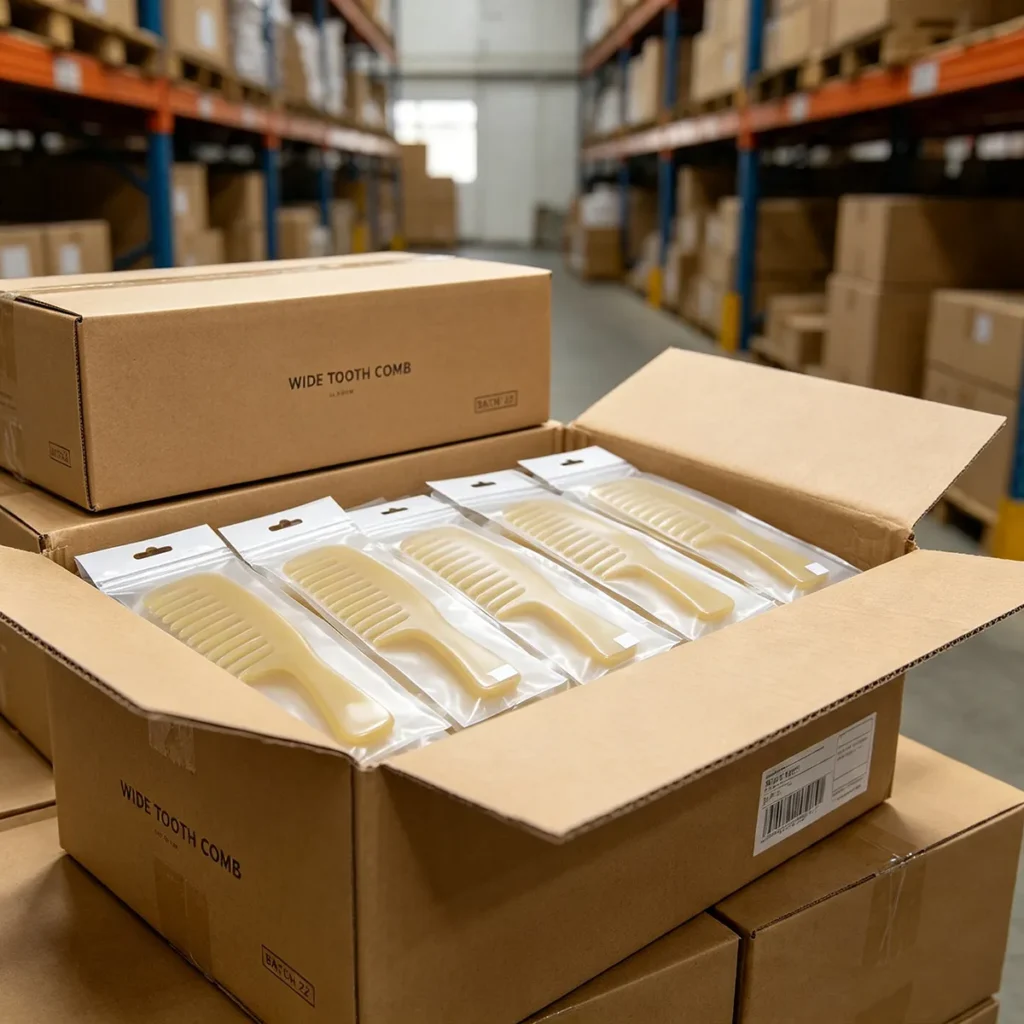
A one-colour logo on kraft board is close to the base price. Full-bleed printing across every panel is a different product. If budget is tight, uncoated board with a single-colour print reads as more considered than full-colour printing on cheap card — and it costs less.
Finishes
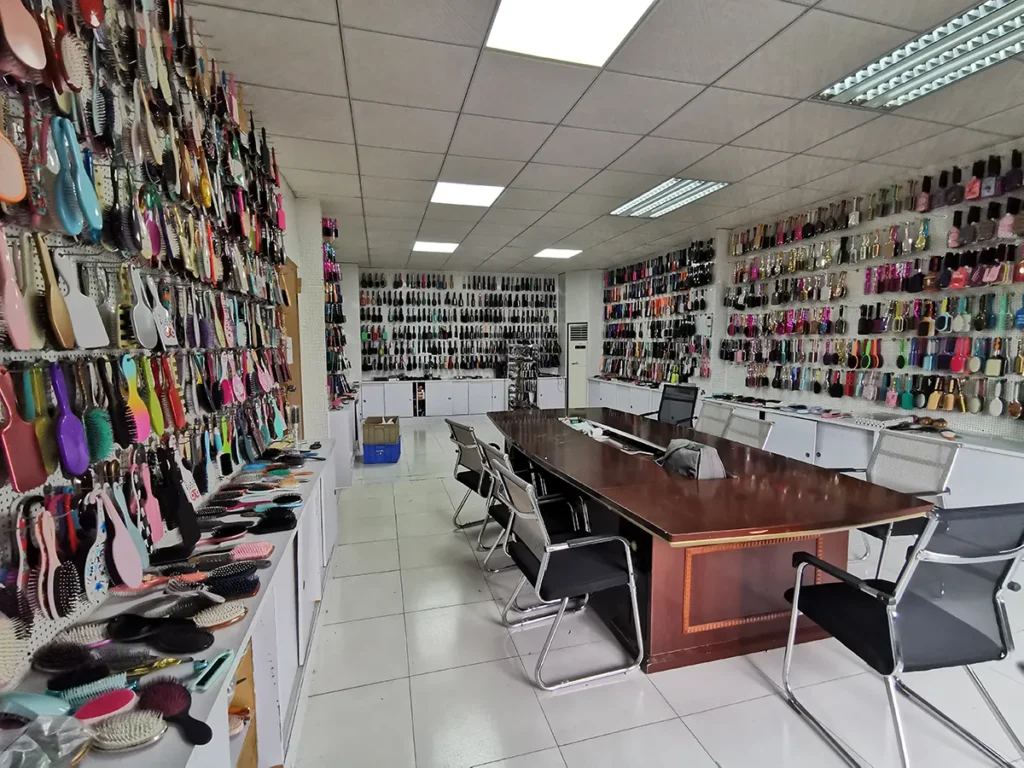
Foil stamping, spot UV and embossing are each a separate pass through a separate machine, and each one adds both cost and lead time. One finish used deliberately looks premium. Three used together usually looks like someone was trying to prove something.
Inserts
A moulded insert that holds the product in place is the single most effective upgrade for perceived value, and it is also where hidden cost lives — it needs its own tooling and its own minimum. Ask for it to be quoted as a separate line rather than folded into the box price.
Material weight
Heavier board and denser velvet cost more per unit and more to ship. On a product that already feels substantial — and acetate does — the packaging does not have to work as hard as it does for a lightweight plastic piece. Let the product carry the weight impression.
Sustainability Claims Start Here
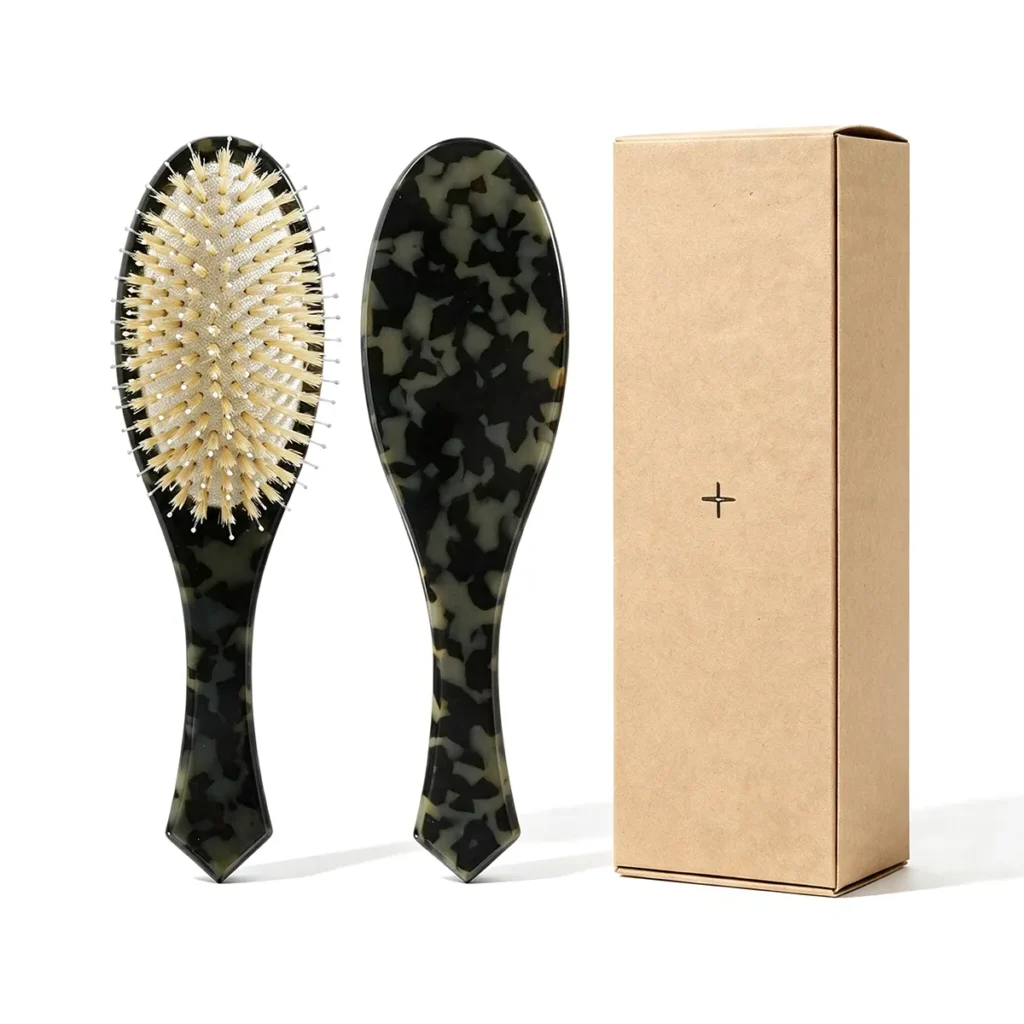
Packaging is the fastest defensible environmental improvement in a hair accessory programme, and it is far easier to substantiate than any claim about the product itself. Switching a polybag and blister to FSC paperboard, kraft sleeves and paper tape is immediately true, immediately visible to the customer, and needs no qualification.
What it is not is a licence to describe the whole product as sustainable. If the packaging is paperboard and the clip inside it has a steel spring, the honest claim is about the packaging. We go through which claims survive scrutiny in our piece on whether cellulose acetate is biodegradable.
Frequently Asked Questions
Can I supply my own packaging?
Yes. Send it to us and we pack into it. Tell us early, because it changes the packing line schedule and we need to confirm the product actually fits the insert before your stock arrives rather than after.
Is packaging quoted inside the unit price or separately?
Ask for it separately, always — even if you end up accepting a combined figure. A packed unit price you cannot break down is a price you cannot compare between suppliers, and packaging is the easiest place for a quotation to hide margin.
How long does packaging take?
Plain stock formats are quick. Custom-printed boxes run alongside production rather than after it, so they are only a problem if artwork is late — which is the usual cause of a delayed shipment on an otherwise on-time order. Lock artwork when you approve the sample, not when production finishes.
Do you do retail-ready packaging with barcodes?
Yes — hangtags, barcodes, retail cartons and inner counts to your specification. Send the retailer packaging manual if you have one; it is far quicker than working from a description, and it removes the compliance risk of getting an inner count wrong.
The Short Version
Boxes start at 1,000 pieces and around USD 0.80. Pouches start at 500–1,000 and around USD 0.70. Check the packaging minimum against your product minimum before you choose a format, because a 500 pc order in a 1,000 pc box carries the cost of 500 boxes nobody will use. Keep outer packaging design-neutral if you are running several designs, quote packaging as a separate line, and lock the artwork at sample approval.
Tell us your product, quantity and target landed cost and we will come back with packaging options that match the quantity rather than fight it.