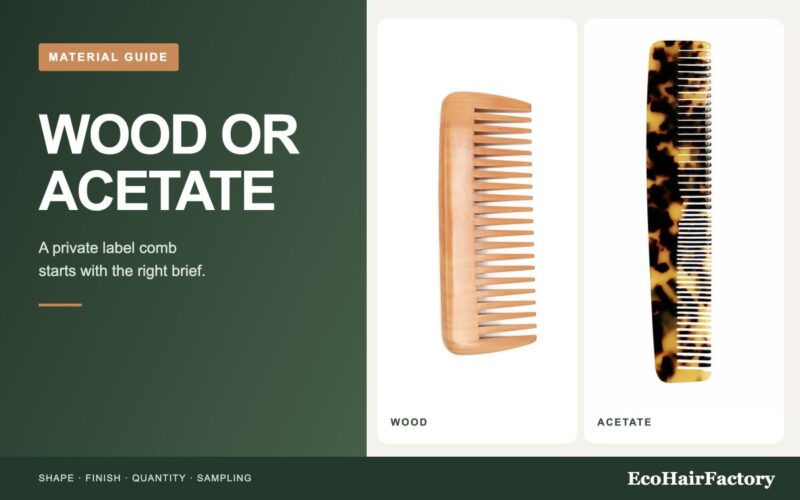
For a private label comb range, choose wood when visible grain and a natural-material finish are central to the design. Choose cellulose acetate when you want tortoiseshell, pearl, translucent or coordinated sheet patterns. The important purchasing differences are how each material responds to moisture and finishing, how the teeth are shaped, and what your first collection costs to develop.
Wooden vs acetate combs: the practical differences
These differences help a brand choose a material route. The two current products shown below then put the decision into actual dimensions and tooth layouts.
| What changes | Wooden comb | Cellulose acetate comb |
|---|---|---|
| Appearance and surface | Visible grain and natural variation are part of the design. Species and finish set the colour and surface character. | Solid, pearl and patterned sheets give a broader graphic palette. Polishing brings out the sheet’s surface gloss. |
| Moisture and water | Wood absorbs and releases moisture; changes can cause swelling, shrinkage and checking. Prolonged soaking is a poor fit for a wood-led care routine. | Acetate also absorbs moisture. It is not automatically a waterproof alternative; select the sheet and finish for the intended cleaning routine. |
| Heat and cleaning products | Moisture movement makes soaking unsuitable as a default care method. Start with a wipe-clean, prompt-dry care brief, then validate the selected coating against any proposed cleaner. | Acetate is thermoplastic. Boiling water and some solvents can affect it; avoid treating it as a heat-resistant salon tool without product-specific validation. |
| Damage to check | Look for splits, raised grain and weak sections at tooth roots, particularly where grain crosses a narrow section. | Look for cracks or chips at tooth roots, rough cut edges and distortion. Sheet grade and tooth thickness belong in the specification. |
| Hand feel and weight | Grain, coating, species and body thickness change the feel. A wood name does not specify the finished comb’s weight. | Polished faces and sheet thickness shape the feel. Record the actual sample’s weight when comparing packed units and freight. |
| Logo direction | Engraving or screen printing are established options. Grain and finish affect the appearance of fine lines. | Engraving with colour fill or screen printing can make a mark visible on a patterned back. Reserve a clear logo area in the outline. |
| Main material cost variables | Species, usable blank size, grain selection and finishing. | Sheet grade, pattern, thickness, usable cutting layout and polishing. |
The moisture behaviour of wood is described in the USDA Forest Products Laboratory’s storage guide. For acetate, Mazzucchelli’s sheet-material guidance explains moisture absorption and chemical sensitivity. These references describe material behaviour; the selected comb still needs its own specification.
Which is better for wet use or salon cleaning?
For repeated wet use, start with the cleaning method rather than the colour. Specify the water temperature, cleaner, contact time and drying routine. Wood’s moisture movement makes soaking a particular concern; acetate avoids wood grain but has its own heat and chemical sensitivities. A brand planning chemical disinfection needs a finished-sample compatibility check before printing that instruction on the pack.
Does either material guarantee an antistatic or unbreakable comb?
No material label establishes those finished-product claims. For an antistatic promise, compare the proposed samples under the same hair and humidity conditions. For durability, specify the tooth dimensions and an agreed handling test. This gives a brand a usable acceptance decision instead of an unsupported “zero static” or “never breaks” slogan.
Choose the material around the range you are building
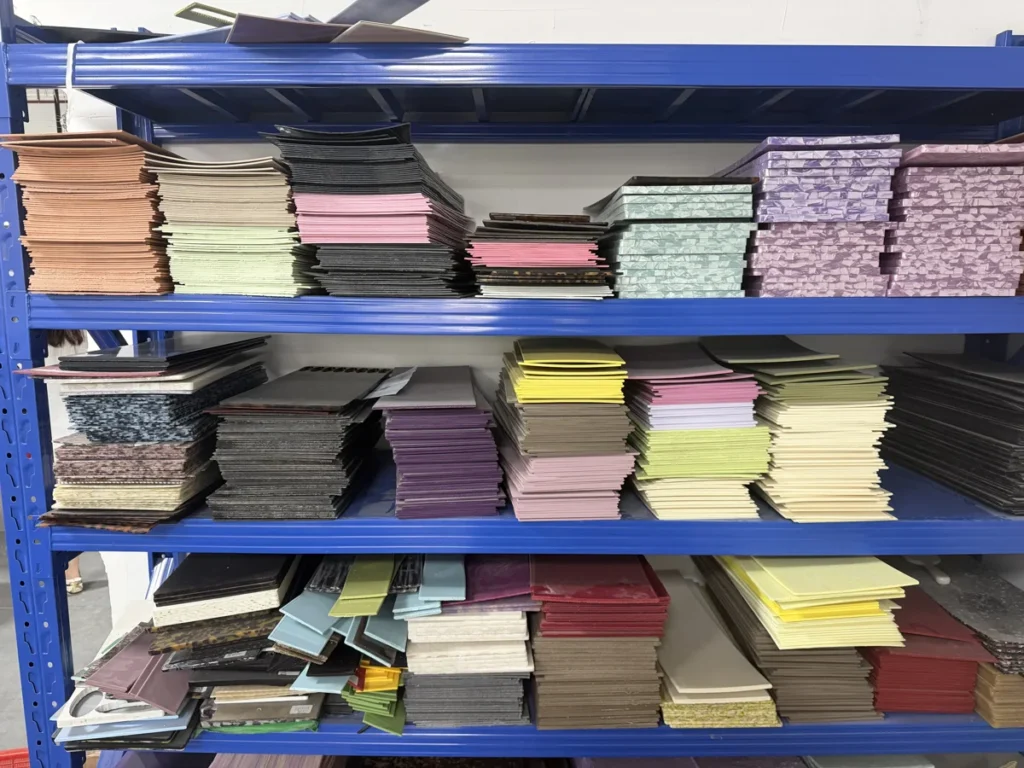
Start with wood for a grain-led range
Useful when the visible timber, an engraved mark and the finish should connect the comb to other wooden accessories. Select an identified species and a grain/colour reference, then decide how much natural variation the collection accepts.
Start with acetate for a pattern-led range
Useful when a tortoiseshell, pearl or colour direction should link combs to acetate clips and brushes. Approve the chosen sheet on the actual narrow back and teeth, where pattern placement differs from a large sheet sample.
For a pocket kit, start with the packed dimensions. For a dressing comb, start with the working length and tooth layout. A beard comb has its own tooth and size brief; the beard comb specification guide covers that format separately.
Two current products: size and teeth change the brief
The wooden pocket comb is 5.5 cm deep; the pictured acetate dressing comb is 3 cm deep and combines fine and wider teeth on one bar. That difference affects the grip, logo space and sleeve dimensions before material pricing enters the comparison.
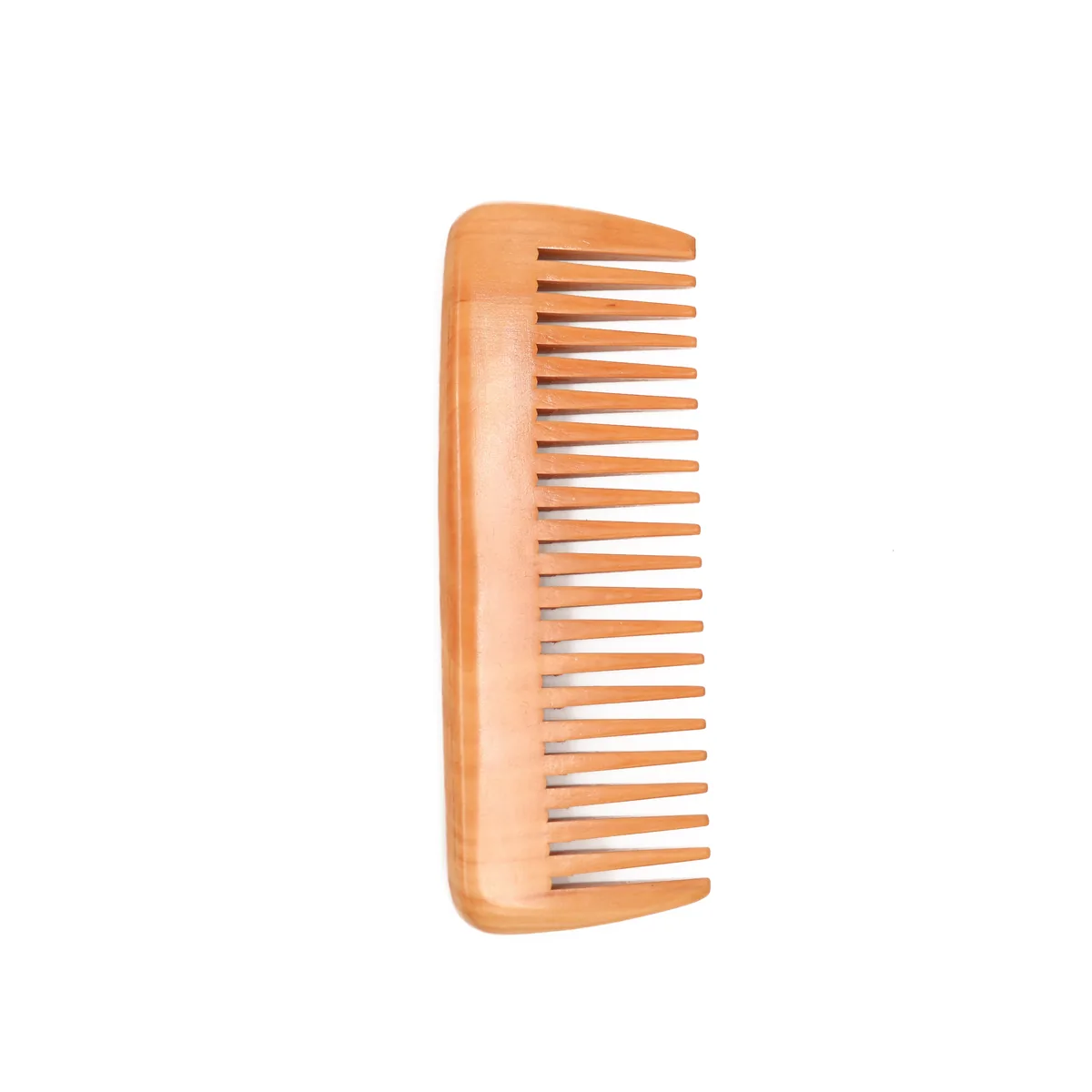
15.5 × 5.5 cm · Fine- or wide-tooth versions
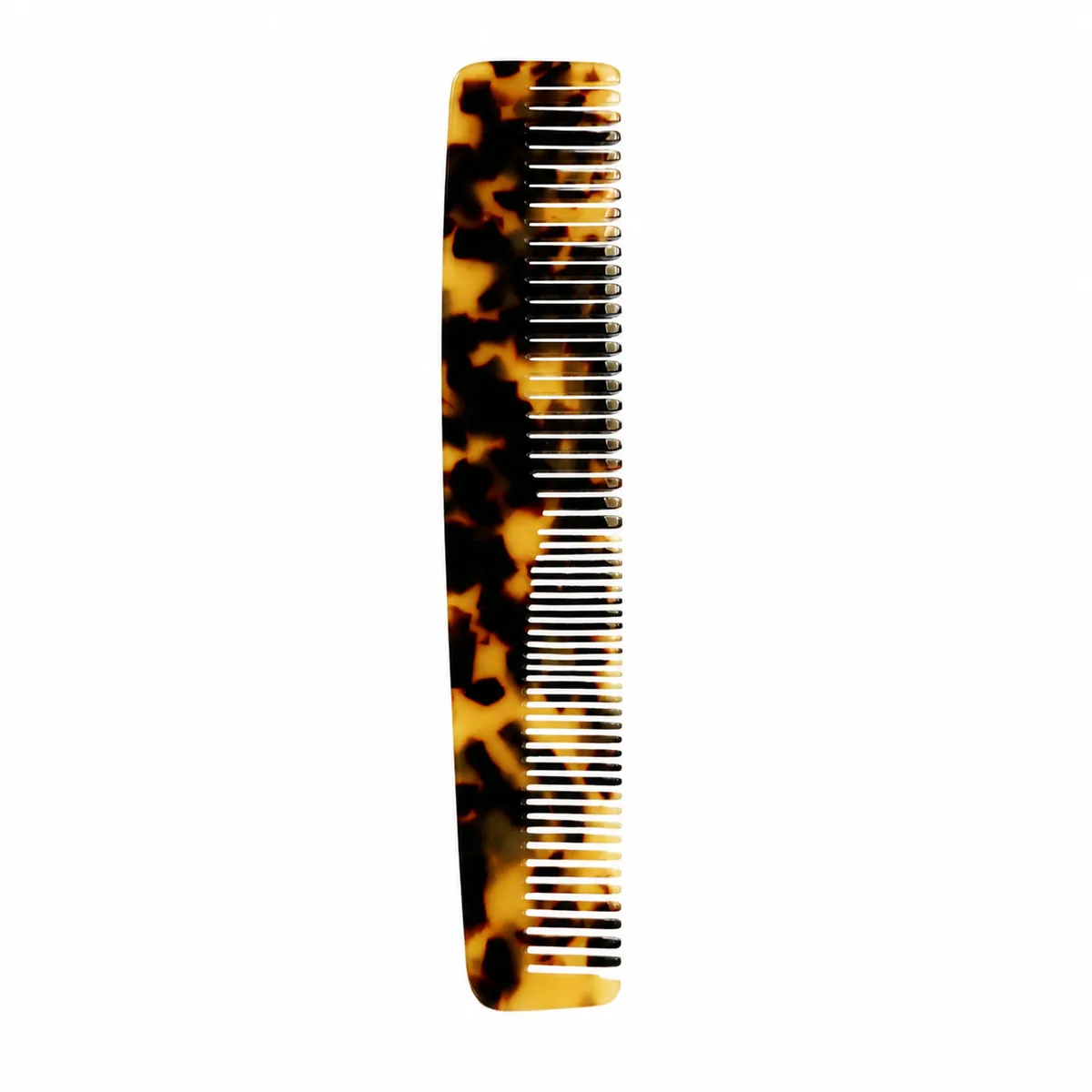
Tortoiseshell · 15.9 × 3 cm · Fine and wider teeth
Both materials can be developed in other outlines. For a useful two-material quotation, send one target outline, tooth spacing, thickness and packaging brief. For more acetate formats, see the acetate comb wholesale guide.
What changes the wholesale cost?
A wood-versus-acetate quotation becomes useful when it separates five cost drivers. Ask for the product price, one-time charges, packaging and freight as separate items:
- Material and usable blank. Name the wood species or acetate sheet reference, then include body thickness. The cutting layout and usable material matter alongside the raw material price.
- Shape and teeth. Overall size, tooth count, narrow gaps and custom contours change the work required. Wood and acetate are cut to shape rather than requiring an injection-moulded plastic design. Standard cutting shapes have no cutting-tool charge; special shapes are quoted individually.
- Surface and logo work. Compare the same finish and logo specification. Engraving has no separate plate charge under our current terms; printing and other non-engraved logo methods have a setup charge. Position, artwork and method are approved together.
- Colours and order split. Both our wood and acetate combs start at 1,000 pieces per style and colour, with each size meeting its own minimum. Splitting a collection into more versions increases the total order.
- Retail packaging and delivery. A protective sleeve, printed box, labels and carton arrangement change the packed cost and freight volume. Custom printed packaging minimums depend on the format.
One style and size in two colourways: 2 × 1,000 = 2,000 pieces. Adding a second style in the same two colourways brings the collection to 4,000 pieces. Set the wood colour and finish options before counting them as separate versions.
How cutting and finishing affect the finished comb
For wood, the blank’s grain direction and soundness come before the final outline. Cutting establishes the body and teeth; sanding and the selected finish establish the contact surfaces. Review the ends and inside faces of the teeth, not just the broad front.
For acetate, the sheet pattern, cutting layout and thickness are chosen together. Cutting and subsequent edge finishing determine the tooth field; polishing develops the surface. A high-gloss front does not by itself show whether the spaces between fine teeth are finished well.
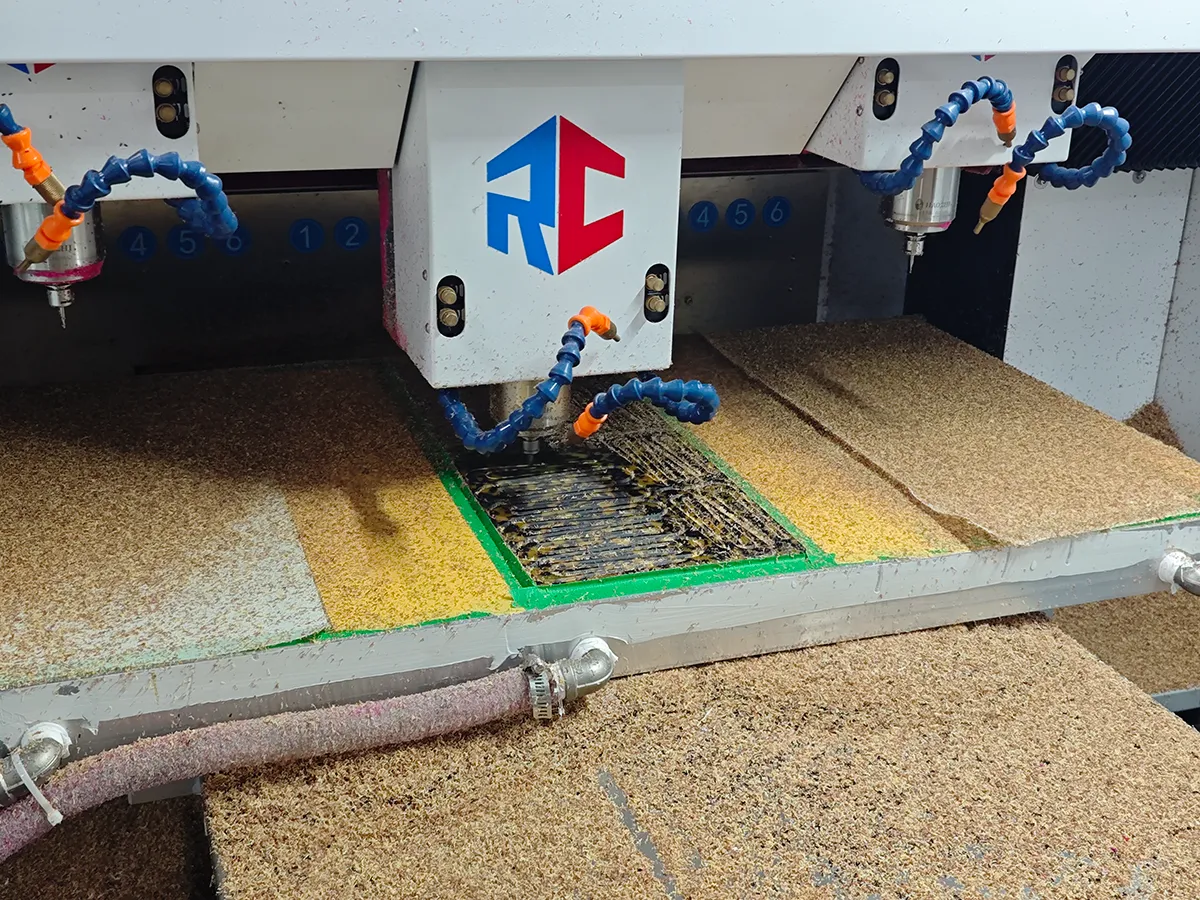

The same finish word can hide a different scope of work. In a sample approval, record whether it refers to the broad faces, outside perimeter, tooth tips, tooth gaps or all of these. Keep the approved physical sample as the production reference.
A comb-specific sample and quality checklist
Our confirmed inspection approach is 100% visual inspection plus AQL 2.5 at General Inspection Level II; customer and third-party inspection are welcome. For the selected comb, put the actual dimensions and agreed tolerances on the specification before approving the sample.

Review the contact surfaces and tooth roots on the finished sample.

Check contrast and placement at the actual print size.
Dimensions and tooth geometry
Record length, depth, thickness, tooth spacing and the fine/wide layout. Check tooth roots, tips and the inside of each gap for rough or sharp edges.
Material and finish
For wood, inspect splits, raised grain and the accepted colour range. For acetate, inspect chips, cracks, edge finish, surface marks and the accepted pattern placement.
Branding and use
Approve the mark’s size, position and legibility. Test the intended handling and cleaning routine on the finished sample; define any durability or static claim separately.
Packed sample
Check that the sleeve or box fits without forcing the teeth, that surfaces are protected, and that the SKU and quantity match the carton plan.
AQL is a sampling framework, not a promise of zero defects or a measured crack rate. Keep any functional test method and acceptance limit in the order specification; numeric dimensional tolerances are set for the chosen design.
Sampling, bulk production and your launch date
| Material route | Custom sampling | Bulk production planning |
|---|---|---|
| Wooden comb | Usually 15–25 days | Usually 30–40 days for first and repeat orders |
| Acetate comb | Usually 25–45 days | Usually 30–45 days |
These are approximate production ranges, dependent on style, materials and the production schedule. Keep sampling, final approval, bulk production, inspection and transport as separate milestones. A retail launch date needs room for all five, rather than treating the production range as an arrival date.
Settle material, size, colour, logo and packaging before custom sampling. Later specification changes are charged as new sampling. See the sampling and approval guide for the approval sequence.
Material identity, claims and the import brief
For wood, specify the botanical species and harvest origin. A commercial colour or timber-series name is not enough to identify a species. Have the importer check the actual species and finished product against the applicable destination rules. For an EU order, the current wildlife-trade annexes illustrate how species listings and annotations define the scope; a timber name alone does not settle the paperwork.
If the retail brief requires an FSC claim, establish the eligible material and supply-chain scope before artwork approval. FSC chain-of-custody requirements govern product claims and labelling; a website certificate graphic does not establish the claim for every wooden comb.
For acetate, name the selected sheet grade. Cellulose acetate uses modified cellulose with plasticizers and other formulation ingredients. The cellulosic feedstock does not identify the whole formulation. Confirm the selected grade before making composition or chemical-compliance claims; general material guidance is not a test report for your SKU.
For an import quotation, give the destination country, intended user and use, packaging, delivery term and required arrival date. Ask for unit and carton dimensions, gross weight, packing quantities and freight as line items. Have the broker confirm the tariff classification for the actual product and destination. Agree any coating, ink, material or finished-product testing scope before the purchase order.
Send a material comparison brief
A useful first message includes the intended comb format, a reference outline or drawing, the wood species or acetate pattern direction, tooth layout, logo, packaging, quantities by version and destination. Add the cleaning routine and any retailer-required claims so those can be considered before sampling.
Send your private label comb brief to compare wood and acetate against the same product requirements. We can then review the material route, price components and project schedule together.
Questions before ordering
Is a wooden comb always cheaper than acetate?
No. Species or sheet grade, body size, tooth work, finishing, logo and packaging all enter the quote. Compare the same product brief with setup and freight separated, rather than comparing two unrelated catalogue prices.
Can I put the same logo on both materials?
Yes, but choose the method and visible result for each surface. Wood grain and acetate pattern affect contrast differently; approve the artwork at its final size on the selected sample.
Which comb should a new brand choose first?
Choose wood if identified timber, visible grain and an engraved finish define the range. Choose acetate if a repeatable colour or sheet-pattern direction connects the comb to other accessories. Keep the initial range small enough to support the order minimums for each version.
Can the comb and retail sleeve be developed together?
Yes. Define the packed size and protection before signing off the comb. Approve a packed sample, including the logo, sleeve or box fit and labels, so packaging changes do not arrive after production planning.