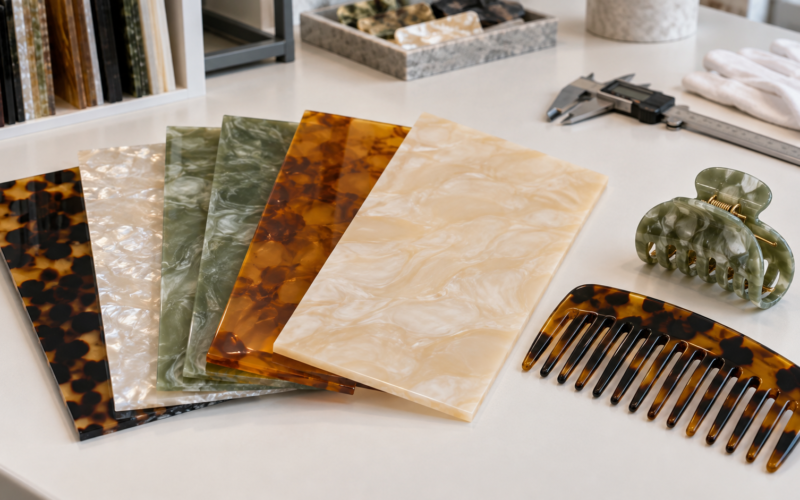
Tortoise shell hair clips are recognised by their amber, honey, brown and near-black clouds, but the name describes a pattern, not the material. Modern accessories should not be made from animal shell. In quality hair accessories, the look is usually created in patterned cellulose acetate sheet, then cut, shaped and polished into a claw, barrette, snap clip or side clip.
That distinction matters to buyers because “tortoiseshell” is not one standard colour. Two sheets can both carry that description and produce completely different assortments. This guide explains how the pattern is made, why every piece varies, how to distinguish through-pattern acetate from a surface print, and what a brand should specify before approving a production order.
First: It Is a Pattern, Not Animal Shell
“Tortoise shell” and “tortoiseshell” are retail colour names for a mottled pattern. They should not imply genuine shell. A clear product description is “tortoiseshell-pattern cellulose acetate” or “tortoiseshell acetate.” This tells a buyer what the accessory is made from and avoids suggesting that wildlife material was used.
Cellulose acetate is a sheet material made with cellulose as its feedstock. It can be built in translucent layers and chips so the pattern has depth rather than sitting only on the surface. For a wider material comparison, see acetate hair clips versus injection-moulded plastic.
How the Tortoiseshell Pattern Is Made
Patterned acetate begins as coloured material arranged and consolidated into blocks or layers, then sliced or pressed into sheet. Manufacturers can vary the base transparency, chip size, colour balance and the contrast between light and dark areas. That is why one design may look like fine tea-coloured flecks while another has large black islands floating in clear amber.
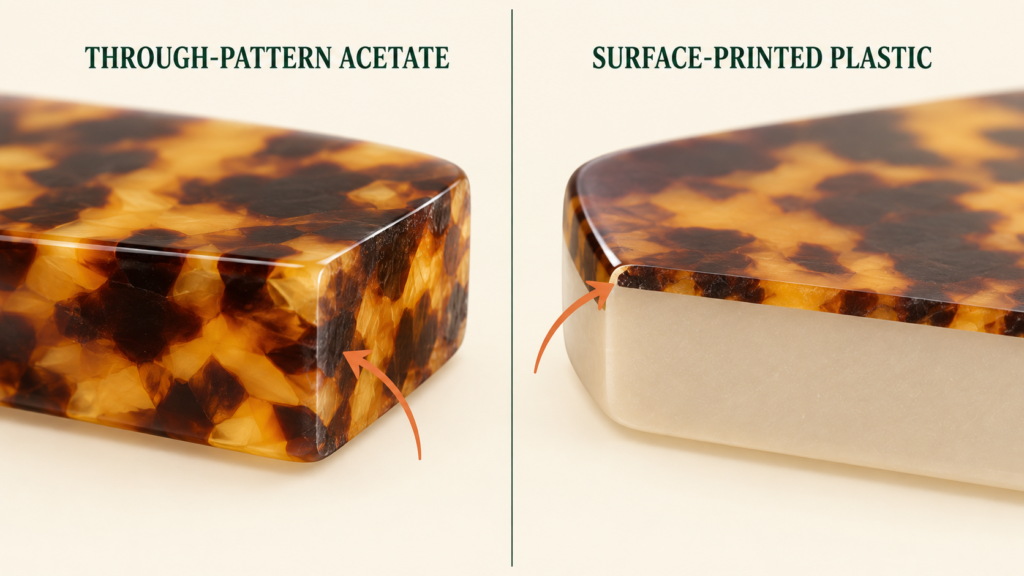
The pattern runs through the sheet. When a part is cut and its edge is rounded and polished, colour remains visible at the edge. A printed plastic imitation is different: the pattern may be applied to the surface of a uniform substrate. Printing can be appropriate for a lower-cost brief, but it should not be presented as the same construction as patterned acetate.
Ask for an unfinished offcut alongside a polished sample if material identity is important. The edge and reverse show whether the visual is integral to the sheet. They also reveal sheet thickness, layer structure and how the colours change when the material is shaped.
The Main Tortoiseshell Colour Families
| Pattern family | Typical appearance | Works well for | Specification risk |
|---|---|---|---|
| Classic dark | Deep brown or black islands over amber | Premium claws, barrettes and combs | Large dark areas can hide a dark logo |
| Blonde or honey | More transparent gold with lighter brown marks | Spring/summer ranges and fine profiles | Batch warmth can shift from yellow to orange |
| Chestnut | Warm red-brown with medium contrast | Autumn palettes and warm-metal hardware | Can photograph redder than it looks in hand |
| Clear tortoise | Large transparent areas with sparse dark chips | Oversized claws and statement shapes | Individual pieces vary more visibly |
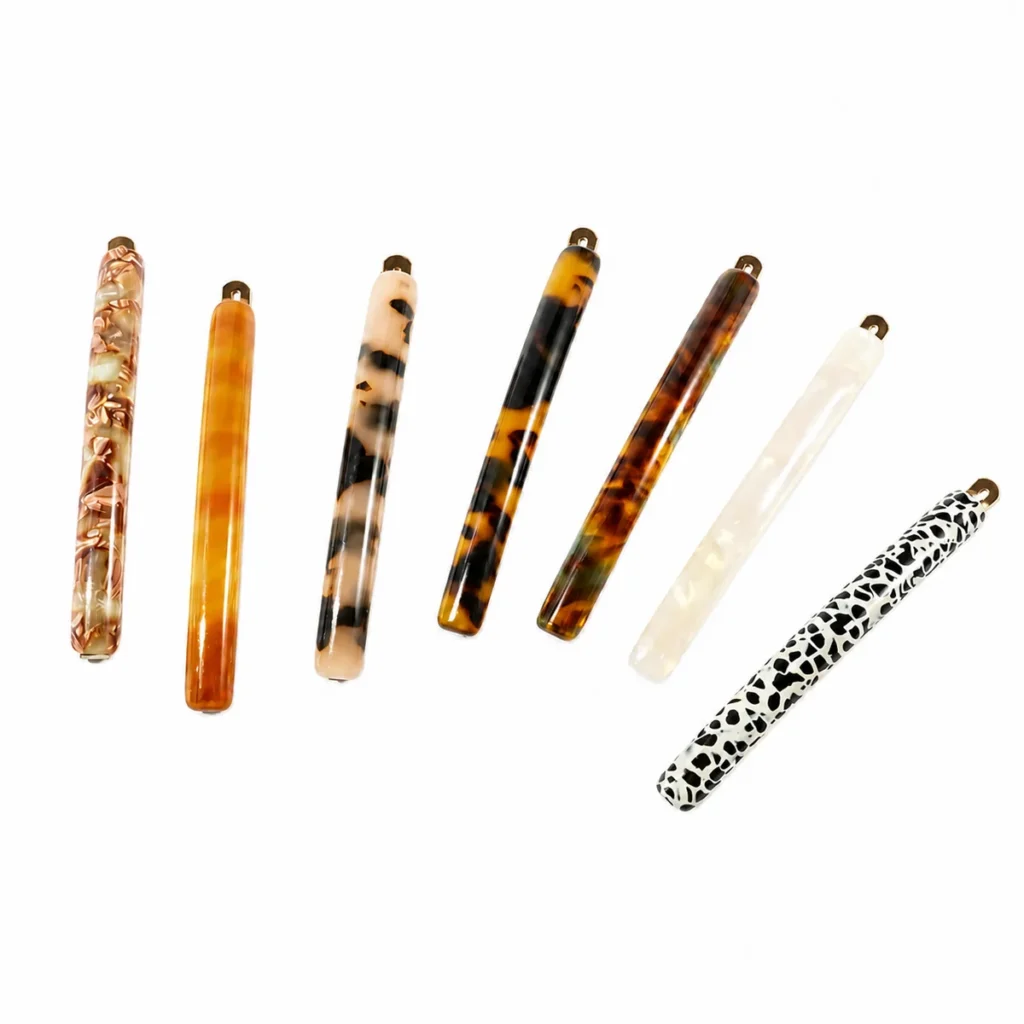
| Flamed or streaked | Directional bands rather than round clouds | Long barrettes, combs and brush handles | Cutting direction changes the entire look |
Names are not controlled standards. One mill’s “blonde tortoise” can resemble another supplier’s “honey amber.” Do not approve from a colour name, a phone screenshot or a marketplace photograph. Approve a physical sheet code and a realistic variation range.
Use a Sheet Code, Not Just a Pattern Name
A serious material library gives each sheet pattern a reference. Put that code on the quotation, sample record, purchase order and approved-sample label. If the exact sheet is discontinued or unavailable, the replacement should be submitted as a new approval rather than silently treated as “close enough.”
When a launch contains several shapes, reserve enough material from one lot for the full order. Mixing lots may create a visible shade break between a claw clip and a matching barrette. If a repeat order must match earlier stock, send the retained sample and state how much difference the brand can accept. Exact replication of a random organic pattern is not realistic, but colour balance and contrast can still be controlled.
Pattern Scale Must Match the Product
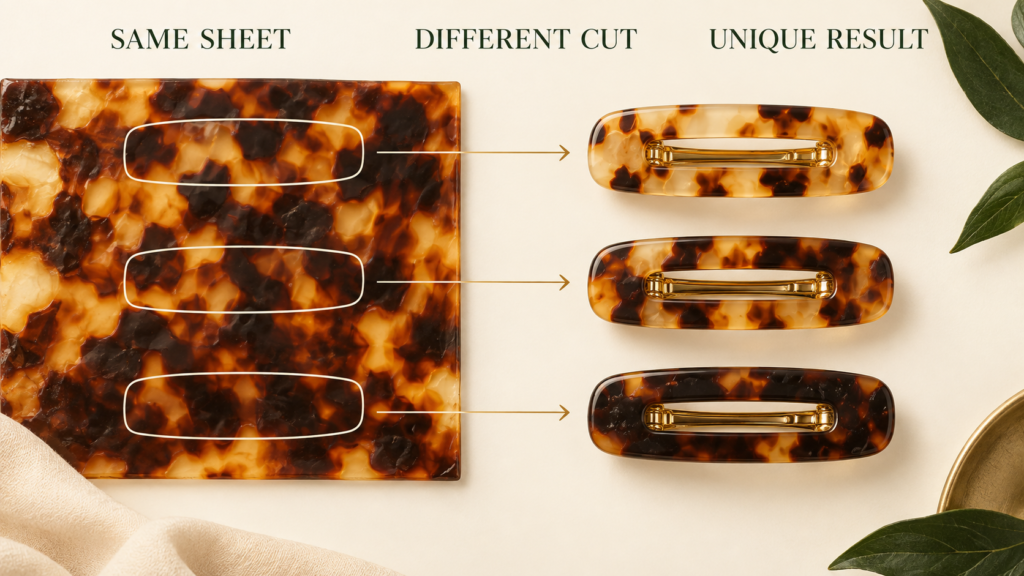
A large transparent sheet with dramatic dark islands can look excellent on a 10 cm claw and almost plain on a 3 cm snap clip. The small part may land entirely inside one amber or black area. Fine-grained patterns give small accessories more consistent visual activity; broad patterns show their depth best on larger surfaces.
Layout direction matters too. Long streaks can run with a barrette to make it feel longer, or across it to create bands. CAD nesting that saves the most sheet may rotate parts in several directions. If orientation is part of the design, mark it on the drawing and accept that material yield and unit cost may change.
Why No Two Clips Are Identical
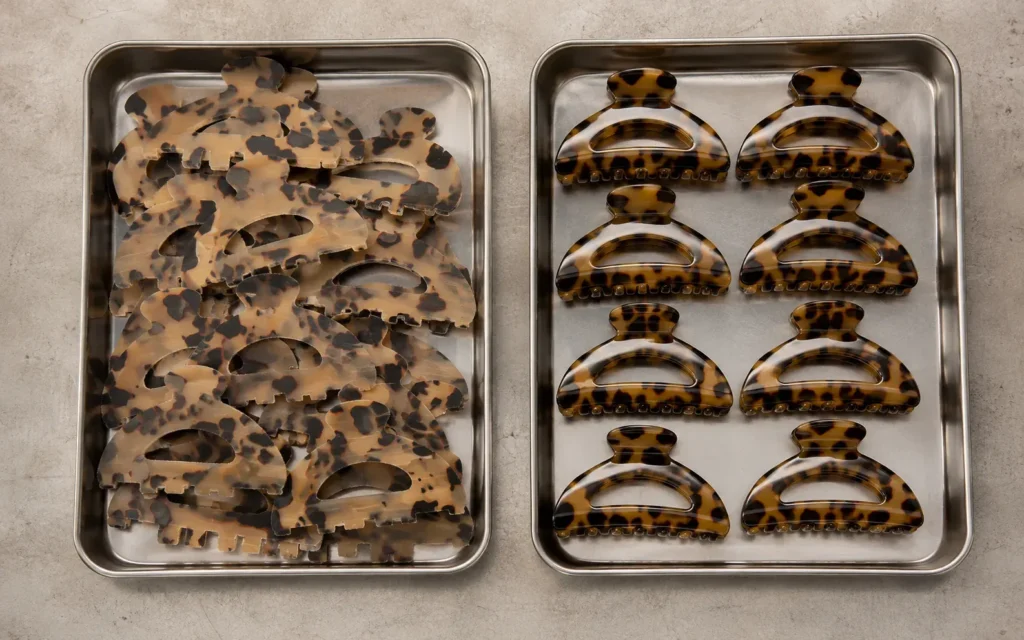
Random variation is part of the appeal. Neighbouring blanks cut from one sheet capture different areas, and shaping exposes colour at different depths. A production order should therefore be approved as a family, not against one hero photograph. Ask for several samples or an assortment photo that includes the lightest, darkest and most transparent acceptable pieces.
Variation does not mean anything goes. The factory can control the material code, lot, product position, pattern orientation and the range of colour balance. The buyer should define whether very dark or very clear pieces can ship in the same carton and whether mixed pairs need to be visually matched.
Approve a Range, Not One Perfect Sample
A single development sample proves shape, mechanism and workmanship, but it cannot represent every part of a patterned sheet. For colour approval, ask the factory to photograph or send a small group cut from different areas of the same lot. Mark the lightest, darkest and most transparent pieces that still feel on-brand. This gives production quality control a usable boundary and prevents the first unusually attractive sample from becoming an impossible standard.
Decide how the assortment will be packed. Random individual clips can usually tolerate more variation than a two-piece set displayed side by side. Matching raises sorting time and may reduce yield because operators must pair pieces with similar colour balance. If retail photography shows one exact clip, include a note that natural pattern placement varies; otherwise customers may interpret a normal difference as a defect.
For repeat orders, keep an approved group rather than one reference piece. Label it with the sheet code, purchase order, lot and approval date. Digital photographs help communication, but monitor settings and lighting can shift amber towards yellow or red. Physical standards remain the safest reference for a pattern whose appeal depends on translucency and depth.
Cutting, Shaping and Polishing Change the Final Look
Acetate accessories are cut from sheet rather than injected into a mould as one finished shape. The blank is machined, drilled, heated where curvature is needed, assembled with metal hardware and polished through several stages. Rounded edges become lighter and more translucent; flat faces keep larger, darker patches. A deep bevel can reveal more layers than a square edge.
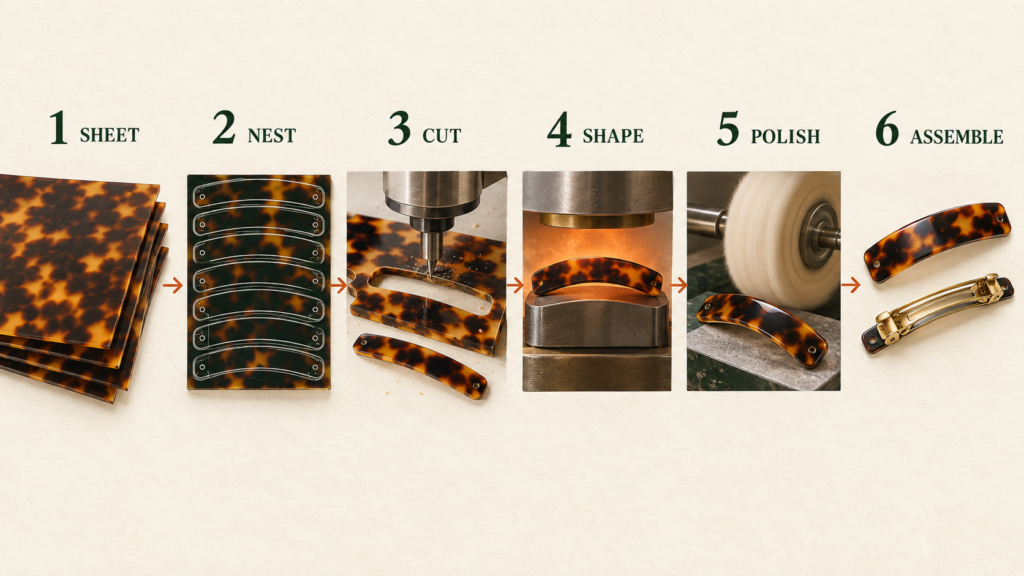
Polishing quality is especially visible on tortoiseshell because bright and dark regions sit next to each other. Scratches, cloudy edges and residue catch the light. Inspect samples under both diffused daylight and a hard point light, then check the inner teeth and hardware holes rather than judging only the front face.
Choose the Clip Mechanism Separately
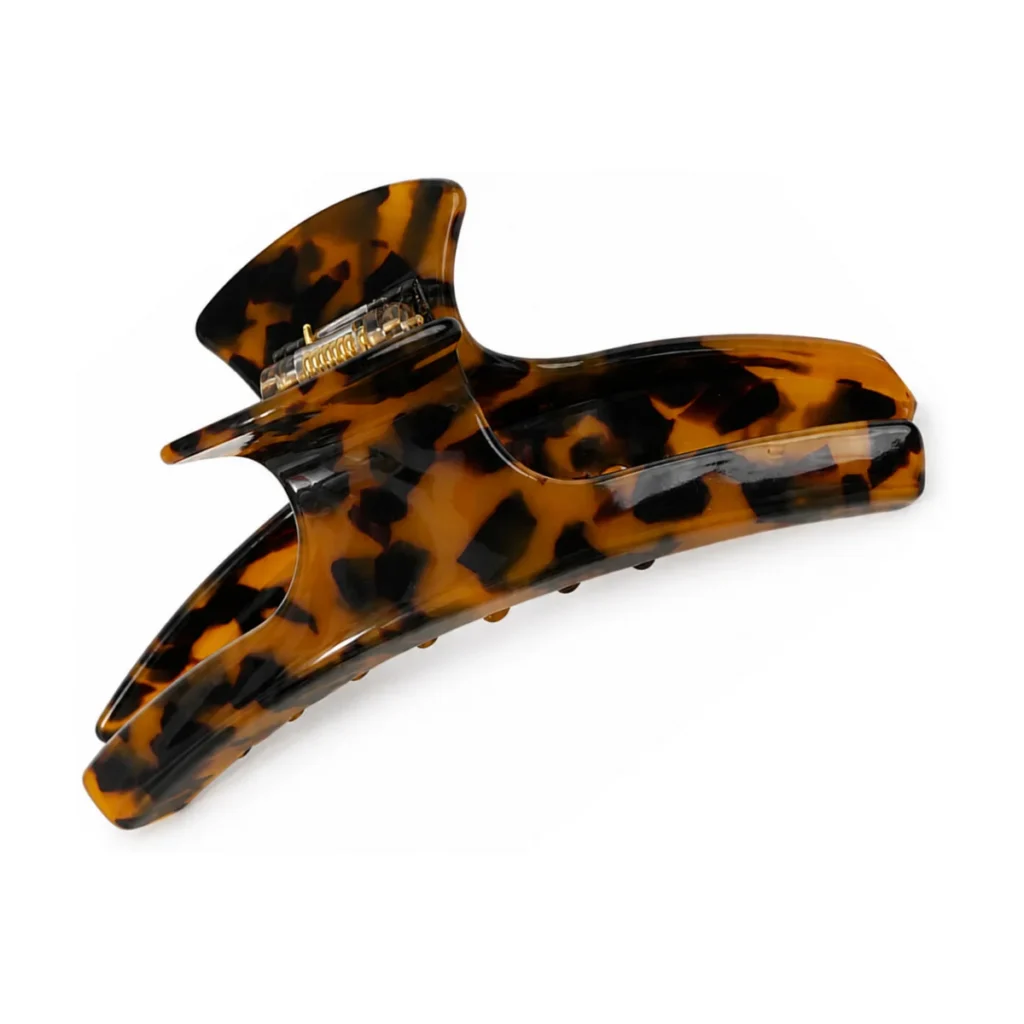
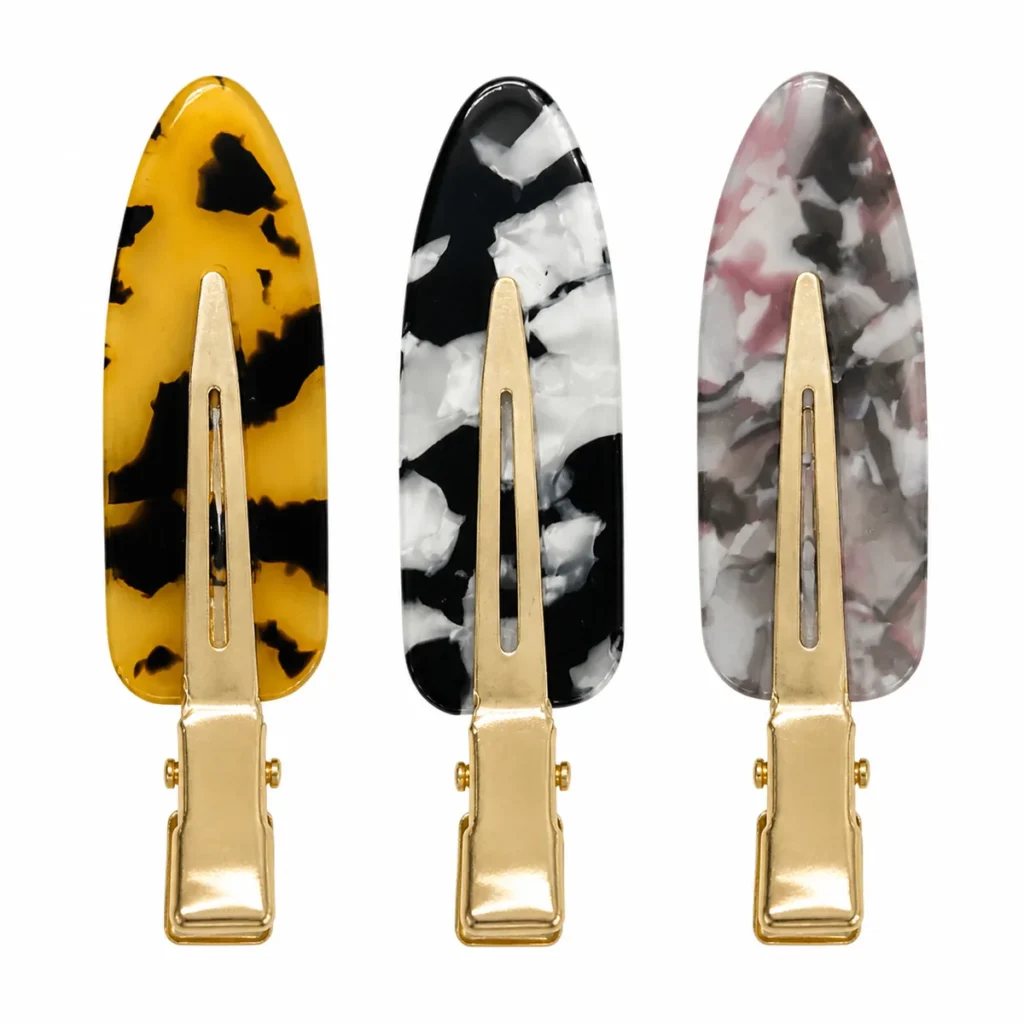
The pattern does not decide how the clip holds. A claw uses two toothed jaws and a spring. A French barrette uses a hinged metal clasp. A snap clip clicks between open and closed, while a side or duckbill clip presses a flatter section of hair. Choose the mechanism for the target hairstyle and hair volume, then apply the tortoiseshell design.
Hardware colour changes the whole palette. Gold warms honey and chestnut sheets, while silver creates more contrast with classic dark tortoise. Test spring tension and plating on the actual assembled piece; a beautiful acetate face cannot compensate for weak grip or a base that twists.
Logo Placement on a High-Contrast Pattern
A tortoiseshell ground can swallow a fine dark logo when it lands over a black patch. A light foil, metallic transfer or filled engraving is often easier to read, but the right process depends on the surface and brand style. Approve the logo on several pieces with different pattern positions, not on one carefully selected light sample.
Packaging should also use a neutral backing that does not fight the pattern. Warm ivory, soft stone and restrained green tend to let amber acetate read clearly. If the card makes sustainability claims, state the product and packaging materials precisely rather than using broad terms that are difficult to substantiate.
What to Put in a Tortoiseshell Clip RFQ
- Product type, dimensions, thickness and target weight
- Physical acetate sheet code and colour-family name
- Acceptable light-to-dark variation range
- Pattern direction or random-nesting permission
- Edge profile, curvature and polishing standard
- Hardware type, size, plating and spring requirement
- Logo process, colour, size and position
- Whether paired or multi-piece sets must be visually matched
- Packaging structure, label copy and barcode requirements
- Order quantity, destination market and required delivery date
For acetate clips and barrettes, a typical starting MOQ is around 500 pieces per design and colour; combs and brushes commonly begin around 1,000 pieces. Development samples often take 15–20 days and bulk production around 25–45 days after approval, depending on sheet availability, hardware, handwork and packaging. Use our MOQ guide and sample approval guide to build a realistic buying plan.
Frequently Asked Questions
Are tortoise shell hair clips made from real tortoise shell?
They should not be. In modern accessories, tortoiseshell describes the mottled brown and amber look. Premium versions are commonly cut from patterned cellulose acetate; lower-cost versions may use printed or moulded plastic.
Can every clip have exactly the same pattern?
No. Parts cut from patterned sheet naturally vary. A factory can control the sheet code, production lot, orientation and acceptable range, but identical placement on every piece would remove the natural variation buyers expect.
Can tortoiseshell acetate be Pantone matched?
A solid component can be matched more directly than a multi-colour translucent pattern. For tortoiseshell, approve a physical sheet standard and colour-balance range. A Pantone reference can guide one tone, but it cannot fully define the pattern.
How can I tell patterned acetate from a printed surface?
Look at an unfinished edge, a drilled hole and the reverse. Patterned acetate shows colour through the material. A surface print may reveal a uniform substrate underneath. Request a material offcut if the distinction is important to your product claim.
Approve the Sheet Before You Approve the Clip
The safest order is material, pattern range, product geometry, hardware, logo and packaging. Once the sheet code and acceptable variation are clear, the natural differences between pieces become a design feature instead of a quality dispute. Explore our hair clip and barrette range, try colours and shapes in the 3D customisation tool, or send us a tortoiseshell clip brief for sheet selection and sampling.