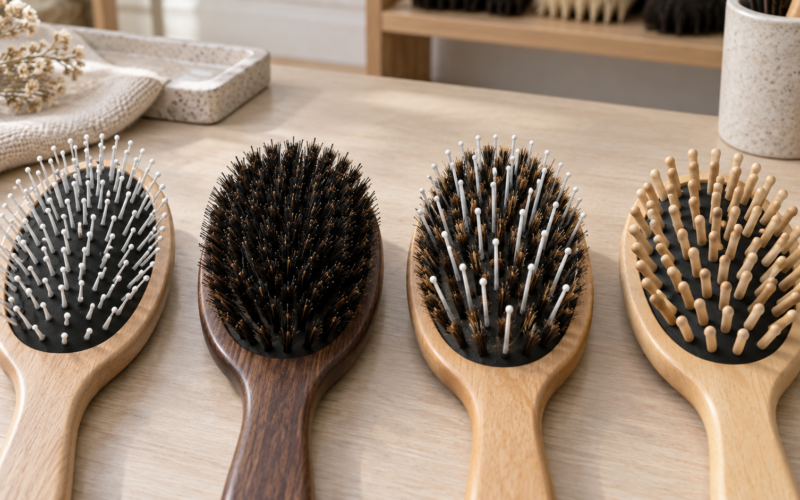
A hair brush is often sold by the material of its handle, but it is the bristle system that decides how the brush feels and what it actually does. A wooden paddle fitted with steel pins, nylon pins or a boar-and-nylon mix may share the same silhouette and still behave like three different products. For a brand buyer, choosing the body first and the bristle later is one of the quickest ways to end up with an attractive sample that misses its customer.
This guide compares the five bristle systems we are most often asked to quote: ball-tip nylon pins, pure boar bristle, mixed boar and nylon, rounded steel pins and wooden pins. It explains the job each one suits, the construction details that change performance and cost, and what to put into a sampling brief.
Bristle Hair Brush Types at a Glance
| Bristle system | Main job | Typical feel | Best fit | Buyer watch-out |
|---|---|---|---|---|
| Ball-tip nylon pins | Detangling and everyday brushing | Flexible, springy | Wet or dry hair; mass retail | Ball quality and pin length matter more than colour |
| Pure boar bristle | Smoothing and distributing natural oils | Dense, soft to firm | Dry finishing; fine to medium hair | It is animal-derived and is not a vegan material |
| Boar and nylon mix | Reaching through hair while smoothing the surface | Firm pins with a softer bristle bed | Medium to thick hair; premium all-round brushes | The ratio and pin projection must be specified |
| Rounded steel pins | Sectioning, penetration and scalp contact | Cool, firm, precise | Dense hair and cushion brushes | Poorly finished tips can scratch |
| Wooden pins | Gentle detangling and massage | Firm, broad and quiet | Natural-material positioning | Pin finish and moisture control are critical |
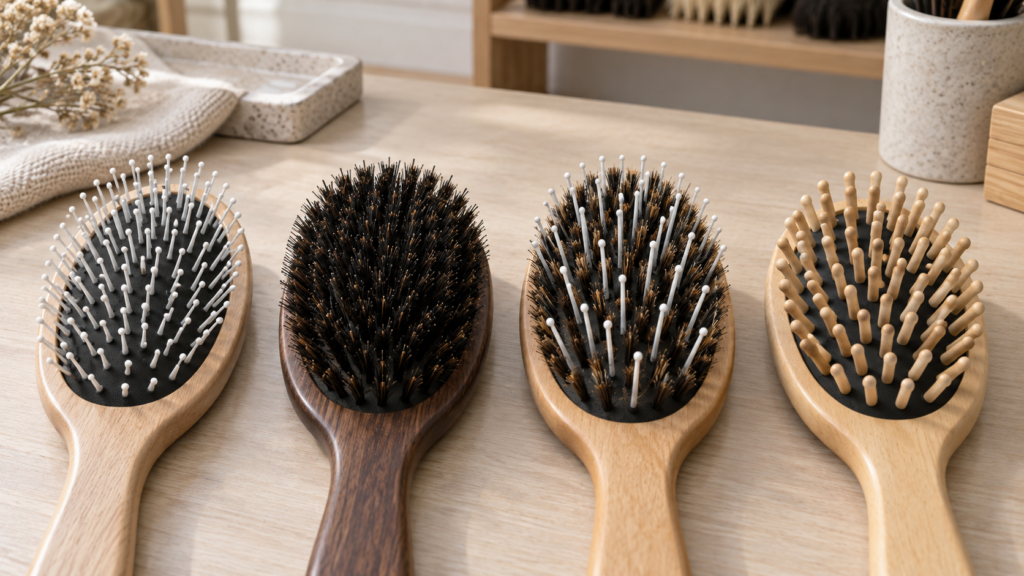
No row in this table is universally “best.” The right answer begins with the hair task, the customer and the price point. A detangling brush needs controlled flex and space for hair to release. A smoothing brush needs enough fine fibres to contact the surface. A scalp-massage brush needs rounded tips and a cushion that gives under pressure. Those are different engineering briefs.
Start With the Job, Not the Handle Material
Buyers commonly begin with “we want a bamboo brush” or “we want an acetate brush.” That is a useful decision for visual identity, weight, price and sustainability claims, but it does not define performance. The same bamboo or wooden brush body can be drilled for wooden pins, fitted with a rubber cushion and steel pins, or tufted with natural bristle. An acetate brush can carry nylon pins for detangling or a mixed bed for smoothing.
Write one primary job at the top of the brief: detangle wet hair, smooth dry hair, penetrate thick hair, massage the scalp, add tension during blow-drying, or finish short hair. Secondary benefits are possible, but asking one brush to lead on all six usually creates a compromise that is difficult to explain at retail.
1. Ball-Tip Nylon Pins
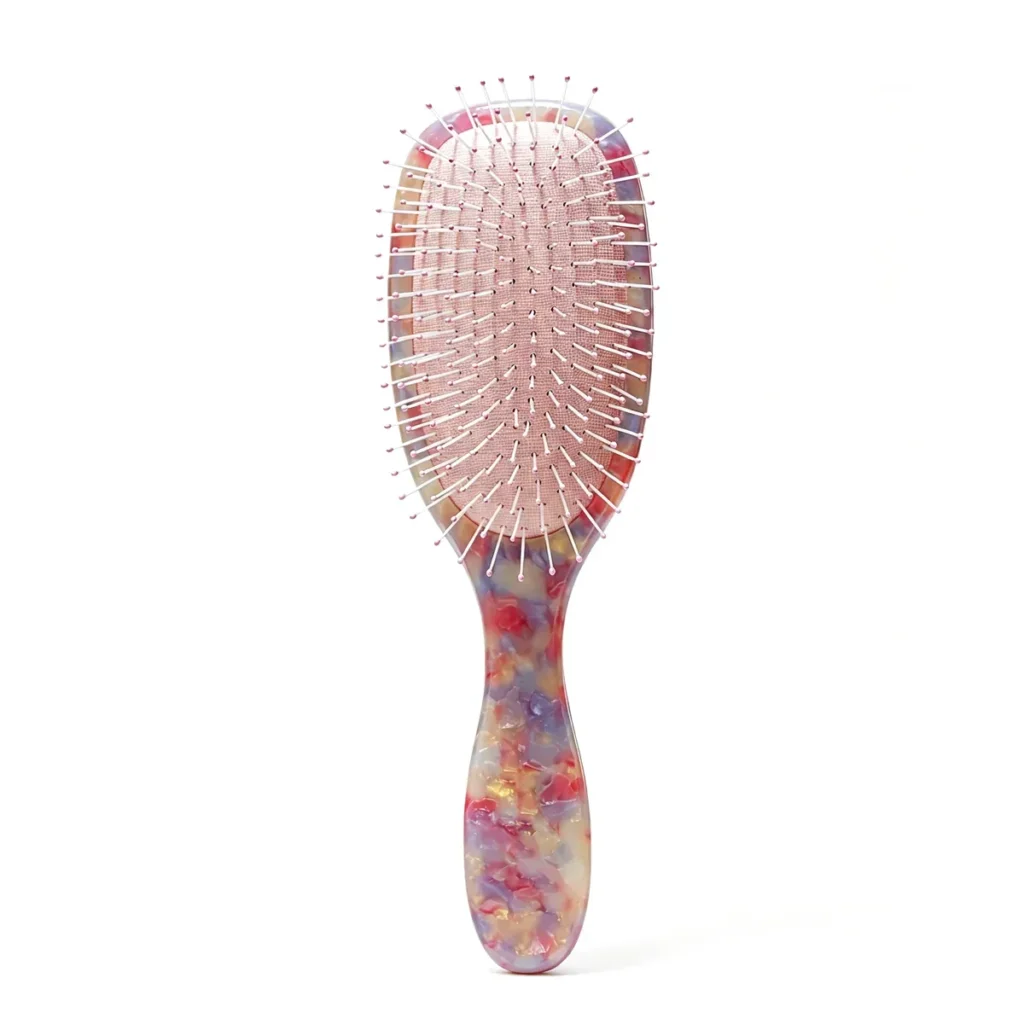
Nylon pins are the most adaptable option for an everyday bristle hair brush. They flex as they meet a knot and recover after the stroke, which makes them useful for detangling. On a vented base they allow air to move through the brush; on a pneumatic cushion they move independently and reduce the hard, fixed feeling of pins set straight into a rigid body.
The specification is not simply “nylon.” Pin diameter changes firmness, exposed length changes reach, row spacing changes how easily hair releases, and the ball at the end changes scalp feel. A moulded one-piece ball is normally more consistent than a poorly bonded added tip. During sampling, drag the brush through a fine stocking or cotton pad: rough seams and loose balls show up before they reach a customer’s scalp.
For wet-use positioning, confirm that every part of the assembly is suitable for repeated water exposure, including the cushion, adhesive, paint and body material. “Nylon pins” alone does not make the complete brush shower-safe.
2. Pure Boar Bristle
Boar bristle is chosen for surface contact. A dense field of fine natural fibres smooths the outer layer of the hair and helps distribute oils from root towards the ends. It is especially suited to dry finishing, short styles and fine to medium hair. It is not a substitute for long detangling pins on very thick hair because the fibres may not reach through the full section.
Density and cut length change the character of the brush. Short, closely packed tufts feel firmer; longer fibres feel softer but may fold before reaching the scalp. Natural colour and fibre diameter vary, so a supplier should approve a realistic range rather than promise every tuft will look identical.
Boar bristle is animal-derived. A product that contains it must not be described as vegan, and the fibre should be clearly identified in the material list. Brands that need a vegan range can ask for nylon or other synthetic fibre with a similar visual density, but should approve performance on its own terms rather than expect it to be physically identical to natural bristle.
3. Mixed Boar and Nylon Bristle
A mixed brush combines two jobs. Longer nylon pins project beyond the natural bristle to enter the hair and separate the section, while the shorter boar bristles contact and smooth the surface. For medium or thick hair, this is often more useful than pure boar because the brush does not sit only on top of the hair.
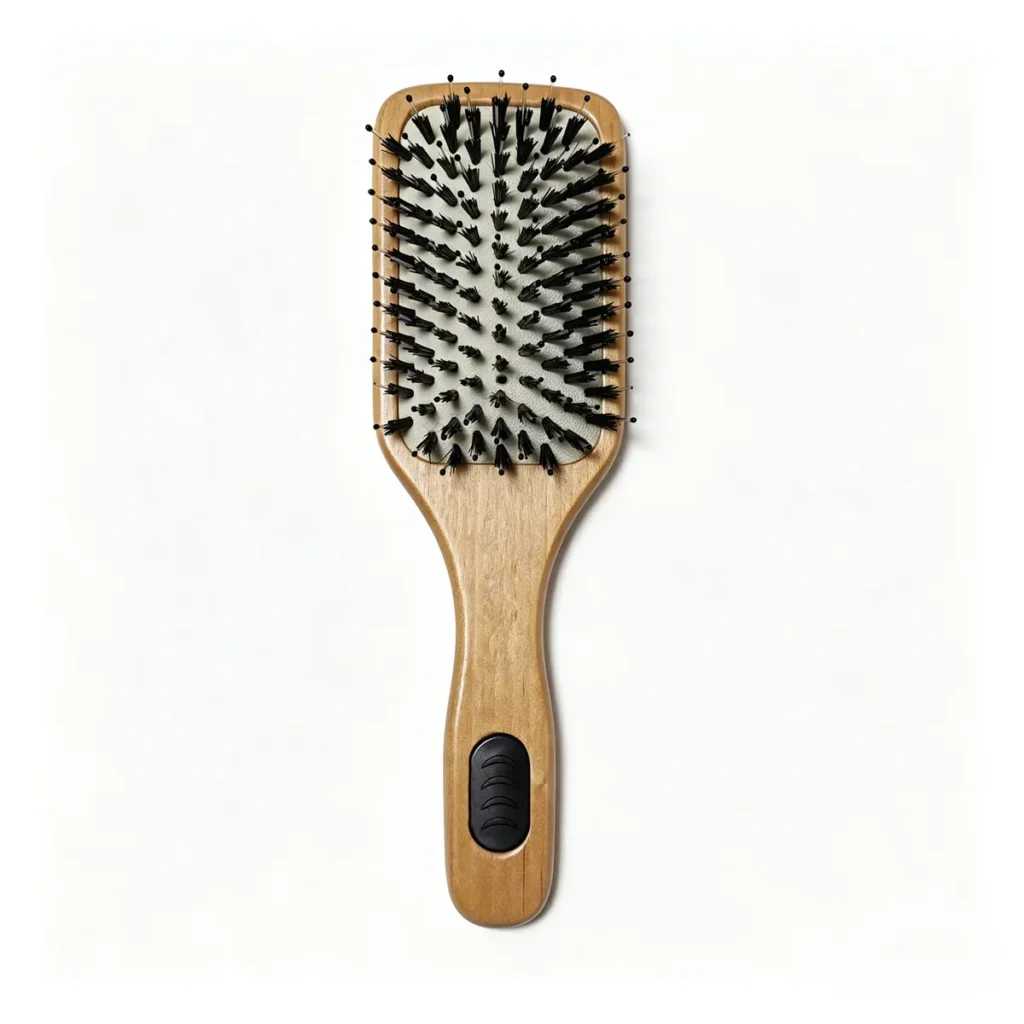
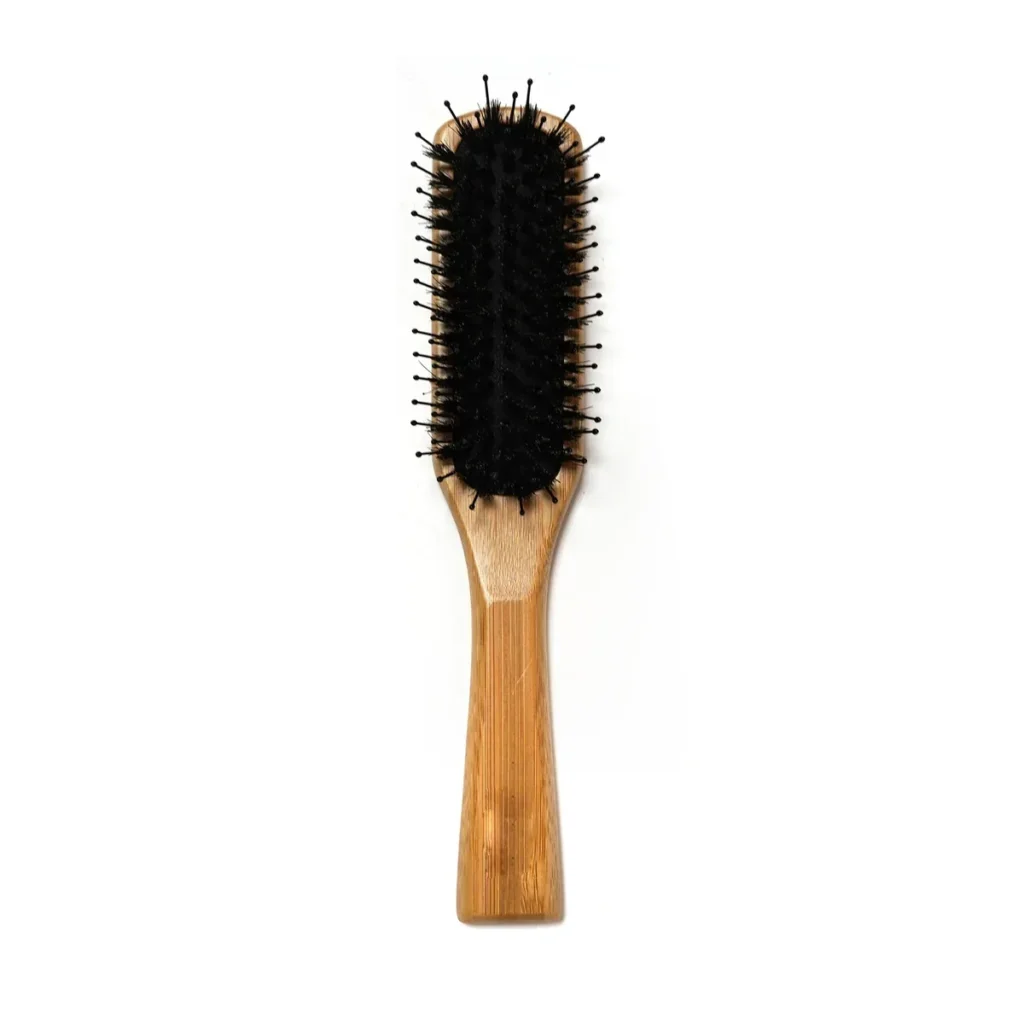
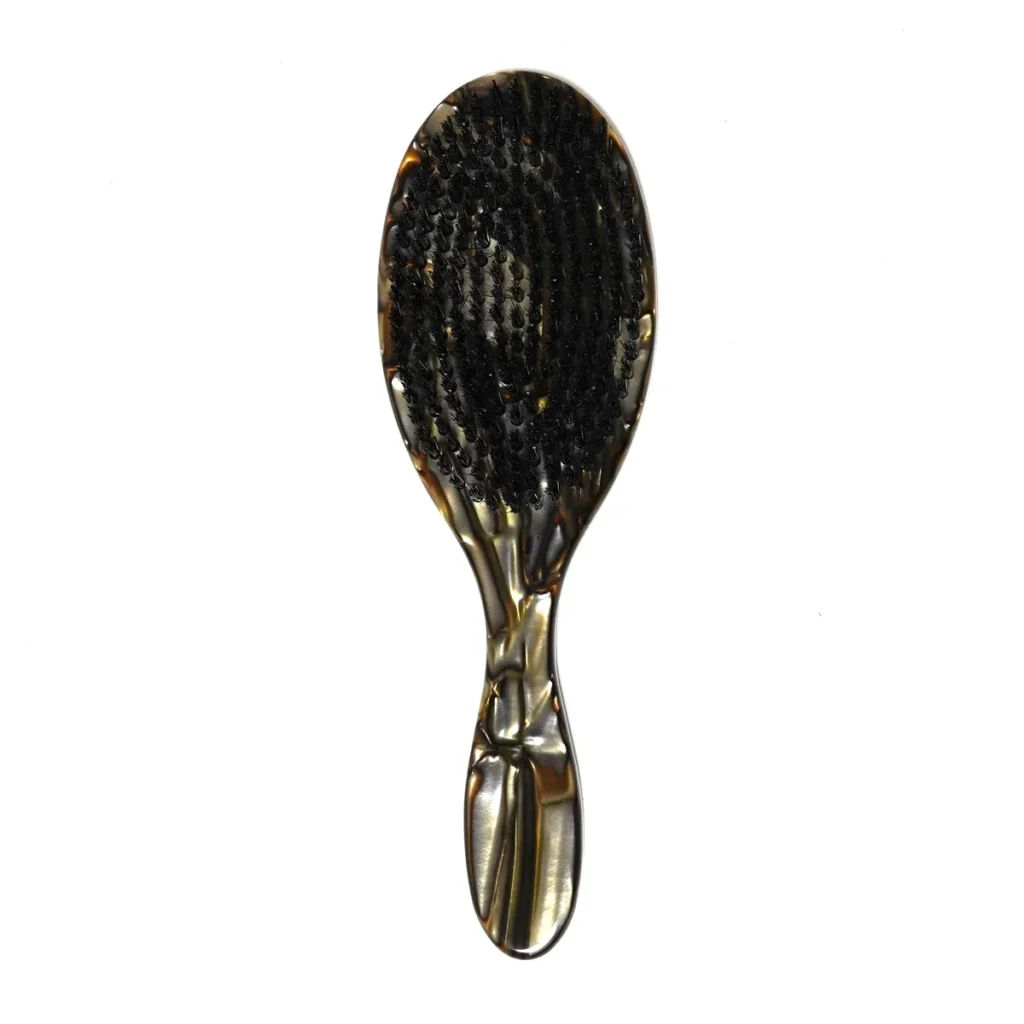
“Mixed bristle” is still too vague for a production brief. Specify the approximate tuft layout, the number of nylon pins, their projection above the boar bed and the firmness you expect. Two brushes can both be labelled boar and nylon while one feels soft and cosmetic and the other feels like a strong detangler. A physical approved sample is more reliable than a percentage alone.
4. Rounded Steel Pins
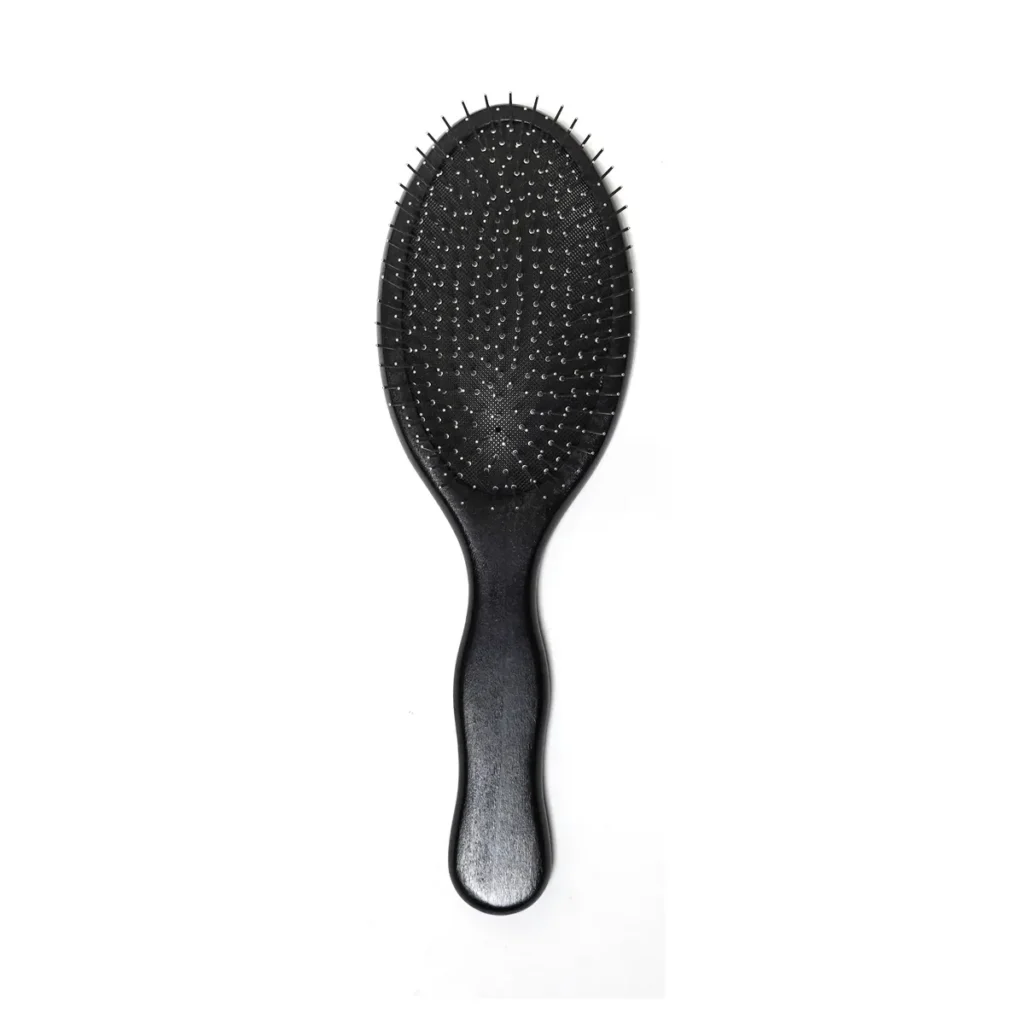
Steel pins give a precise, firm contact and can pass through dense hair with less flex than nylon. They are normally fitted into a pneumatic cushion so the base moves as pressure changes. The combination is useful for scalp contact, sectioning and brushes intended to feel durable and professional.
The tip is the critical quality point. Every pin should be rounded and polished, with no burrs, sharp edges or plating defects. The pin must also be retained securely in the cushion. In a sample review, inspect the tips under strong side light, press the cushion repeatedly around the edge and pull-test pins from several areas rather than checking only the centre.
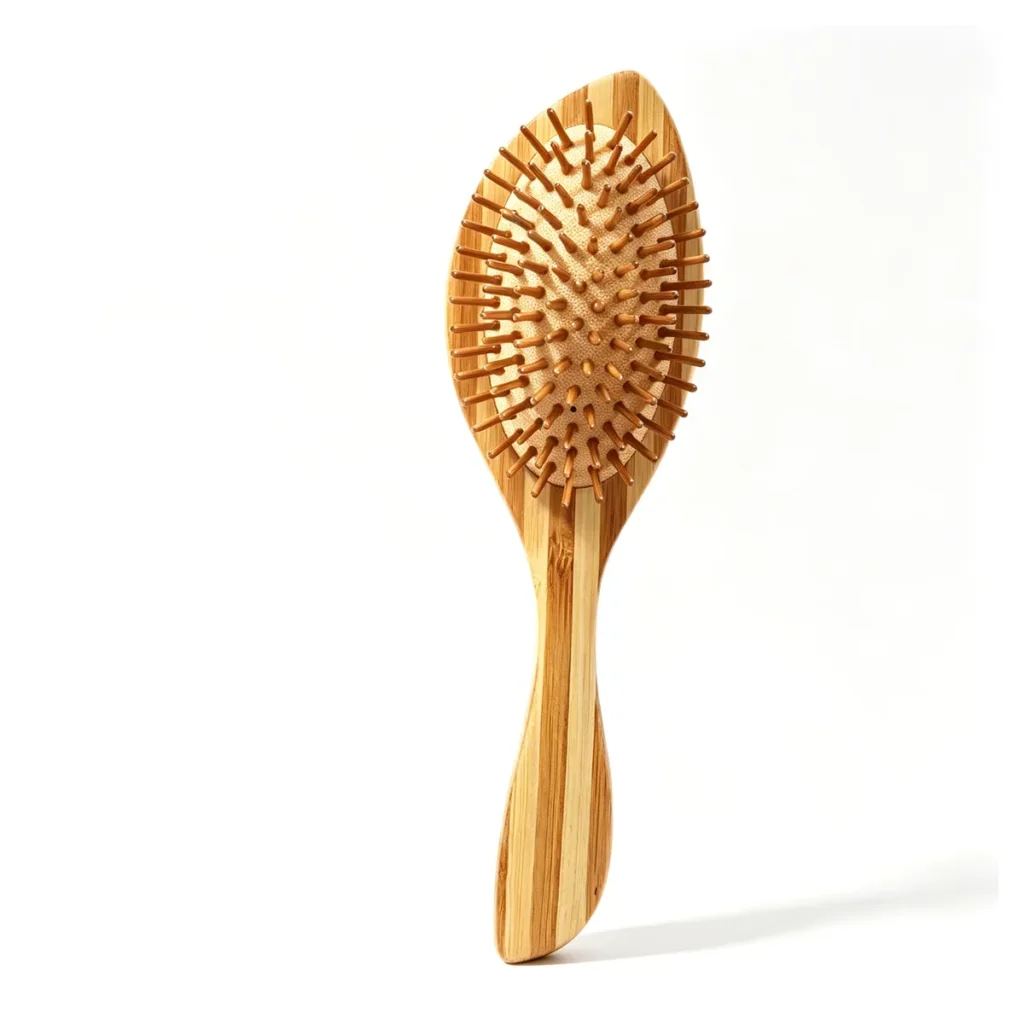
5. Wooden Pins
Wooden pins offer a broad, rounded contact and support a natural-material story. They feel quieter than metal on the scalp and can work well for dry detangling and massage. They are usually larger in diameter than steel pins, so the experience is firm without feeling needle-like.
The species, drying, sanding and coating all matter. A pin that is smooth when new can become rough if moisture raises the grain, while an overly heavy coating can make the product feel plastic. Ask whether the pin is solid wood or bamboo, how the rounded head is formed and what moisture range is controlled before assembly.
The Cushion Changes the Brush as Much as the Pins
Many pin brushes use a rubber or elastomer cushion. Its hardness, dome height, air hole and fit inside the frame determine how much the pin field moves. A softer cushion can feel forgiving but may collapse too easily in thick hair. A firmer cushion transfers more force but can feel harsh. The edge must seat cleanly in the frame, because lifting or uneven gaps become visible quickly on a pale or glossy product.
Ask the factory to keep the pin system and cushion constant when comparing body materials. Otherwise a wooden sample may appear “better” than an acetate sample simply because it was fitted with a different cushion. Controlled comparisons make approvals faster and reduce subjective feedback.
What Changes the Quotation?
The bristle material is only one cost line. The amount of material, tuft density, pin count, drilling or tufting method, cushion construction, body machining, paint or polishing, logo process and packaging all affect the quotation. Pure boar and a dense mixed bed normally sit above a simple nylon pin field. A custom pin colour may also introduce a separate colour-matching minimum even when the brush body uses a stock finish.
For an apples-to-apples comparison, request the same dimensions, logo and pack while changing only the bristle system. Then compare landed product value, not just unit price. A cheaper pin system that does not support the retail promise is not a saving.
How to Approve a Brush Sample
- Confirm the use case. Test on the hair type and condition named in the brief, including wet hair only if the complete product is intended for it.
- Measure the working parts. Record exposed pin length, pin or tuft count, projection in mixed systems, cushion size and brush weight.
- Check every contact point. Run fingers over the full pin field and inspect balls, polished tips and cut bristle ends.
- Stress the assembly. Flex the cushion, pull representative pins and repeat strokes to look for shedding, loosening or cushion lift.
- Clean it. Remove hair and product residue using the care method you plan to give consumers. Check that the finish, pad and logo remain stable.
- Seal a reference. Sign and date the approved sample, and retain one with the factory and one with the buyer.
Build those checks into the approval round rather than discovering them after the purchase order. Our guide to sampling costs and approval explains how to separate aesthetic feedback from production tolerances.
A Practical RFQ Checklist
- Primary task and target hair type
- Body material, dimensions, shape and target weight
- Bristle system and material declaration
- Pin length, diameter, row layout or tuft density
- Tip style, pin colour and cushion colour
- Cushion firmness and water-use requirement
- Logo position and process
- Packaging format, warning copy and material claims
- Target order quantity, launch date and destination market
For planning, many custom brush programmes begin around 1,000 pieces per design, although wooden and bamboo constructions vary with the component and finish. A development sample commonly needs around 10–20 days and bulk production around 25–45 days after approval. Treat those as planning ranges, not promises: the final schedule depends on material, artwork, packaging and capacity. See our guides to hair accessory MOQ and lead times before fixing a retail launch.
Frequently Asked Questions
Which bristle hair brush is best for detangling?
Ball-tip nylon pins are the usual starting point because they flex around knots. Wooden or rounded steel pins can also work on dry hair, but pin length, spacing and cushion movement must suit the hair density.
Is boar bristle better than mixed bristle?
Pure boar is strong at surface smoothing. Mixed boar and nylon adds longer pins that reach further into medium or thick hair. The better option is the one that matches the intended job.
Are boar bristle brushes vegan?
No. Boar bristle is animal-derived. A vegan brush should use nylon, another synthetic fibre, steel or wooden pins and should be checked for animal-derived materials in the rest of the assembly.
Can bristle colour be customised?
Nylon pins and cushions can often be colour-matched, subject to material and minimum quantity. Natural boar varies by batch and should be approved as a range rather than against one exact digital colour.
Choose the Bristle System Before You Style the Range
A strong brush range can share one visual language while using different bristle systems for different jobs. Define the performance first, then choose body material, colour, logo and packaging around it. You can test combinations in our 3D customisation tool, browse production-ready brush references, or send us a brush brief for a construction review and quotation.