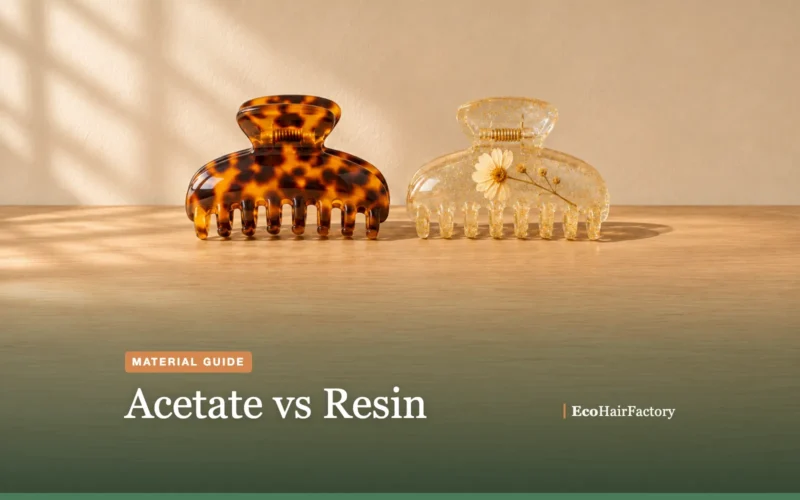
When buyers compare claw clip quotes, the lowest “acetate” price is often not acetate at all. Our purchasing team sees it regularly: a clip listed as acetate at a price well below the market turns out to be resin or acrylic. Neither is a bad material. But they are different materials, and a range planned around acetate will not wear, reorder or cost the same way if it is made in something else.
That is the real acetate vs resin question for a brand. Both can make a good-looking claw clip, but they are made differently, wear differently and cost differently, and the difference is easy to miss on a product photo. This guide compares the two for buyers specifying a range, explains when resin is the better choice, and lists the checks that tell you which one a supplier is actually quoting.
The short answer
Choose by what the clip has to do, not by how it looks in a photo
- Pattern runs through the full thickness
- Tough and slightly flexible under a spring
- Gloss comes from polishing the material itself
- Plant-based (wood pulp or cotton), not petroleum
- Best for: core ranges that must last and reorder
- Can hold glitter, foil or dried flowers inside
- Clear and jelly looks are easy
- More brittle at thin teeth and hinges
- Finish quality varies piece to piece
- Best for: novelty and one-season designs
What “resin” means on a supplier listing
In hair accessory listings, “resin” usually means a cast resin: an epoxy, polyester or UV-curing resin that is mixed as a liquid, poured into a silicone mould and left to harden. It is also used loosely for acrylic and other plastics, so the word on its own does not tell you much. Ask how the part is formed, not only what it is called.
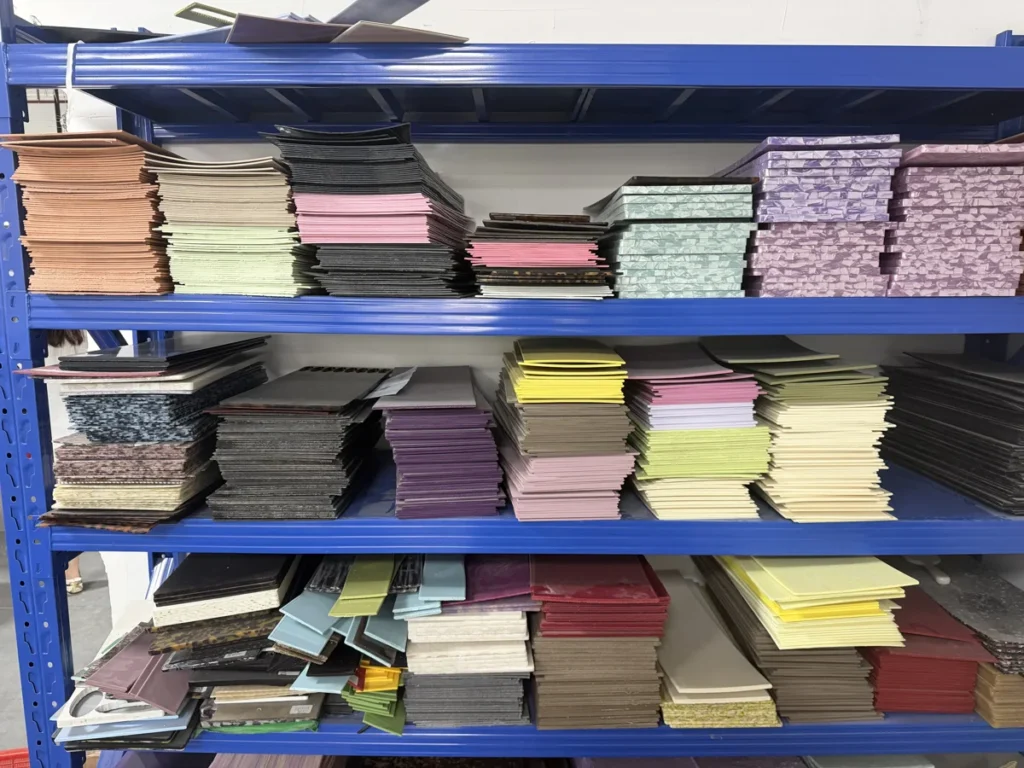
Cellulose acetate is different from all of them. It is made from plant cellulose (wood pulp or cotton), supplied as pressed sheet with the colour and pattern already inside, and every clip is cut out of that sheet. If you want the full production story, see how acetate hair accessories are made. For the comparison with injection-moulded ABS, see acetate vs plastic hair clips.
Two production routes
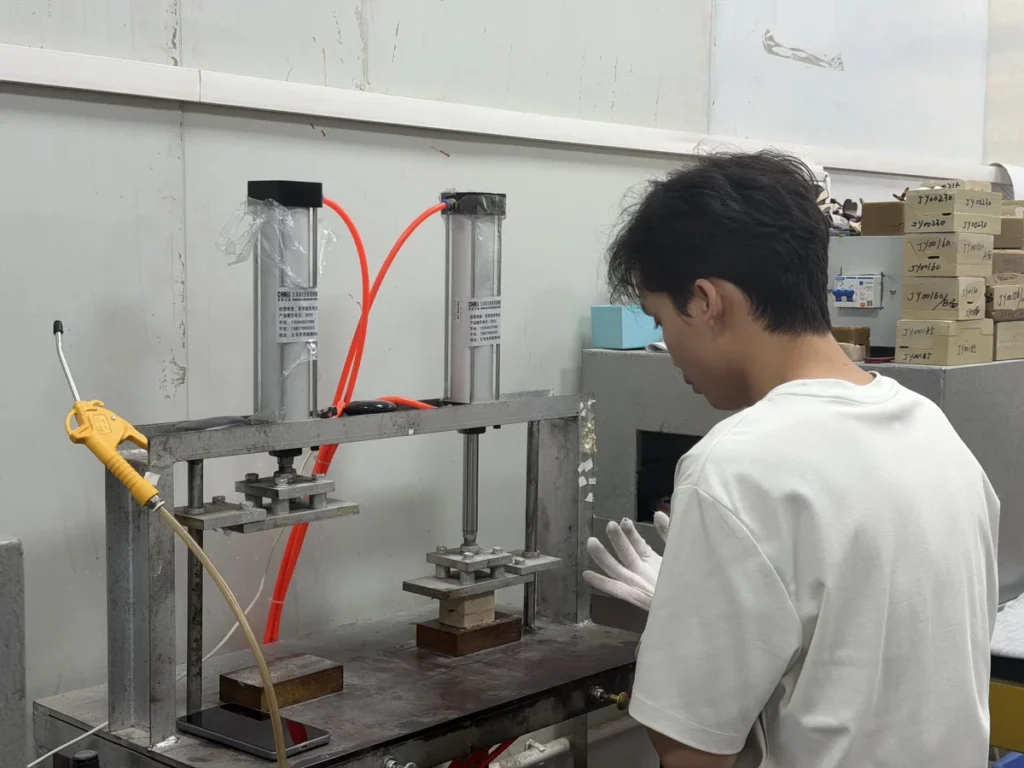
Acetate removes material from a sheet. Resin fills a mould.
- Choose stock sheet
- Die-cut or CNC blank
- Heat-shape and cold-set
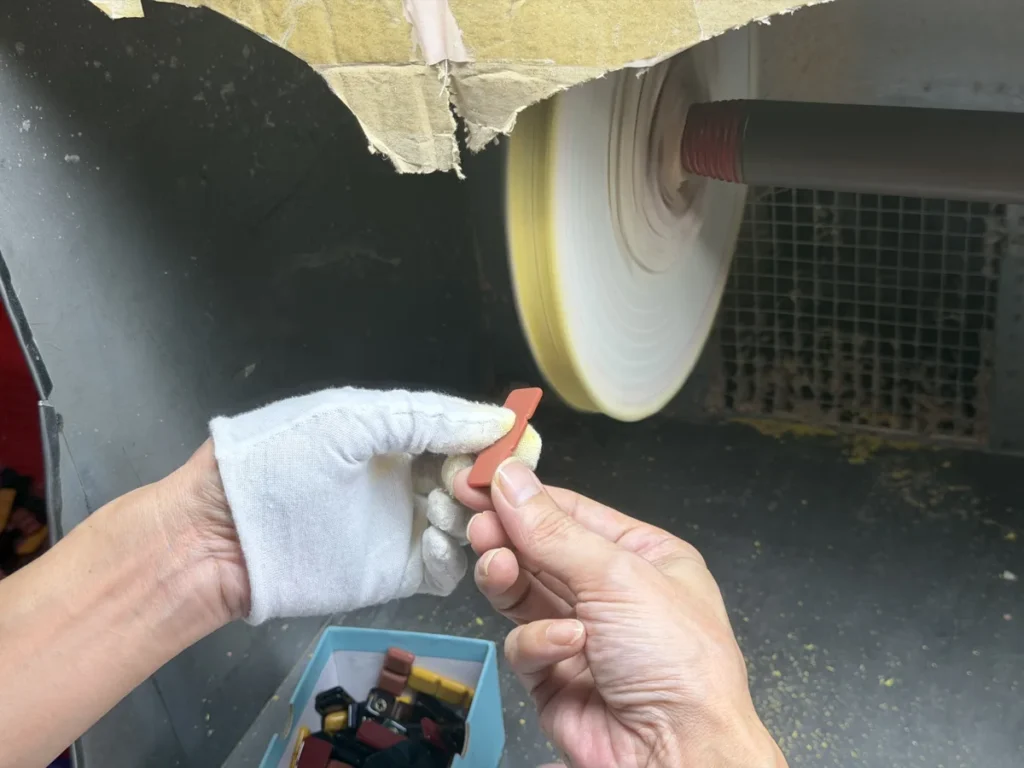
- Tumble and hand-polish
- Fit spring and hinge
- Spring tension check
- Mix resin and pigment
- Add glitter or inclusions
- Pour into silicone mould
- Cure
- Demould, trim and sand
- Coat or polish, fit spring
Because acetate starts as a finished sheet, two clips cut from the same sheet have the same material and the same depth of pattern; only the pattern placement changes. Resin is mixed batch by batch, so colour, glitter spread and bubble count depend on each pour. That is why acetate is easier to reorder consistently.
Side by side: what changes for your range
The table compares the two materials on the points buyers usually ask about. Resin covers a wide family of products, so read the resin column as typical, not guaranteed: ask for a sample before you commit a range to it.
| Factor | Cellulose acetate | Cast resin |
|---|---|---|
| How it is formed | Cut from pressed sheet, then heat-shaped | Poured into a mould and cured |
| Where the pattern is | Through the full thickness | Through the body, set by each pour |
| Behaviour under a spring | Tough, flexes slightly | Stiffer; thin teeth and hinges can crack |
| Inclusions (glitter, flowers, foil) | Limited to what the sheet contains | Easy, the main reason to choose resin |
| Surface finish | Tumbled and polished material | Sanded and coated, or polished |
| Colour consistency on reorder | High: same stock sheet | Varies by batch |
| Typical defects to check | Polish marks, uneven edges | Bubbles, flat cloudy back, yellowing in clear resin |
| Raw material | Plant cellulose (wood pulp or cotton) | Usually petroleum-based resin |
Durability: the spring is the real test
A claw clip is not a decorative object. Every time it opens, the spring loads the teeth and the hinge, hundreds of times over its life. Acetate is tough and has a little give, so it takes that repeated load well, which is why it has been used for spectacle frames for decades. Cast resin is harder and less forgiving: a clip can look perfect on the shelf and still crack at a thin tooth or around the hinge pin after weeks of use.
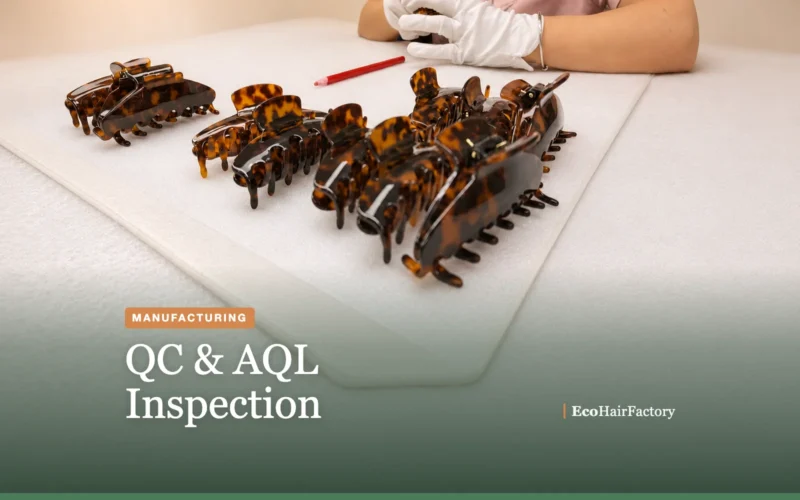
If you do choose resin, keep the teeth and hinge area thicker than you would in acetate, and ask for samples you can open and close a few hundred times before approving. For acetate, the spring is tested by hand on every piece; see our claw clip quality control guide for what is checked before shipment.
Finish: coating vs polished material
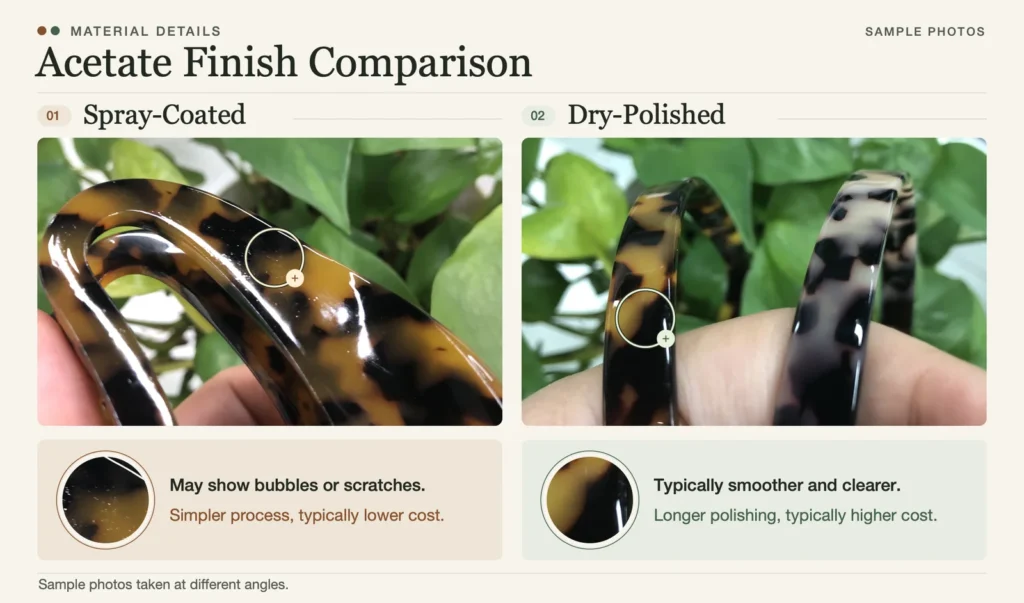
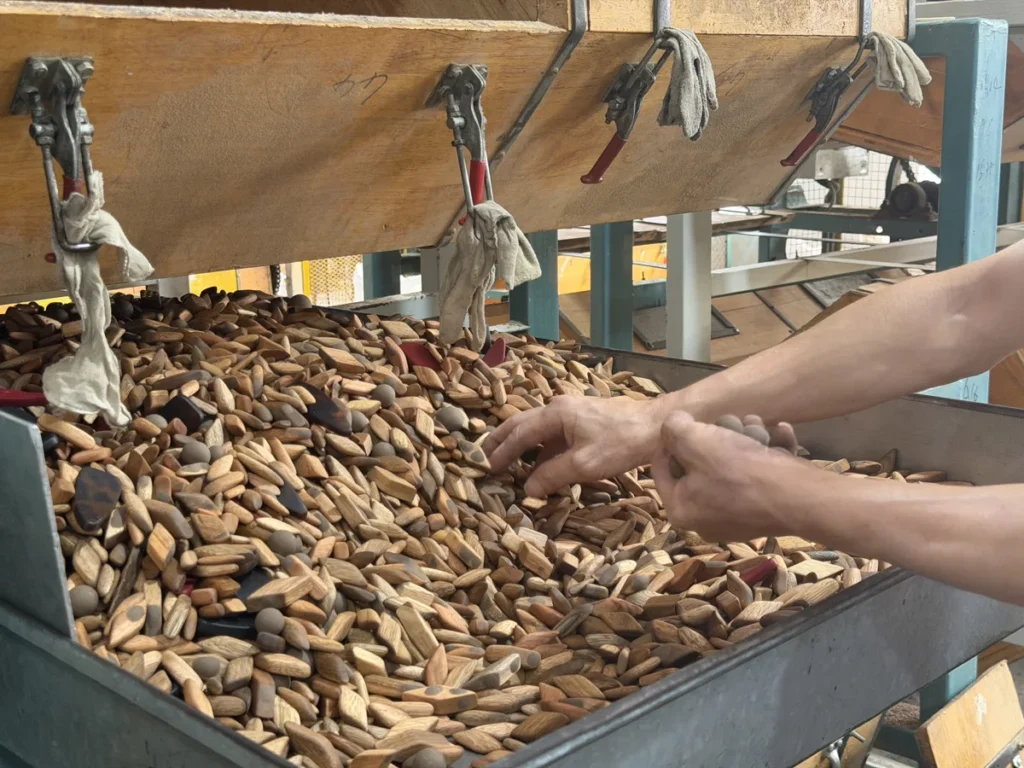
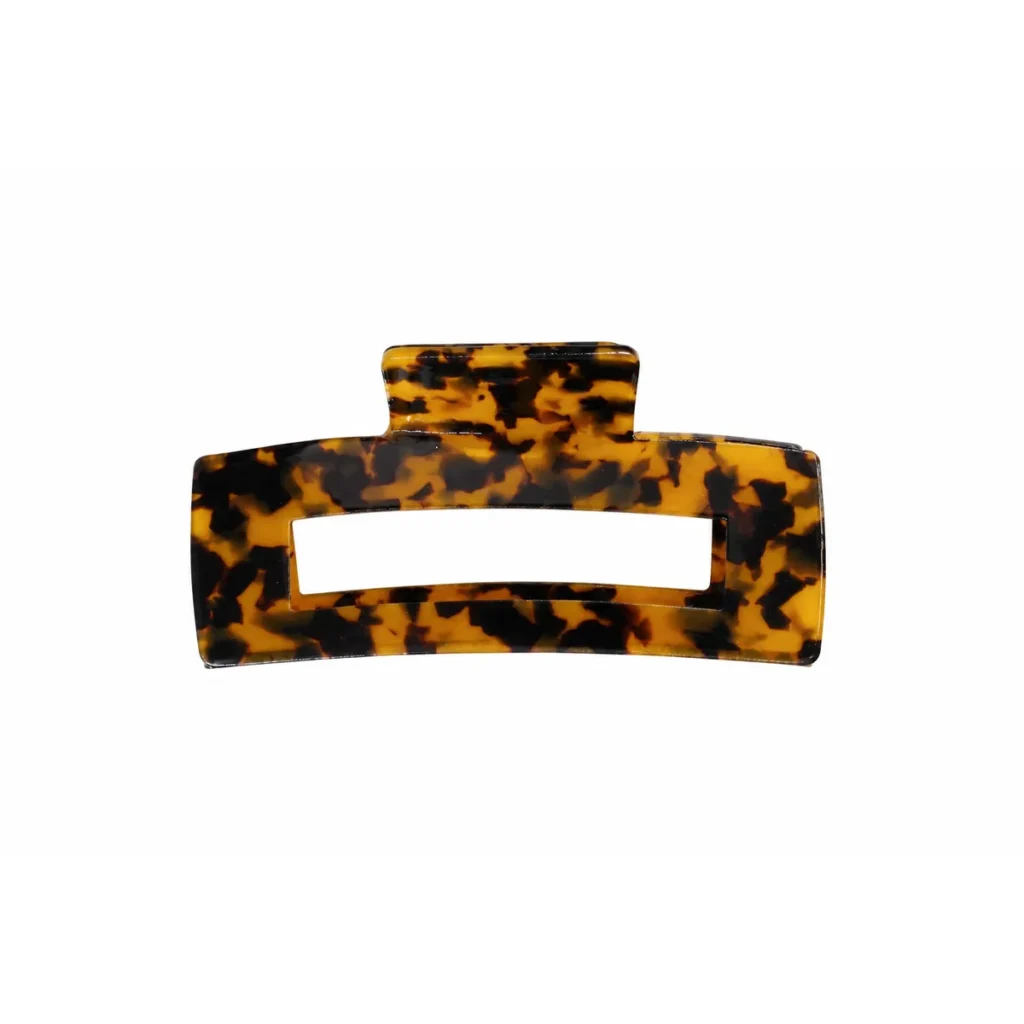
Even within acetate, quality depends on how the surface is finished, and this is where cheaper quotes often save money. A spray coat gives a fast gloss over a less-polished blank. Dry polishing takes much longer, but the shine comes from the acetate itself. The two samples below are both acetate; the photos show how the two finishes look up close.
Resin is usually finished the same two ways: it is sanded and then either coated or polished. A coating can scratch or wear at the edges where the clip rubs against hair, which is worth checking on any sample, acetate or resin. When you compare quotes, ask which finish is included, not only which material.
When resin is the better choice
Resin is not a lesser material, it is a different tool. It makes sense when:
- The design depends on something suspended inside: glitter, gold foil, dried flowers or shells.
- You want a fully clear or jelly look that acetate sheet colours do not offer.
- The product is a one-season novelty, and long-term reorders matter less than the look.
- The clip is small, chunky and lightly loaded, such as a mini clip, so brittleness matters less.
Resin and acetate can also work together. Coloured epoxy is often used as a drip-coat fill on clips, adding colour inside an engraved line or a logo recess. If your design needs that, it is a decoration step on an acetate or metal clip, not a reason to make the whole clip in resin.
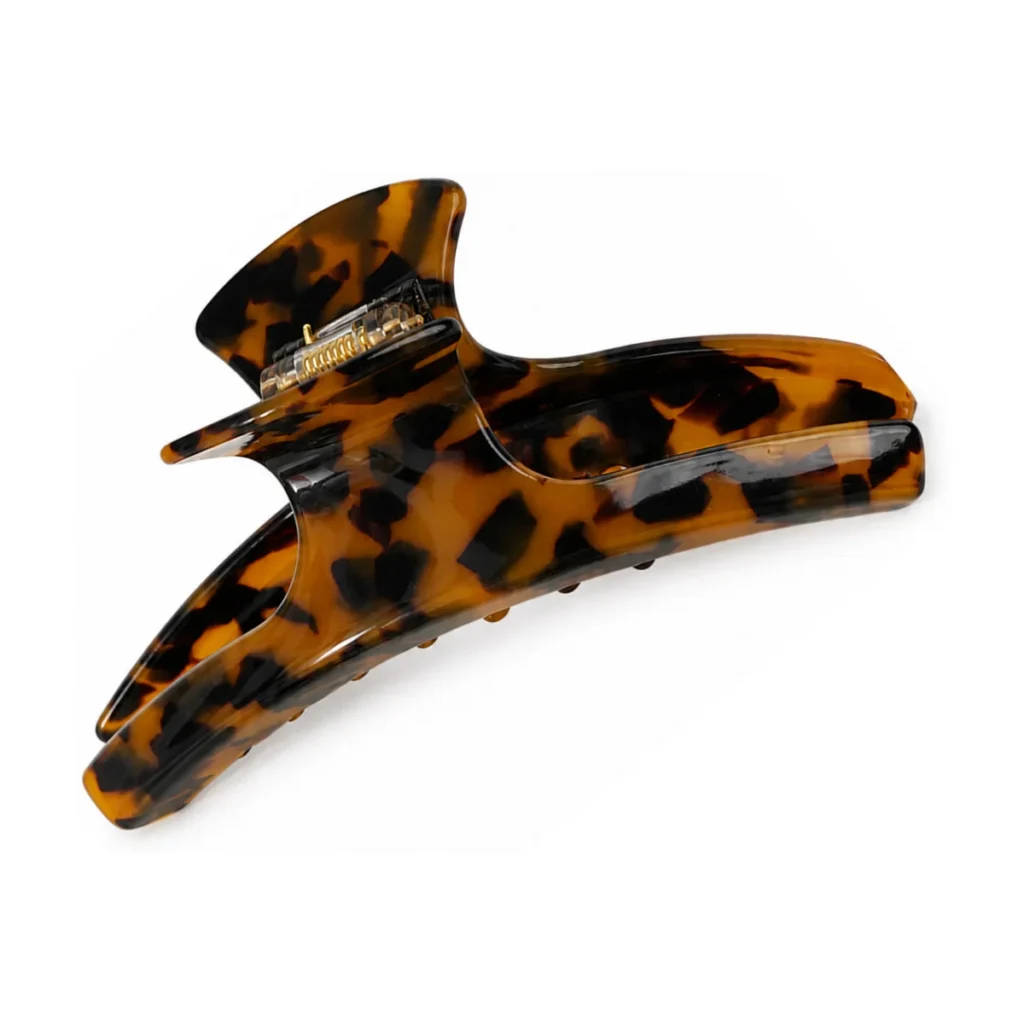
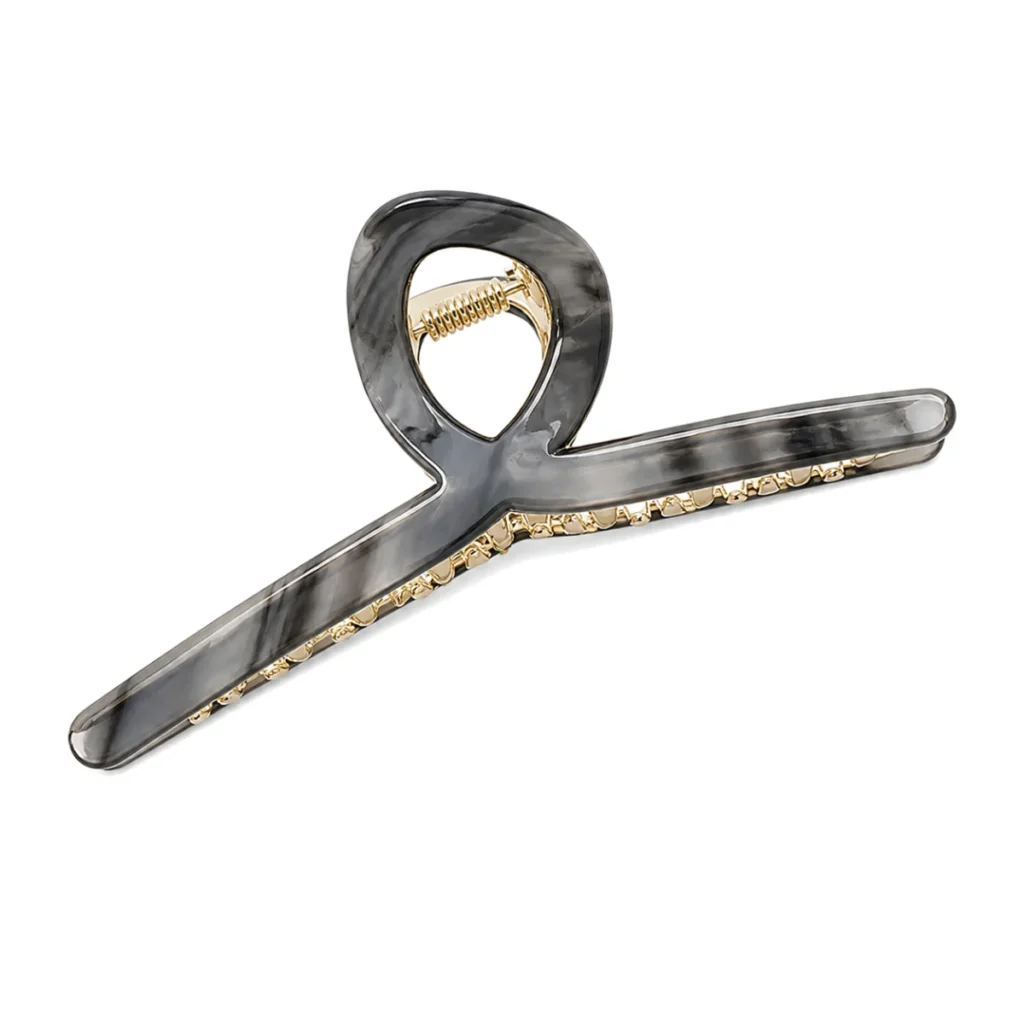
We make claw clips in acetate only. If your collection needs resin for a few novelty pieces, it often makes sense to keep the core styles, which reorder every season, in acetate and to buy the novelty pieces separately. Our acetate claw clip range shows the shapes that already have cutting dies.
How to check that an “acetate” quote is really acetate
When one quote is far below the others, the material is the first thing to check. In our experience, low-priced “acetate” claw clips are often resin or acrylic. These checks take a few minutes and need no lab:
Ask before ordering, then check the sample
- Ask how it is formed“Is this cut from acetate sheet, or cast in a mould?” A factory working in acetate will answer this directly.Red flag: a vague answer, or “acetate resin”
- Ask the sheet thicknessAcetate is quoted by sheet: thin single-colour sheet and thicker laminated sheet cost very differently.Red flag: no thickness given at all
- Look at the backAcetate is polished on all sides. Many cast resin clips have a flat, slightly matte back from the open side of the mould.Red flag: a flat back that is duller than the front
- Look for bubblesHold the clip up to the light. Small round bubbles trapped under the surface point to a poured material or a sprayed coating.Red flag: bubbles in the body, not just the surface
- Check the edges and teethCut-and-polished acetate edges are rounded evenly. Moulded parts can show a fine parting line or sanded flat spots.Red flag: a raised seam along the teeth
- Ask for an offcut or sheet photoA factory that cuts from sheet can show the sheet your colour comes from, or send an offcut with the sample.Red flag: no sheet can be shown
One more tell, if you have a scrap piece: when acetate is sanded or buffed it gives off a faint vinegar-like smell. Resin and acrylic do not smell of vinegar. Please do not test this on a sample you need to return.
Cost and minimums for acetate claw clips
Acetate costs more than resin per piece because of the sheet, the cutting waste and the polishing time. Where you can save is in how you specify the order. The minimums below apply to our acetate claw clips; the full explanation is in acetate hair clip MOQ: stock vs custom.
| What you order | Minimum | What it means for cost |
|---|---|---|
| Existing shape, your colour choice and logo | 500 pcs per colour | Uses an existing cutting die; simple logo placement is free |
| New shape | From 1,000 pcs per design | Needs a new cutting die; special shapes are quoted per design |
The sheet itself is the other big cost line. Many current claw clip designs use a thicker laminated sheet, which looks richer but costs more per piece than a thin single-layer sheet. On laminated sheet, a new colour in a small quantity is especially expensive, because the waste and set-up are spread over few pieces.
The most useful saving is to choose from colours that are already in stock sheet and add your logo, rather than asking for a new colour on a laminated sheet in a small quantity. Custom samples take about 25–45 days for acetate, and bulk production typically takes 30–45 days, depending on style, materials and the production schedule. Before you ask for a quote, our guide on how to brief a factory for custom hair clips lists what to send.
Not sure which material fits your range? Send us your design or reference photos and tell us the look you want. We will say honestly whether acetate is the right fit, and if it is, which stock sheets come closest.
Frequently asked questions
Is resin the same as acetate?
No. Cellulose acetate is a plant-based material supplied as pressed sheet and cut into shape. Resin is a liquid, usually epoxy, polyester or UV resin, poured into a mould and cured. The two can look similar in photos, but they are made and finished differently.
Which is more durable for a claw clip?
Acetate is usually more durable because it is tough and flexes slightly under the spring. Cast resin is harder and more brittle, so thin teeth and the hinge area are more likely to crack with repeated use.
Why is resin cheaper than acetate?
Resin needs only a low-cost silicone mould and less polishing. Acetate costs more because of the sheet, the cutting waste and the time spent tumbling and polishing each piece.
Can acetate have glitter or flowers inside like resin?
Only what is already in the sheet. Acetate sheets come in solids, pearls, marbles and tortoiseshells, but objects such as dried flowers cannot be set inside. That is where resin is the better choice.
What is the minimum order for acetate claw clips?
For an existing shape, 500 pieces per colour, including when you change the colour and add your logo. A new shape starts at 1,000 pieces per design.