Wholesale headbands are easy to underestimate. A sample may look polished in a product photo but become uncomfortable after an hour of wear. A wide shape can read as premium on a display yet sit too tightly at the temples. And a colour story that looks good in isolation can feel inconsistent once it reaches a retail shelf.
For retailers and private-label brands, the useful question is not simply “which headband looks best?” It is whether the width, material, fit and packaging all support the customer and price point. This guide gives buyers a practical way to approve a headband range before committing to a colourway, MOQ or branded package.
Start with the job the headband needs to do
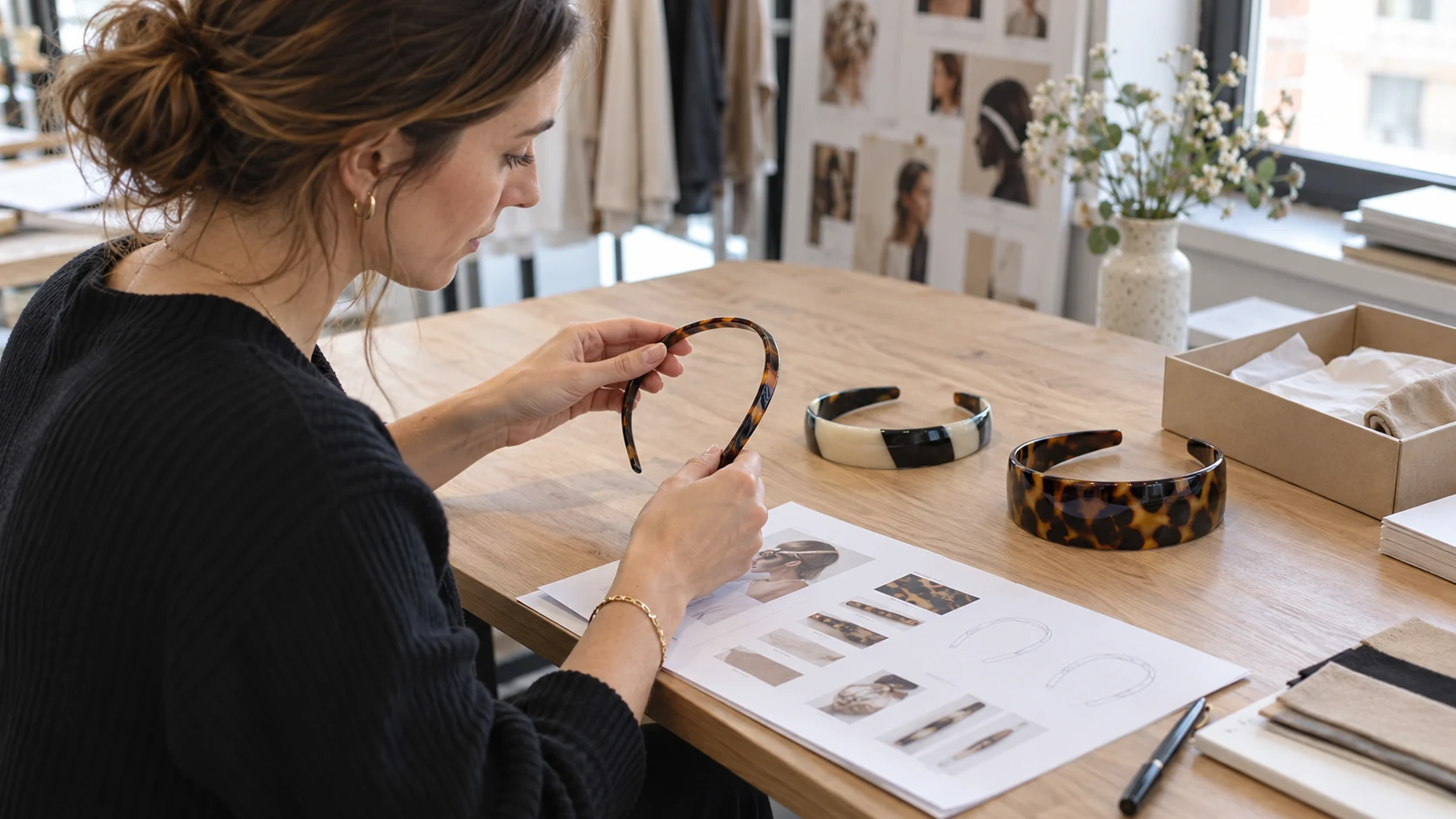
“Headbands wholesale” covers very different products. A narrow everyday band, a wide tortoiseshell statement piece and a colour-blocked fashion style do not play the same role in a collection. Defining that role first makes the product brief more useful and keeps the first order from becoming a random mix of attractive samples.
- Everyday retail: balanced proportions, dependable colours and a profile that works with regular wardrobes.
- Fashion or occasion retail: a visible width, pattern or colour treatment that creates an outfit-led accessory.
- Salon or beauty retail: comfortable, secure styles that customers can put on quickly while styling or getting ready.
- Gift or seasonal edits: a compact colour story and packaging that makes the product feel ready to give.
That decision changes what the factory needs to know. A daily style must pass a longer comfort test. A fashion-led style may need a more carefully controlled pattern placement and side profile. A gift-led product needs its retail card or box defined early rather than added at the end.
What changed after an Australian buyer tested the samples
A recent Australian project shows why a headband should be approved on the head rather than from a drawing. The starting brief covered two styles at 500 pieces each, 1,000 pieces in total. During sample review, the buyer changed three decisions that had looked acceptable on paper: the visible width, the logo and the inner teeth.
| Decision | Starting point | What the buyer found | Change after wear testing |
|---|---|---|---|
| Visible width | 1.5 cm | The band felt and looked too wide. | Reduced to 1 cm. |
| Logo | A larger logo treatment | The logo disappeared into the hair, so increasing its size did not make it more useful. | Reduce the logo and recheck its scale and visible position on the worn sample. |
| Inner teeth | Full-tooth and segmented-tooth versions were compared. | The buyer wanted grip without using a continuous row of teeth. | Selected the segmented construction, with one tooth section on the left and one on the right. |
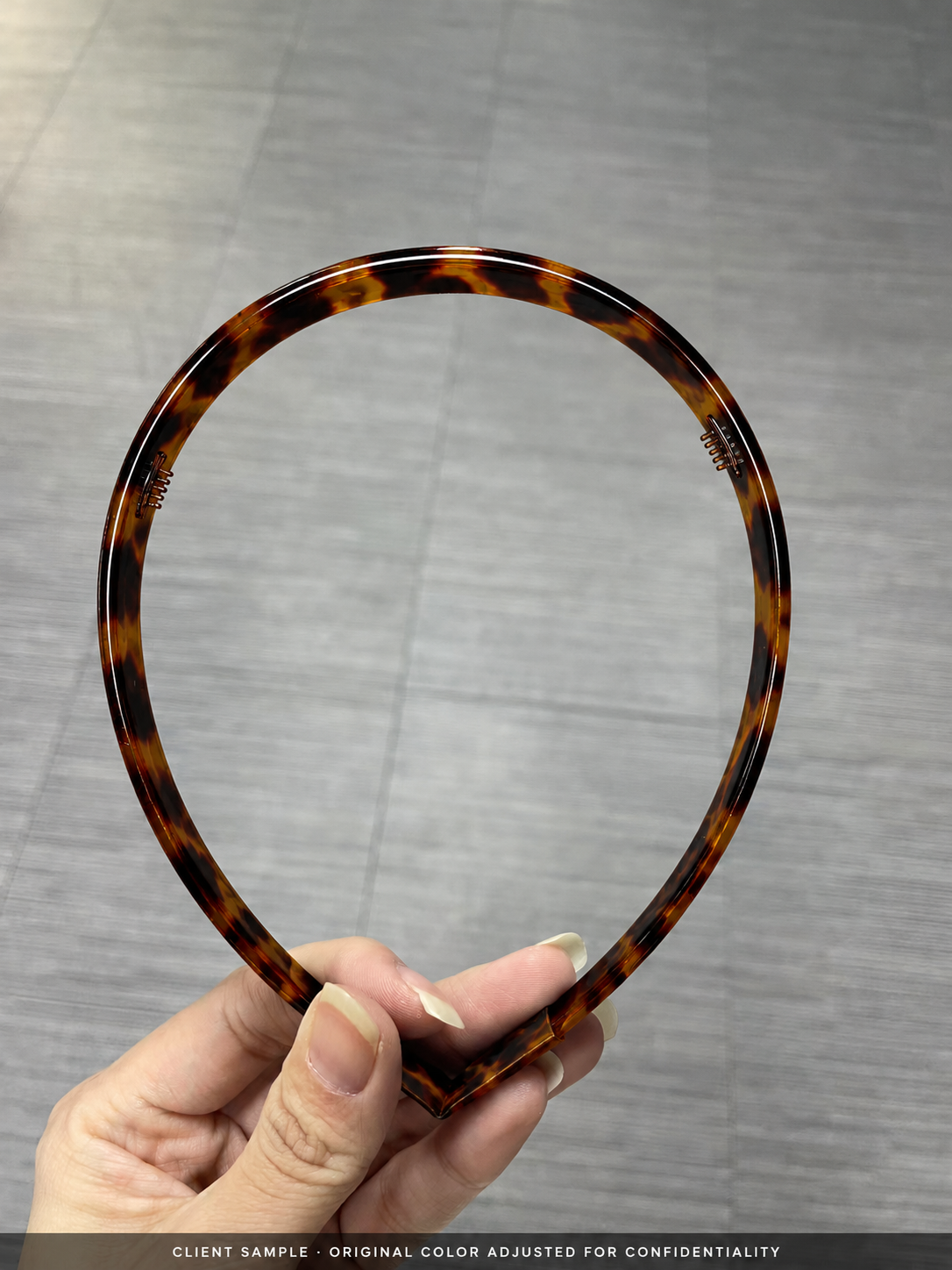
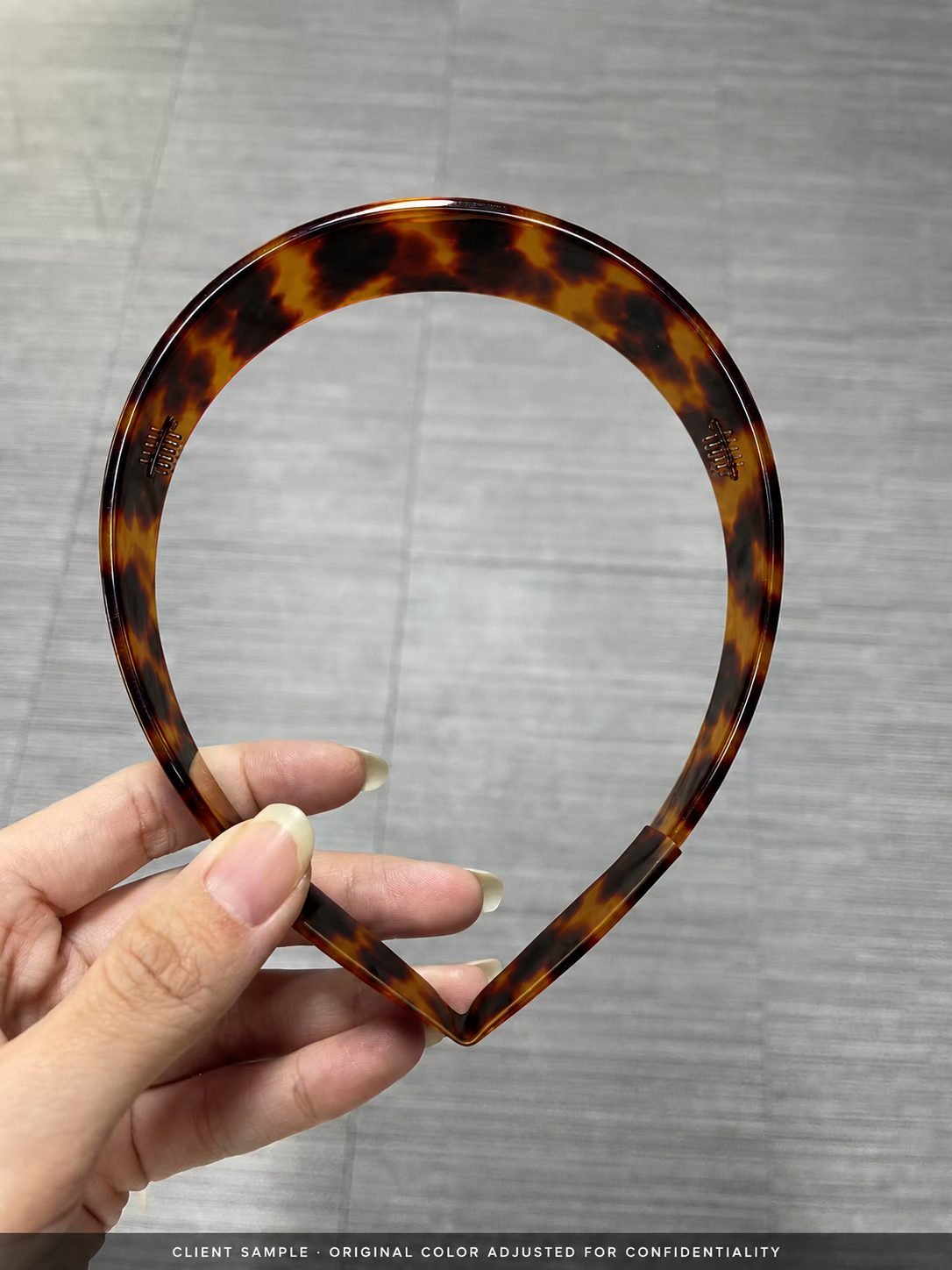
Client sample images are published without identifying information. The original colour has been adjusted to protect commercial confidentiality; the physical width, shape and segmented-tooth construction remain visible for the comparison.
This was not a cosmetic round of comments. The width affected the silhouette and pressure; the tooth layout affected grip; and the logo needed to remain visible when the product was actually worn. A useful approval sample should answer all three questions before colourways and packaging are locked.
The curve itself is formed during heat press moulding. The video below shows this step on a wide acetate hair band; it is the production stage that turns a flat cut component into the shape the buyer eventually wear-tests.
Choose width before choosing a pattern
Width affects both the visual impact and the wearing experience. It also affects material use, packaging, display space and the way a range is structured. Start with a small set of widths that have separate jobs instead of asking for many versions of the same shape.
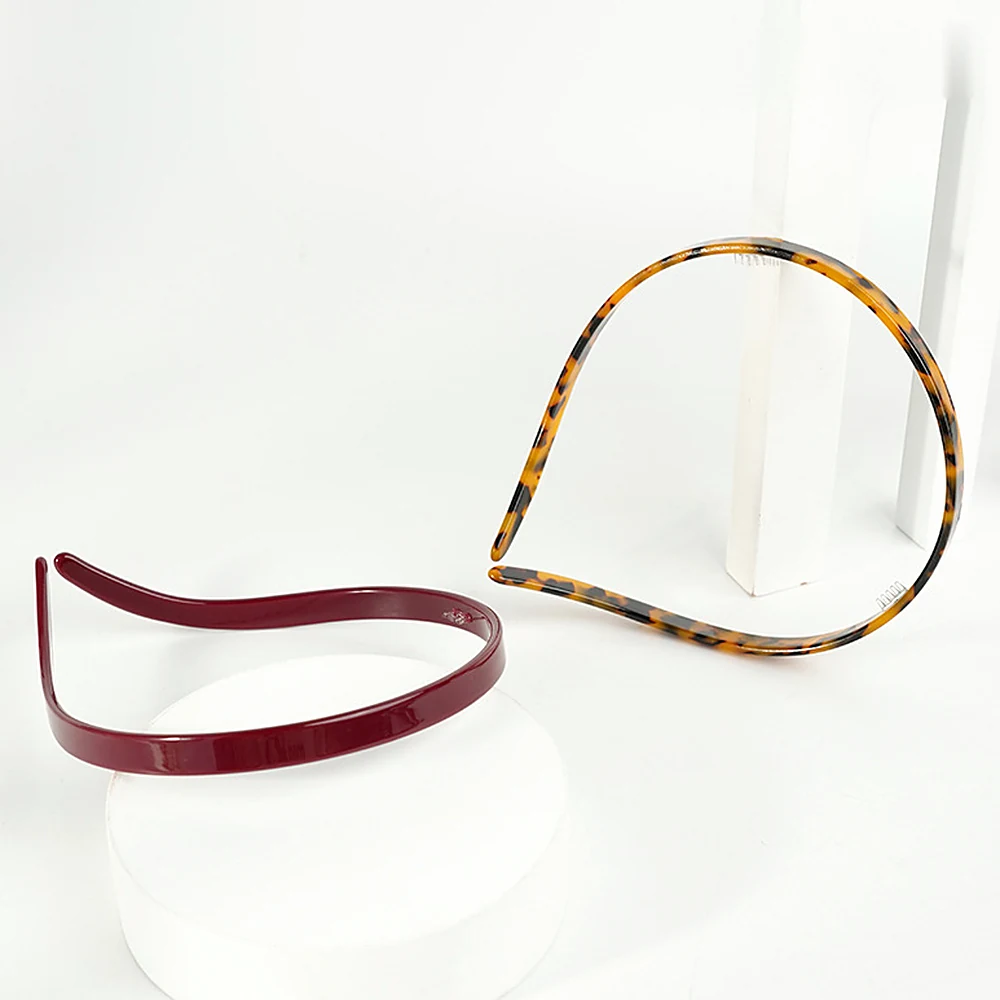
These three current catalogue references show why a buying brief needs more than a front-on photo. The figures below are the published product specifications, not universal rules for every headband.
| Current reference | Published dimensions | Construction detail to verify | Published product-page MOQ |
|---|---|---|---|
| Thin acetate headband | 14.5 cm across · 1 cm visible width · 15 g | Cut from 3 mm cellulose acetate sheet and heat-bent; check the polish because the edge is highly visible on a narrow band. | Three stock colourways; 1,000 pcs per design, with the colourways counted toward one order. |
| Two-tone acetate headband | 14 cm across · 3.8 cm at the widest point · 36 g | Two acetate sheets are laminated before cutting; inspect the cut edge to confirm the colour split runs through the material rather than sitting on the surface. | Two colourways; 1,000 pcs per design, with both colourways counted toward one order. |
| Wide headband with inner teeth | 14 cm across · 3.5 cm at the widest point · 38 g | Short comb teeth are cut into the inner edge; check that their tips are polished and that the grip comes from the teeth rather than excessive temple pressure. | Four colourways; 1,000 pcs per design, with the colourways counted toward one order. |
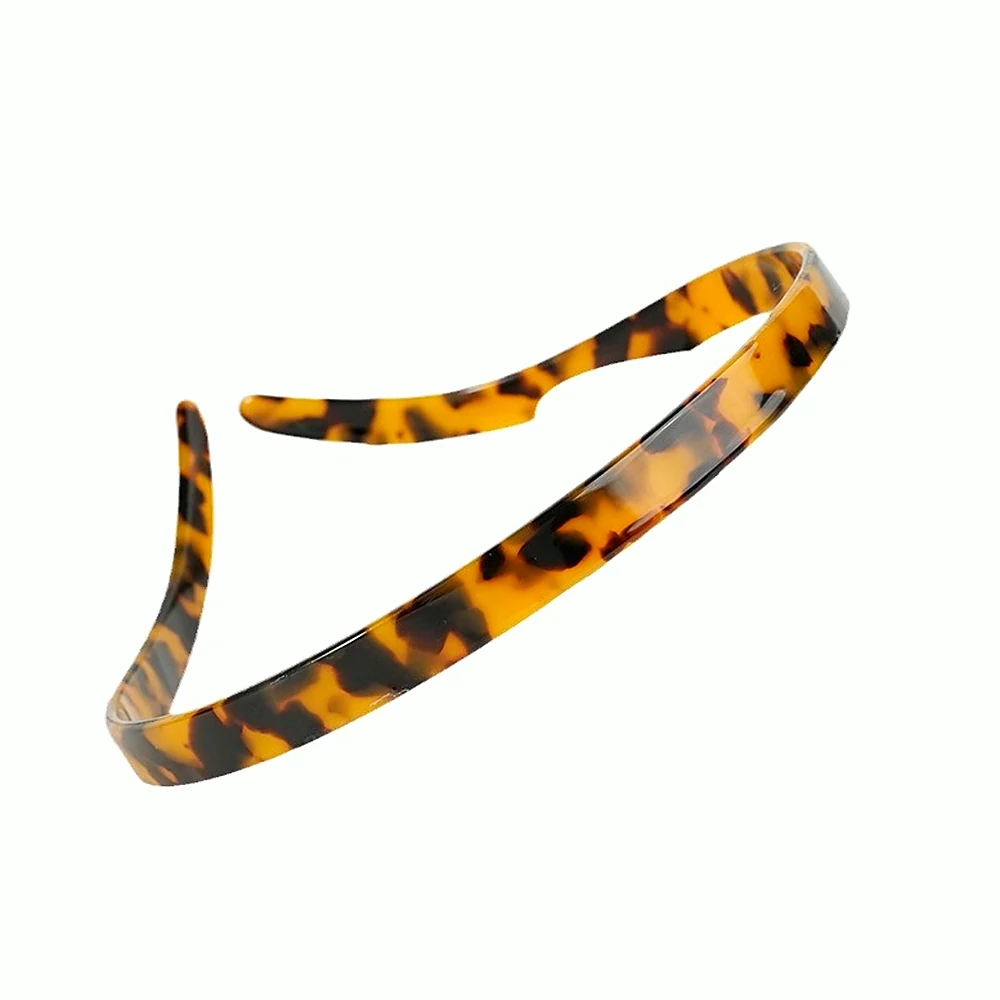
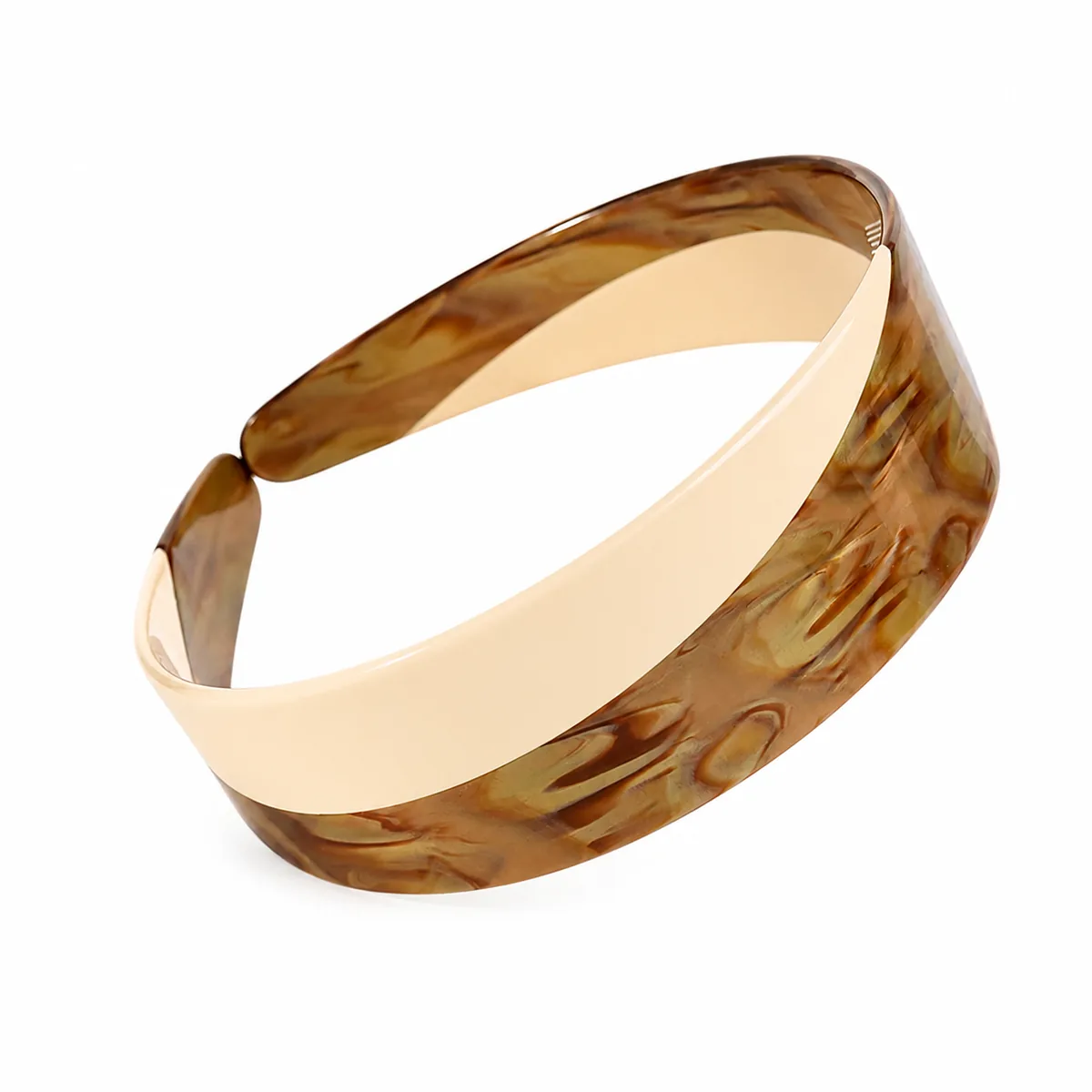
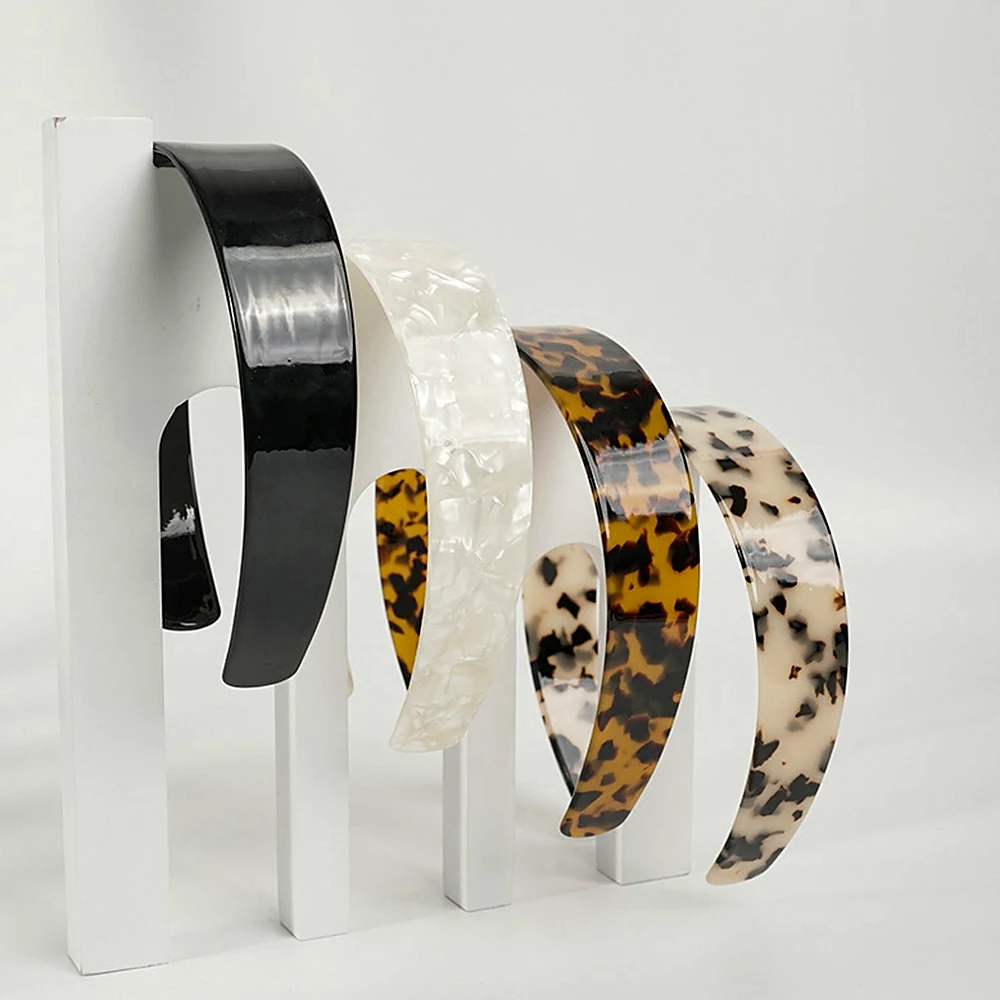
Narrow styles are often the easiest entry point for a first collection: they work with more outfits and can carry several compatible colourways without overwhelming the display. Medium widths can bridge everyday use and a more polished look, giving a pattern or colour pairing enough visible surface without becoming too directional. Wide headbands are the visual anchors of a range and need the most careful sample review because polishing, edge finishing and pattern variation are more visible.
Use the existing custom headbands collection to compare product directions, but select only the widths that have a clear customer role. More styles do not automatically create a stronger assortment.
Test the fit in real wear, not just in photography
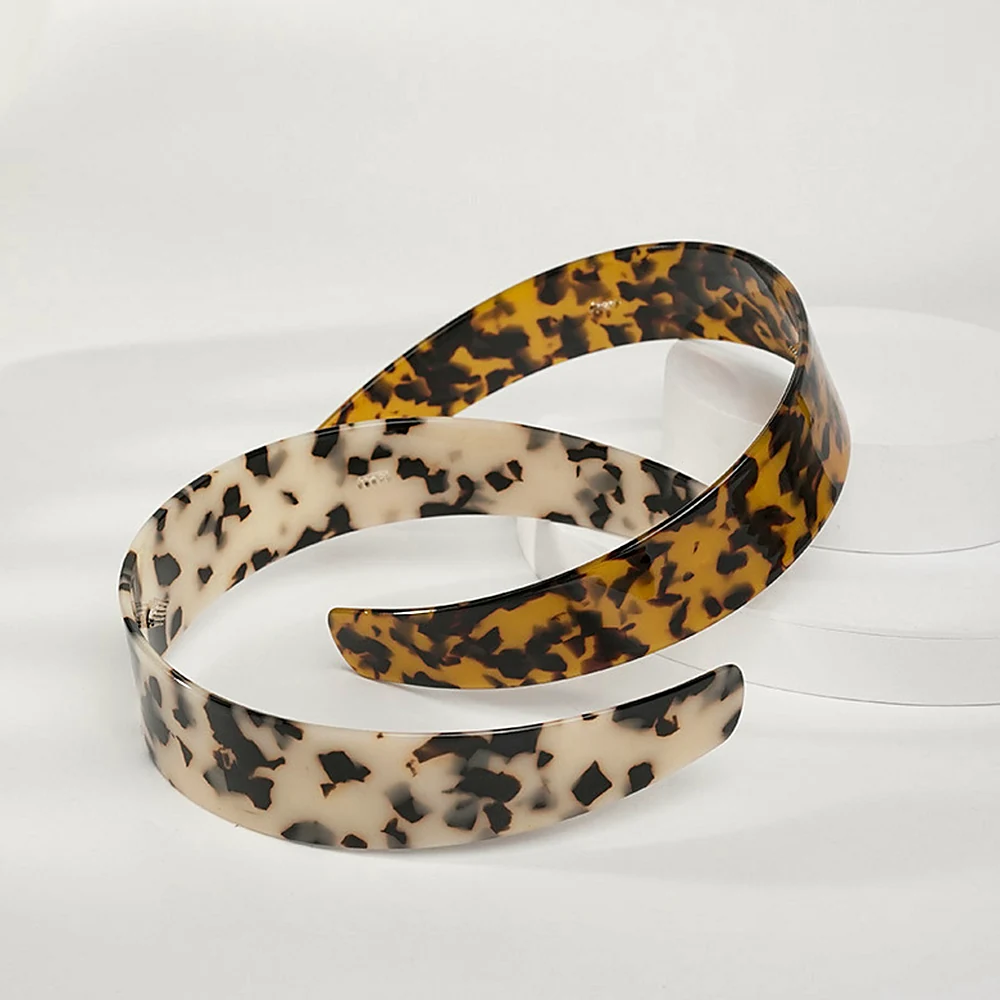
Fit is the main risk in a wholesale headband order because a front-on product photo cannot show temple pressure, stability or the feel of removal. Test the same sample on more than one wearer and keep it on long enough for pressure points to show up.
How the factory checks comfort and finish
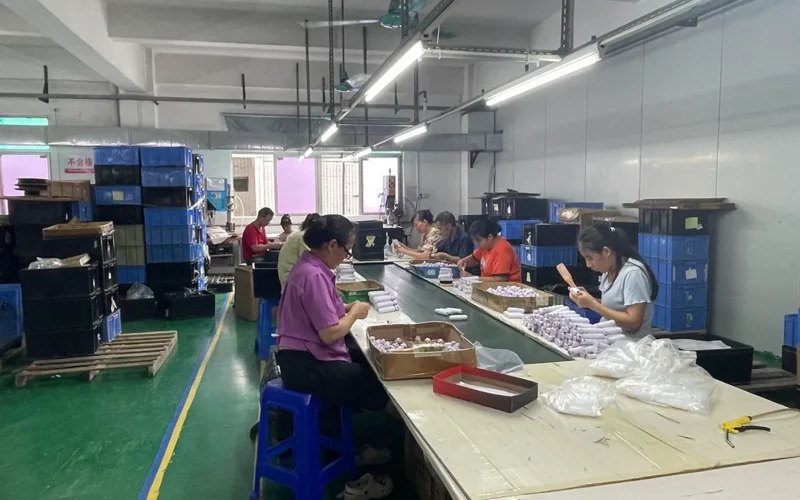
The production team does not judge comfort from appearance alone. A short on-head test is used together with a visual inspection of the teeth, surface and logo. These are the practical checks described by the team for the Australian project.
| QC point | How it is checked | What causes rejection or rework |
|---|---|---|
| Left/right symmetry | Compare the tooth position and layout on both sides. | Visibly uneven tooth sections or an asymmetric fit. |
| Wearing pressure | Put the sample on and wear it for about 10 minutes. Temple pressure and general comfort usually become clear within that time. | A band that feels uncomfortable, overly tight or unstable in ordinary wear. |
| Surface finish | Inspect the polished surface and edges under normal viewing light. | Visible scratches are not accepted. Surface scratching is one of the most common reasons for rework. |
| Logo quality | Check print quality, position and visibility on the worn product—not only on the table. | A poorly printed logo or a logo that is obscured by the hair. |
| Before shipment | QC removes non-conforming pieces and the production plan includes spare units. | Rejected pieces are replaced before shipment rather than passed to the buyer. |
There is no single “best” construction for every headband customer. A smooth inner edge may suit one range; a toothed edge may improve stability for another. For joined material, no numeric seam-alignment tolerance was supplied for this project, so it would be misleading to invent one. Record the acceptable join position and appearance on the approved sample instead.
The inspection video below shows hand deburring and surface checking on an acetate component. It demonstrates why edge finish and scratches need a hands-on check rather than approval from a distant product photo.
Review material and finish as part of the retail value
For acetate headbands, material is part of the product story. Patterned sheet can offer depth of colour and an individual tortoiseshell or marbled effect, but it also means the buyer needs a realistic approval standard. Do not approve one unusually attractive pattern placement and expect every piece to look identical.
During sampling, check the pattern balance, polish, edge finishing, thickness, curvature and colour range across the proposed pieces. The goal is not identical marbling; it is a consistent level of quality within the agreed visual direction. If sustainability language will be part of the listing or package, read Is Cellulose Acetate Biodegradable? before making environmental claims.
Use one approval framework for the whole range
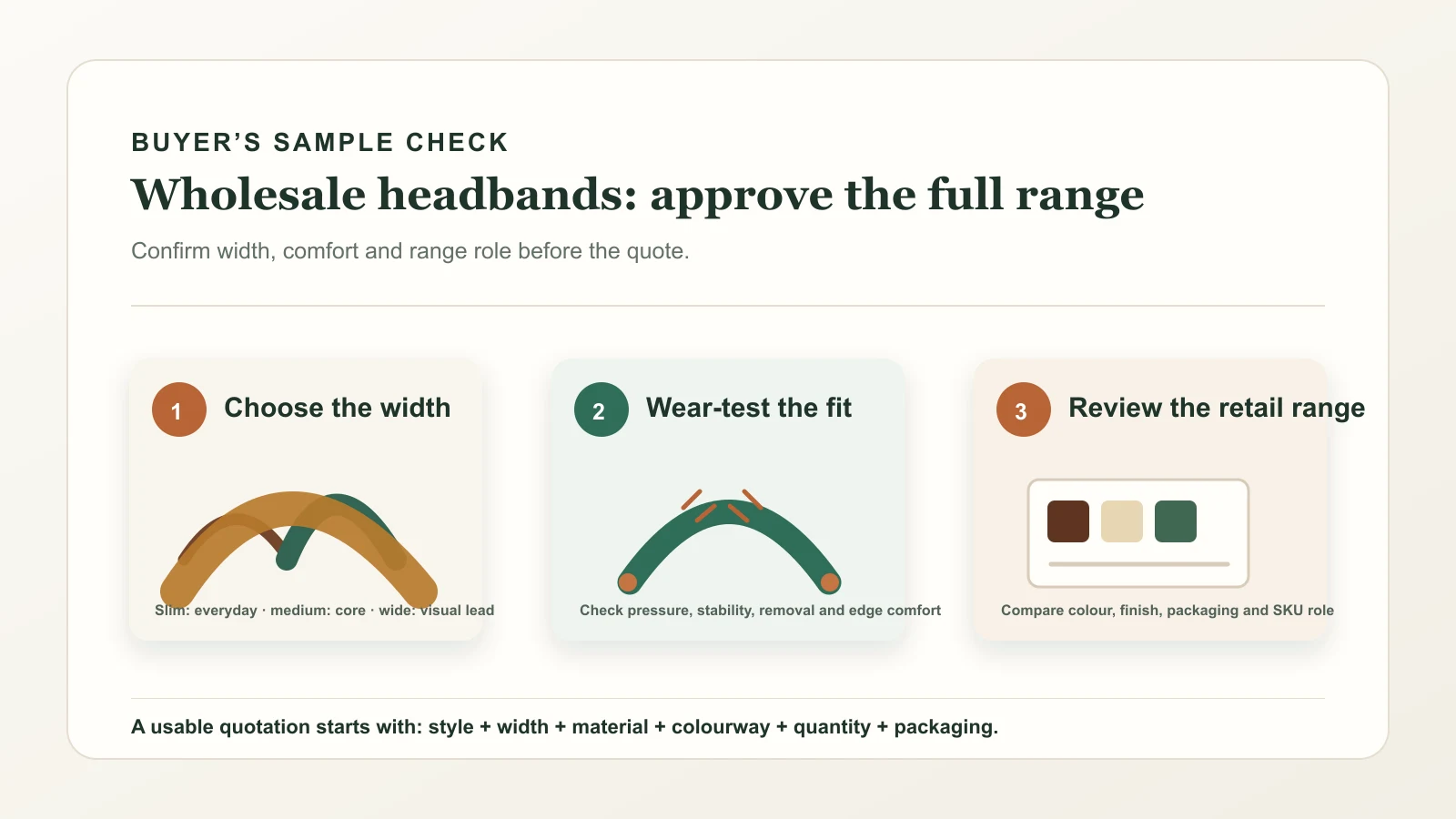
Reviewing one product at a time can hide the issues that matter on a shelf: a cream that looks yellow beside the rest of the range, a wide piece that pushes the perceived price too high, or packaging that works for one SKU but not another. Lay the physical samples, proposed retail packaging and range sheet together for one approval meeting.
- Approve the dimensions: width, internal span and visible side profile.
- Approve the comfort: tension, stability and removal in ordinary wear.
- Approve the finish: polish, edge quality, colour direction and acceptable pattern variation.
- Approve the retail unit: one piece, a pair or a set, including card, box, barcode and market-required information.
- Record a decision: approved, approved with a defined change, or not approved.
Ask for MOQ by style and colourway
MOQ is not one number detached from the product. The practical minimum can change with the width, the acetate sheet, the number of colourways, logo treatment and packaging. A total quantity may look workable until it is divided across too many designs and each one becomes a separate production run.
For the Australian project discussed above, the sales team gave the following working guidance. It is project-specific rather than a promise that every headband has the same minimum.
| Development route | Working quantity or cost | What it means for the brief |
|---|---|---|
| Existing acetate sheet | From 500 pcs | Suitable when an available sheet can be used for the selected shape and colour direction. |
| Joined or custom-combined material | 1,000 pcs | The additional material process raises the workable minimum. |
| Custom logo | Follows the material/product MOQ | The logo does not create a separate minimum; the chosen material route determines the order quantity. |
| Sample development | About RMB 500 per style | Allow about 15 days for the sample; the final cost and timing are confirmed after the design is reviewed. |
This explains why “500 pieces per design” and “1,000-piece MOQ” can both be correct in different quotations. The first may use an existing sheet, while a joined or specially combined material needs a larger run. Ask the supplier to state the material route beside the MOQ so the comparison is meaningful.
Give the supplier a clear range sheet: selected style or reference, width, material or sheet direction, quantity by colourway, logo placement, packaging and destination market. Then ask for the MOQ by design and colourway—not only the combined order total. The hair accessory MOQ guide explains why that distinction matters when comparing quotations.
Build a small range with clear merchandising roles
A first headband collection does not need five versions of the same idea. A more practical structure is a narrow or medium core style in dependable neutrals, one patterned direction such as tortoiseshell or marbled acetate, and one wider statement shape for editorial images, gifting or a seasonal display. Use a shared material palette and packaging system to make the range feel connected.
Headbands can also sit naturally beside claw clips and barrettes when the material and colour story are coordinated. Browse the hair clips and barrettes collection if the categories will be merchandised together, but give each product a separate shelf role so customers have a genuine reason to buy more than one piece.
Prepare a buyer-ready enquiry
A useful wholesale enquiry does not need to be long. It needs enough detail for a supplier to see the production path. Include the intended market and retail channel, reference photos or selected styles, width and material direction, expected quantity per style and colourway, logo and packaging requirements, target delivery window, and questions about samples or development.
When the direction is ready, send the range brief to our OEM hair accessories team. A focused first range with defined roles is easier to sample, quote, merchandise and replenish than a long list of unrelated inspiration images.
Frequently asked questions
What width is best for a wholesale headband range?
There is no universal best width. Narrow styles suit everyday retail, medium widths often work as a core line, and wide styles create a stronger fashion or gifting statement. Choose based on the customer and shelf role.
What should I test in a headband sample?
Wear the sample for about 10 minutes and check temple pressure, stability and comfort. Then compare the left and right tooth sections, inspect the surface for scratches, remove it to check whether it catches the hair, and confirm that the logo is still visible when worn. Use more than one wearer whenever possible.
Can patterned acetate headbands be identical?
No. Patterned acetate naturally varies from piece to piece. Approve a clear visual range for colour, pattern density and finish rather than requiring identical placement.
How should I request a realistic MOQ?
Give the supplier the shape, width, material direction, number of colourways, branding method and packaging plan. For the project above, an existing acetate sheet could start from 500 pieces, while joined material required 1,000. The custom logo followed the material MOQ. Always request the minimum by design, colourway and material route.
How much does a custom headband sample cost and how long does it take?
For the Australian project above, the working estimate was about RMB 500 per style and approximately 15 days. Treat this as a real project reference rather than a fixed universal price: the factory should confirm the final cost and lead time after reviewing the design, material and logo method.