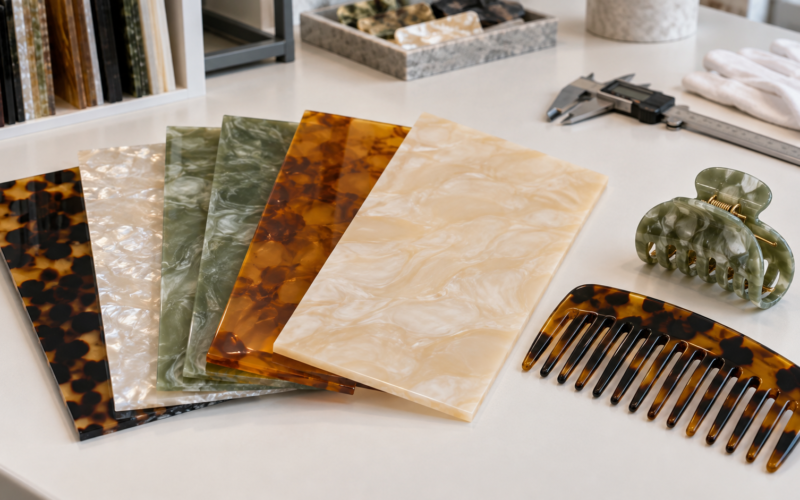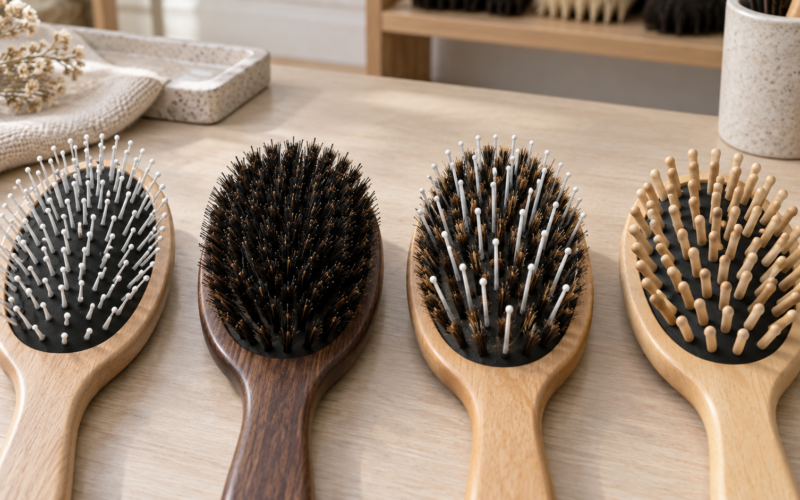
Buying claw clips wholesale is not simply a question of choosing the largest available shape. A clip that photographs well can still be wrong for a collection if the body is too heavy for its intended user, the spring is not matched to the teeth, the acetate pattern cannot be repeated at the required quantity, or the minimum is spread across too many colourways.
This guide is for buyers planning a custom claw clip programme: brand owners, retailers, distributors and salon suppliers. It explains the decisions that belong in a brief before pricing begins, how to compare an existing shape with a new development, and how to approve a sample that a factory can repeat at volume.
Start With the Product Job
Write down what the clip is expected to do before selecting a trend shape. Is it a compact clip for a small section of hair, a medium everyday style, a large updo clip, or a decorative statement piece? That decision affects body length, tooth depth, opening width, spring resistance and weight. It also tells the factory which existing bodies are worth sampling.
| Brief decision | What to specify | Why it changes the quote |
|---|---|---|
| Use case | Everyday hold, half-up style, thick hair, updo or decorative wear. | It directs the starting body size, tooth geometry and spring range. |
| Body and pattern | Existing silhouette or new shape; acetate sheet, colourway and visible variation. | It determines material yield, cutting and any development work. |
| Hardware | Spring action, hinge construction and any metal trim. | It affects feel, assembly and repeatable quality checks. |
| Branding | Logo position, method, packaging and barcode requirements. | These are separate operations, not a detail to add after price approval. |
| Quantity | Units per design and per colourway, not only the total order. | Production minimums normally apply to the individual run. |
Material Comes Before Colour
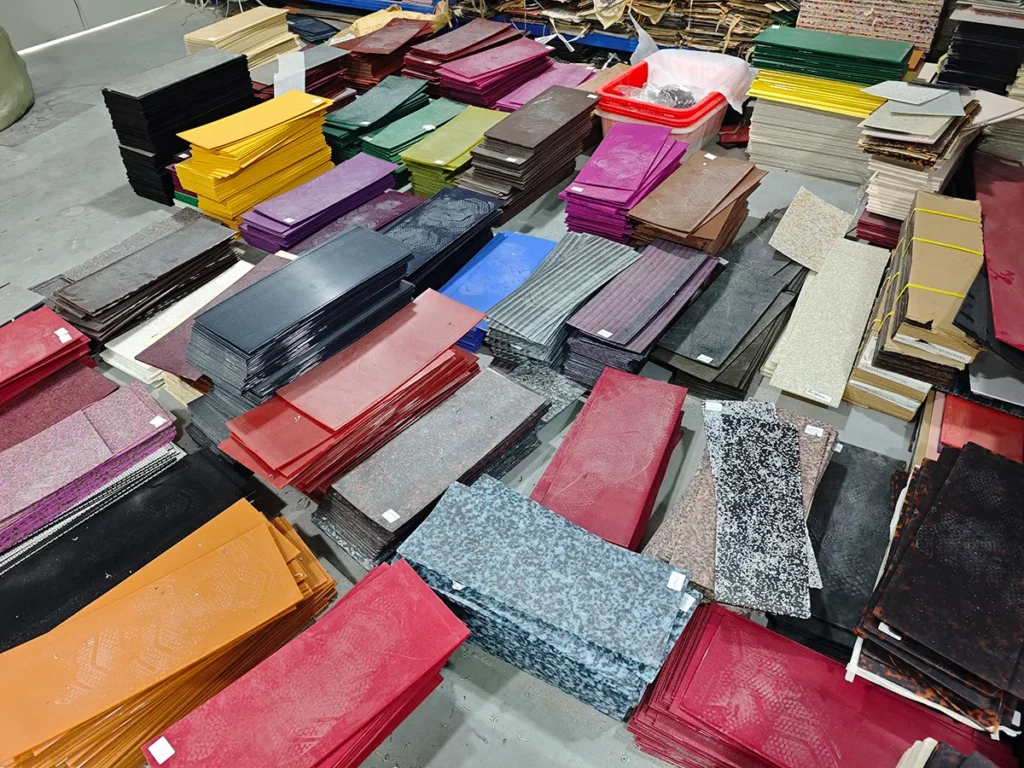
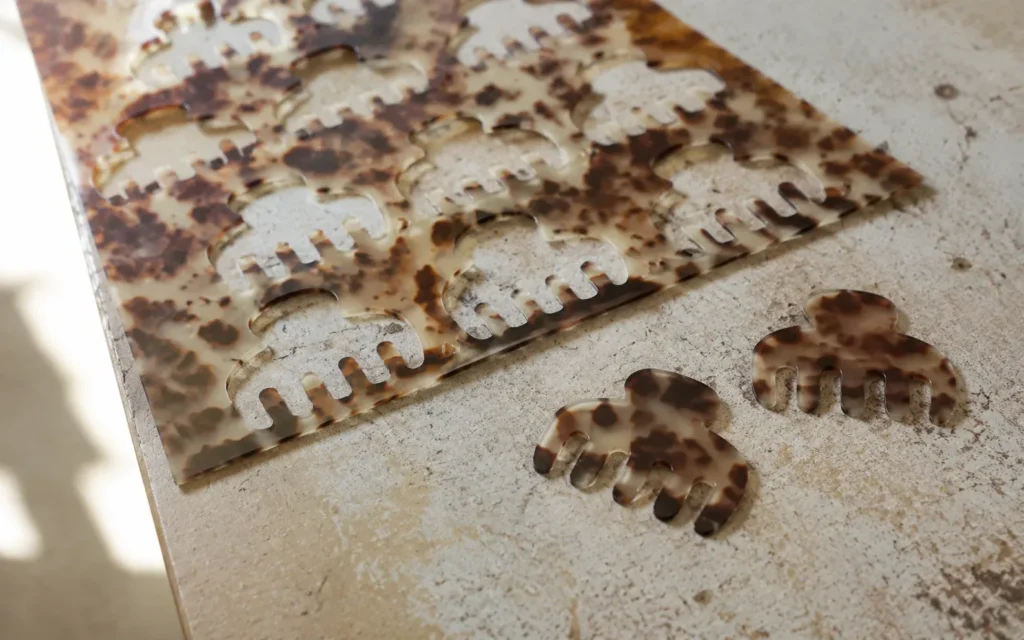
For an acetate claw clip, the pattern is part of the sheet rather than a coating added at the end. Tortoiseshell, marble, pearl and solid effects therefore behave differently in cutting and in how much natural variation a buyer should expect. A reference photo is useful, but it should be paired with a sheet selection or approved sample so that “tortoiseshell” does not become an unmeasurable instruction.
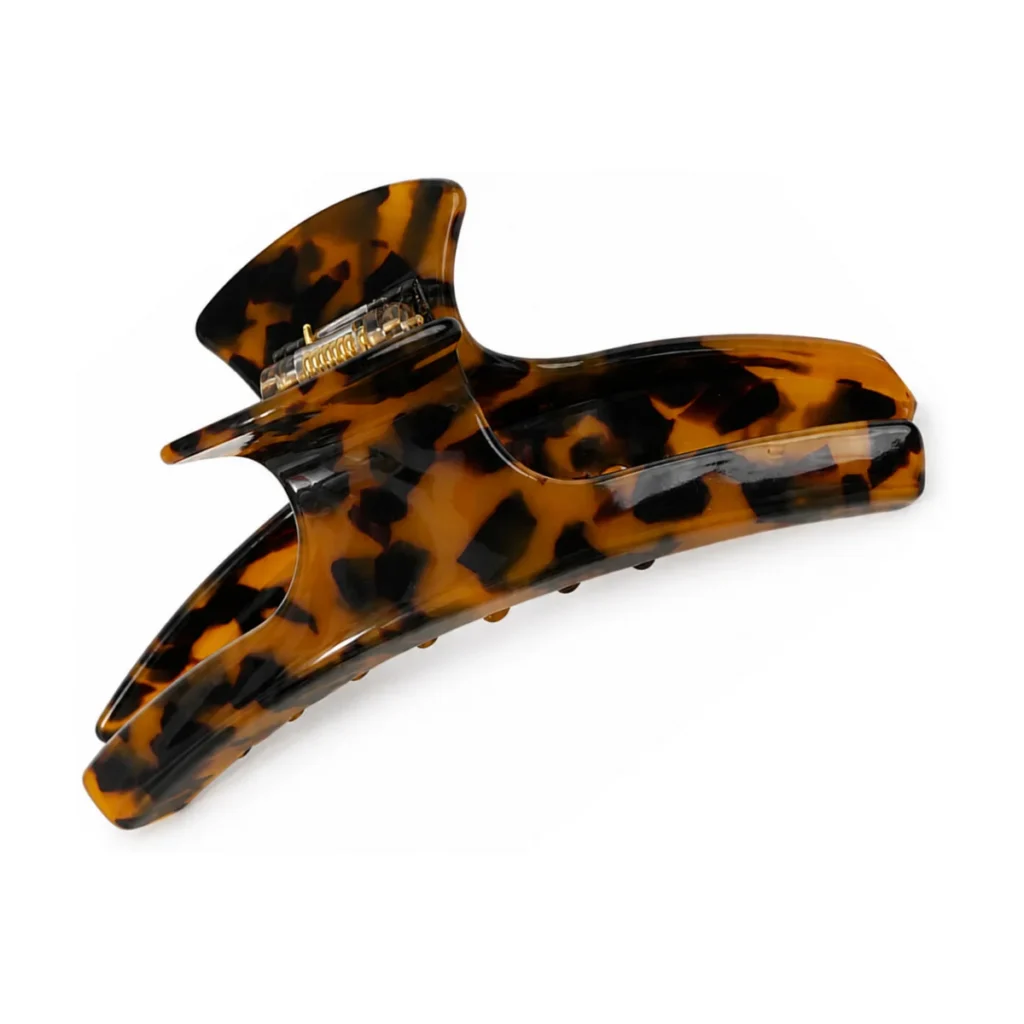
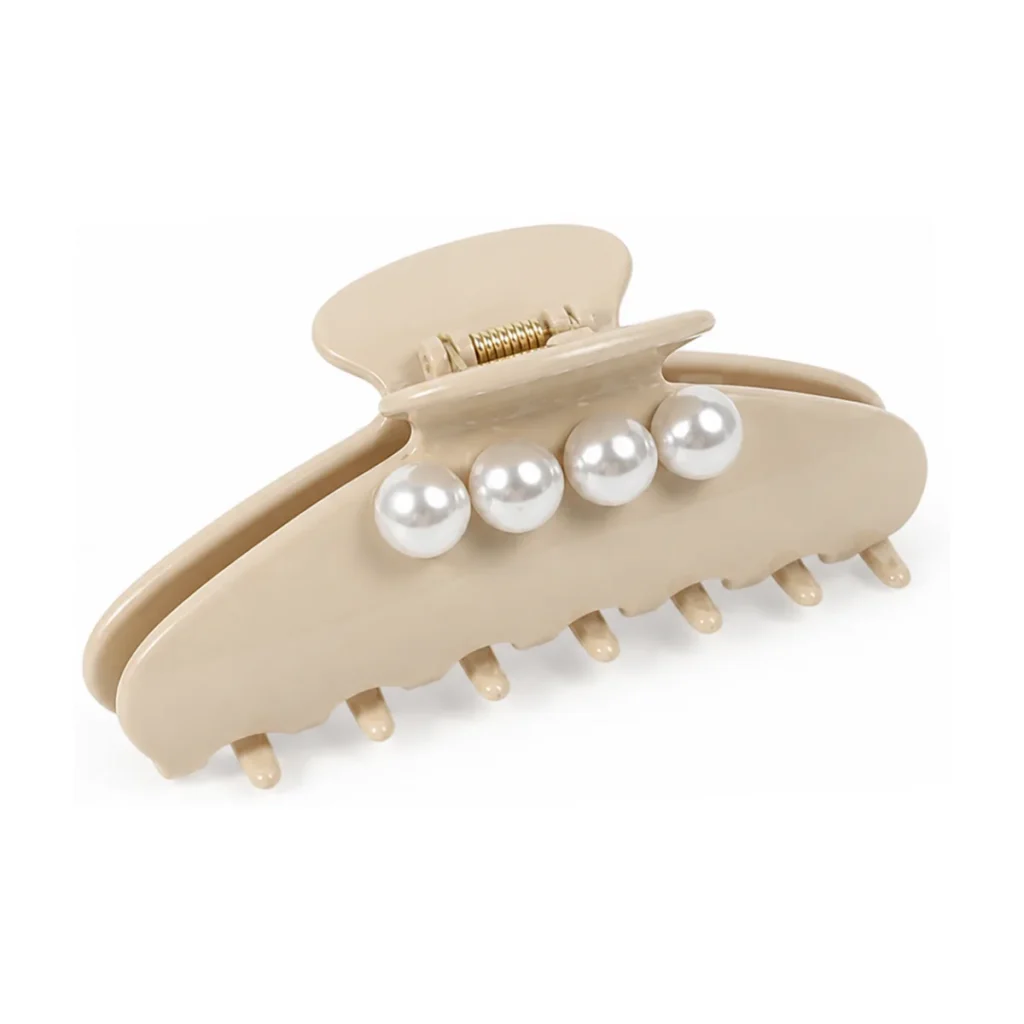
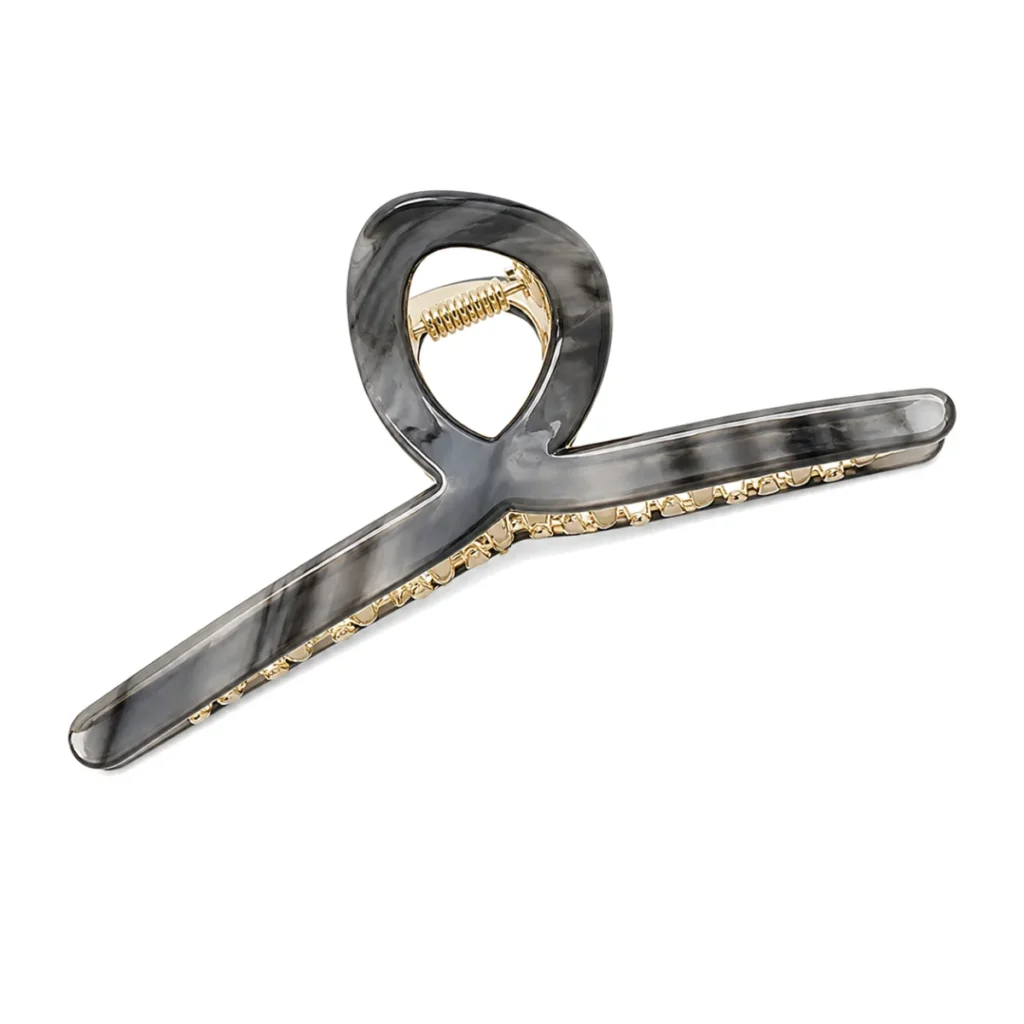
Ask the factory to identify what is fixed and what is variable. The body outline, thickness, face decoration, spring, logo and packaging can all be separate choices. A clear materials discussion also avoids comparing a cellulose acetate clip with a lower-cost plastic lookalike as if the two quotes describe the same product.
Existing Mould or New Shape?
An existing mould does not mean an off-the-shelf collection. It can be the practical foundation for a custom programme: the buyer chooses a proven body, then defines the material, colourway, logo, packaging and SKU mix. This is usually the most efficient way to test a collection because the fundamental body and fit have already been resolved.
A new shape is appropriate when the silhouette is the point of difference. In that case, request a written development path covering feasibility, tooling or cutting requirements, sampling stages, ownership, revision limits and the production minimum after approval. Do not treat a CAD drawing, a mood-board picture and a repeatable finished clip as the same deliverable.
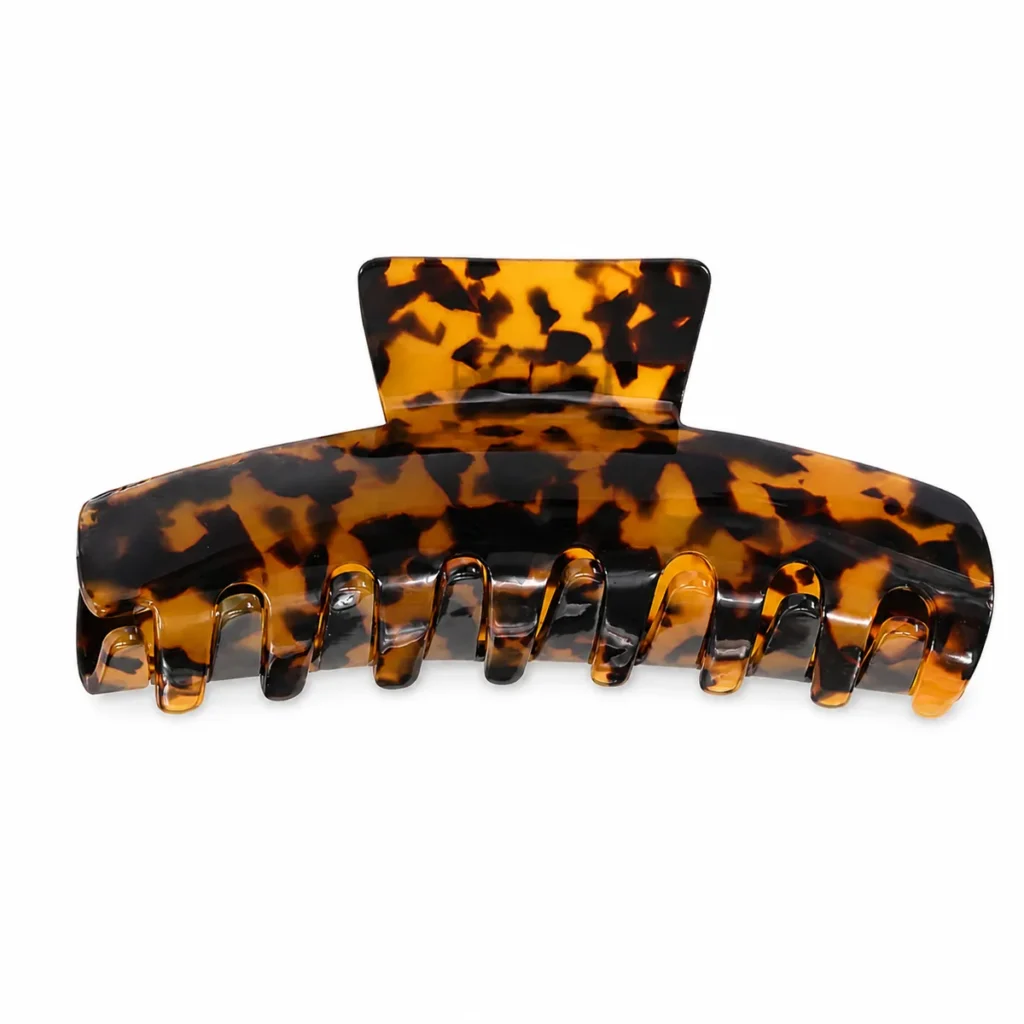
The quickest starting point is a marked-up selection from the full claw clip catalogue. Circle the bodies you want, then add the desired sheet pattern, size, logo position and quantity next to each one. That lets a factory identify which details can be shared across styles and which must be treated as individual runs.
Build an Assortment by Role, Not by Trend
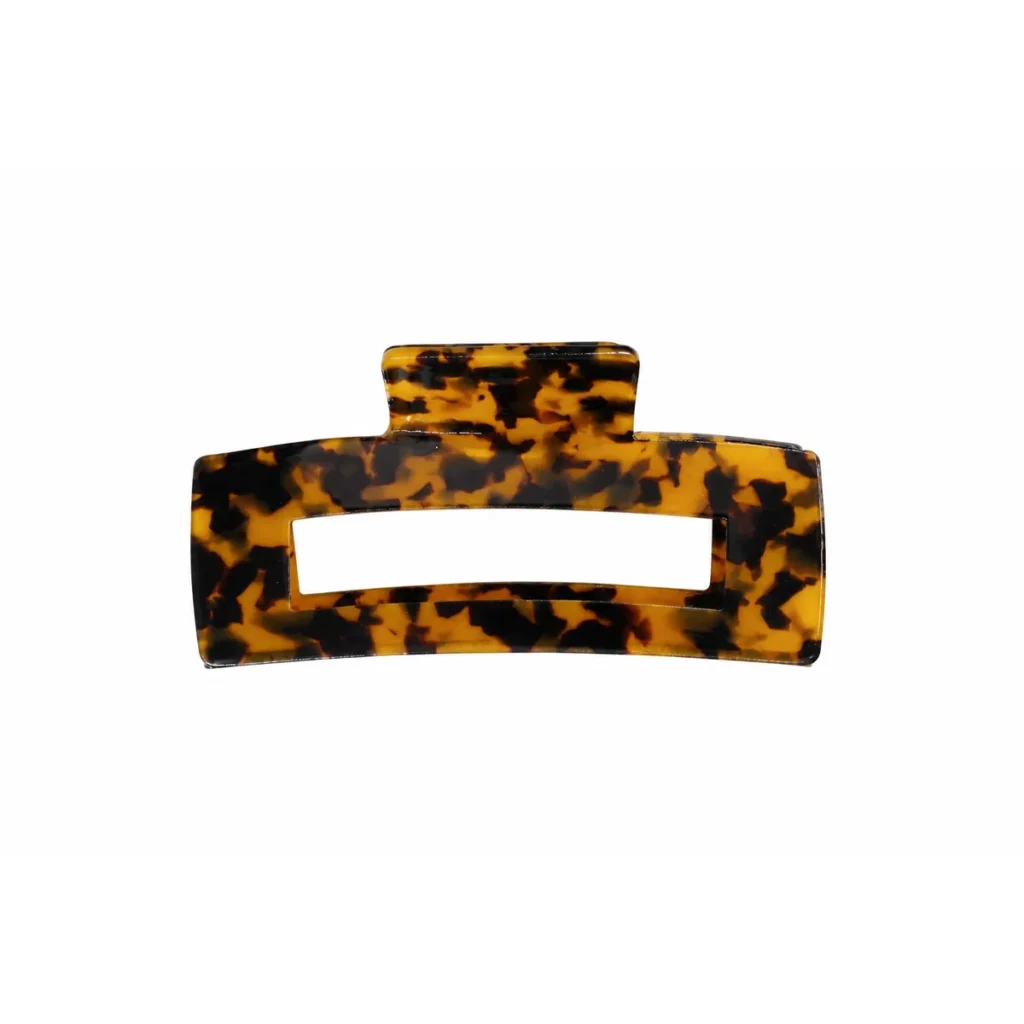
A visually coherent collection does not require every clip to be the same size. A buyer can make a range easier to shop and easier to produce by assigning each style a role: a compact everyday clip, a medium half-up style, a larger updo clip and perhaps one decorative statement shape. Start with one or two bodies with proven fit, then let the sheet patterns, branding and packaging create the collection identity.
| Assortment role | Brief the buyer should provide | What to test in the sample |
|---|---|---|
| Compact clip | Target section of hair, body length and preferred pattern | Jaw opening, tooth contact and whether it twists during wear |
| Everyday medium clip | Hair volume, target body weight and spring feel | Comfort, repeated opening and consistent closing alignment |
| Large updo clip | Intended hold, thickness and hardware finish | Grip through a full style without sharp edges or imbalance |
| Statement design | New silhouette, decorative elements and commercial quantity | Feasibility, yield from the sheet and development path |
This approach prevents a common first-order problem: splitting a small quantity across too many untested shapes and colours. It also gives sales and merchandising teams a practical story for the range, while letting the supplier identify which styles can share material preparation and packaging.
Understand Wholesale MOQ by Design
For a wholesale claw clip order, the total number of pieces is only half the answer. Production is planned by design. If one body is ordered in four sheet patterns, a factory may need to prepare four separate runs. Packaging and custom sheet development may also have their own minimums. A buyer who asks only for “2,000 clips” can receive a misleading answer if the intended assortment is not included.
Ask for the quote in this form: style code, material or sheet code, quantity per colourway, logo method, packaging and unit price. The MOQ guide for hair accessories explains the production logic in more detail. The goal is not to force every style into one minimum; it is to make sure the plan is commercially workable before samples are approved.
Approve More Than the Front View
Open and close the sample repeatedly. Look at the contact between the teeth, the alignment of the two body halves, the feel of the polished edge and the return of the spring. Examine the logo at normal viewing distance, then inspect it closely for placement and edge quality. If the collection uses a patterned sheet, compare several pieces rather than approving one unusually attractive cut.
Record the approval with photographs and short, observable rules: the selected sheet reference, placement of metal trim, logo position, acceptable pattern variation, packaging layout and any dimensions that are critical to the product. This lets a quality-control check compare production goods with an agreed reference instead of a memory of the sample.
Set Acceptance Criteria Before the Purchase Order
Use the approved sample to set a short acceptance checklist that the buyer and factory can both read. Avoid vague instructions such as “premium quality.” Instead, identify the few characteristics that a customer will notice: clean polished edges, aligned jaws, smooth spring action, legible logo, acceptable pattern variation and undamaged retail packaging. Where size matters, give a tolerance or a reference measurement.
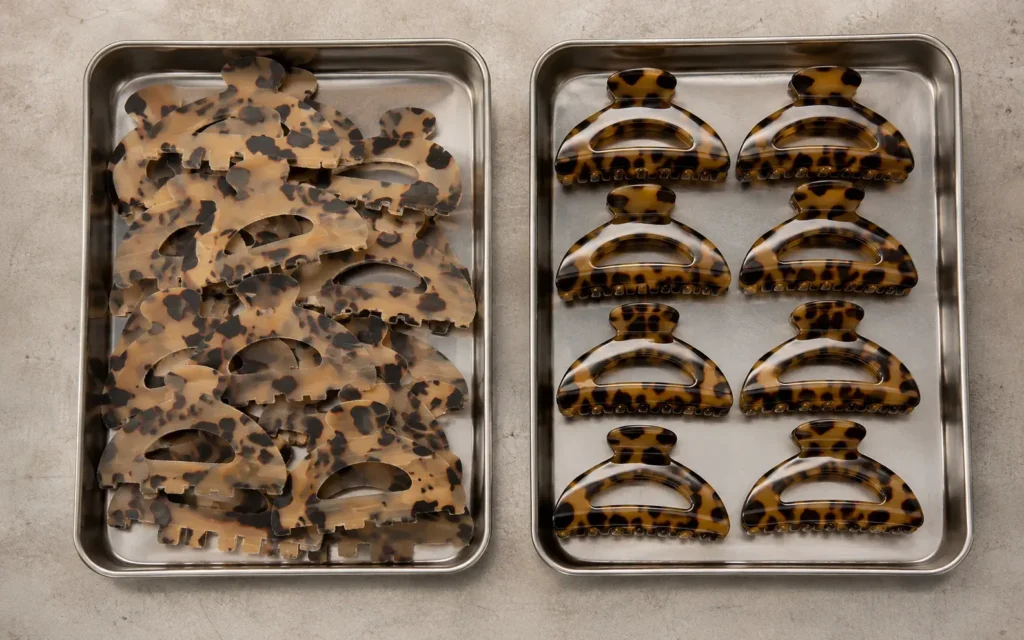
For patterned acetate, agree that individual pieces will vary while defining what remains unacceptable: a colour that falls outside the chosen family, a sheet transition placed across a logo area, or a cut that makes the front face look materially different from the sample. Ask for production photos or a pre-shipment review against these agreed points. It makes the inspection conversation concrete without pretending every acetate piece should be identical.
Run a Focused Sample Review
Do not ask different teams to approve different versions by email. Put the physical sample, range sheet and packaging proof in one review. Product reviews fit, feel, weight and finish; purchasing checks that the quoted construction matches the sample; and brand or merchandising checks that the pattern, logo and pack work as a collection. Record one decision for each point: approved, approved with a specified change, or not approved.
When a change is requested, describe the observed result and the desired result rather than only saying that it “looks wrong.” For example: “move the logo 3 mm toward the hinge,” “use the approved sheet reference on the front face,” or “reduce the visible gap when the jaws close.” Photographs with simple arrows are useful supporting evidence. This discipline keeps the revised sample, bulk inspection and final shipment tied to the same agreed product.
Keep the final approval pack with the purchase order: selected sample photographs, material reference, logo artwork, packaging file, quantity by SKU and acceptance checklist. It becomes the handover record if a new person joins the buyer or factory team during production, and it is far more reliable than rebuilding decisions from an old message thread.
Once the approval pack is complete, the buyer can request a production timeline with defined checkpoints instead of relying on a general estimated ship date.
That timing should distinguish sample revision, material preparation, assembly, inspection and final packing so that a delay can be identified early rather than discovered at the requested delivery date.
Compare Wholesale Quotes on the Same Basis
Before choosing the lowest price, make a one-page comparison with identical columns. If one supplier has assumed stock packaging, a plastic body or one colourway while another has priced custom acetate and retail boxes, their unit prices cannot be compared fairly.
- Body style, dimensions and material construction.
- Sheet pattern, colour tolerance and visible variation.
- Spring, hinge and decorative hardware.
- Logo method, artwork preparation and logo location.
- Inner packing, retail packaging and carton quantities.
- MOQ per design and per colourway.
- Sample, development and production timings.
- Inspection scope and delivery terms.
For a range that mixes claw clips with other fastening types, keep the quote distinction clear. Hair clips and barrettes use different bases and fit expectations, even when their colours and packaging belong to the same collection.
A Ready-to-Send Inquiry Checklist
- Reference photographs, sketches or selected catalogue styles.
- Your customer and intended use: everyday, salon, fashion or promotional.
- Required material and pattern direction.
- Quantity per style and colourway.
- Logo, packaging and label requirements.
- Destination country and requested delivery date.
- Whether you prefer an existing body or a new shape.
A complete brief gives the supplier a basis for a useful answer: which route is feasible, what needs development and which assumptions remain open. It also helps your team compare responses before committing to a sample programme.
FAQs
What does custom claw clips wholesale mean?
It normally means a production order made for a brand, retailer or distributor rather than individual consumer purchases. The custom elements may include the body, acetate pattern, logo, packaging and assortment. The quote should state which elements are included.
Can I start with a stock claw clip shape?
Yes. Starting from an existing body can reduce development uncertainty while preserving room to customise material, pattern, logo and packaging. Confirm the available sizes and the exact changes that are feasible before treating it as a final SKU.
What should I send for a claw clip quote?
Send a reference image or selected body, material direction, quantity by colourway, logo, packaging, destination and target delivery date. State whether you need a new shape or want to adapt an existing one.
To discuss a custom acetate collection, send your selected styles, target quantities and reference images for a feasibility review.