Sourcing hair accessories from China is straightforward once you know which questions to ask and in what order. Most first-time buyers lose months not because they picked the wrong factory, but because they asked for a quote before they had a spec — and then compared quotes that were never comparable in the first place.
Once you are ready to compare real suppliers rather than listings, use our hair accessories manufacturer checklist before you request quotations.
This guide walks through the process in the order it actually happens: define the product, choose a material, find real manufacturers, understand MOQ and tooling, run samples, and ship. It is written from the factory side, so it includes the numbers suppliers usually only give you after three emails.
Step 1: Define the Product Before You Ask for a Price
A quote is only meaningful against a spec. Before contacting anyone, write down:
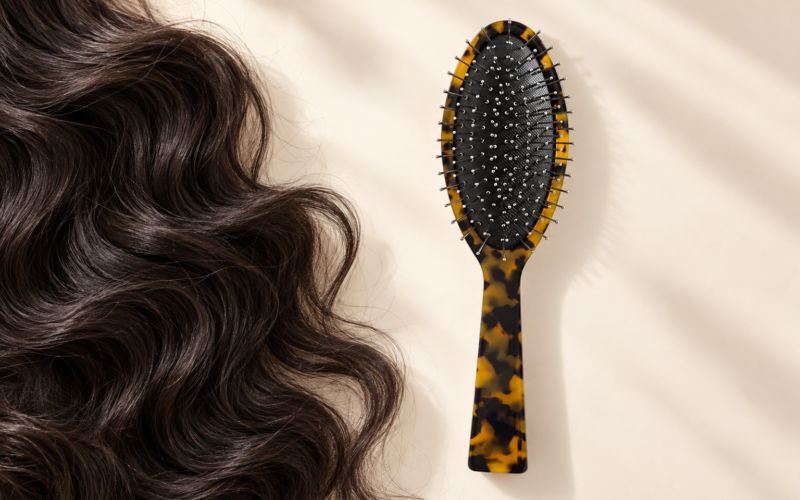
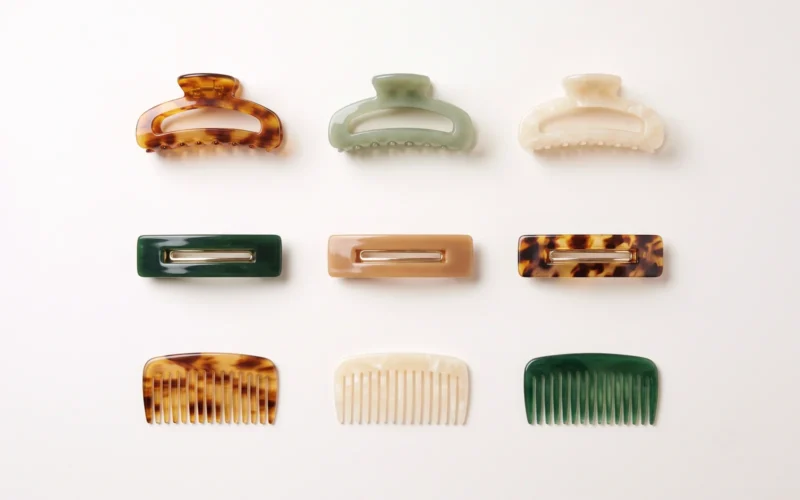
- Product and shape — claw clip, French barrette, paddle brush, wide-tooth comb, headband.
- Material — cellulose acetate, wood, bamboo, or a combination.
- Size and weight — even approximate. A 6 cm claw clip and a 10 cm claw clip are different products with different tooling.
- Quantity — your realistic first order, not your dream forecast.
- Branding — logo method and placement.
- Packaging — polybag, backer card, printed box, or retail-ready with barcodes.
- Target landed cost — the number that decides whether the project is viable at all.
Send that list to five suppliers and you will get five comparable quotes. Send “how much for hair clips?” and you will get five numbers that mean nothing.
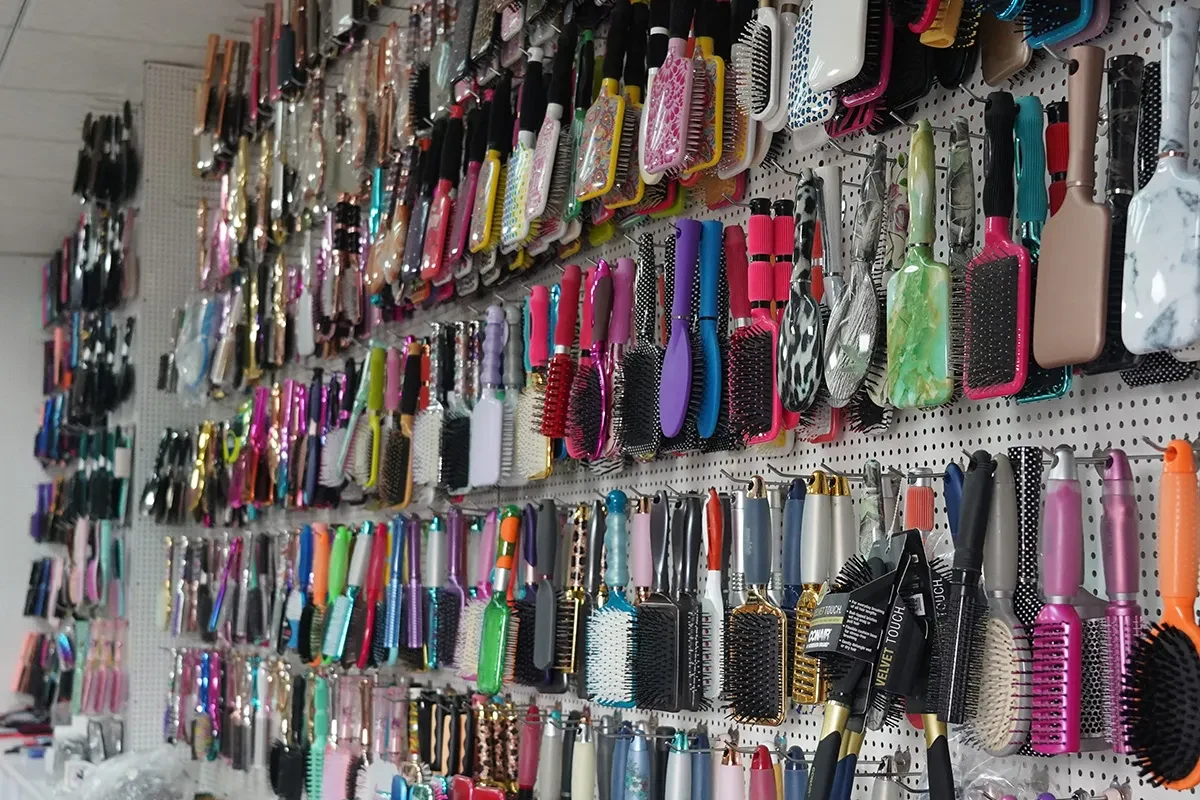
Step 2: Choose the Material First
Material determines your factory, your MOQ, your lead time, and your price band. It is the single most consequential decision in the process, and it is largely irreversible once tooling is cut.
| Material | Best for | Sample lead time | Bulk lead time |
|---|---|---|---|
| Cellulose acetate | Clips, barrettes, headbands, premium combs | 15–20 days | 25–45 days |
| Wood | Combs, brushes, hair pins | 10–15 days | 25–30 days |
| Bamboo | Brushes, combs, eco-positioned lines | 10–15 days | 25–30 days |
Acetate takes longer because it is a subtractive process: sheet is CNC-cut, then tumble-polished for days to develop its luster. Wood and bamboo are faster but constrain your color and pattern options to what the grain gives you. If sustainability claims matter to your positioning, ask for FSC certification on wood and bamboo and GRS documentation on acetate — and ask to see the certificates, not a logo on a website. Our materials guide compares all three in detail.

Step 3: Find Manufacturers, Not Middlemen
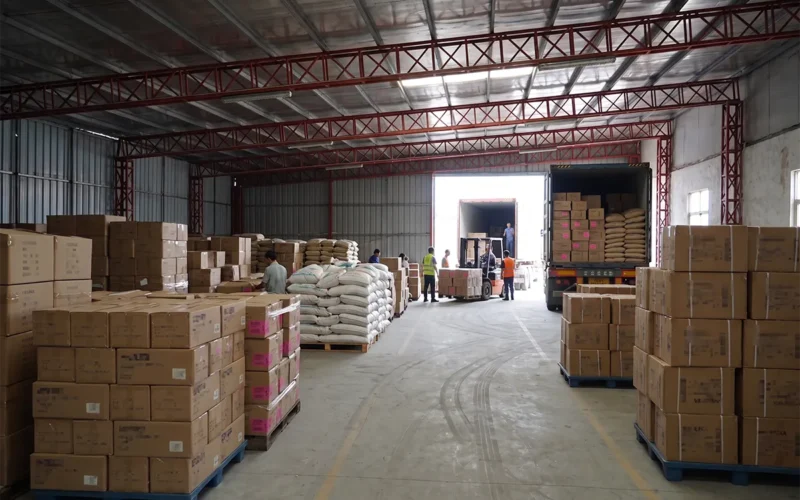
Most listings you find searching for hair brush manufacturers in China are trading companies. Trading companies are not inherently bad — a good one adds real coordination value across multiple factories — but you should always know which one you are talking to, because it changes who controls quality and how much margin sits between you and the production line.
Four questions separate them quickly:
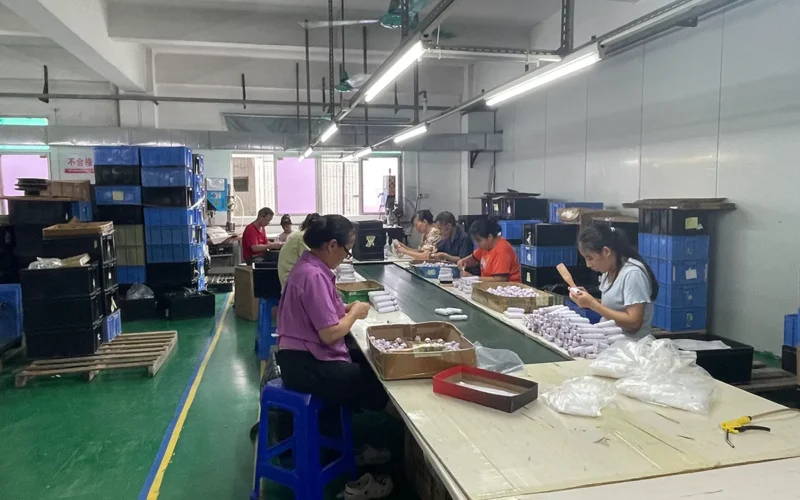
- “Can you send a video walkthrough of the production line for this product?” A factory films it the same week. A trader stalls, sends stock footage, or sends a line that does not match the product.
- “Which processes are done in-house and which are outsourced?” An honest factory will tell you plainly — almost every hair accessory factory outsources something, commonly electroplating or printed packaging.
- “What is your MOQ and why is it that number?” A factory explains it in terms of sheet yield, mold setup, or a minimum polishing batch. A trader quotes a round number with no reasoning.
- “Who owns the tooling if I pay for the mold?” The answer should be you, in writing, before any money moves.
Verify the business license too. The company name on the license, the bank account, and the sales contract should all match. If payment is requested to a personal account or to a company with a different name, stop.
Step 4: Understand MOQ — and Why It Varies
MOQ is not a negotiating tactic. It reflects a real production floor: how much sheet a pattern run consumes, how many pieces fit in a polishing tumbler, how long a mold setup takes. Our own tiers:
- Acetate combs and headbands — 1,000 pcs per design. Comb teeth are cut individually and hand-finished, and headbands are heat-bent one at a time over a steel form, so the batch has to justify the setup.
- Other acetate accessories — 500 pcs per design. Claw clips, barrettes, hair pins, and brush handles.
- Wood and bamboo — varies by product. It depends on the blank size, the wood species, and whether an existing profile can be used. Send us the shape and we will give you the real number rather than a placeholder.
One thing many buyers miss: MOQ is usually per design, not per order. Three tortoiseshell patterns of the same claw clip shape normally count toward the same tier, because the tooling is shared and only the sheet changes. That is how a small brand launches an assortment instead of a single SKU. Our case studies show how this plays out on real first orders, including a Dutch brand that launched on 500 pcs.
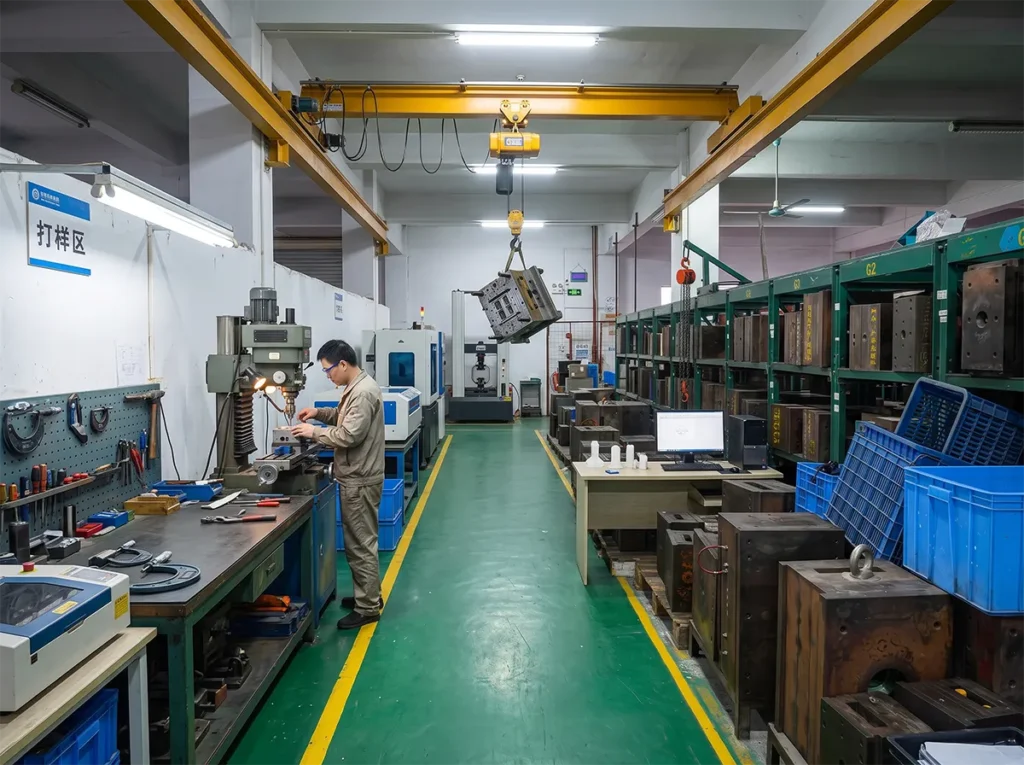
Step 5: Tooling, Molds, and What They Cost
If your shape already exists in the factory’s library, tooling is free — you are choosing from thousands of existing profiles. If you want an exclusive silhouette, you pay for a mold once, and it stays yours.
Three points to settle in writing before you pay:
- Ownership. You own the mold, and it will not be used for other customers.
- Exclusivity period. How long your design is off-limits to others — indefinite is normal for a customer-paid mold.
- Storage and revision. Where the mold is kept, and what a modification costs later.
Many factories credit part or all of the mold cost back against your first bulk order. Ask — it is often available and rarely offered unprompted.
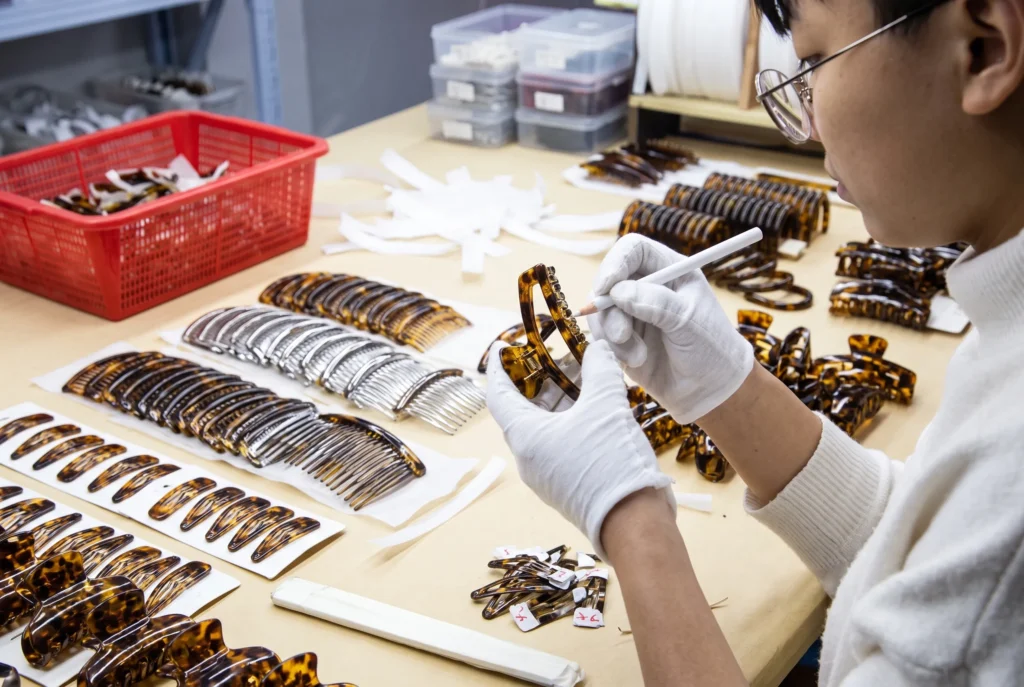
Step 6: Samples — Where Projects Are Actually Won or Lost
Never skip sampling on a first order unless you have worked with the factory before. Two stages matter:
- Material or pattern samples — physical swatches so you can check color and figuring in daylight. Screens lie about acetate; a tortoiseshell that looks warm on a monitor can arrive noticeably greener.
- Pre-production samples — the actual product, made the way bulk will be made. Approve this in writing, keep a physical copy, and make it the reference for QC.
Check the sample for the things that fail in bulk: edge polish on every surface that touches hair, spring tension, tooth tip rounding, logo depth and alignment, and color consistency between pieces. Bend a claw clip gently and listen — a clip that creaks has internal stress and will crack in a customer’s bag.
Two more checks are worth doing on anything with a moving part. Close it twenty times and confirm it returns to the same position with the same resistance every time, then hold the body and waggle the mechanism sideways to check for play at the hinge. Both catch assembly faults that a single hand-finished sample will hide. The full desk-test lists are in duckbill clips and wholesale hair barrettes.
How Are Claw Clips Made? A Quick Look at the Process
Knowing the process makes you a better buyer, because you can tell which corners a low quote is cutting. The size, weight and cost side of one product is worked through in claw clip sizes and cost. For an acetate claw clip:
- Sheet selection. A pattern is chosen from the acetate sheet library; the pattern runs through the full thickness, not just the surface.
- CNC cutting. Both halves are cut flat from the sheet.
- Heat bending. Each half is heated and formed over a steel mold to its curve — this is what gives acetate its shape memory and grip.
- Tumble polishing. Days in a tumbler with polishing media until the surface reaches full luster and every edge is rounded.
- Drilling and spring assembly. The hinge is drilled and the spring hardware fitted by hand.
- Branding and QC. Logo application, then piece-by-piece inspection.
The step that gets skipped on cheap quotes is polishing time. A clip pulled from the tumbler early looks acceptable in photos and feels rough on hair. It is the difference you can spot in a sample within seconds of running it through your fingers.
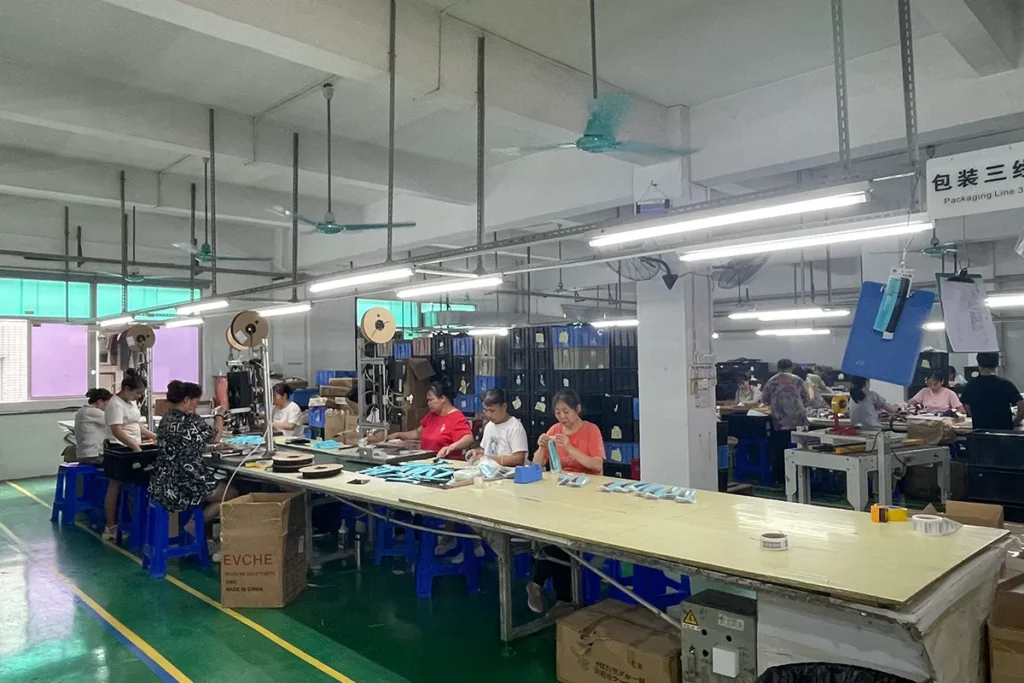
Step 7: Payment, Shipping, and Incoterms
Standard payment terms are 30% deposit on order confirmation and 70% against a copy of the bill of lading or before shipment. Be cautious of anyone asking for 100% up front on a first order.
- FOB — you take over at the Chinese port. Cheapest unit price, most work for you.
- CIF — the factory covers sea freight and insurance to your port; you handle customs and delivery.
- DAP / DDP — delivered to your door, with DDP including duties. Simplest for first-time importers, and worth the premium until you have a freight forwarder you trust.
Hair accessories are light and low-volume, so air freight is viable for launch quantities and sea freight makes sense from roughly one pallet upward. Factor 30–40 days of transit on sea freight to the US or EU on top of the production lead time.
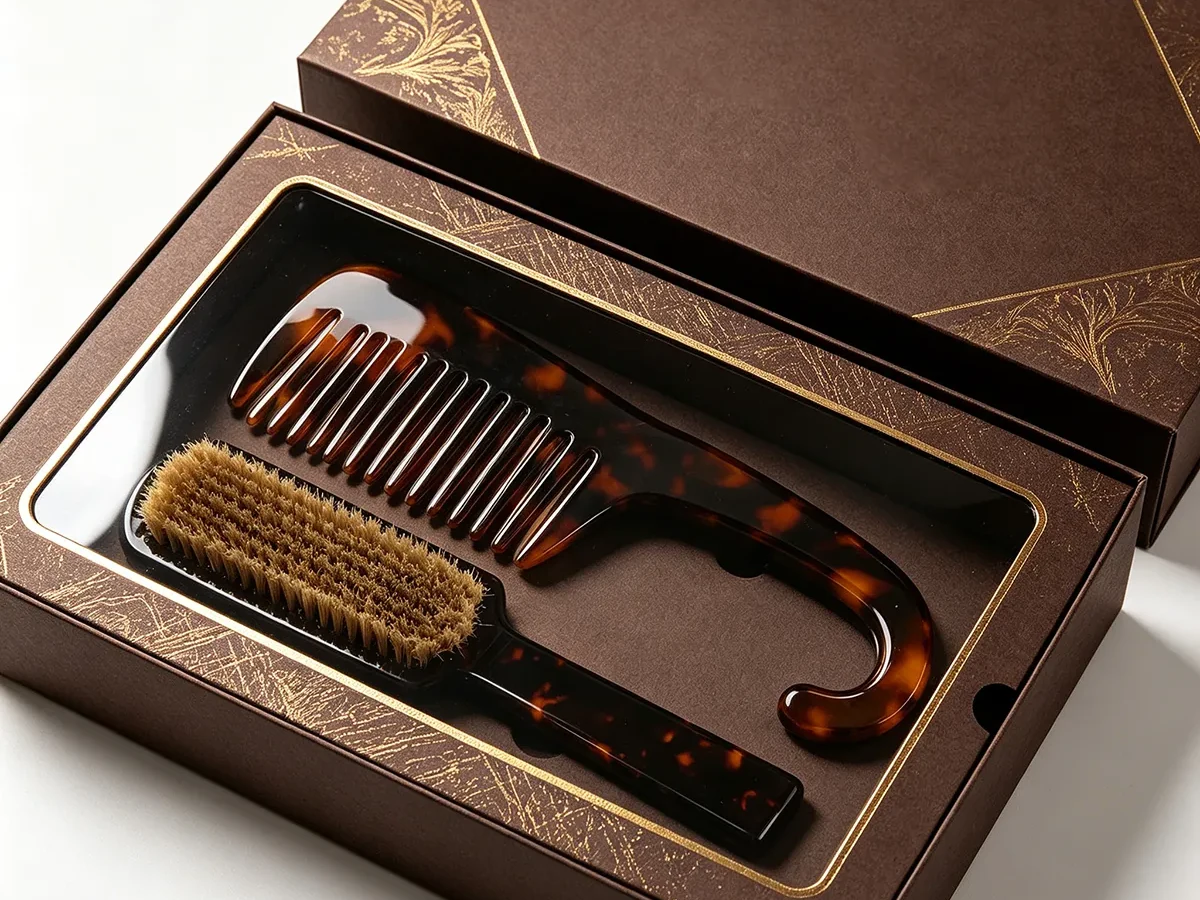
Five Mistakes That Cost First-Time Buyers the Most
- Choosing on unit price alone. The cheapest quote almost always removes polishing time, downgrades spring steel, or thins the acetate. All three surface as returns.
- Approving color on a screen. Always get physical swatches.
- Leaving packaging to the end. Printed boxes have their own lead time and their own MOQ, and they routinely delay otherwise finished orders.
- Ordering one SKU. If MOQ is per design, an assortment costs little more and tells you far more about what sells.
- Not writing down the QC standard. “Good quality” is not a standard. Name the defects that matter and the tolerance you accept.
Ready to Start?
We are a direct manufacturer of eco-friendly hair accessories in cellulose acetate, wood, and bamboo, with 25+ years on the same production lines and a mold library of thousands of existing shapes. Send us a reference photo, a target quantity, and a target price, and you will get a real quote — with the MOQ reasoning included — within 24 hours.
See what we can produce on our OEM/ODM services page, read how other brands launched in our case studies, or go straight to contact us.
Frequently Asked Questions
How long does it take to source hair accessories from China?
From first contact to goods in your warehouse, budget three to four months for a first order: two to four weeks to settle the spec and quote, two to three weeks for samples, four to six weeks for production, and four to six weeks of sea freight. Reorders of a running design cut that to roughly half.
What is a realistic MOQ for a new brand?
500 pcs per design for acetate accessories, and 1,000 pcs for acetate combs and headbands, are workable starting points. Wood and bamboo depend on the shape. Because MOQ is per design rather than per order, a launch assortment of three or four patterns is usually more achievable than buyers expect.
Do I need to visit the factory?
Not for a first order. A live video walkthrough, a verified business license, and a physical pre-production sample cover most of the risk. A visit becomes worthwhile once you are running repeat volume or developing exclusive tooling.
Can I get my own logo on the products?
Yes. Laser engraving, hot foil stamping, silk screen printing, UV printing, and recessed ink-fill are all standard, and the method is chosen to suit the material. Custom branding is available from the same MOQ as the base product.
What certifications should I ask for?
FSC for wood and bamboo, GRS for recycled content, and REACH or Prop 65 test reports if you sell into the EU or California. Ask for the certificate itself with its number and expiry date, and verify it against the issuing body’s register. See our certifications page for what we hold.