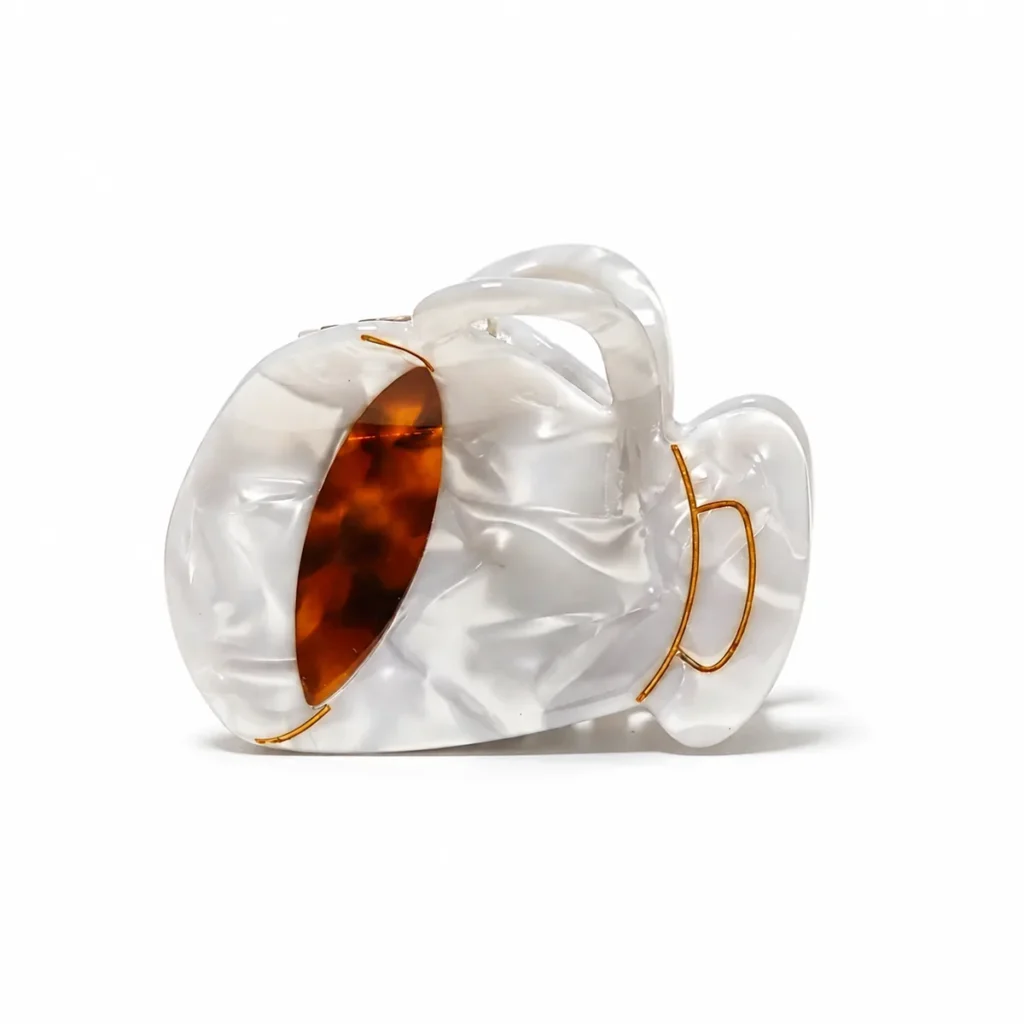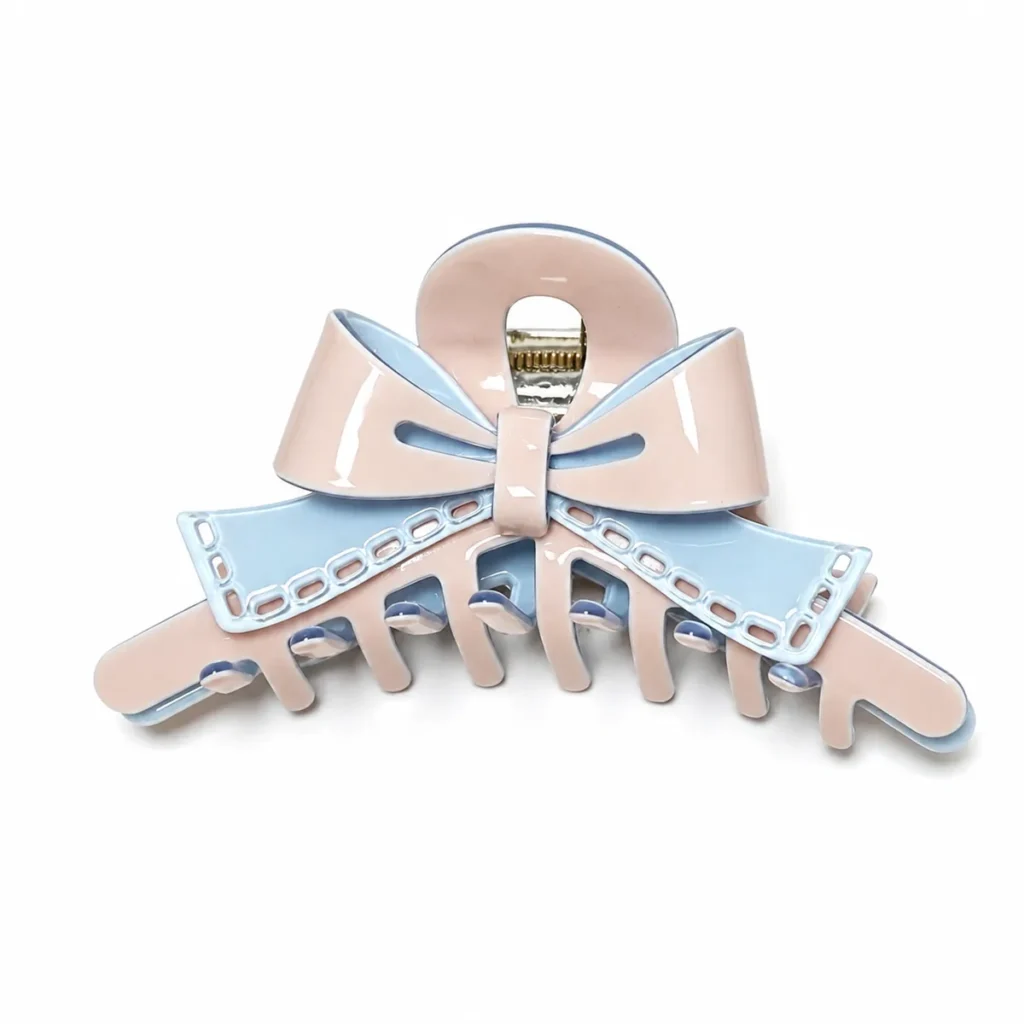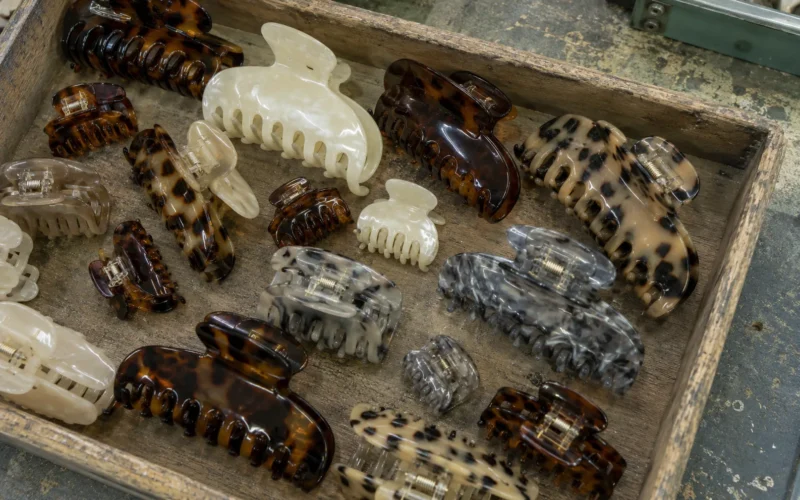
A claw clip looks like the simplest thing on the accessory wall. It is one moulded shape, one metal bar, two rows of teeth. That impression is exactly why quotations for it come back so far apart: buyers describe the shape and assume the rest is standard, and the rest is where the cost actually lives.
If you are buying claw clips for a range rather than comparing a single sample, see our claw clips wholesale buyer’s guide for the material, MOQ, spring and quotation checks to make first.
This page covers what a claw clip is mechanically, what the sizes really are once you measure a whole range rather than one sample, why weight is the specification nobody asks for and everybody pays for, and the five things to send if you want a number that survives sampling.
What Actually Holds a Claw Clip Shut
Two hinged arms, a row of interlocking teeth on each, and a coiled spring bar through the hinge. That is the whole mechanism. The teeth do not grip in the way an alligator clip’s teeth grip — they interlock with each other, and what presses them together is the spring. A claw clip that has gone soft has almost never lost its teeth. It has lost its spring.

| Clip type | What closes it | Holds | Cost sits in | Typical use |
|---|---|---|---|---|
| Claw | Spring bar through a hinge | A whole twist or bun | Body volume plus the spring | Statement piece, everyday updo |
| Banana | Interlocking combs, hinged at one end | A ponytail or long twist | Length of the toothed row | Long hair, retro ranges |
| Duckbill | Sprung jaws, one long flat jaw | A flat section against the head | The bought-in spring | Fine hair, decorative pieces |
| Snap / tic-tac | One bent metal strip | A fringe or small twist | Almost nothing | Multipacks, kids’ ranges |
If you want the sprung-jaw family explained properly rather than tabulated, we wrote a separate piece on duckbill clips. Barrettes and their minimum-order arithmetic are covered in wholesale hair barrettes. If you are still placing the clip families against each other, our overview of the seven types of hair clips shows what each one holds and where it fails.
Size, Measured Across a Whole Range
Most size guides quote one clip. The numbers below come from every claw shape we currently tool — 83 of them — each measured on the finished piece rather than taken off a drawing.
| Dimension | Smallest | Largest | Median across 83 shapes |
|---|---|---|---|
| Length | 4.5 cm | 14.0 cm | 10.5 cm |
| Height | 2.5 cm | 6.0 cm | 4.5 cm |
| Finished weight | 10 g | 63 g | 30 g |
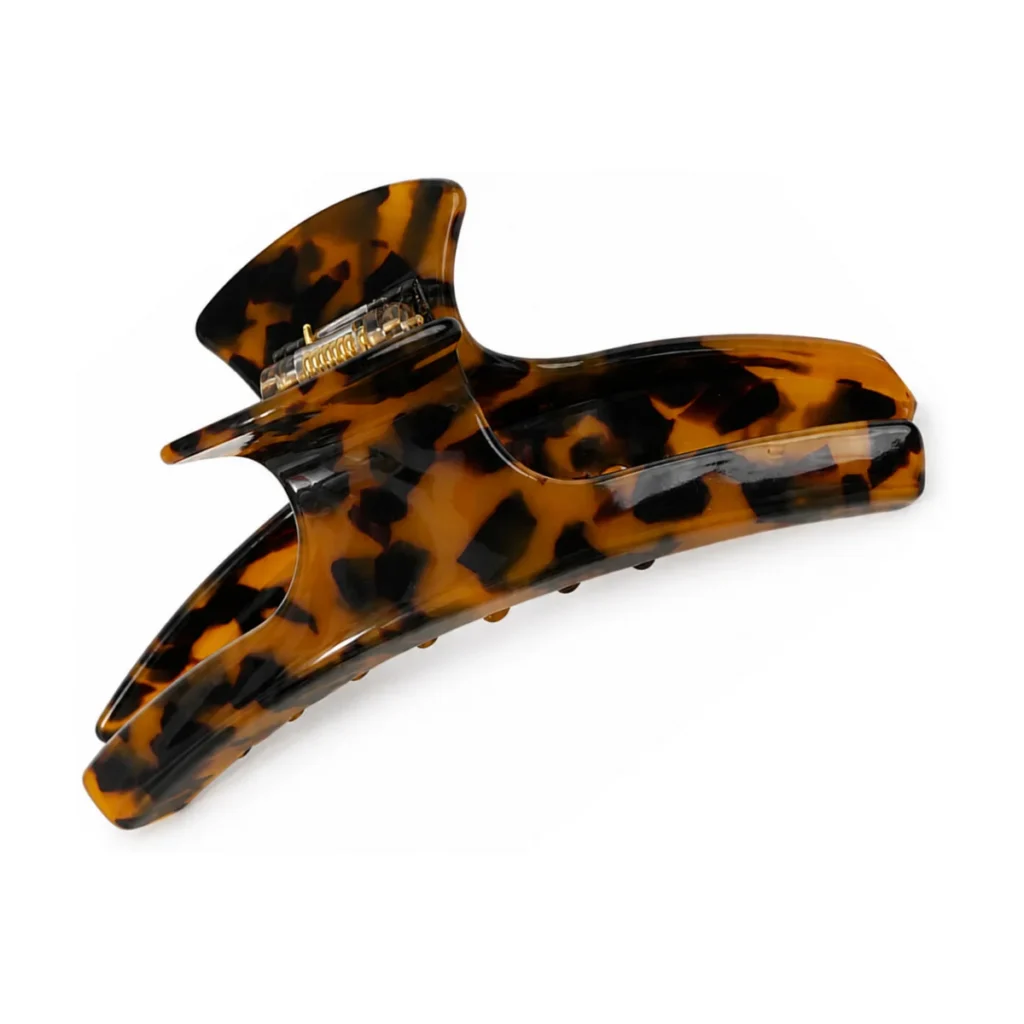
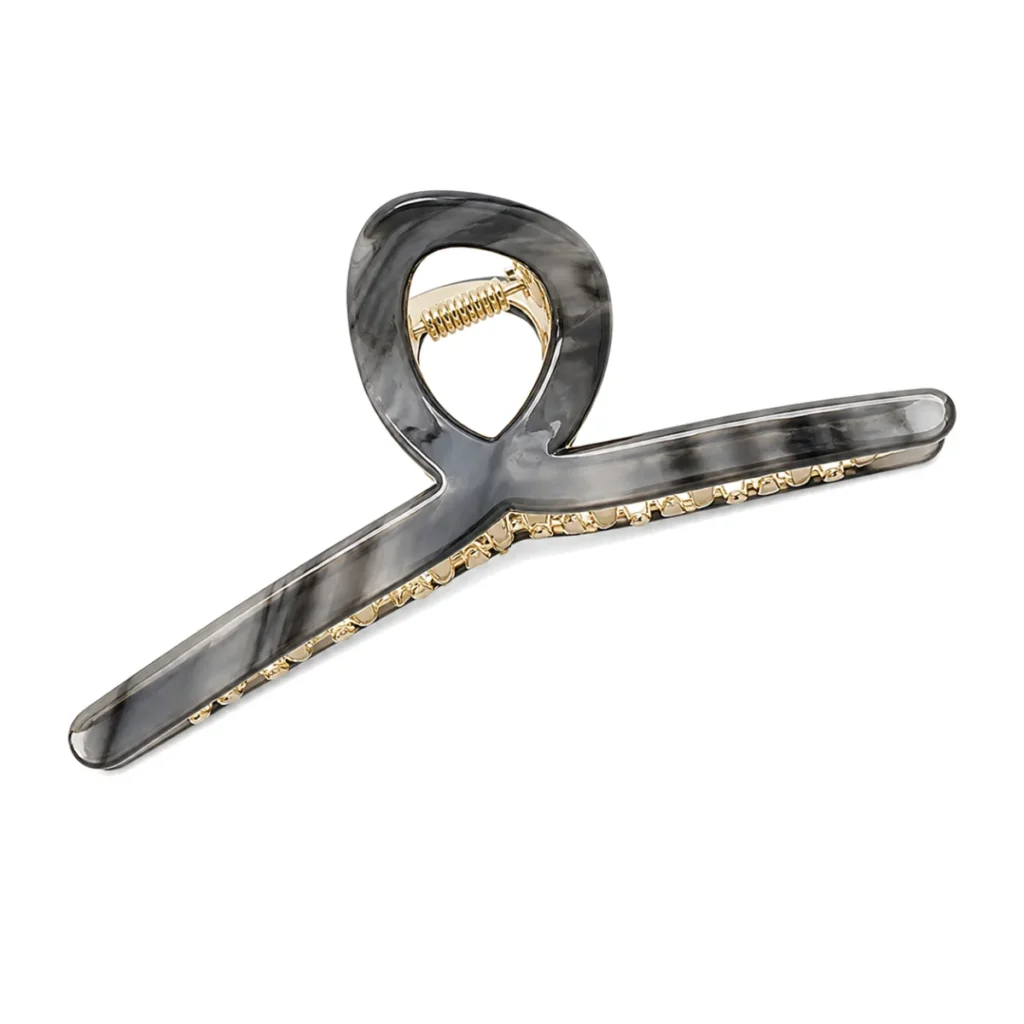
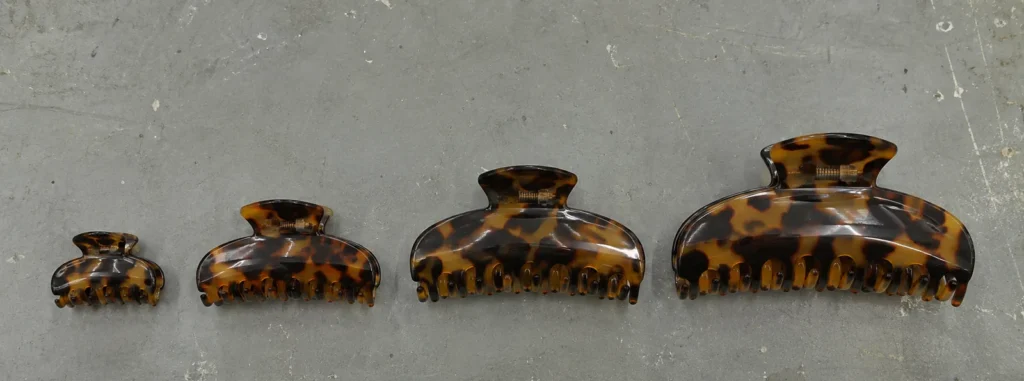
The spread matters more than the median. A 4.5 cm mushroom mini and a 14 cm gold-trim loop are the same product category and the same process, but they are not the same purchase: one is a multipack item and the other is a single-unit gift line. Deciding which end of that range you are buying, before you ask for a price, removes most of the confusion from the reply.
| Length | Holds | Where it sells | Notes |
|---|---|---|---|
| 4.5 – 6 cm | A section, half-up | Multipacks, kids, claw sets | Lightest to ship; usually sold in threes or fives |
| 7 – 9 cm | Fine to medium hair, full twist | Everyday retail | The safest first size if you only order one |
| 10 – 12 cm | Thick hair, full bun | The volume seller in most ranges | Median sits here for a reason |
| 13 – 14 cm | Very thick or long hair | Statement and gift lines | Heaviest, and the most sheet per piece |
Every shape can be cut longer, shorter or thicker than the size we tool it at. That is a property of cutting from sheet rather than moulding, and it is the single most useful thing to know before you decide a size is unavailable.
Weight Is the Specification Nobody Asks For
Across those 83 shapes the finished weight runs from 10 g to 63 g. That is a six-fold difference in how much acetate is in the piece, and acetate sheet is the largest single line in the cost of a claw clip. Two clips of the same length can differ by 20 g if one is cut from a thicker sheet or has a solid body where the other has an open frame.
This is also why a quotation that does not state a thickness is not a quotation. A supplier quoting a thinner sheet will always look cheaper, and the difference does not show in a photograph — it shows the first time a customer opens the clip fully. The reasoning behind our own minimums is set out in MOQ explained.
Heat-Press Shaping, and Why the Jaw Stays Curved
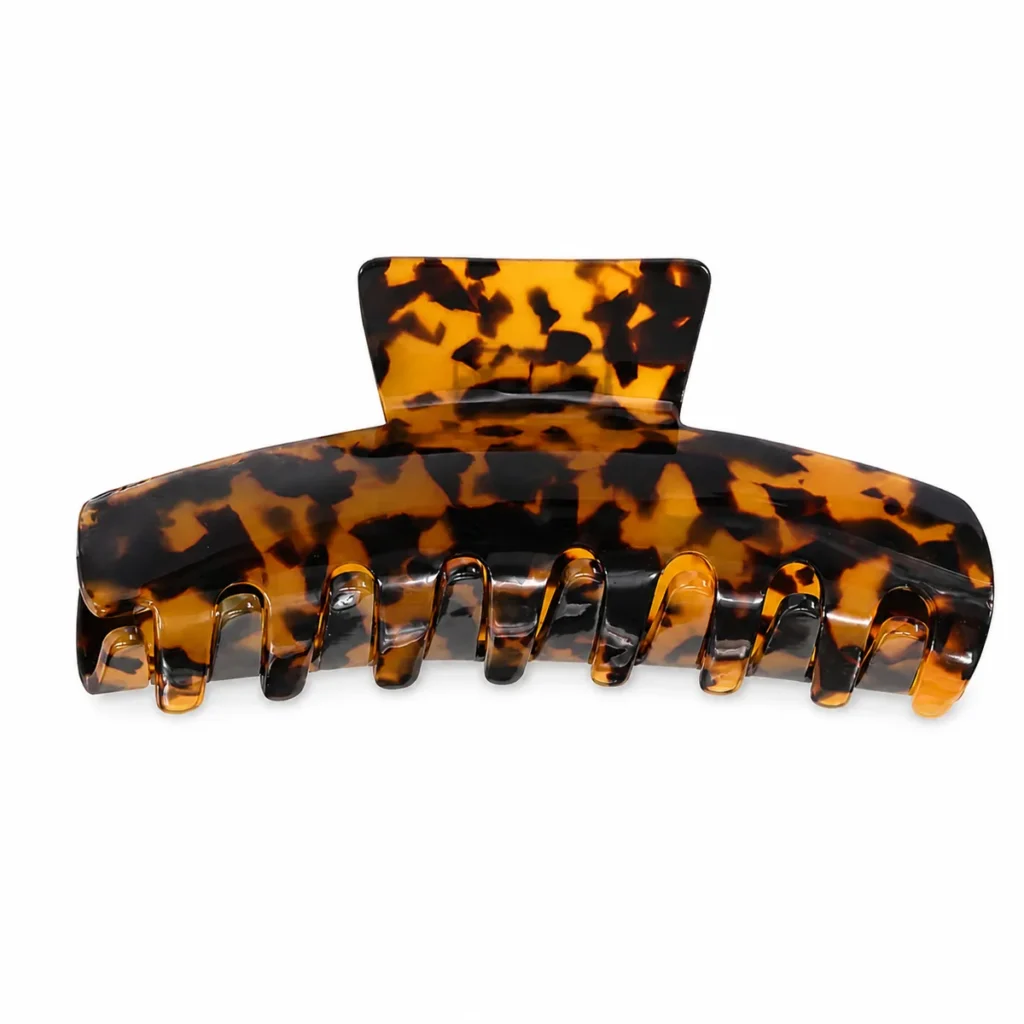
Acetate arrives as a flat sheet. A claw clip is not flat. The curve in each arm is pressed in with heat and then held while it cools, and the cooling stage is what decides whether the arm keeps that curve or drifts back towards flat over the following months.
A clip that was pressed correctly but cooled too fast will pass inspection at the factory and fail in a warehouse in July. It is not a defect you can catch on a single sample on a desk, which is why it is worth asking a supplier how long their cold-set stage runs rather than whether they heat-press at all. Everybody heat-presses.
How the Body Gets Made
Shapes are cut from sheet, not injection moulded. That one difference decides the economics of the whole category: a new outline costs a cutting profile rather than a steel tool, so a shape that has never existed before can be made in a few hundred pieces instead of tens of thousands.
What that buys you commercially is range. Twelve colourways of one shape cost no more in tooling than one colourway, because they are the same cutting profile run against different sheet. The full comparison with moulded plastic is in acetate versus plastic.
The Minimum, and How Colours Behave
Our minimum on acetate claw clips is 500 pieces per design — one shape, one size. The part that surprises first-time buyers is that sizes and colours do not behave the same way.
| What you change | Is it a new minimum? | Why |
|---|---|---|
| Same shape, different sheet pattern | No | Same cutting profile, different sheet |
| Same shape, different length | Yes | A new cutting profile and a different spring length |
| New outline entirely | Yes | A new cutting profile |
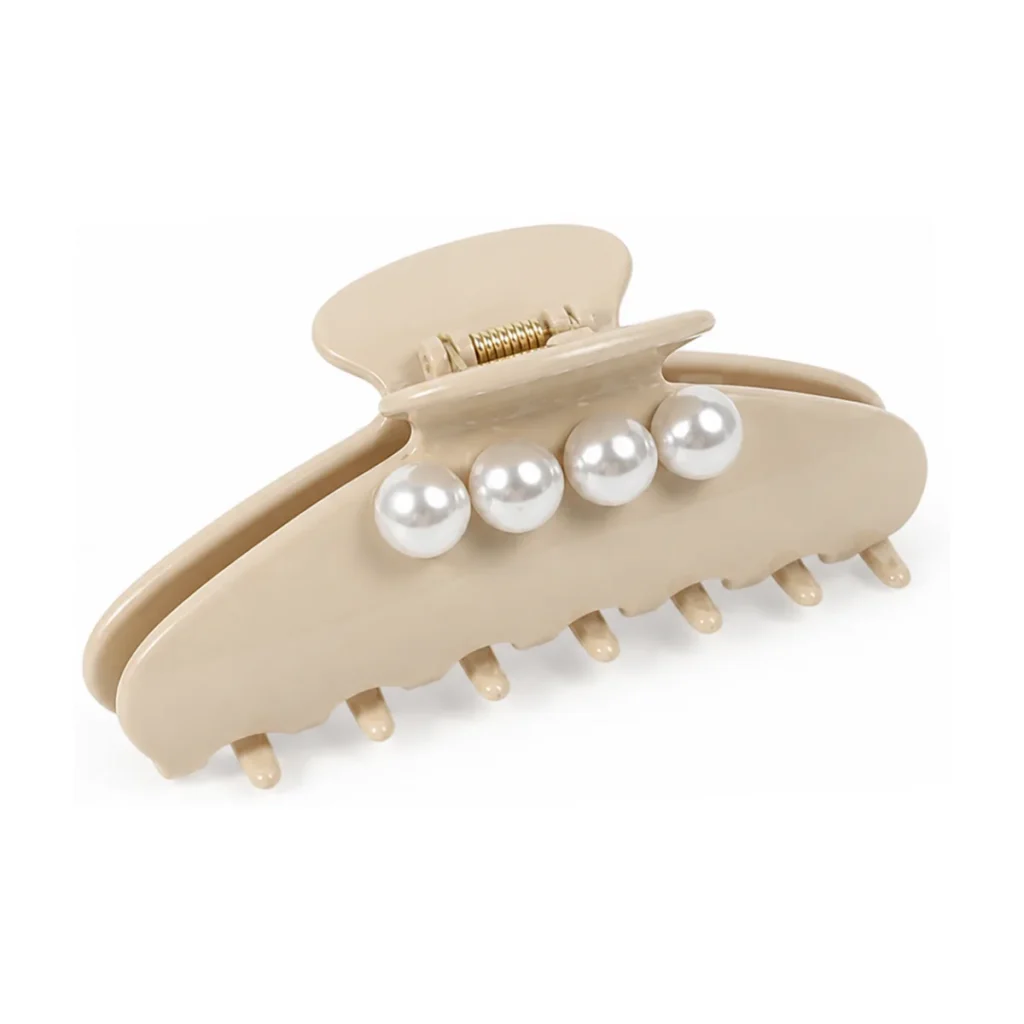
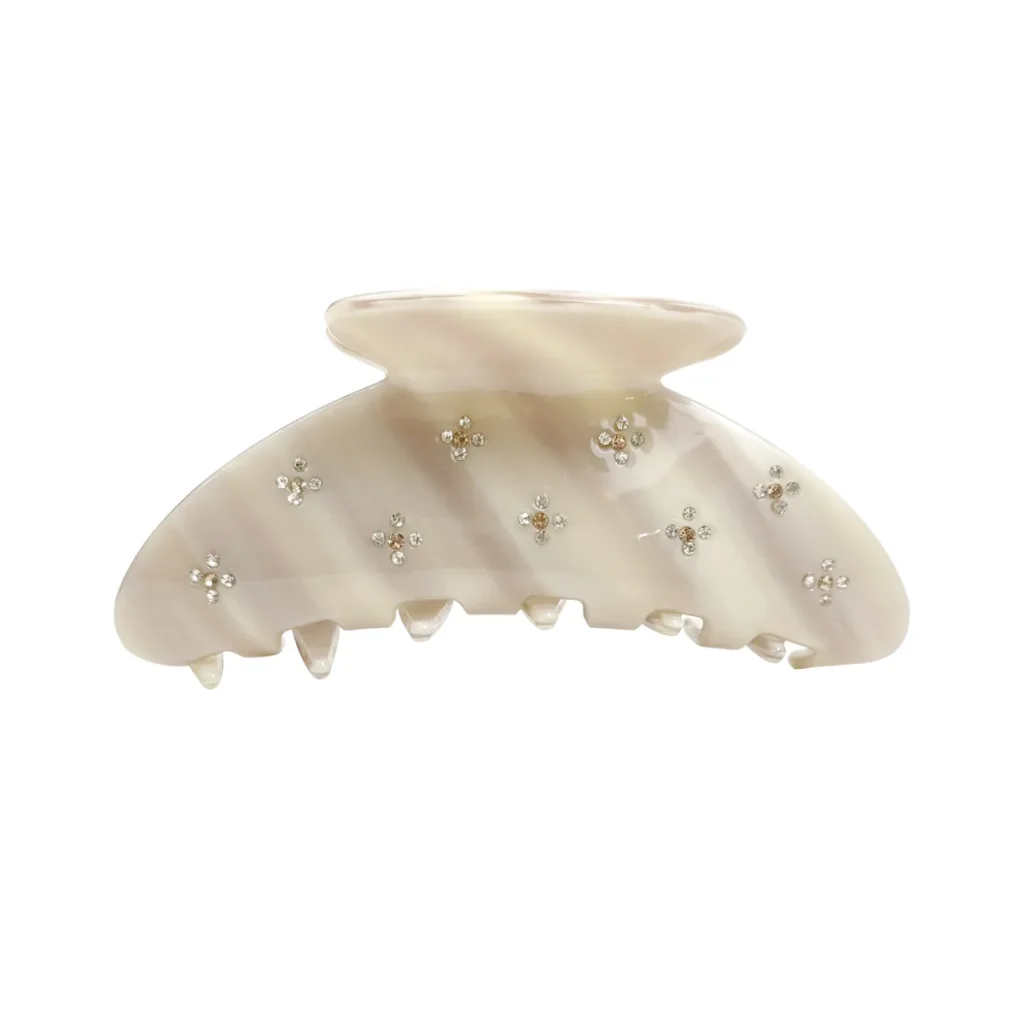
| Adding a trim, pearl or stone | No, but the unit price moves | Added parts and added labour |
So a four-colour launch of one shape is one minimum, not four. Three sizes of that same shape is three. This is the arithmetic that most often puts a first order over the budget a brand had in mind, and it is worth doing before the range is signed off rather than after.
Colour: Stock Sheet or a Sheet of Your Own
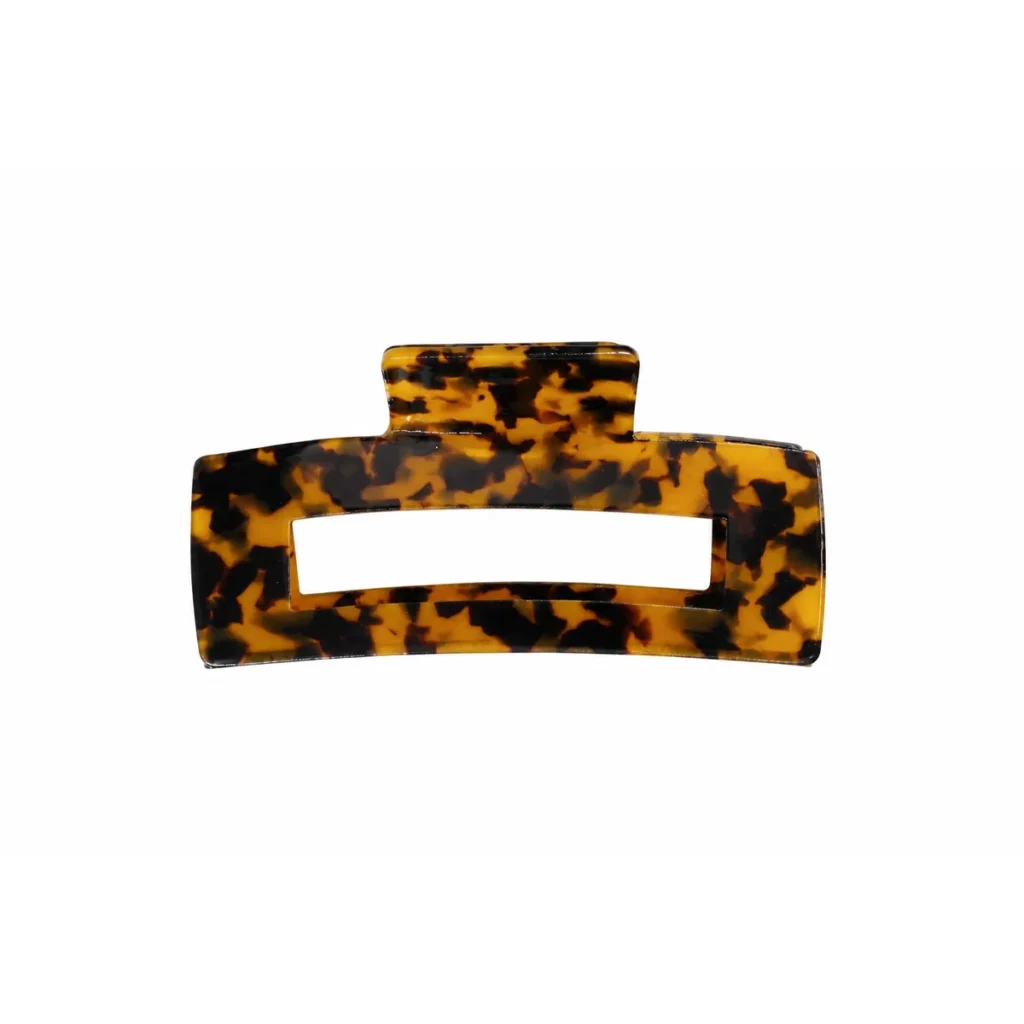
Acetate patterns live inside the material rather than on it. A tortoiseshell clip is tortoiseshell all the way through, which is why a chipped edge shows the same pattern underneath instead of grey. It is also why colour is not a finishing decision here — it is a material decision, made before anything is cut.
Stock sheet carries no development cost and no extra weeks. A bespoke pattern — your own tortoiseshell mix, a specific pearl, a Pantone-matched solid — means a sheet run, and sheet runs carry their own minimum from the mill that is considerably higher than the clip minimum. For a first order the arithmetic almost always favours picking from stock and putting the difference into packaging, which is where a shopper forms a price impression.
Commission your own sheet on the reorder, once you know which two colourways earned their shelf space. The honest version of the sustainability question, which buyers increasingly ask about acetate, is in is cellulose acetate biodegradable.
What Moves the Unit Price
- Sheet thickness. The largest line, and the one most often left unstated.
- How the shapes nest. An awkward outline wastes sheet, and the waste is in your price.
- The spring. A bought-in part. The spread between an adequate one and a good one is about one yuan a piece — invisible on 500, material on 50,000.
- Added parts. Pearls, stones, metal trims and inlays are each a part and an operation.
- Hand work. Hand-set stones are a unit of labour per stone, not per clip.

Point three is the one worth pressing a supplier on. Ask what the spring is specified as and ask for the finish separately. A supplier who cannot answer is buying whatever the component shop had that week, which is precisely how a repeat order comes back feeling unlike the sample that was approved.
The Two Defects That Cause Most Rejections
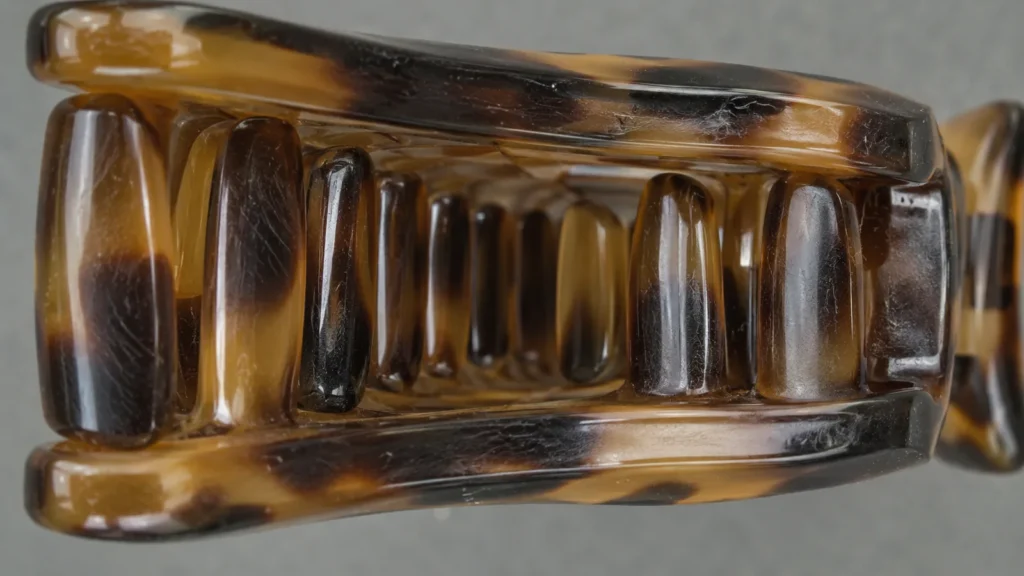
Claw clips fail at the hinge, not in the body. The acetate itself is a solid piece of material and rarely gives trouble. Both of the checks below work on a single sample, on a desk, in under a minute.
| Check | How | What a failure looks like |
|---|---|---|
| Teeth alignment | Close the clip and look down the toothed row from the end | Teeth meet on one side before the other, or one row sits proud |
| Spring seating | Open fully and let it close on a finger | It closes in two stages, or feels soft at the end of the travel |
| Hinge play | Hold both arms and twist gently in opposite directions | Visible lateral movement at the hinge |
| Edge finish | Run a thumbnail along the inside edge of each arm | A ridge you can feel — it will catch hair every time |
The longer the clip, the harder all four get. A small alignment error at the hinge becomes a visible gap by the time it reaches the end of a 14 cm arm, which is part of why the largest sizes carry the highest rejection rates.
Packing, and the Freight Surprise
Claw clips are the bulkiest thing in a hair accessory range. A 14 cm clip weighs 63 g but occupies far more carton than its weight suggests, and air freight is charged on volumetric weight rather than actual weight. Packaging decided for the shelf can therefore double a freight bill without changing the product at all.
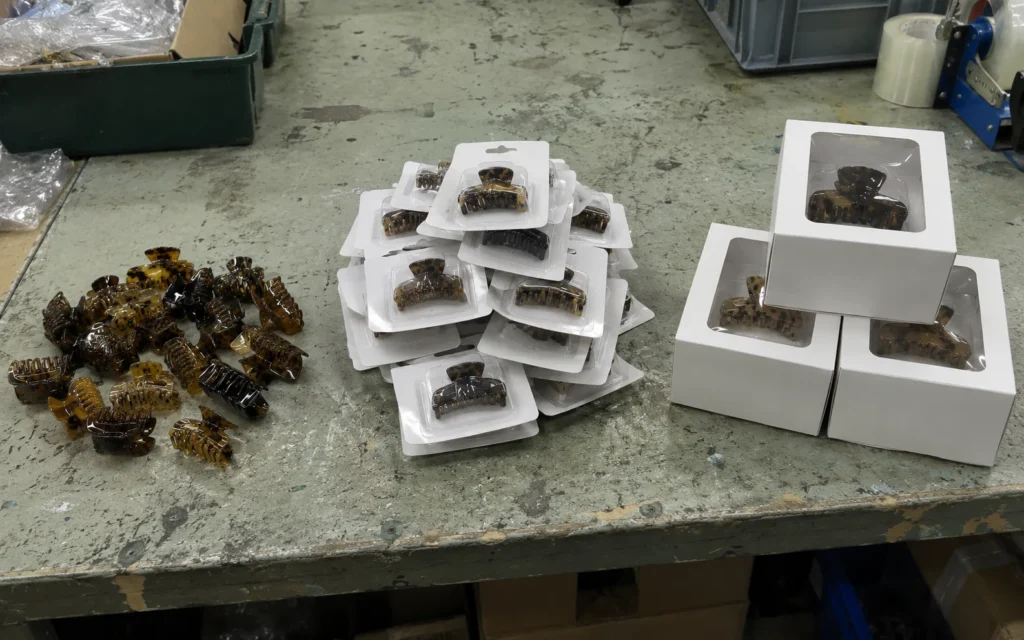
Two decisions do most of the damage. A blister card holds the clip open, which is good merchandising and roughly triples the volume of the same clip. A rigid gift box does the same again. Neither is wrong, but both belong in the freight calculation from the start, not after the quotation has been signed.
Settle the retail packaging before you quote the freight, not after. The costs and minimums on the packaging side are set out separately in packaging MOQ and cost.
Compliance, Briefly
- The spring, not the acetate. On a claw clip the part that attracts regulatory attention is the metal — nickel release in the EU in particular. Specify the hardware and tell your supplier which market the goods are for at the briefing stage, because it changes the component we buy.
- California. A clip body that is entirely fine can sit on a spring that is not. The importer-facing version of this is in Prop 65 for hair accessory importers.
- Claims. If you intend to make a material claim on the card, it needs substantiation behind it. Do not put a certification logo on packaging you cannot back up.
What to Send Us for a Real Quotation
Five things. With all five we can quote a number that holds through sampling; with fewer, any number is a guess that gets revised later.
- The outline. A sketch is enough. It does not need to be a technical drawing.
- The length, measured along the finished piece.
- The sheet thickness, or the finished weight you are aiming at if you do not know the thickness.
- The colour count, and whether the patterns come from stock sheet or a sheet you want developed.
- Any added parts — pearls, stones, metal trim — and whether they are set by hand.
If you already have a design, send it and you will get a costed schedule rather than a single number. If you do not, the faster route is to start from a shape that already runs and change the sheet rather than the outline. What a sample should cost, and what to check before approving one, is in sampling costs and approval. Timing from approved sample to goods on the water is broken down in where the 62 days go.
The full range, including the 83-shape catalogue with every measured size and weight, is under claw clips.
Claw Clips We Make