Hot foil stamping, laser engraving, recessed ink-fill
Material
Cellulose Acetate
Service Type
OEM / ODM
Origin
Dongguan, Guangdong, China
Product Description
Two different products arrive under the same enquiry. Half the buyers who write to us about a pearl claw clip mean a clip cut from pearlescent acetate — no pearls on it at all, just a sheet with depth and shift. The other half mean a plain clip with real-looking pearls set into the face. We make both, we make them together, and the first thing worth settling in a brief is which one you are actually asking for.
Pearl Acetate Is a Sheet, Not a Coating
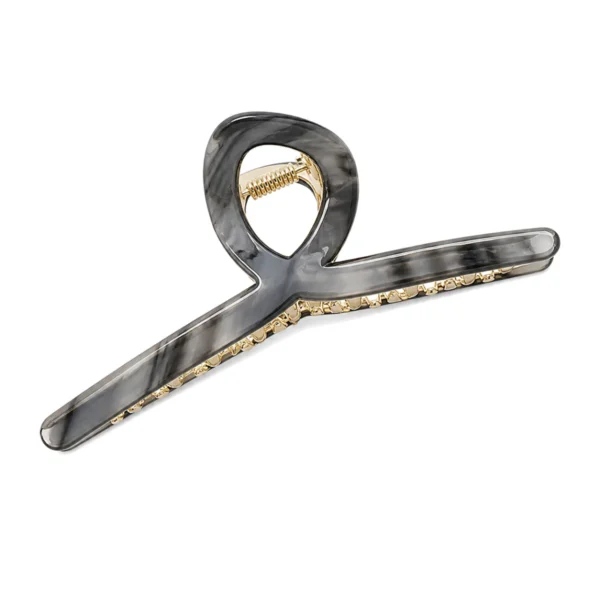
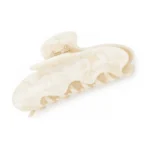
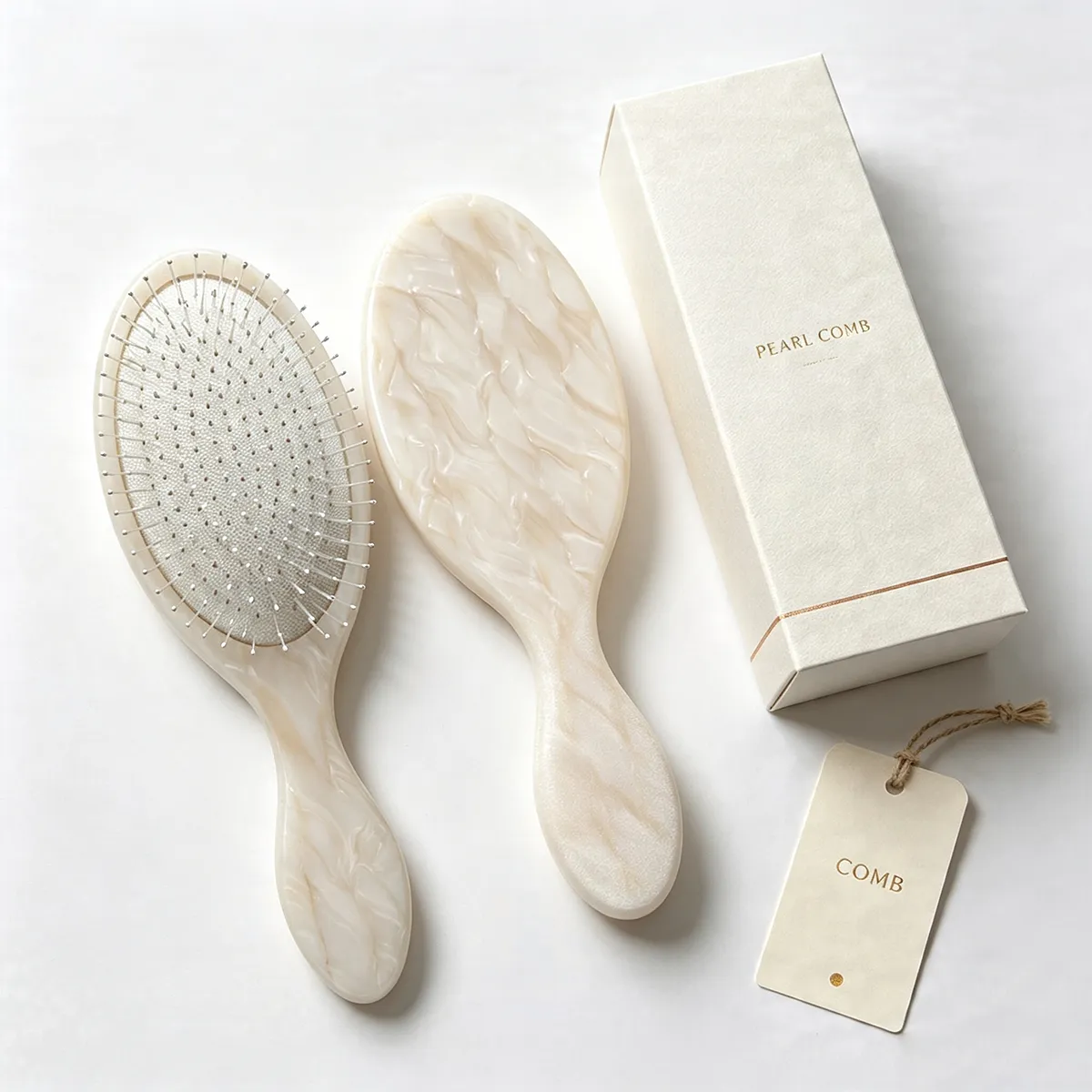
Pearlescent acetate gets its shift from mica laminated into the block, not from anything sprayed on afterwards. Because the shimmer is suspended through the thickness of the material, the clip changes as it turns — the face reads cream, the polished edge reads almost white, and a curved arm picks up a highlight that moves. A sprayed pearl finish does none of that; it looks flat from every angle and scuffs at the teeth first.
We hold ivory, cream, champagne, rose and opal blue pearl sheets in stock. Rose and opal shift the most and photograph best; ivory is the one that sells all year. The same two-second test as any laminated sheet applies — look at the side of a tooth, and the pearl should be there too.
Set Pearls: Four Ways We Mount Them
When a brief means actual pearls, the mounting decides whether the clip survives its first month:
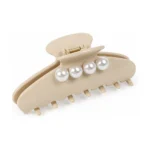
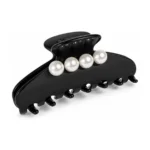
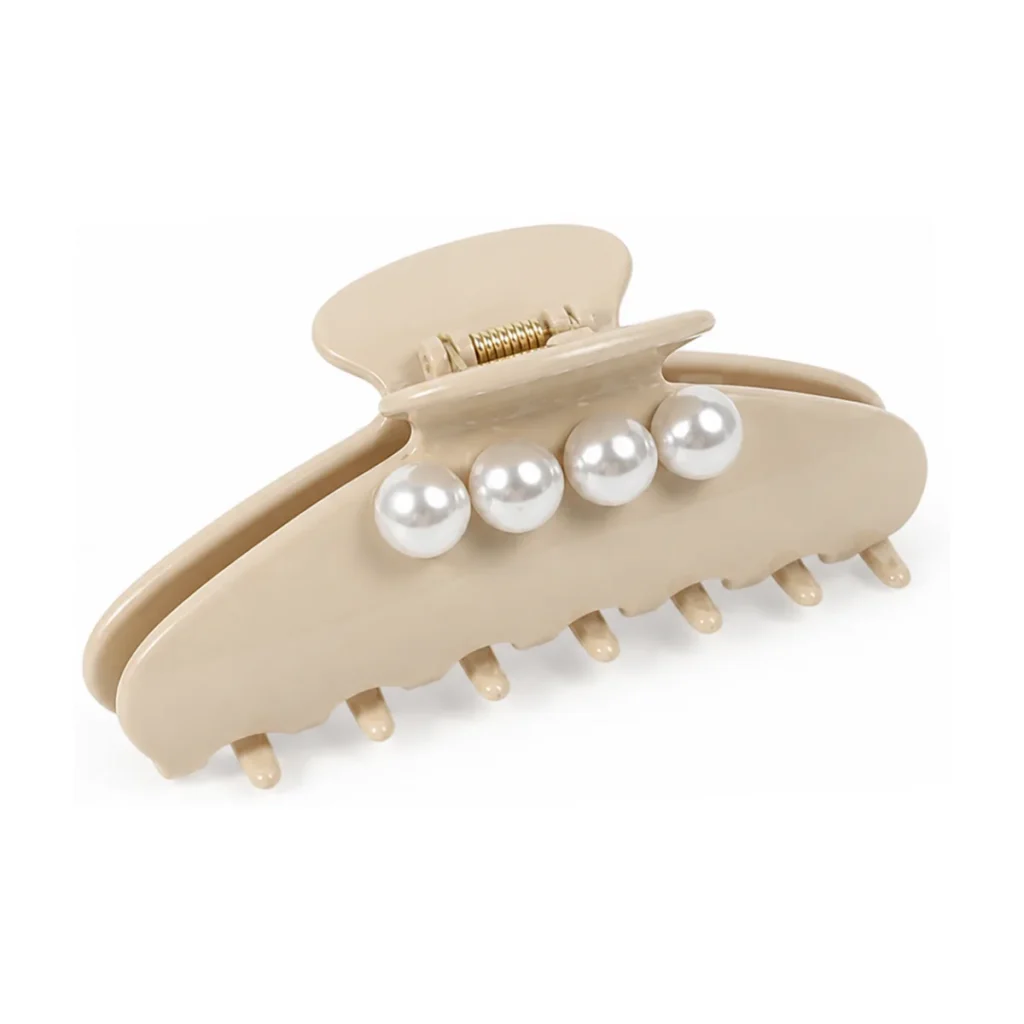
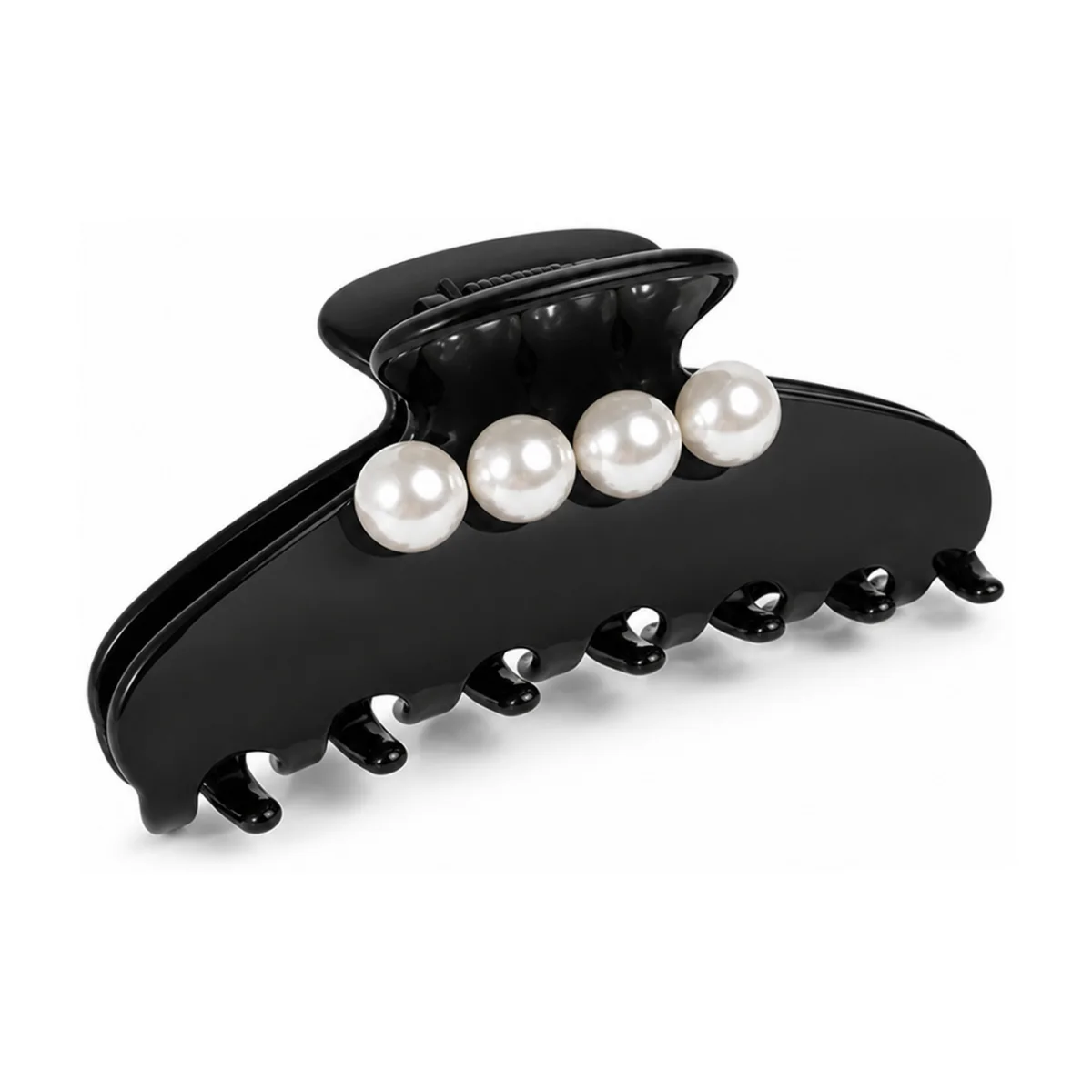
A row of four large pearls. 8 mm pearls across the upper arm — the most recognisable “pearl clip” silhouette on a shelf, and the one that photographs at thumbnail size.
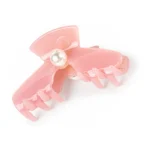
A single statement pearl. One large pearl at the hinge. Cheaper per unit, and it survives handling better because there is one mounting point instead of four.
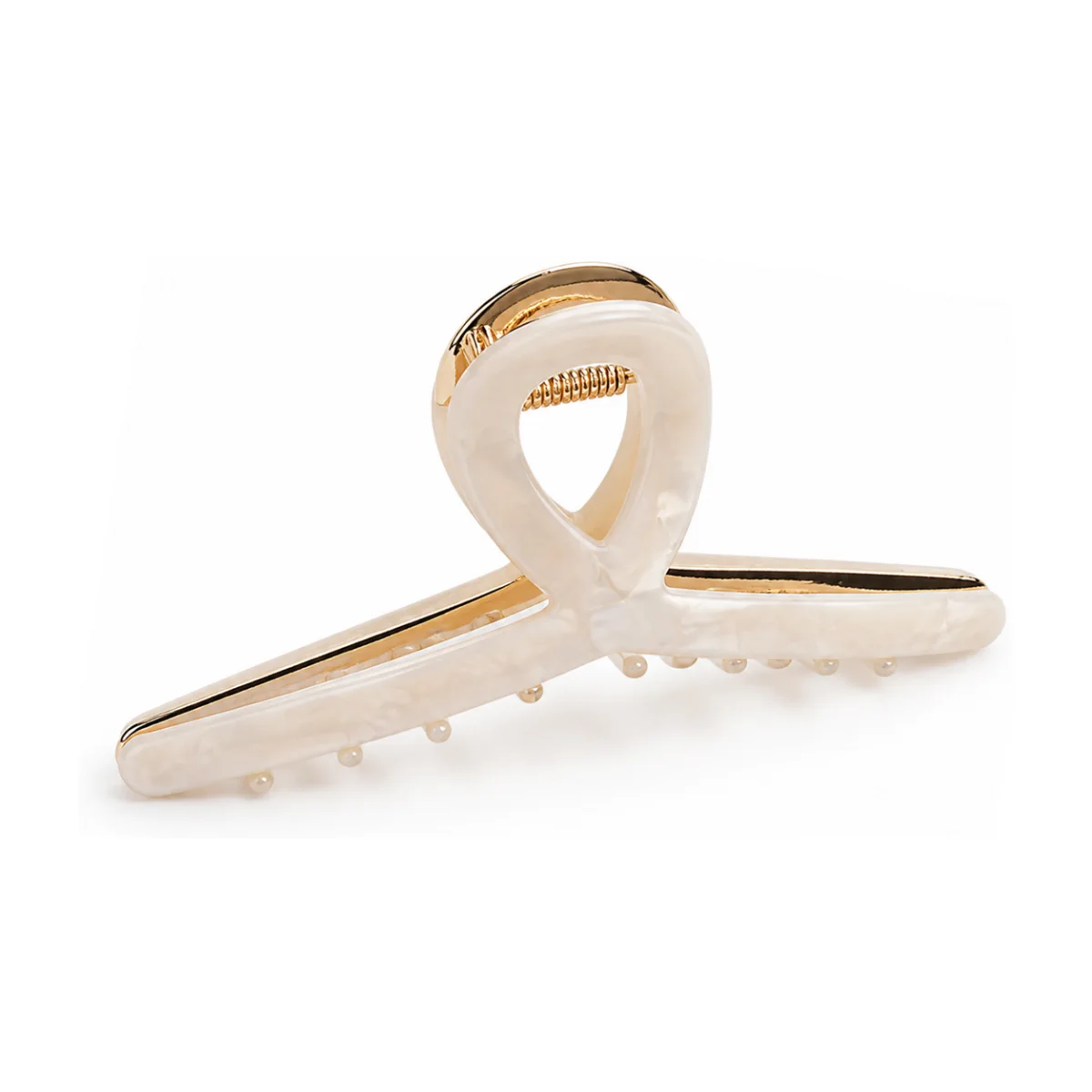
Pearl-tipped teeth. Small pearls capping each tooth, usually over a gold trim. Highest perceived value in the range, and the most labour.
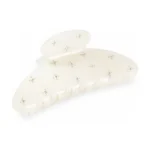
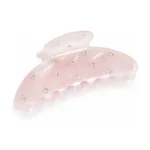
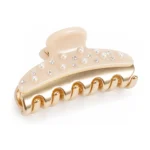
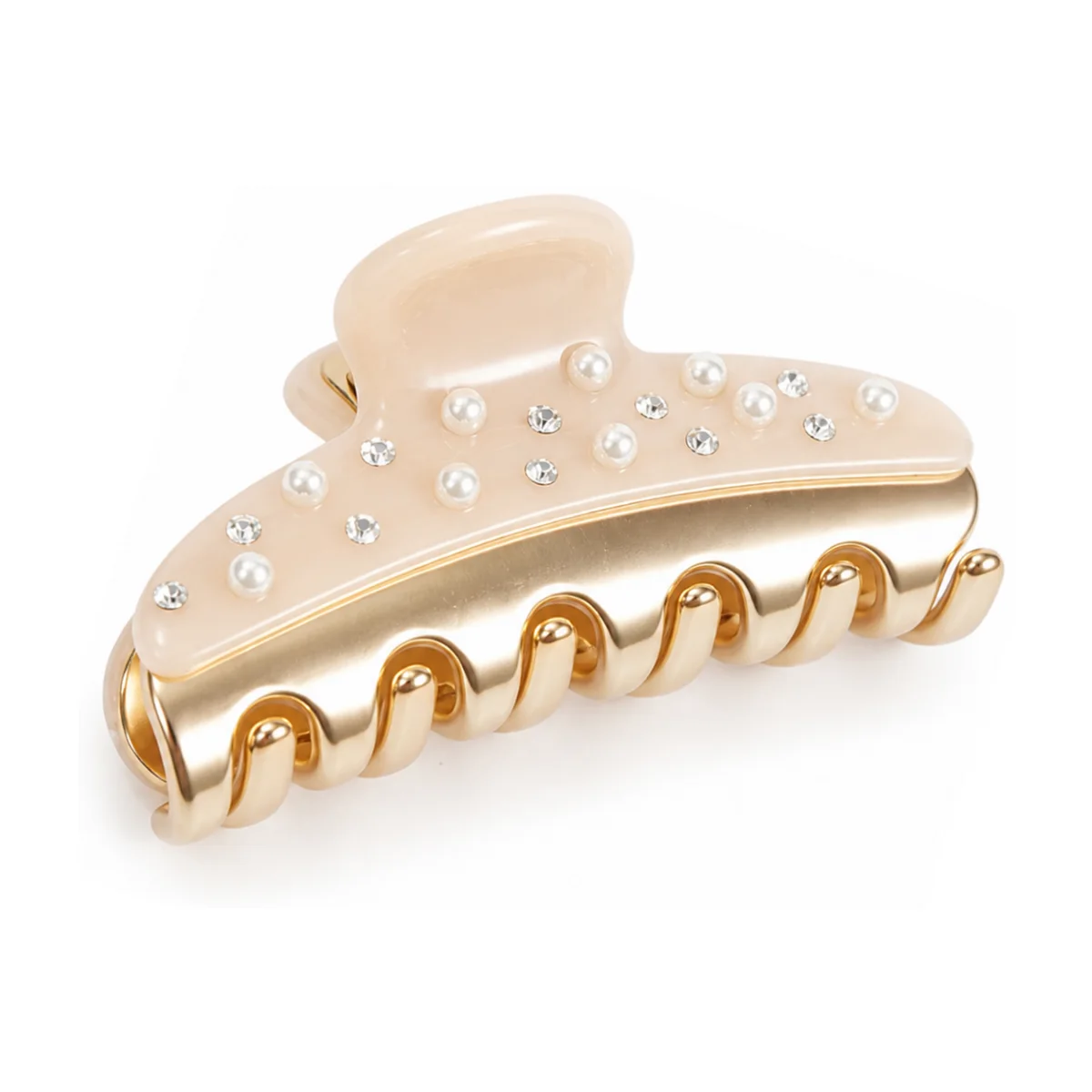
Scattered pearl and crystal. Mixed sizes across the face, often on a pearl sheet, so the set pearls and the sheet reinforce each other.
Every pearl is seated in a drilled recess, not glued to a flat surface. Surface-glued pearls are the single most common failure in this category — they survive the photoshoot and come off in a handbag, and the customer blames the brand rather than the factory. Drilling costs more per piece and is not negotiable at our end.
The Two Together, and When Not To
Set pearls on a pearl sheet is the combination most brands land on after sampling, because the sheet gives the piece depth at arm’s length and the pearls give it a reason to be picked up. It works when the sheet is quiet — ivory or cream.
It stops working on a busy sheet. Rose and opal pearl already have movement of their own, and set pearls on top of them read as clutter in photography even when they look fine in the hand. On those sheets we recommend a plain face, or crystals rather than pearls. Black and burgundy solids are the other direction that consistently works: the pearls have maximum contrast and the clip photographs cleanly on any background.
Sizes, from a 6 cm Mini Up
The pearl range runs from a 6 cm mini claw at 13 g through to an 11.5 cm body at 36 g. The minis matter more than their size suggests — they are the impulse-buy price point and the multipack filler, and pearls raise their perceived value further than they raise their cost.
Spring tension is set per size, not per shape. A 6 cm clip with a heavy spring is unusable on fine hair; an 11.5 cm clip with a light one gapes at the ends. Tell us the hair type you are designing for and we match tension on the sample.
Ordering and Customisation
Minimum is 500 pcs per design, and mixed sheets of one shape share that minimum. Pearl size, count and placement are all specified on the drawing — moving four pearls to five, or 8 mm to 6 mm, does not change the minimum or the tooling.
Make this product your own. Every detail is customizable for orders meeting the MOQ.
Custom Logo
Laser engraving, hot stamping, silk screen printing, or UV printing on product body and handle.
Custom Color & Pattern
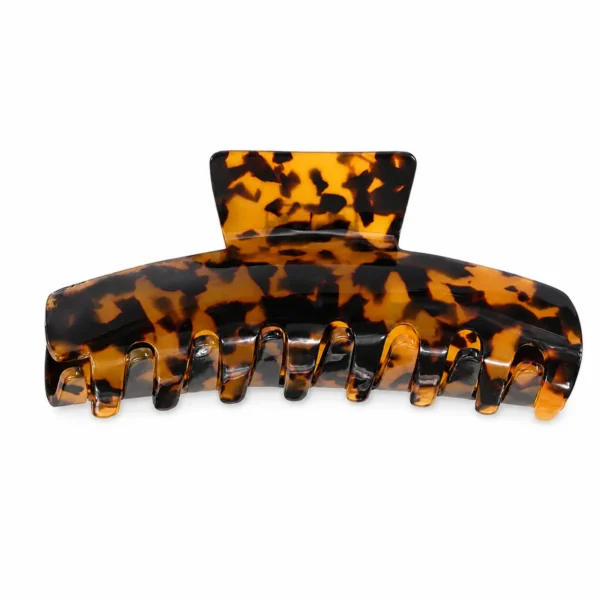
Pantone color matching. For acetate: custom tortoiseshell, marble, and unique pattern designs.
Custom Shape & Size
Modify dimensions or create entirely new shapes. 2,000+ existing molds or develop new ones.
Custom Packaging
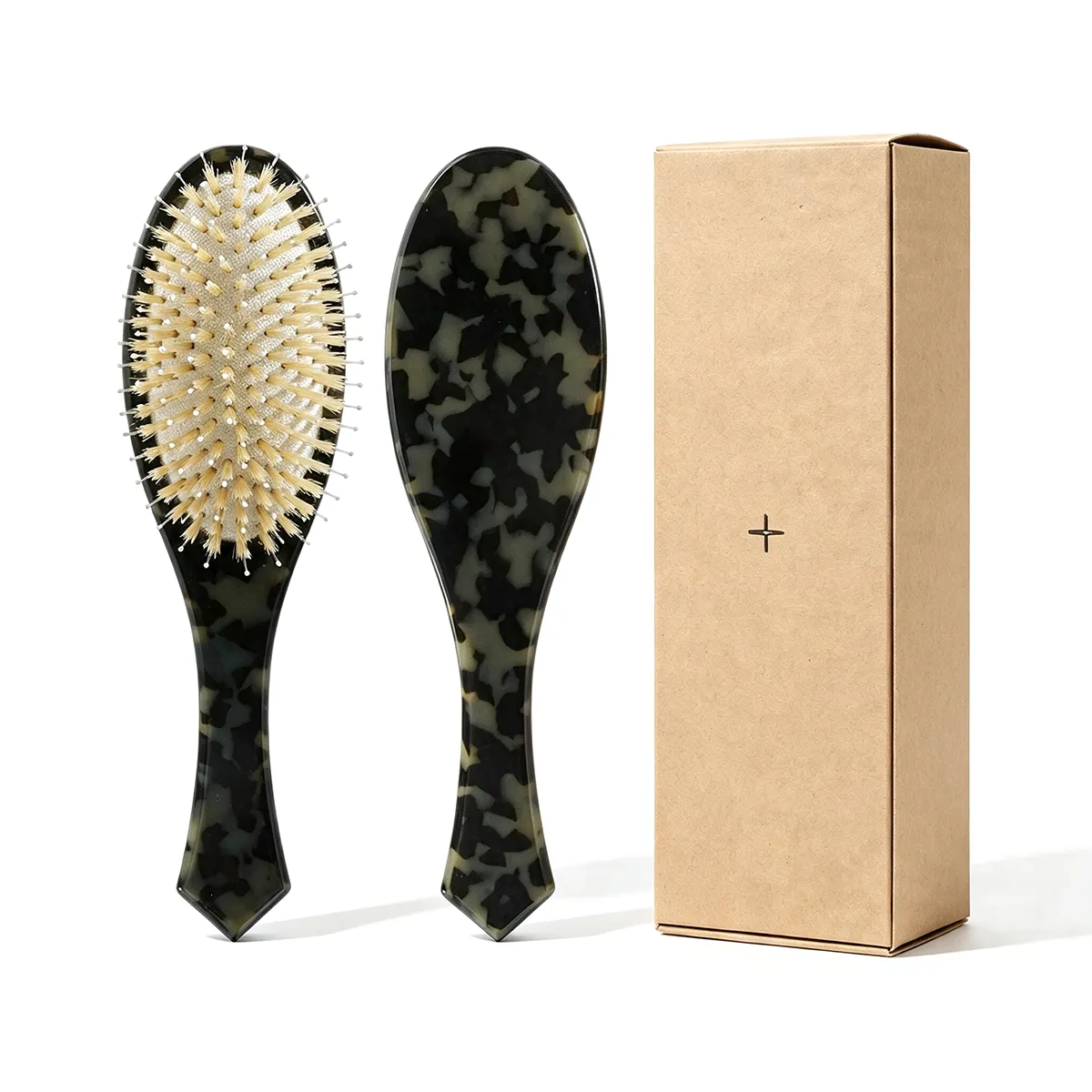
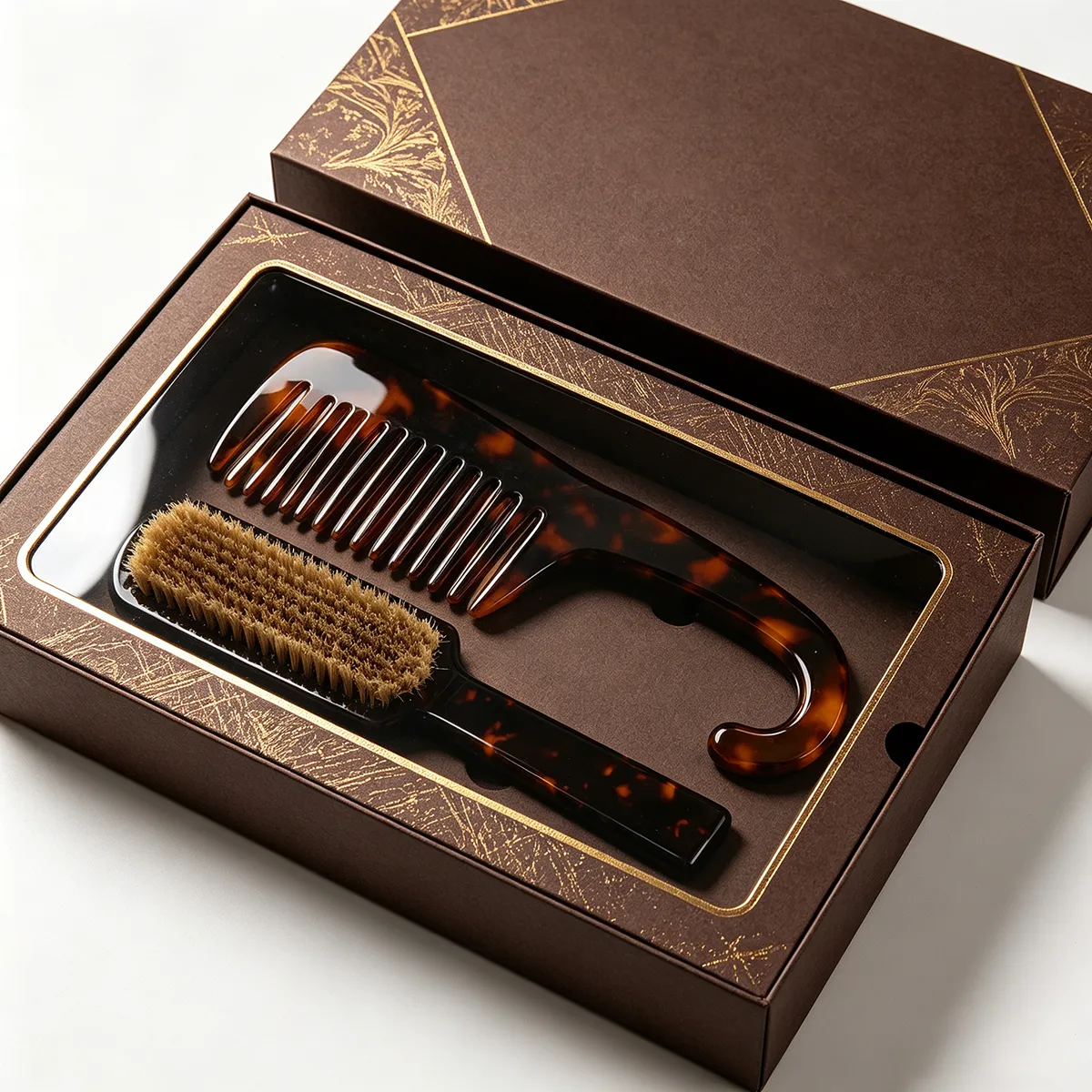
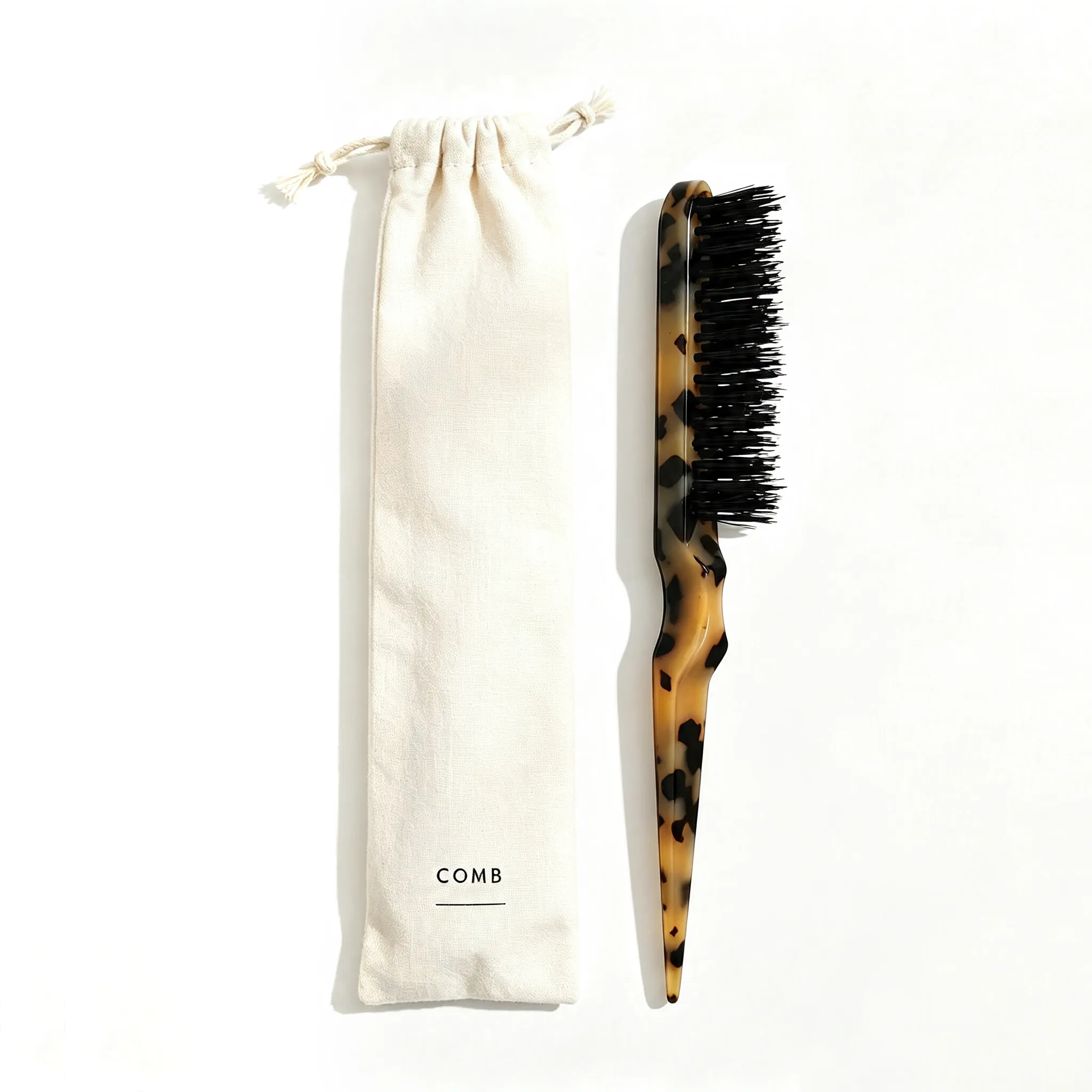
Kraft boxes, velvet pouches, blister packs, retail-ready display cards. Your brand on every package.
Colours & Patterns
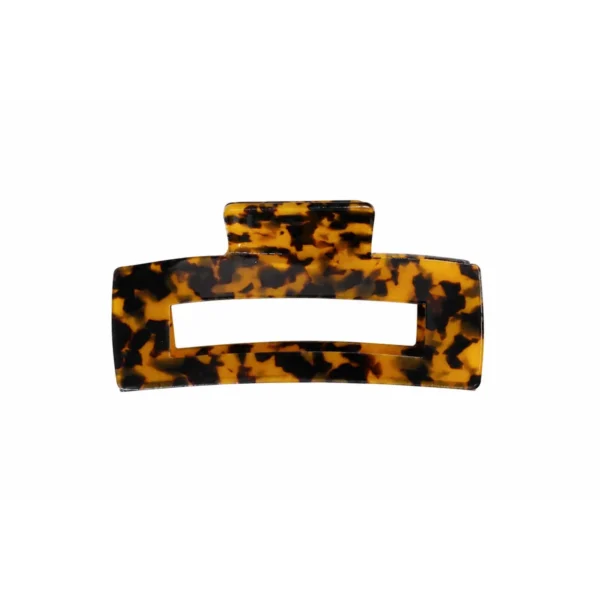
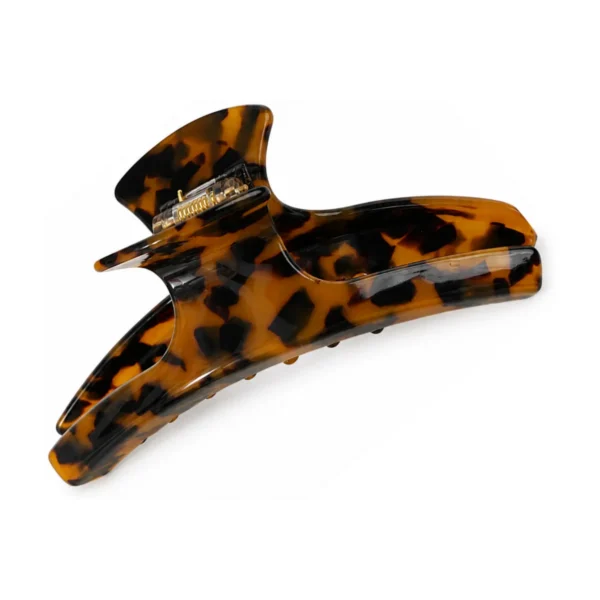
These are the stock colours this shape runs in. Any Pantone reference can be matched on top of them — colour is mixed into the material, not sprayed on the surface, so it never chips or fades.
Tortoiseshell
Amber
Chocolate Brown
Blush Pink
Ivory Cream
Deep Blue
Olive Green
Burgundy
Matte Black
Your Pantone
Send a Pantone code or a physical reference and we will match it on the sample before bulk. See the full pattern library →
Packaging Options
Packaging is produced alongside the product and ships as one order. Printed packaging carries its own lead time, so tell us early which route you want.
PolybagIndividual OPP or biodegradable bag — the default for bulk shipments.
Hangtag & Backer CardRetail-ready with your artwork, barcode and hanging hole.
Kraft BoxUnbleached recycled board — the low-waste choice for eco lines.
Rigid Gift BoxPrinted rigid box with insert for premium and gift positioning.
Cotton PouchDrawstring pouch for travel sets and subscription boxes.
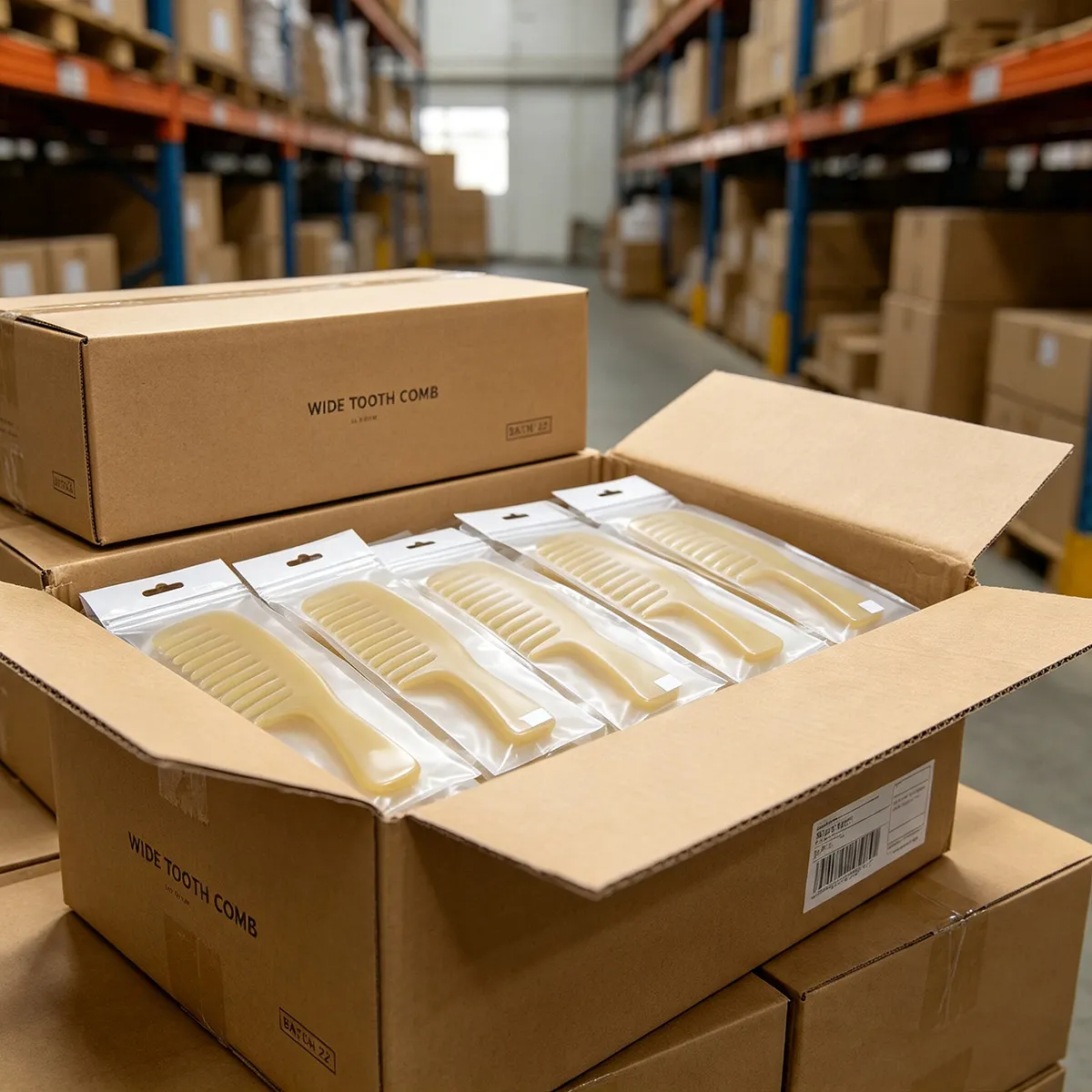
Export CartonMaster cartons with your shipping marks and carton labels.
Samples, Lead Times & Shipping
Samples
Samples from an existing mould ship against a sample fee that is credited back against your first bulk order. Custom-tooled samples are quoted case by case.
Sample lead time: 15-20 working days
Production
Bulk production starts once the pre-production sample is approved in writing. Reorders of a running design are faster, because tooling and colour are already set.
Bulk lead time: 25-45 working days
Shipping Terms
FOB, CIF, DAP and DDP are all available, by sea or by air, from Shenzhen or Guangzhou. DDP is the simplest route for a first order.
Payment: 30% deposit, 70% before shipment
About Cellulose Acetate
Cellulose acetate is a plant-derived, biodegradable material made from wood pulp or cotton fibers. Unlike petroleum-based plastics, it breaks down naturally over time, making it an eco-friendly choice for premium hair accessories. Its unique properties allow for rich color patterns — from classic tortoiseshell to custom marble effects — that cannot be replicated with standard plastics.
As a manufacturer with 25+ years of experience, EcoHairFactory has mastered the intricate process of cellulose acetate production — from sheet selection and pattern matching to precision cutting and multi-stage hand polishing. Each piece undergoes 8–12 finishing steps to achieve the signature smooth, glossy surface that defines high-end acetate accessories.
Frequently Asked Questions
Both, and buyers use the words for both. Pearl acetate is a mica-laminated sheet with shift and no pearls on it; set pearls are mounted into a drilled recess on the face. We make either, or the two combined.
Each pearl sits in a drilled recess, not glued to a flat surface. Surface-glued pearls are the most common failure in this category — they survive the photoshoot and come off in a handbag.
Ivory, cream, champagne, rose and opal blue. Ivory sells year-round; rose and opal shift the most and photograph best.
Technically yes, but we advise against it on rose and opal — those sheets already have movement and the pearls read as clutter in photography. Quiet sheets and solid black or burgundy give the pearls contrast.
A 6 cm mini at 13 g. It is the impulse price point and the multipack filler, and pearls lift its perceived value further than they lift its cost.
Orders We Have Delivered in This Material
Every number below comes from an order that shipped — not a projection.
 Netherlands