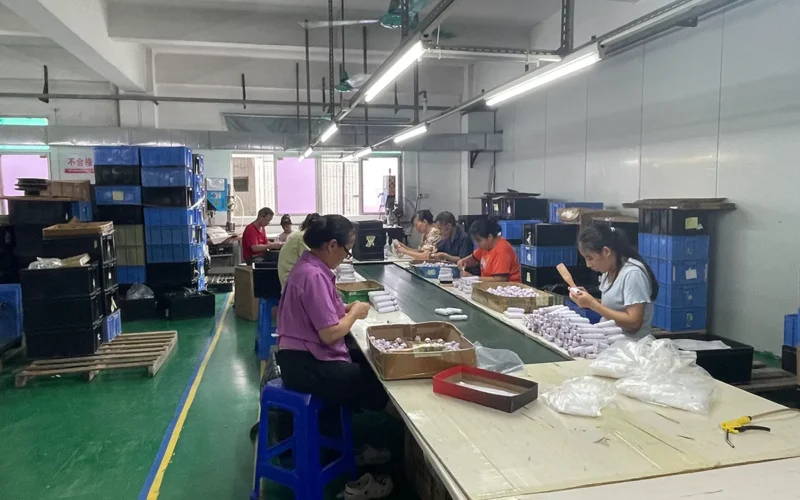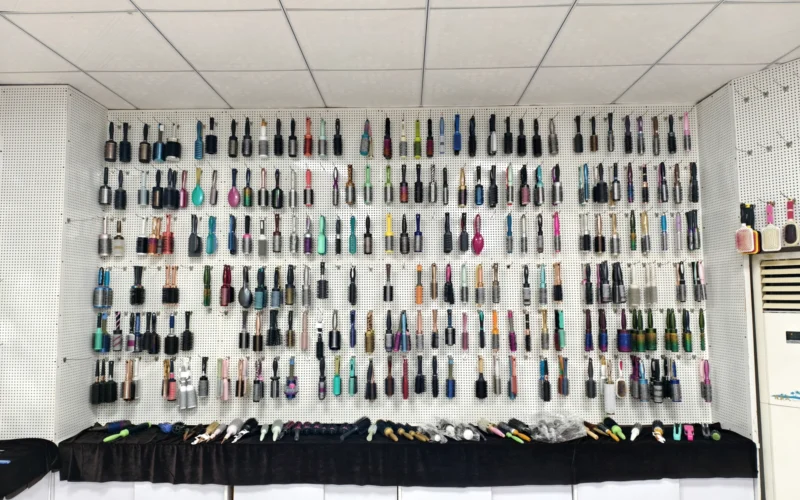
Most listings returned by a search for hair accessory manufacturers in China are trading companies. That is not an accusation — a good trading company adds real coordination value across multiple factories, and for a buyer sourcing five unrelated categories it can be the right choice. But you should always know which one you are talking to, because it changes who controls quality, who can actually change something on the line, and how much margin sits between you and the people making your product.
Before you contact a shortlist, our hair accessories manufacturer checklist gives you a practical order for comparing factories, quotations and samples.
The problem is that this is hard to establish from a website. Everyone has factory photos. Everyone says “our factory”. So here are tests that do not rely on trust — questions where the difference shows up in how the answer arrives, not in what it says.
Five Questions That Sort It Out
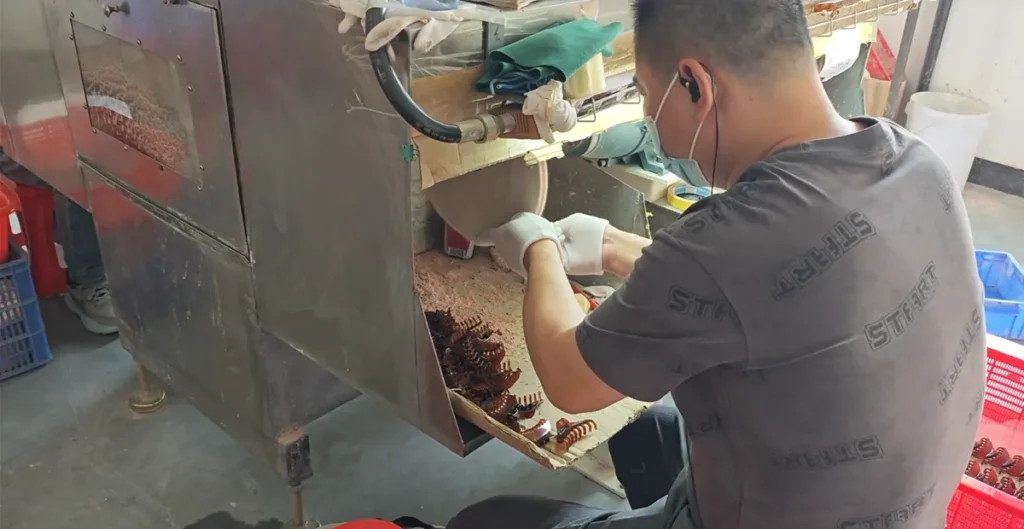
1. “Which process produces the finish on this sample?”
This is the single most reliable test we know, and it costs you one line in an email.
“Glossy” is not a process. Tumble-polished, hand-polished, spray-finished and bake-finished all produce shine and they age completely differently — a tumbled acetate edge stays smooth for years because the gloss is the material itself, while a sprayed finish sits on top and can wear at the contact points. A factory answers immediately, because it owns the process. An intermediary has to go and ask.
Watch the response time and the specificity, not the content. Every process named on this site is filmed on our own floor — you can watch them in our factory video library.
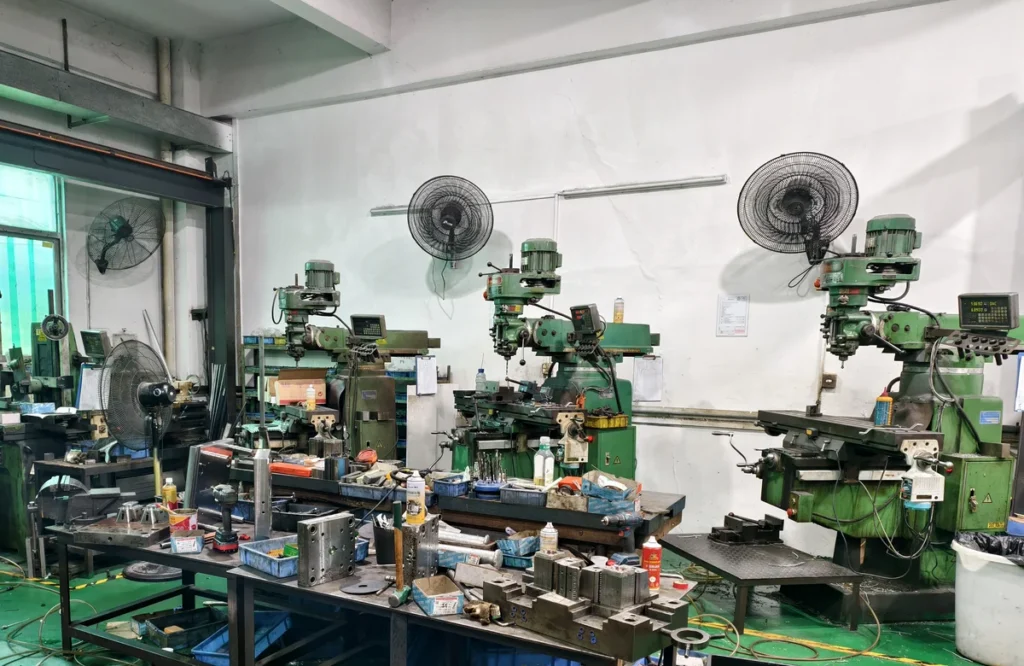
2. “How long will a tooling quotation take?”
A factory with its own tool shop quotes from a drawing. An intermediary waits for someone else’s shop and comes back days later. Ask for the turnaround before you send the file — the answer to that question is more informative than the quotation itself.
3. “Why is your minimum what it is?”
A real minimum comes from production reality — sheet yield, changeover time, batch finishing. Someone who runs the line can explain the reasoning. Someone who does not will either recite a number or, more tellingly, drop it the moment you push back. A minimum that halves under mild pressure was never a production constraint. We explain what sets ours in this breakdown.

4. “How many separate components is this product made from?”
Anyone assembling the product knows the number without checking. It determines tooling count, assembly labour and QC points, so it is not obscure knowledge on the floor — it is the floor’s daily reality. Hesitation here is diagnostic.

5. “Can you film this specific product being made this week?”
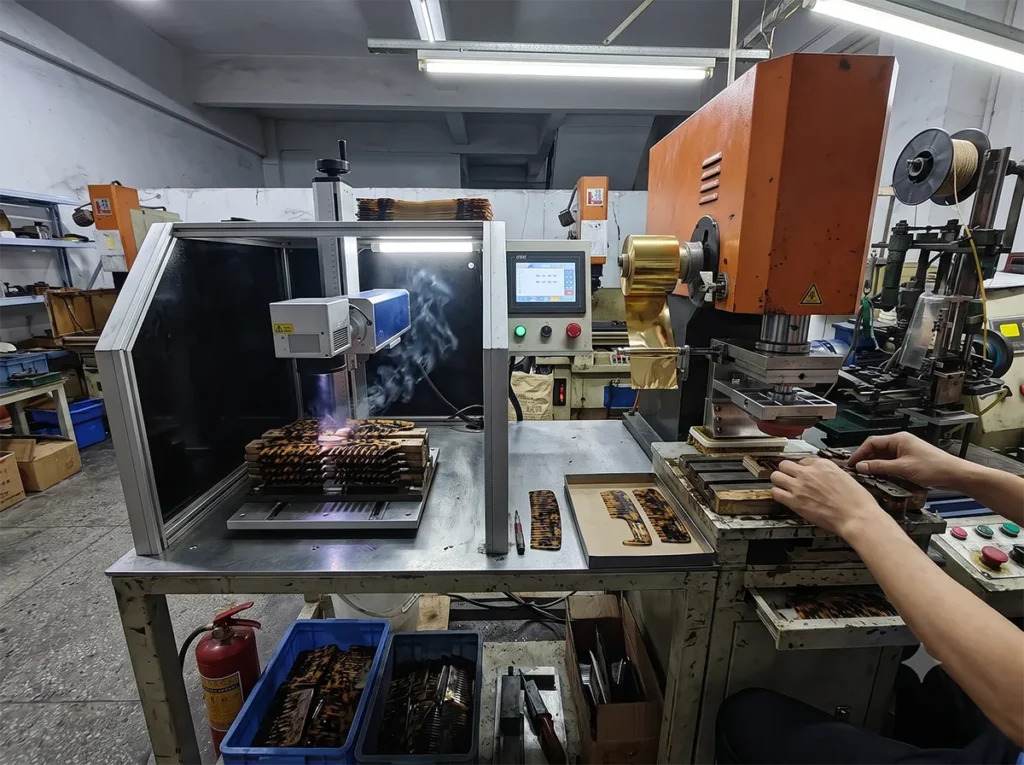
The strongest test, and the hardest to fake. Not a factory tour video — a specific product, filmed this week, on a line that is running. A factory sends it in days. An intermediary sends stock footage, stalls, or sends a line that does not match the product you asked about.
Watch what is in frame beyond the machine: work-in-progress in crates, an untidy bench, people doing unrelated jobs in the background. Staged footage is clean in a way real production never is.

Two Checks That Take Five Minutes
- The business licence. Ask for it. Check the registered name against the bank account name and against the name on the sales contract. If the three do not match, you are paying a different company from the one you think you are dealing with — and that is worth understanding before a deposit, not after.
- Certificate holders. A certificate with a different company name on it is somebody else’s certificate. Check the company name on the certificate against the business licence, and check the scope covers the product you are buying rather than something else the factory makes.
When a Trading Company Is the Right Answer
To be fair about it: if you are buying five unrelated categories in one shipment, a good trading company coordinating five factories is genuinely doing work you would otherwise do yourself, and it earns its margin. If you need someone local managing multiple suppliers, that is a real service.
It stops making sense when you are buying one category in volume and want to influence how the product is made. At that point every layer between you and the line costs you both margin and control — and control is usually the more expensive loss, because it is the one you notice only when something needs to change mid-production.
Frequently Asked Questions
Is a trading company always more expensive?
Not always. A trading company consolidating volume across several buyers can occasionally beat a factory’s small-order price. The consistent difference is control, not price.
Can a factory also act as a trading company?
Yes, and many do for categories outside their own lines. The question worth asking is not “are you a factory” but “do you make this product”. Those are different questions and only the second one matters for your order.
What if I cannot visit in person?
A live video walkthrough is the practical substitute — unedited, on request, with you choosing what to look at. Ask to see the specific line your product would run on rather than accepting a general tour.
The Short Version
Ask which process produces the finish, how long a tooling quotation takes, why the minimum is what it is, how many components the product has, and whether they can film it being made this week. In every case the diagnostic is how the answer arrives, not what it says — a factory answers from its own floor, an intermediary has to go and ask. Then check the business licence name against the bank account name. Trading companies are not the problem; not knowing which one you are talking to is.
Run those five questions past us. If the answers do not arrive the way this page says they should, you have learned something useful either way.