An acetate hair clip can begin from an existing production body or from a new custom design. Those routes do not carry the same minimum, sampling work or risk. For current EcoHairFactory programmes, existing acetate clip styles start from 500 pieces per design; a new custom acetate clip starts from 1,000 pieces per design.
This guide explains what those numbers buy, what still needs approval, and how a wholesale buyer can choose the lower-risk route without confusing private-label changes with full product development.
The Short Answer: 500 for an Existing Style, 1,000 for a Custom Style
| Buying route | Current MOQ | What is already established | What still needs approval |
|---|---|---|---|
| Existing acetate clip style | From 500 pcs per design | Current body profile and compatible hardware | Selected sheet or colourway, logo, packaging and final sample |
| New custom acetate clip | From 1,000 pcs per design | Material and production route can be known, but the product body is new | Shape, dimensions, thickness, hardware, material, branding, package and functional sample |
The minimum is per design, not a basket total. Two new custom shapes are two custom programmes. A single existing body in several stock colourways may be more efficient, but the colour split must still be confirmed in the quotation because sheets, logo versions and packaging can introduce separate minimums.
If the main goal is to launch a branded collection quickly, begin with an existing body. If the silhouette, proportion or mechanism is the reason the product should exist, choose the custom route and budget for development.
What Counts as an Existing Acetate Clip Style?
An existing style is more specific than “a claw clip” or “a barrette.” It is a current body profile with known dimensions and compatible hardware. Changing to an available sheet, adding an approved logo or preparing retail packaging can create a distinct private-label product without redrawing the whole construction.
Current examples include a 7 cm side clip cut from 4 mm acetate, a 6.5 cm triangle side clip on an insert-pin base, a 5.5 cm teardrop snap clip cut from 3 mm acetate, and a 9 cm curved bar barrette. The hair clips and barrettes catalogue gives buyers a body to reference before asking whether a change is private label or full custom development.
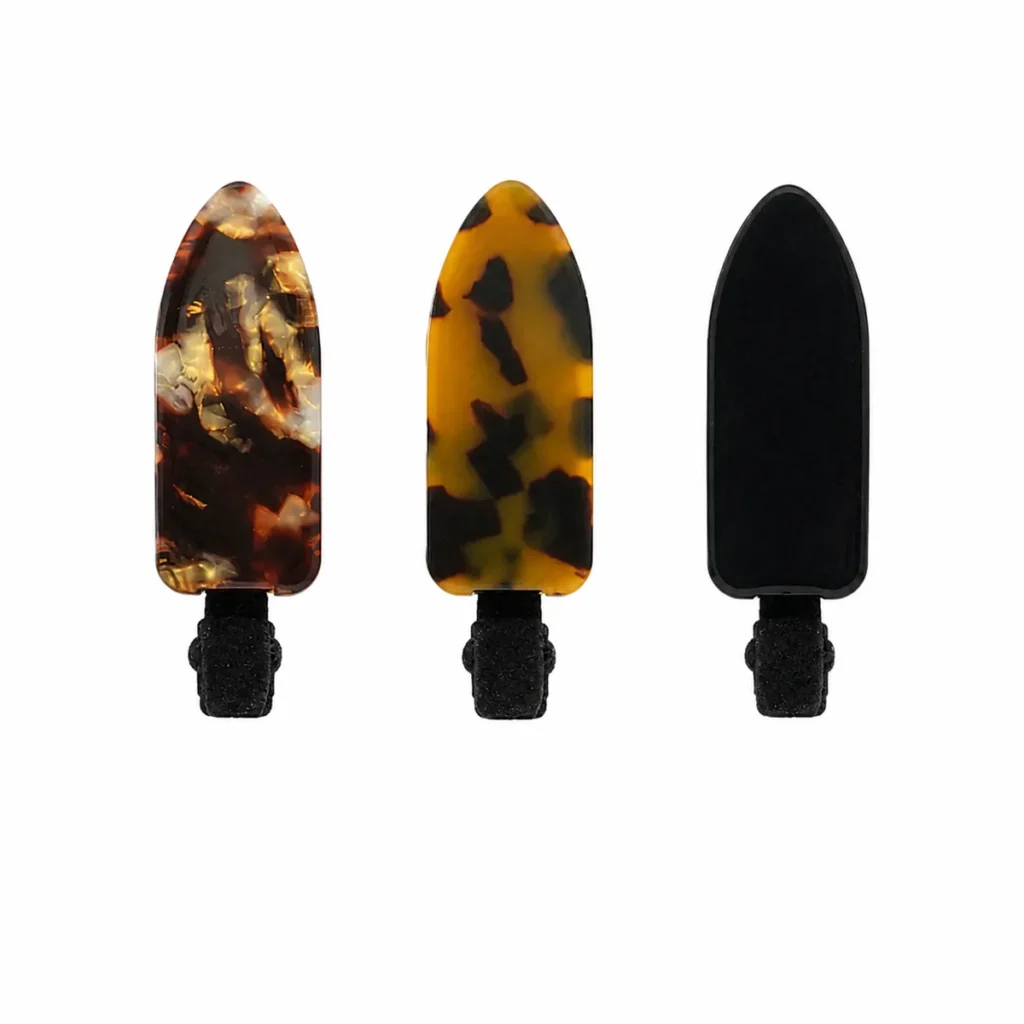
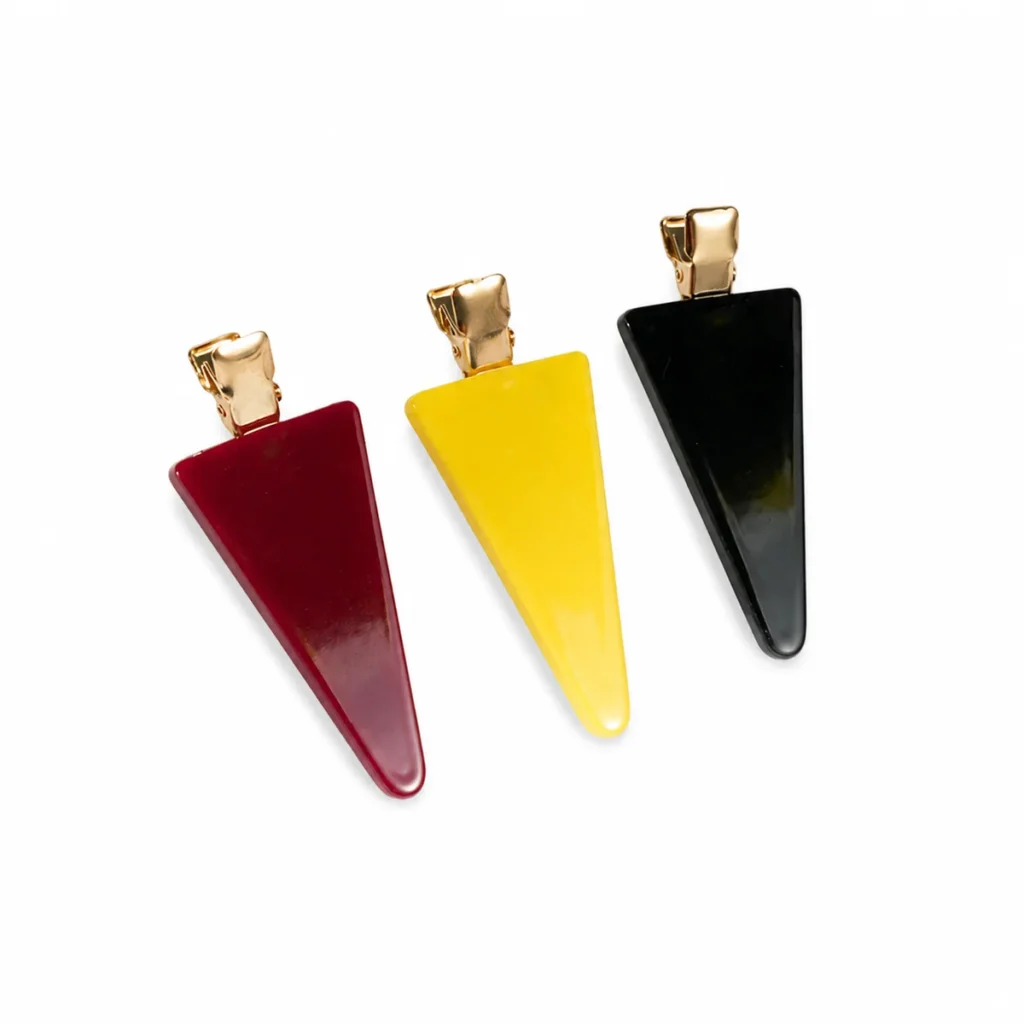
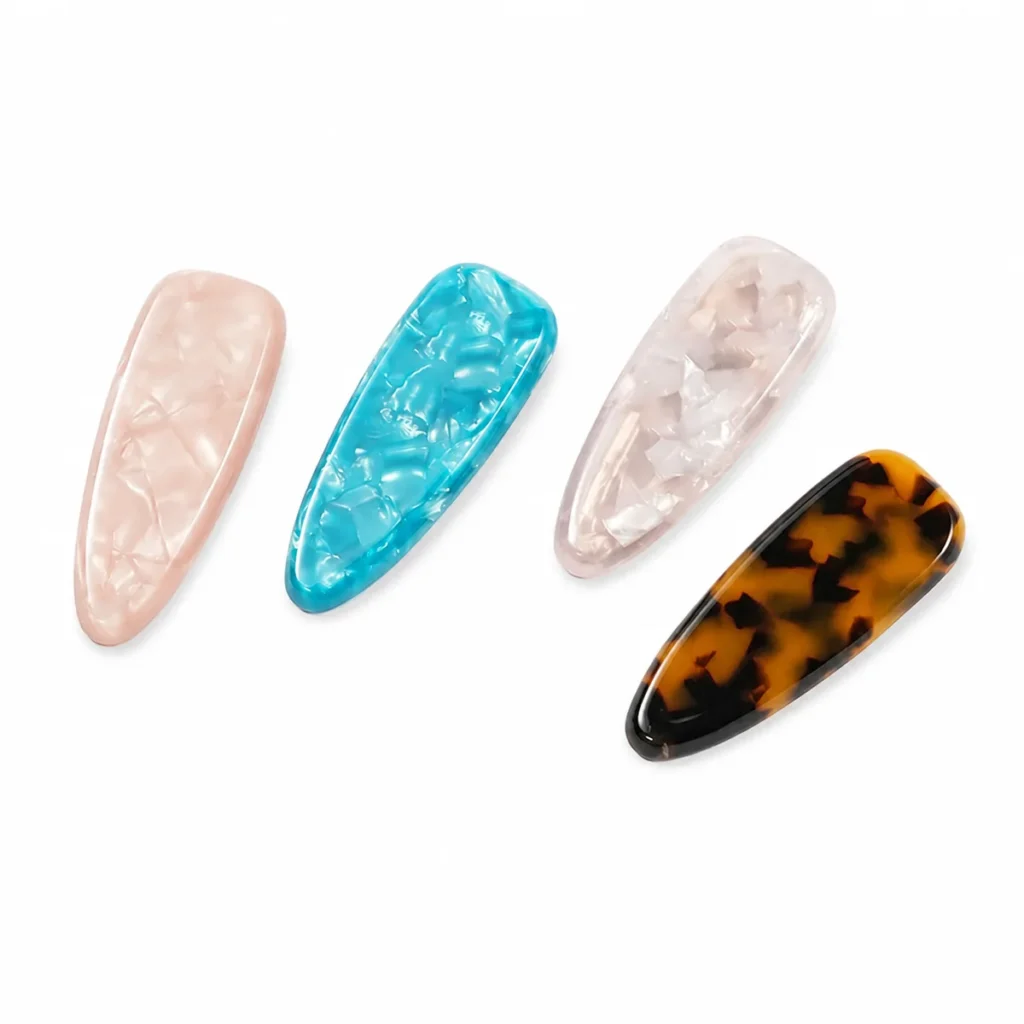
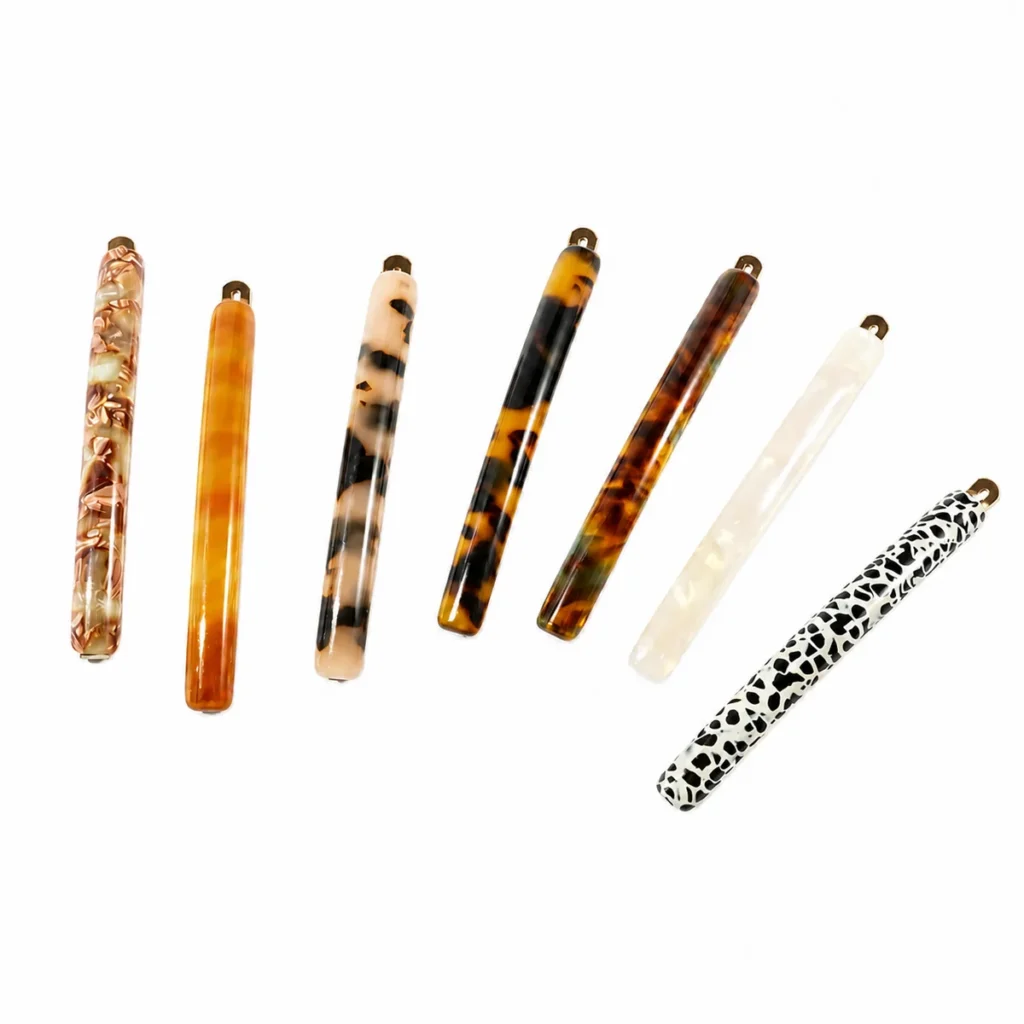
An existing style is not an unfinished blank that accepts every possible change. A different thickness, a different spring or clasp, a changed curve, new openings or a revised tooth pattern may move the request into custom development. Send one marked reference and ask the supplier to label every change as either existing, modified or new.
What Makes a Clip Fully Custom?
A custom programme begins when the body or construction must be developed for the buyer. That can include a new silhouette, new proportions, a different thickness, a new opening pattern, a changed curve or hardware that has not already been paired with the body.
| Requested change | Likely route | Why |
|---|---|---|
| Choose another available acetate sheet on a current body | Existing-style review | The cutting profile and compatible hardware may stay unchanged |
| Add a logo to a suitable current surface | Existing-style review | Branding is added after the product body is selected |
| Create a new outer silhouette | Custom development | The cutting profile, nesting and edge work must be proved |
| Change body thickness or a structural opening | Custom development | Strength, forming, weight and hardware fit can change |
| Replace the spring, clasp or insert-pin system | Custom development unless already compatible | The holding function must be sampled as one construction |
| Develop a unique sheet colour or pattern | Separate custom material review | The sheet can have its own minimum and approval process |
The route should be confirmed before artwork and packaging are finalised. Otherwise a brand can spend time preparing a logo for a surface that changes during engineering.
Choose the Route by Commercial Risk, Not Only by MOQ
The 500-piece route is useful when a buyer needs to test a category, build a first colour story or add an acetate line without making the body itself proprietary. The 1,000-piece custom route makes sense when the silhouette or construction creates a real retail difference that an existing body cannot provide.
| Business situation | Better starting route | Reason |
|---|---|---|
| First acetate launch with limited sell-through history | Existing style | Lower minimum and fewer construction decisions |
| Retailer needs a fast seasonal colour update | Existing style | Current body can carry the material and merchandising change |
| Brand owns a distinctive shape central to its identity | Custom development | The body, not only the logo, is the point of difference |
| Current body cannot meet the required hold or fit | Custom development | Function must be revised and approved, not hidden inside a colour change |
| Buyer wants many untested shapes at a small total quantity | Narrow the range first | Dividing volume across too many designs increases risk and does not satisfy per-design minimums |
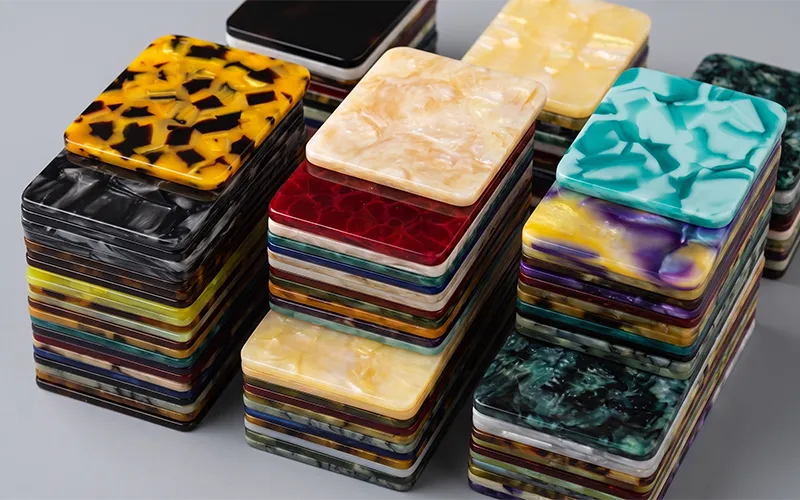
A strong first range can use one or two proven bodies in a disciplined palette, then add a custom hero shape after the buyer learns which size, mechanism and price point sell. That sequence protects development budget without turning the whole collection into commodity stock.
Build the Quantity Plan by Design
“1,000 pieces total” is incomplete. The quotation needs quantity by body, sheet or colourway, logo version and package. The per-design minimum applies before the order is combined for shipment.
| Example plan | How to read it |
|---|---|
| One existing 7 cm body, 500 pcs | Can meet the existing-style minimum, subject to the selected colour and branding plan |
| Two existing bodies, 500 pcs each | Two qualifying designs; 1,000 pcs total |
| One new custom body, 1,000 pcs | Can meet the custom-style minimum for one design |
| Two new custom bodies, 500 pcs each | Does not meet the 1,000-piece minimum for either custom design |
| One body with several colourways | Possible split depends on sheet availability, setup, logo and packaging; confirm in the quotation |
This is the point to challenge an over-wide launch. If the budget cannot support each custom design, reduce the number of shapes before reducing the checks on each shape.
Sampling Is a Decision Gate, Not a Free Trial
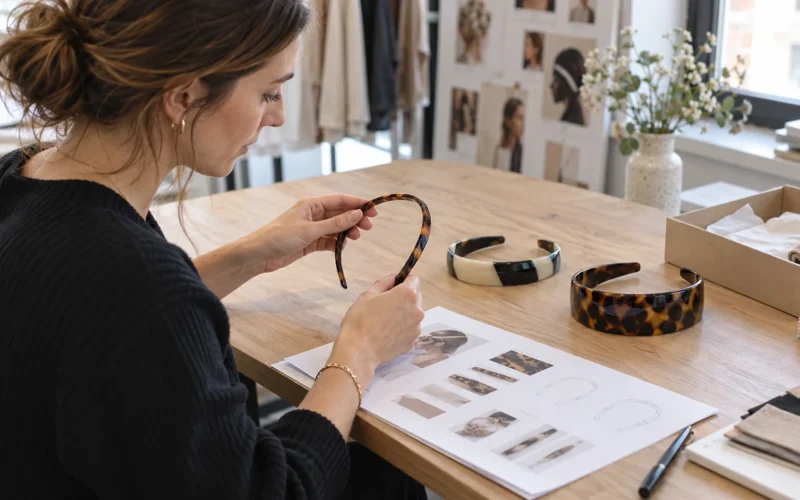
Custom sample fees are non-refundable. The fee covers development of the agreed direction and should be tied to a written brief: body drawing or marked reference, dimensions, sheet direction, hardware, logo and package assumptions. A new request after the sample may require another development round.
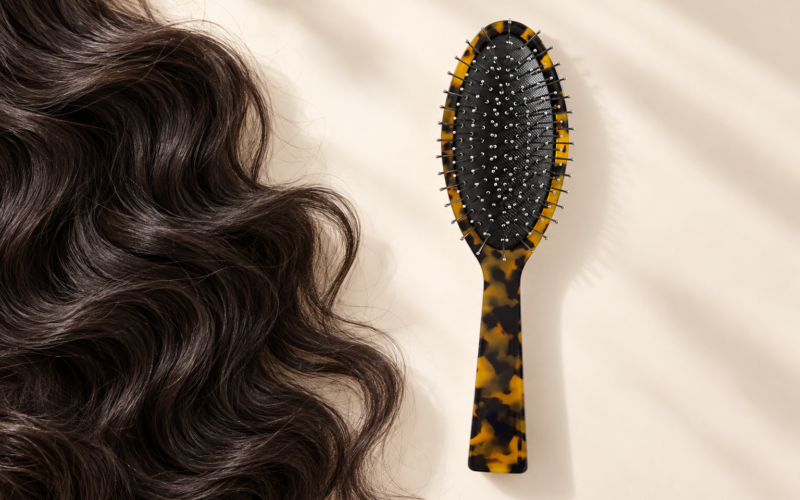
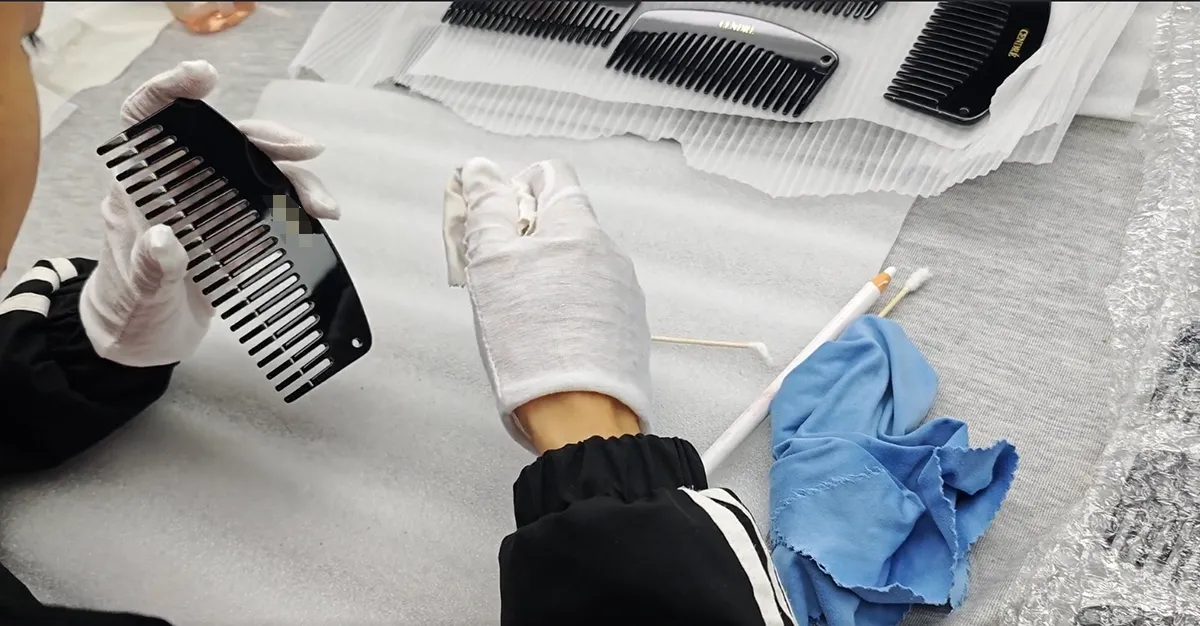
Approve function before appearance is treated as final. A clip can have the right tortoiseshell pattern and still fail because the curve lifts at the ends, the spring does not suit the body, the teeth do not close evenly or the hardware marks the acetate.
- Confirm the body against the drawing or existing product reference.
- Open and close the mechanism repeatedly and observe alignment.
- Test the intended hair section, not only an empty hand.
- Inspect tooth contact, rivets, spring seating and edge polish.
- Check the logo at normal viewing distance and under side light.
- Pack and remove the sample to ensure the package does not scratch the finish.
The custom logo guide covers artwork and placement after the body has been selected. The sample approval guide explains how to record the accepted result for production.
Keep Material, Hardware and Logo in One Approval Pack
Acetate is visually variable, and the mechanism is a separate component. The approved sample pack should therefore identify the body profile, sheet family, acceptable pattern range, hardware finish, logo version, packaging and quantity breakdown together.
Surface scratches and poorly reproduced logos deserve specific checks. Acetate shows its polish at the edge and face, while a small mark can become visibly uneven on a patterned or curved surface. Do not approve with “finish looks good.” Record the accepted logo size and position, then compare the bulk product under the same lighting.
A Ready-to-Send Acetate Clip RFQ
- Existing product URL or drawing of the new custom body
- Target dimensions, thickness and intended hair use
- Claw, barrette, snap, side-clip or other mechanism
- Selected stock sheet or custom colour and pattern direction
- Quantity per design and proposed colour split
- Logo artwork, method, size and marked placement
- Retail card, pouch, carton, barcode and label requirements
- Destination market and delivery window
- Visible and functional checks that will decide sample approval
Send the current body or custom drawing through the contact page. The first useful answer is not only a unit price; it is confirmation of which development route the request actually belongs to.
Frequently Asked Questions
What is the MOQ for an existing acetate hair clip?
Current existing acetate clip styles start from 500 pieces per design. The exact sheet, colour split, logo and packaging still need to be confirmed in the quotation.
What is the MOQ for a fully custom acetate hair clip?
A new custom acetate clip starts from 1,000 pieces per design. A second new body is a second custom design, even when both are shipped in the same order.
Does adding a logo always make the clip fully custom?
No. A logo can often be added to a suitable existing body as a private-label change. The surface, logo method, artwork and placement still need sample approval.
Can I split 1,000 custom clips across two new shapes?
No. Two new shapes at 500 pieces each do not meet a 1,000-piece per-design minimum. Reduce the number of custom shapes or use an existing style for part of the range.
Is the custom sample fee refundable after the bulk order?
No. Custom sample fees are non-refundable and pay for developing the approved sample direction.