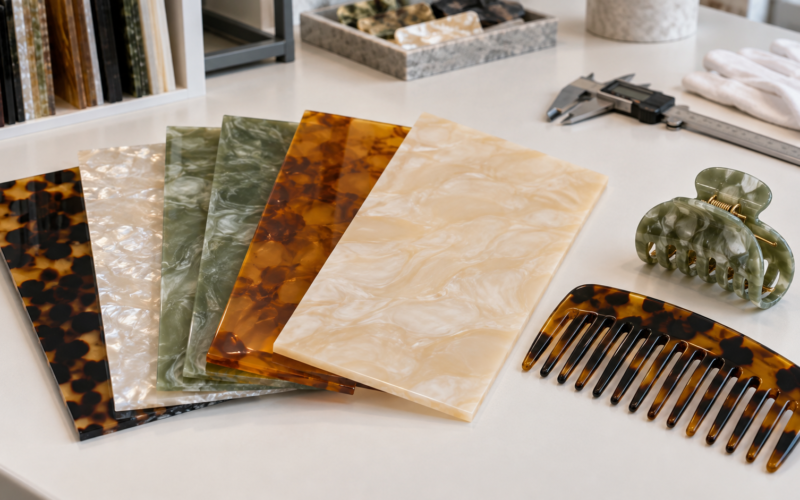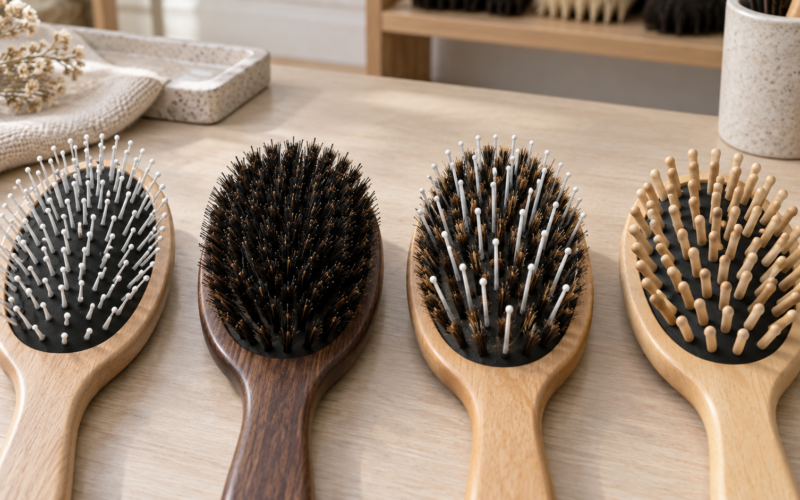
Choosing a hair accessories manufacturer is not the same as choosing a finished item from a catalogue. A supplier may be able to offer a good-looking sample and still be the wrong partner for a repeat programme: the material may not match the brief, the quote may hide tooling or packaging, or the factory may not be set up to control the details that make a clip, comb or brush feel right in use.
This checklist is for brand buyers, retailers and distributors comparing an OEM or ODM partner. It focuses on the decisions that should be made before a purchase order: what the supplier really makes, what counts as one design for MOQ, how to compare samples and what to put in a quote request so that two prices mean the same thing.
What to Check Before You Request Prices
| Question | Why it matters | Useful evidence |
|---|---|---|
| Which materials and product types are made in-house? | It shows whether the supplier controls the process or is relaying a request. | Factory walk-through, product construction details and a sample set. |
| What is the MOQ per design and per colourway? | A low headline MOQ can conceal separate minimums for each shape, colour or finish. | A written MOQ breakdown against your exact brief. |
| Can an existing mould be adapted? | It changes development time, cost and the amount of risk in a first order. | Relevant mould options and a clear list of changes that are possible. |
| What is included in the quote? | Comparable pricing needs the same material, hardware, logo, packaging and shipping basis. | An itemised quote rather than a single unit price. |
| How is the production sample approved? | Approval is the point at which the product becomes reproducible at volume. | A sample approval record, tolerance discussion and production timeline. |
Start with the product rather than a broad request for “hair accessories.” State the intended material, product family, target market, quantity per design, colourways, logo method, packaging and launch date. If a point is not decided, label it as open instead of allowing each supplier to make a different assumption.
1. Confirm What the Supplier Actually Controls
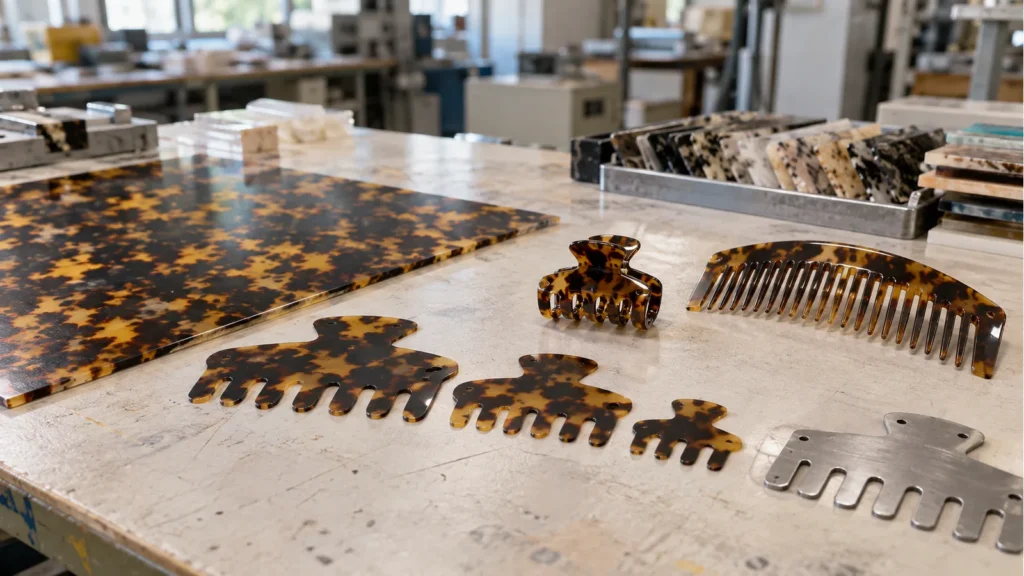
There is nothing inherently wrong with working through a trading company, but the buying process should be honest about it. A manufacturer should be able to discuss the steps that change the product: selecting and cutting sheet material, forming, polishing, fitting hardware, printing a logo, inspection and packing. A trader may still be helpful for sourcing, but normally needs more time to get an answer from the workshop.
Ask for an evidence-based conversation, not a stock answer. For example, a cellulose acetate claw clip needs a decision on body shape, sheet pattern, spring and teeth geometry; a brush needs a body, cushion or drilled base, pin or bristle system and handle finish. The more directly a supplier can explain those choices, the easier it is to identify whether the proposed product is genuinely manufacturable.
If visiting is not practical, ask for a live video walkthrough focused on the relevant line and the sample being discussed. It is more useful than a polished general presentation because it connects the quoted product to an actual process.
2. Separate an Existing Mould From a New Development
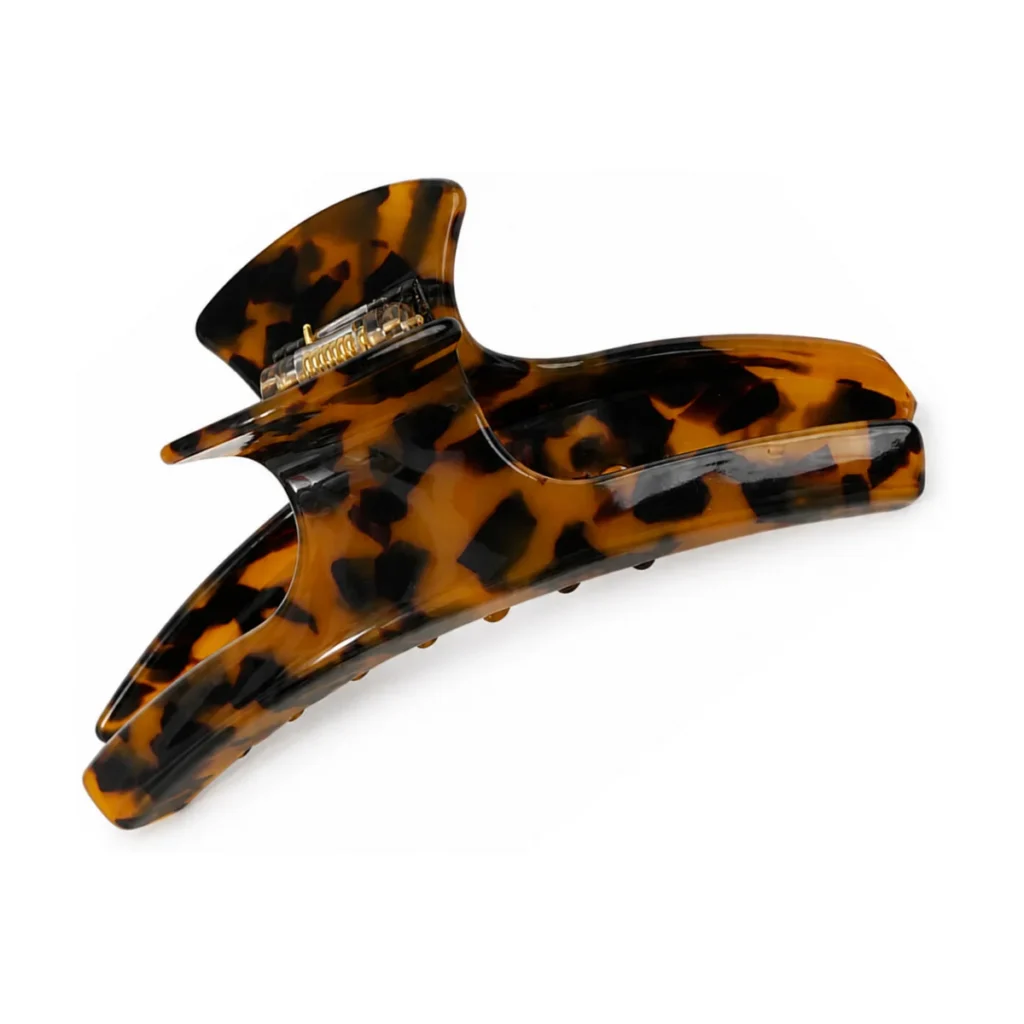
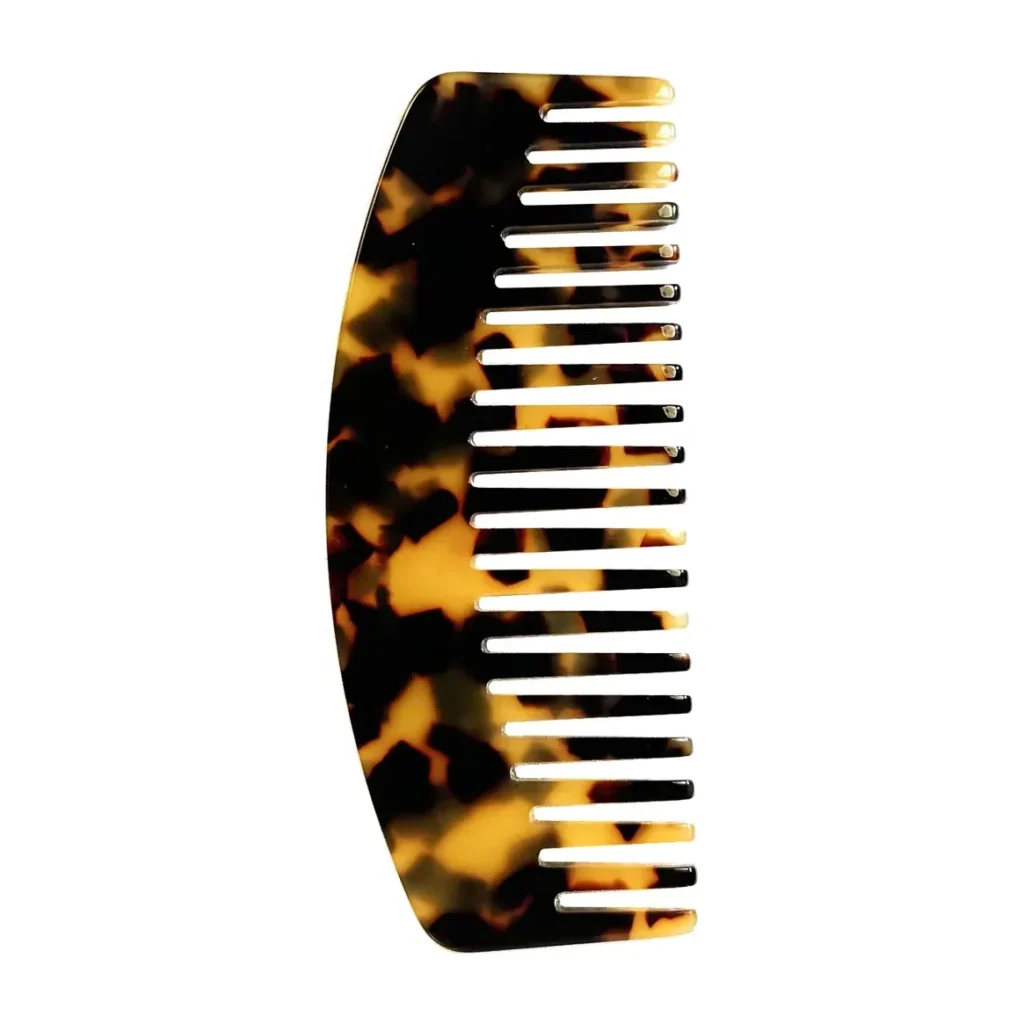
“Custom” can mean several different things. It may mean selecting an existing body and changing the acetate pattern, colour, logo or packaging. It may mean adjusting a detail on an existing construction. Or it may mean developing an entirely new shape, which requires new tooling, more approvals and a different budget. Treat these as separate routes in the brief.
For a first collection, an existing mould is often the lower-risk route: it shortens development and lets the buyer put investment into material, branding and packaging. A new mould can be the right decision for a signature product, but it should come with ownership, tooling cost, lead time and revision expectations in writing.
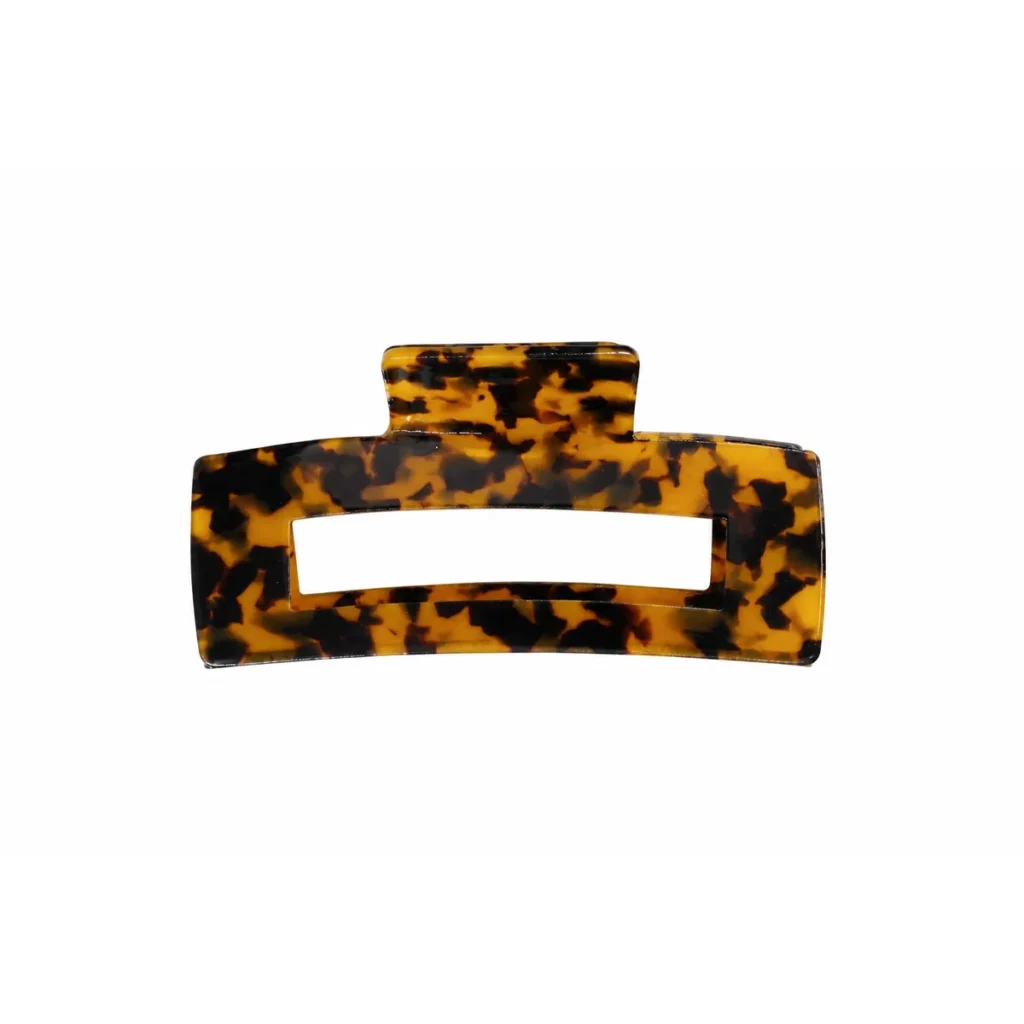
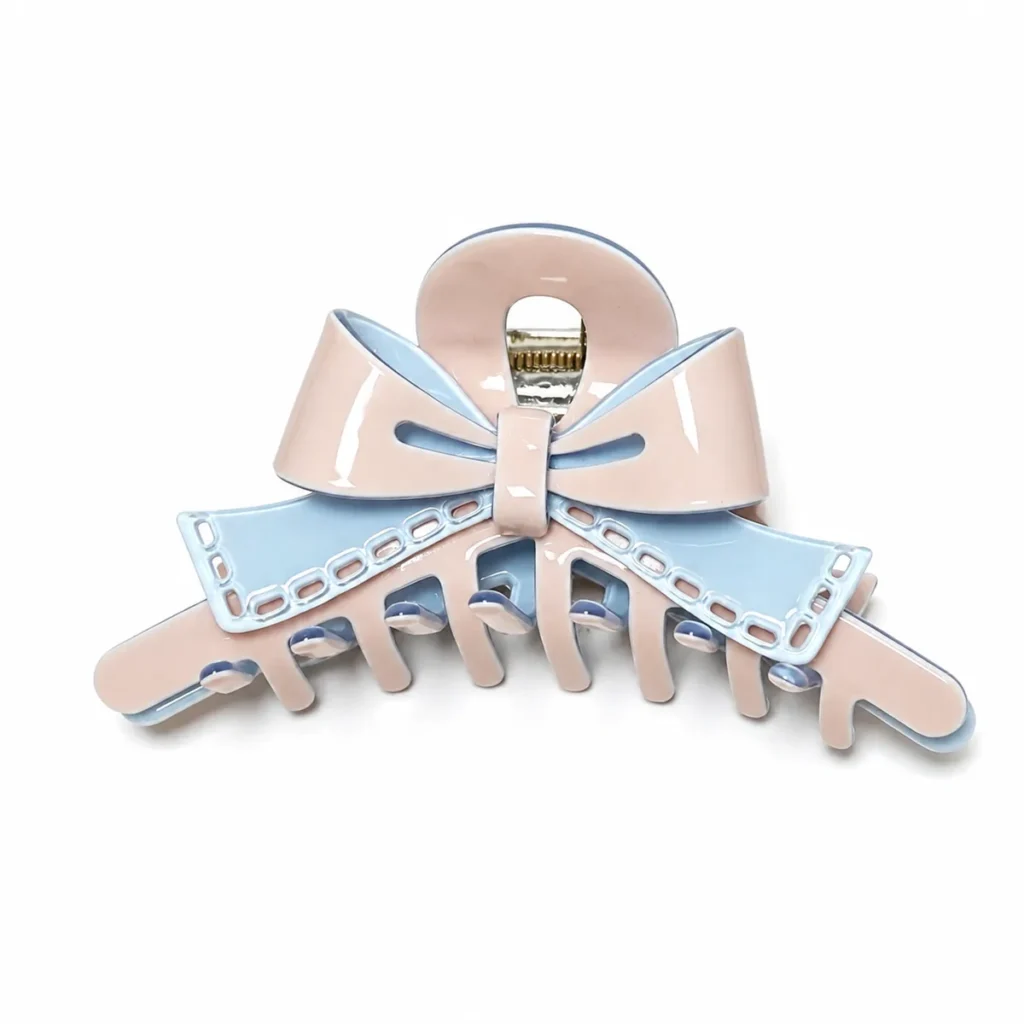
When your range includes clips, make a visual selection sheet. Mark the exact body, size, pattern, hardware colour and logo position for every SKU. This removes the ambiguity of descriptions such as “large tortoiseshell clip” and gives the factory a document it can quote against.
Turn a Mood Board Into a Quoteable Range
A mood board can start a conversation, but it cannot approve a production run. Before requesting prices, turn each visual reference into a line on a range sheet. Give it a working style code, intended customer, body size, material direction, hardware finish, logo location and proposed quantity. This does not need to be a technical drawing on day one; it needs to show the supplier what belongs together and what must be quoted separately.
| Range-sheet field | Example decision | Factory question it answers |
|---|---|---|
| Style code and body | CC-01 medium curved claw clip | Which existing mould or construction is being discussed? |
| Material and finish | Warm tortoiseshell cellulose acetate, polished edge | What sheet and finishing route should be allowed for? |
| Hardware and branding | Gold spring, small pad-print logo inside jaw | Which components and operations must appear in the quote? |
| Assortment quantity | 600 pieces in two colourways | Does MOQ apply per body, pattern or colourway? |
| Approval reference | Marked sample photos and packaging dieline | What will bulk production be checked against? |
Ask the supplier to reply against the same rows. If a supplier changes an assumption, such as substituting plastic for acetate or using stock boxes instead of retail packaging, make that visible in the sheet. The comparison becomes useful because it records decisions, not because it produces the lowest-looking number.
3. Treat MOQ as a Production Rule, Not a Negotiation Slogan
MOQ exists because material preparation, tooling set-up, labour and quality checks need to be repeated for a defined production run. The important question is not only the lowest number, but what it applies to. One body in four colours may be four separate designs; a new sheet pattern may have its own material minimum; special packaging may carry a separate threshold.
Ask the supplier to show the calculation in a short table: product quantity, quantity per colour, packaging quantity and any mould or material minimum. Our hair accessory MOQ guide explains why clips may start at a different level from combs and brushes, but the final figure always belongs to the actual construction and order plan.
4. Approve the Sample as a Specification
A sample is not simply a photograph for marketing approval. It is the reference for production. Review it for shape, dimensions, material effect, polish, edge feel, hardware action, logo legibility, colour tolerance and packaging. For a claw clip, open and close the spring repeatedly and inspect how the teeth meet. For a barrette or snap clip, check the bar action and rivets. For a comb, run a fine cloth along the teeth and inspect the finish.
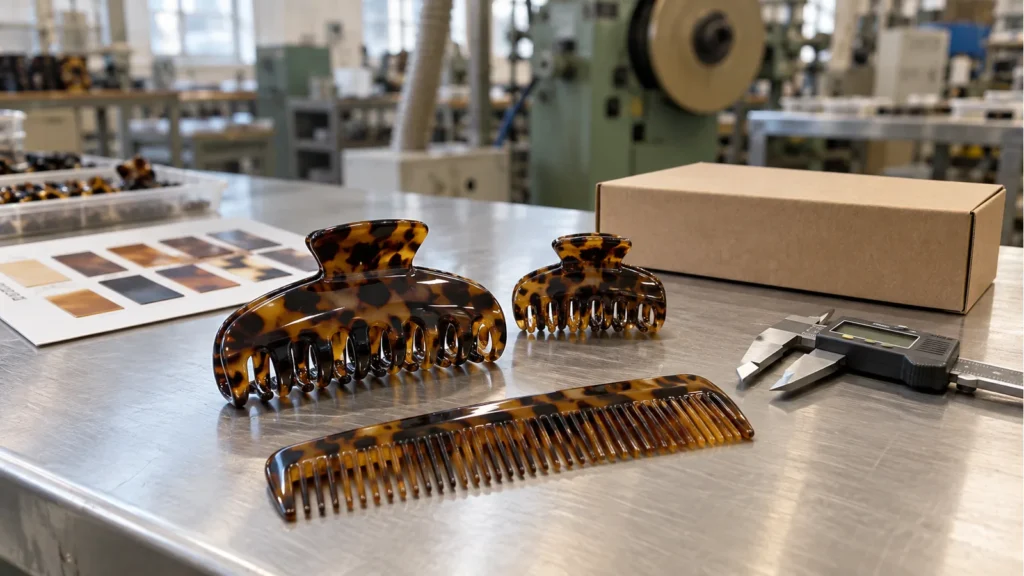
Document changes on the sample rather than relying on an email chain. A short approval sheet with annotated photographs, an approved colour reference and a list of tolerances makes the bulk inspection more objective. If something is only “understood,” it is difficult to enforce later.
For a first order, reserve time for one decision round after the physical sample arrives. Have the person responsible for product, packaging and purchasing review the same sample together. Their priorities can conflict: a larger logo may reduce the clean look; a thinner body may change the feel; a new box can change the carton count. Resolving those trade-offs before approval is much cheaper than trying to correct them during production.
5. Compare Quotes Line by Line
The cheapest unit price is meaningful only when the products are genuinely alike. Put each supplier’s response into one comparison sheet with the columns below. Any empty cell is a question to resolve before selecting a partner.
- Material and thickness or construction.
- Body size, hardware and finish.
- Logo method and artwork preparation.
- Inner packing, retail packaging and export carton.
- Sample charge, tooling charge and what is refundable.
- Production lead time after approval.
- Quality-control scope and acceptable tolerances.
- Shipping terms: EXW, FOB, CIF, DAP or DDP.
For a programme that combines several product types, ask whether the supplier can manage them under one quality standard and one shipping plan. A capable hair accessories manufacturer should be able to quote clips, combs and brushes clearly while still identifying where their materials and production rules differ.
How to Assess the Reply, Not Just the Price
The quality of a supplier reply is early evidence of how the programme may run. A useful response separates confirmed facts from open decisions, asks focused questions about unclear references and explains why a minimum, sample charge or lead time applies. A response that supplies only a unit price may still be workable, but it gives the buyer no way to tell whether the material, packaging and approval route were understood correctly.
Score each prospective partner on clarity as well as cost: did it restate the brief accurately; identify an existing mould or a development route; break out tooling and packaging; give a realistic sample path; and name the approval point before bulk production? The supplier with the most useful answer is not automatically the right choice, but this simple review prevents a first order from being selected on an incomplete comparison.
Keep this comparison with the approved sample and final purchase order. It creates a clear record of why the selected route was chosen, what still needs confirmation and who owns the next decision.
A Practical First Inquiry Template
A useful first inquiry can be brief. Include: the product category; reference photos or a sketch; material preference; target quantity per design and colour; logo and packaging needs; destination country; desired delivery window; and whether you prefer an existing mould or new development. This gives a supplier enough information to respond with a feasible route instead of a generic catalogue.
If you are building an acetate clip line, browse the custom claw clip catalogue and the broader hair clips and barrettes range before writing the brief. Starting with an identifiable body is much faster than attempting to quote a trend photograph alone.
FAQs
What should I ask a hair accessories manufacturer first?
Ask what material and product steps the supplier controls, then provide your quantity, design count, material preference, reference images, logo and packaging requirements. Those details determine whether a quote is realistic.
Is an existing mould less custom than a new one?
Not necessarily. An existing body can still carry a distinctive material, colourway, logo and packaging. It is a faster route when the silhouette is not the main point of difference. A new mould is most useful when the shape itself is central to the collection.
How do I avoid an inaccurate quote?
Give the same written brief to every supplier and ask them to state all assumptions. Compare the material, hardware, logo, packaging, tooling, sampling, lead time and shipping basis before comparing unit prices.
Ready to turn a reference into a workable production brief? Send your sketch, target quantity and launch requirements for a feasibility review.