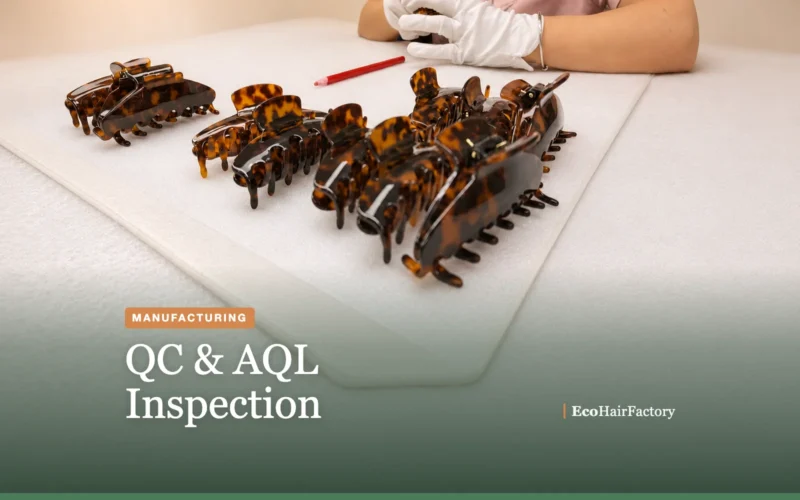
When a new brand asks us about quality control, the real question is usually narrower: what happens to my 500 claw clips between the last polish and the carton, and what will I see before I pay the balance? Our answer has three parts. Every piece gets a visual inspection, every bulk batch is sampled at AQL 2.5 for dimensions and finish, and every spring is tension-tested by hand. This guide explains what those three checks mean in numbers at our minimum order sizes, and what you will see before the goods leave.
Between the last polish and the carton
What happens to every claw clip order before it ships
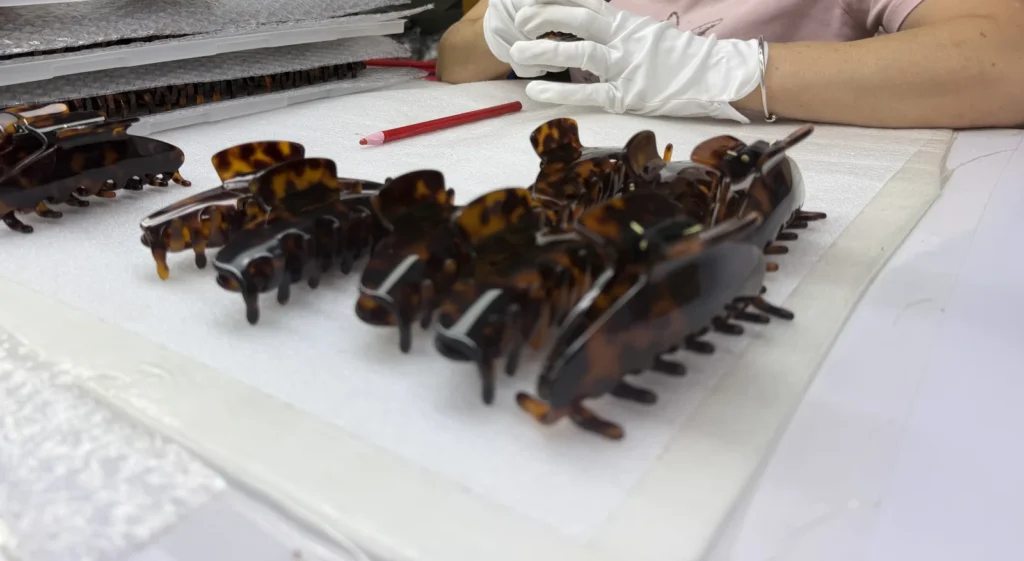
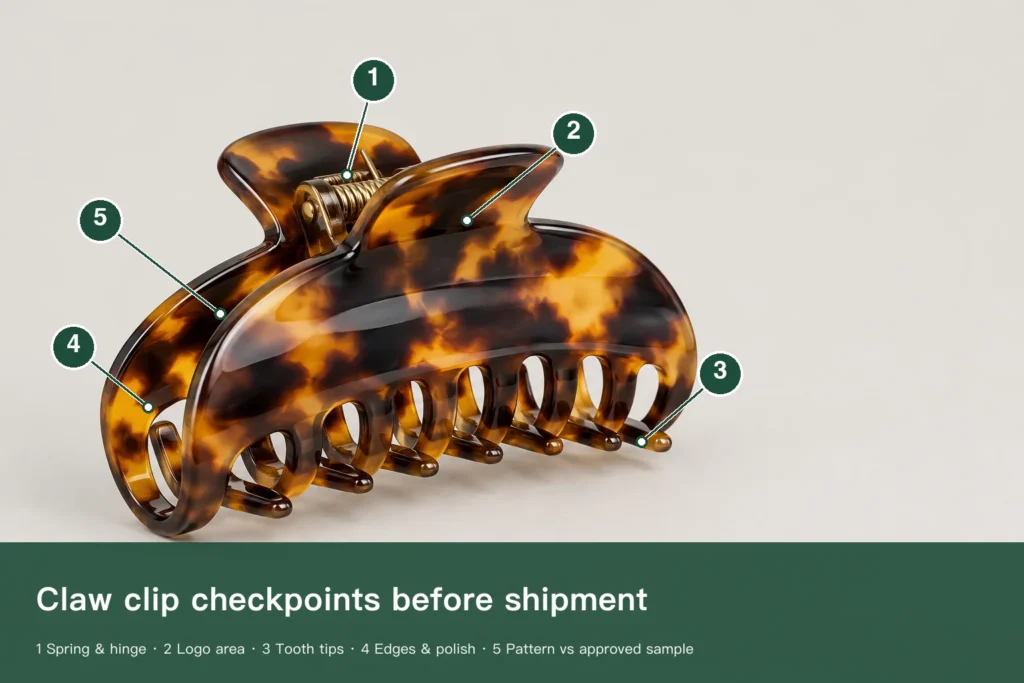
- Every pieceVisual checkChips, burrs on tooth edges, polishing haze, pattern breaks across the logo area
- Every springSpring test by handWeak return, sticking hinge, jaws that close unevenly, judged against your sample
- Every batchAQL 2.5 sampleRandom pieces checked for dimensions and finish, plus a pull-force test
- Every packPackaging checkRetail packs, hangtags and inserts against your artwork proof
- You approveQC photo reportYou see the finished, packed goods; cartons are loaded after you approve
Who checks what before your order is packed
Our QC team reports to management, not to the production line supervisor. The people deciding whether a batch passes are not the people measured on getting it out of the door, and that separation is one of the practical differences between a factory and a trading company. Our QC lab is separate from the production floor and has a pull tester, a salt-spray cabinet for metal parts and moisture meters for wood and bamboo.
| Check | Applies to | When it happens |
|---|---|---|
| Visual inspection | Every piece | After the final hand polish |
| Spring tension, by hand | Every spring on claw clips | Before packing |
| AQL 2.5 sampling | Dimensions and finish, every bulk batch | Before the batch is packed |
| Pull-force test | Every batch | Before packing |
| Packaging against your artwork proof | Retail packs, hangtags, inserts | During packing |
What AQL 2.5 actually means on a 500-piece order
AQL stands for acceptance quality limit. Despite the percentage in its name, it is a sampling rule. An inspector draws a fixed number of pieces at random from a lot, counts the defects, and the lot passes or fails on that count. The sample sizes come from ISO 2859-1; the American standard ANSI/ASQ Z1.4 uses the same table. Most consumer-goods inspections use General Inspection Level II with single sampling, which gives these numbers at AQL 2.5:
500 pieces in the lot 50 drawn at random
pieces are inspected: one in ten
Defects found in those 50
1,000-piece order: 80 inspected, passes with up to 5 defects, fails at 6.
5,000-piece order: 200 inspected, one in twenty-five.
AQL 2.5, General Inspection Level II, single sampling (ISO 2859-1).
| Lot size (pieces) | Pieces inspected | Lot passes with up to | Lot fails at |
|---|---|---|---|
| 281–500 | 50 | 3 defects | 4 defects |
| 501–1,200 | 80 | 5 defects | 6 defects |
| 1,201–3,200 | 125 | 7 defects | 8 defects |
| 3,201–10,000 | 200 | 10 defects | 11 defects |
| 10,001–35,000 | 315 | 14 defects | 15 defects |
Two things in this table catch first-time buyers out. The sample does not grow in step with the order. A 500-piece lot has 50 pieces inspected, one in ten, while a 5,000-piece lot has 200, one in twenty-five. The rows and limits come from one inspection standard that we apply to every order.
The one thing to remember: AQL 2.5 does not mean 2.5% of your order may be faulty. It is the limit on defects in a random sample. On 500 claw clips, a fourth defect among the 50 inspected fails the whole lot.
At our minimums, that works out simply. A clip design ordered at 500 pieces sits in the first row: 50 pieces are inspected, and a fourth defect fails the lot. An acetate comb or brush design at 1,000 pieces sits in the second row, with 80 inspected and a sixth defect failing it. A larger order moves down the table, and the share of pieces inspected falls as it does.
Why every piece is still looked at by hand
Sampling tells you whether a batch is acceptable as a whole. It does nothing about the single chipped clip that a random draw happened to miss. So before any sampling, each piece is looked over on the bench and obvious faults are pulled out: chips, burrs along tooth edges, haze left by polishing, a pattern break that runs across the logo area.
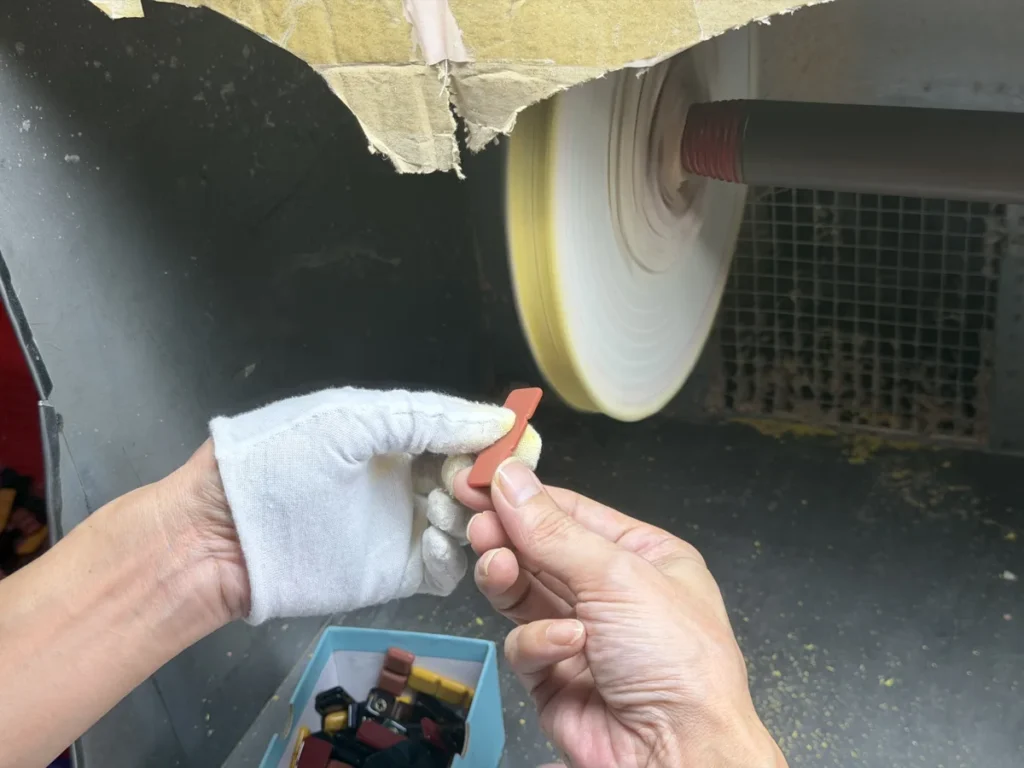
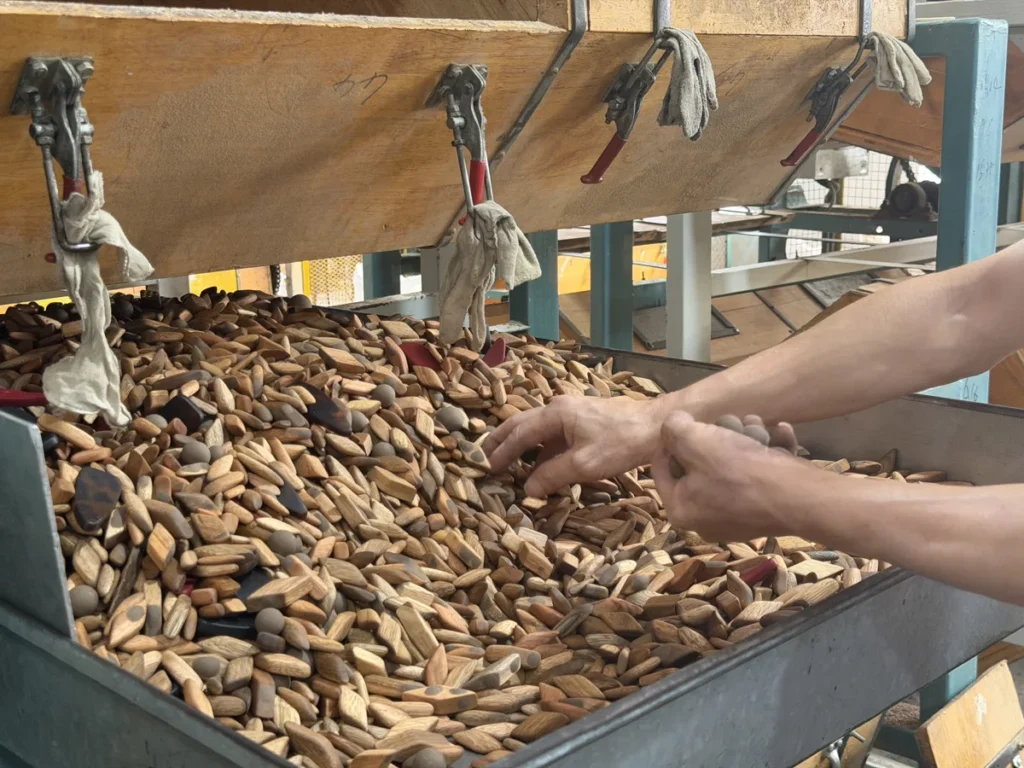
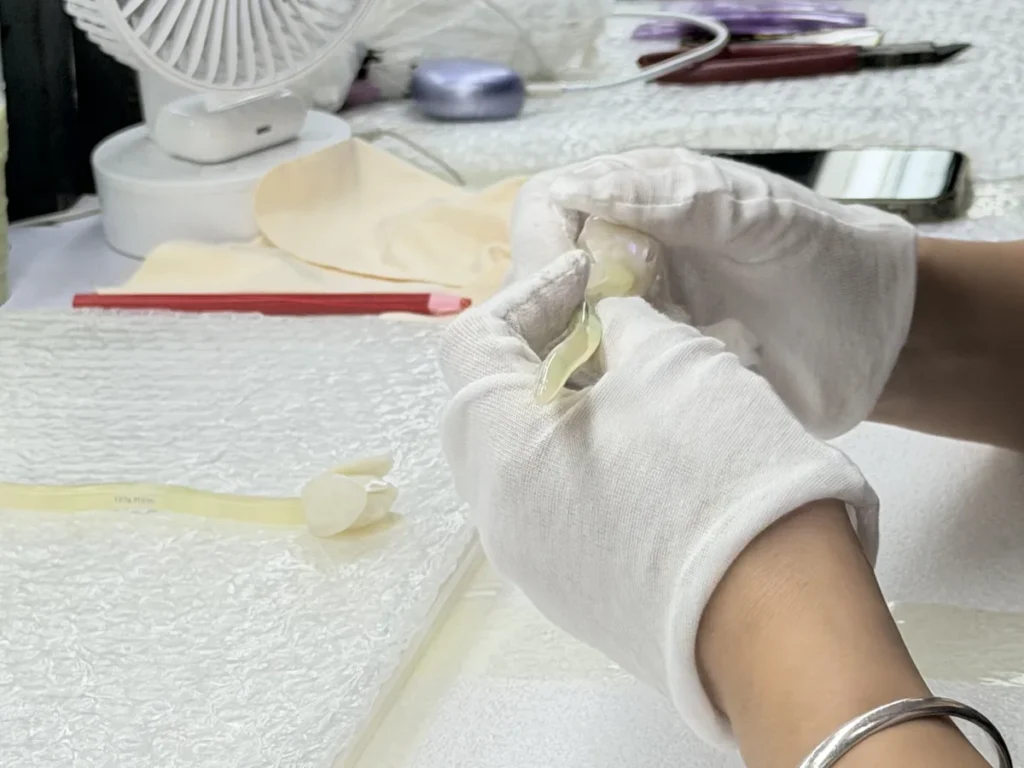
Acetate gives this step a second job. Two clips cut from the same tortoiseshell sheet never carry the same pattern, so “matches the sample” cannot mean identical. The approved sample fixes the colour family; the visual check removes the pieces that drift outside it.
The spring test on claw clips
A claw clip that looks perfect but does not grip comes back as a return. Every spring is tension-tested by hand before packing. The inspector opens and closes each clip and feels for a weak return, a hinge that sticks, or jaws that close unevenly. There is no universal “correct” tension, because a large clip for thick hair needs a firmer spring than a small one, so the reference is your approved sample. That is why final dimensions and spring tension are confirmed at sampling.
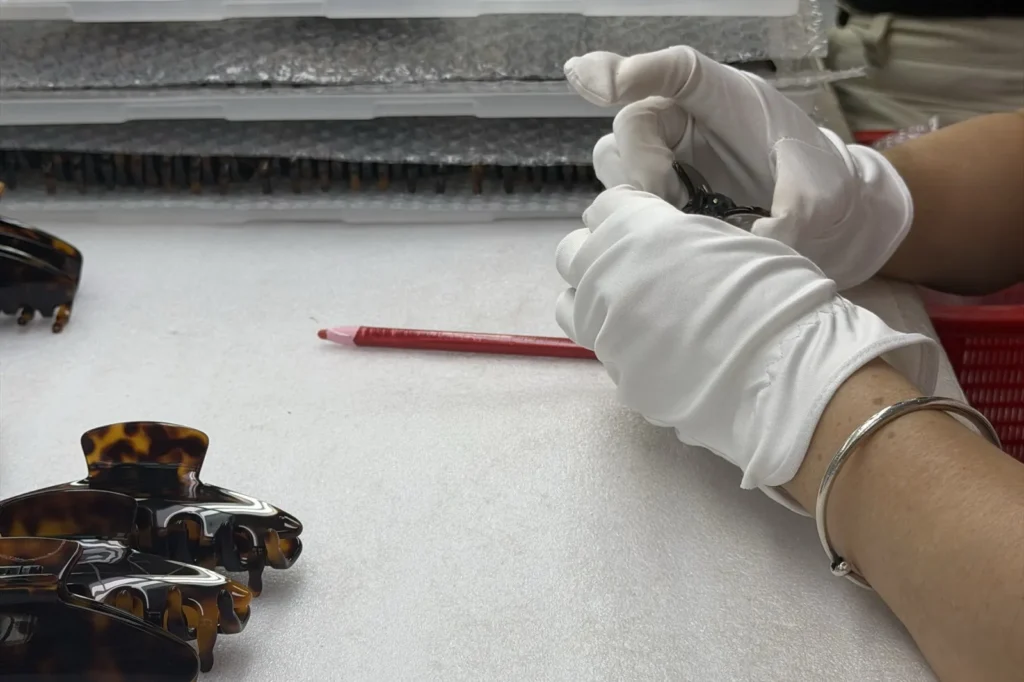
If you are comparing suppliers, ask to see how the spring is checked rather than whether it is. Our claw clip buyer guide covers the spring and hinge choices that affect this before you even reach sampling.
Agree on defect classes before production starts
An AQL result is only as clear as the defect list behind it. Many brands sort defects into critical, major and minor and set a stricter limit for the serious ones; zero critical, AQL 2.5 for major and AQL 4.0 for minor is a common split in consumer goods. Our inspection follows one standard for every order: AQL 2.5 on dimensions and finish, read from the table above. For hair accessories, the classes usually look like this:
| Class | Hair accessory examples | Usual treatment |
|---|---|---|
| Critical | A sharp burr or broken tooth tip that could scratch the scalp; a part that can detach from a children’s item | None accepted |
| Major | A spring that does not return or grip; jaws that do not meet; logo missing or misplaced; size outside the agreed tolerance; wrong colourway | Counted against the main AQL |
| Minor | A light mark on a face that is hidden when worn; slightly uneven polish that is not visible in normal use | Counted against a looser limit, or noted in the report |
| Not a defect | Pattern variation within the approved colour family on patterned acetate | Agreed in writing at sample approval |
Children’s accessories need more than this table. Product safety testing for a market is a separate step from a pre-shipment AQL inspection, and it should be planned before you order.
What you should see before you approve shipment
Before shipment is approved, we send a QC photo report so you can see the finished, packed goods before they leave. Once you approve, the cartons are loaded.
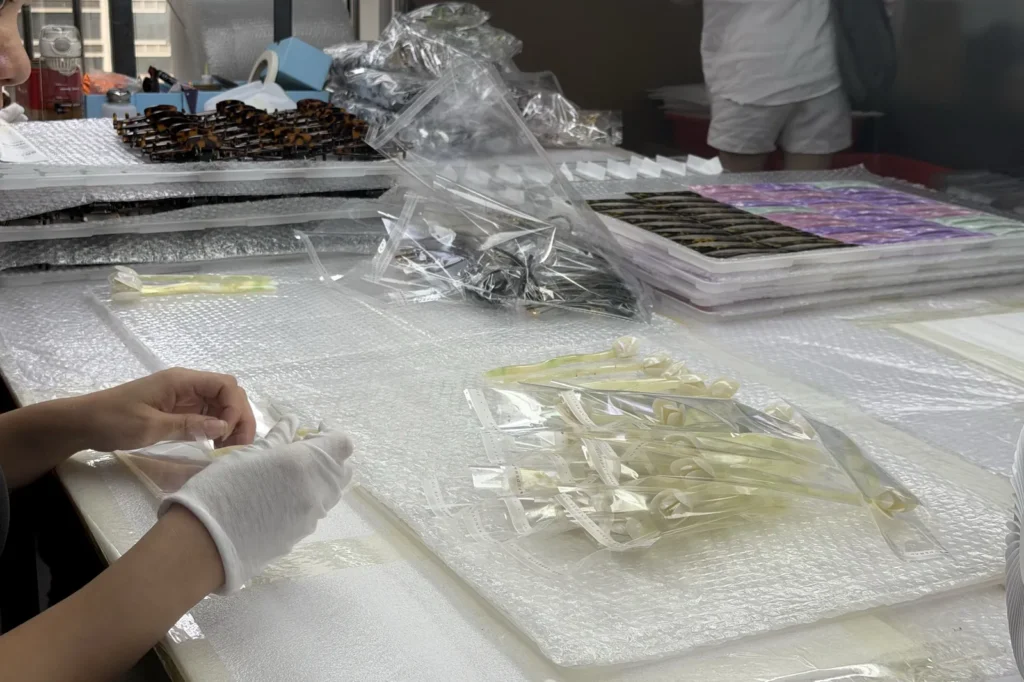
We also accept third-party inspection. If you book an independent inspector, tell us the date early and schedule the visit for when production is finished and most of the goods are packed, because a final random inspection is meant to see what will actually ship. Give the inspector photos of the approved sample so the goods are judged against the same reference we used.
After delivery, send us photographs of any problem within 30 days of receipt. If our check confirms the fault is in our goods, we take responsibility and either refund or replace the defective units. The full claims policy is in our FAQ.
What to confirm before production starts
- Reference sample: which approved sample bulk is checked against, identified by date and photos.
- Inspection standard: AQL 2.5, General Inspection Level II, single sampling (ISO 2859-1).
- Springs: the approved sample sets the feel for the hand tension check.
- Pattern: the colour family as approved, and no sheet transition across the logo area.
- Packaging: the artwork proof it will be checked against.
- Third-party inspection: whether you will book one, and roughly when.
- After delivery: photographs within 30 days of receipt for any claim.
Every one of the claw clips below goes through the same five checks. They are made on existing shapes, so you can change the colour and add your logo and still order from 500 pieces per colour.
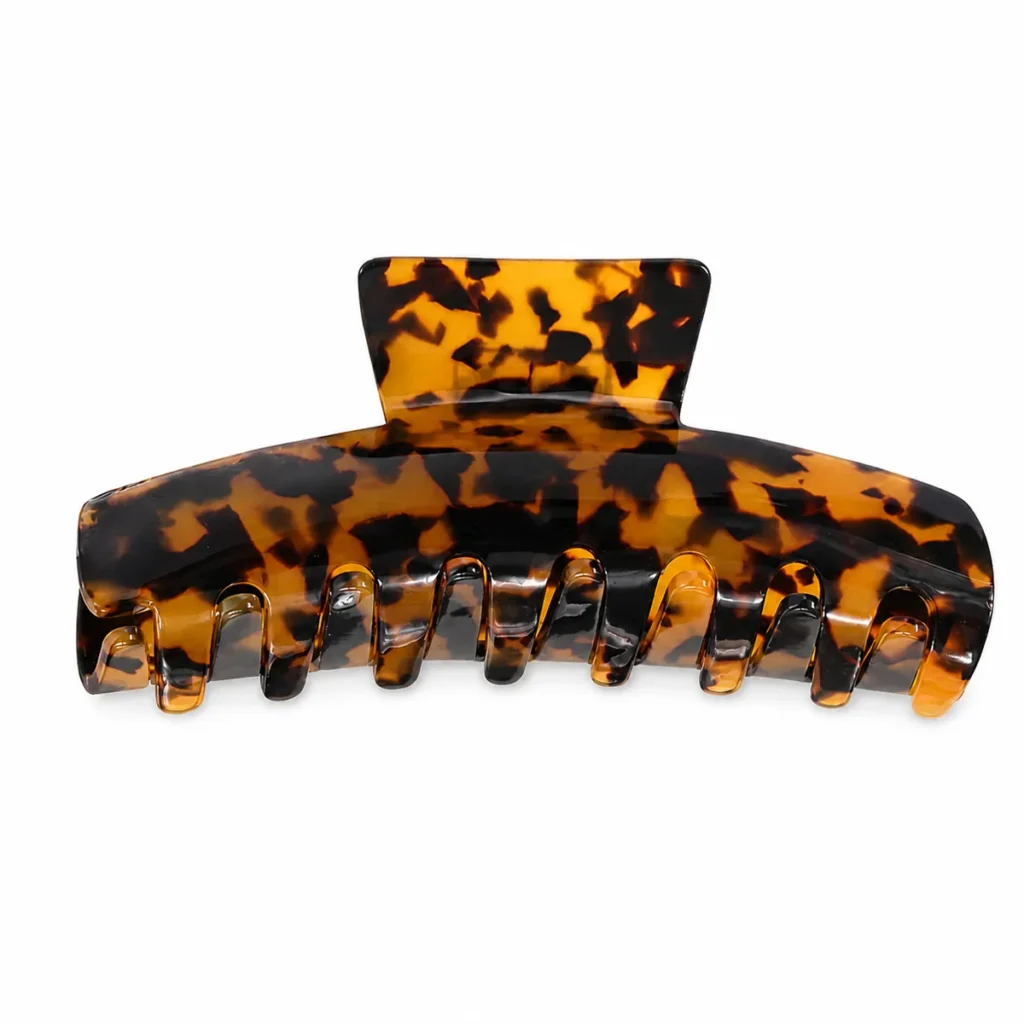
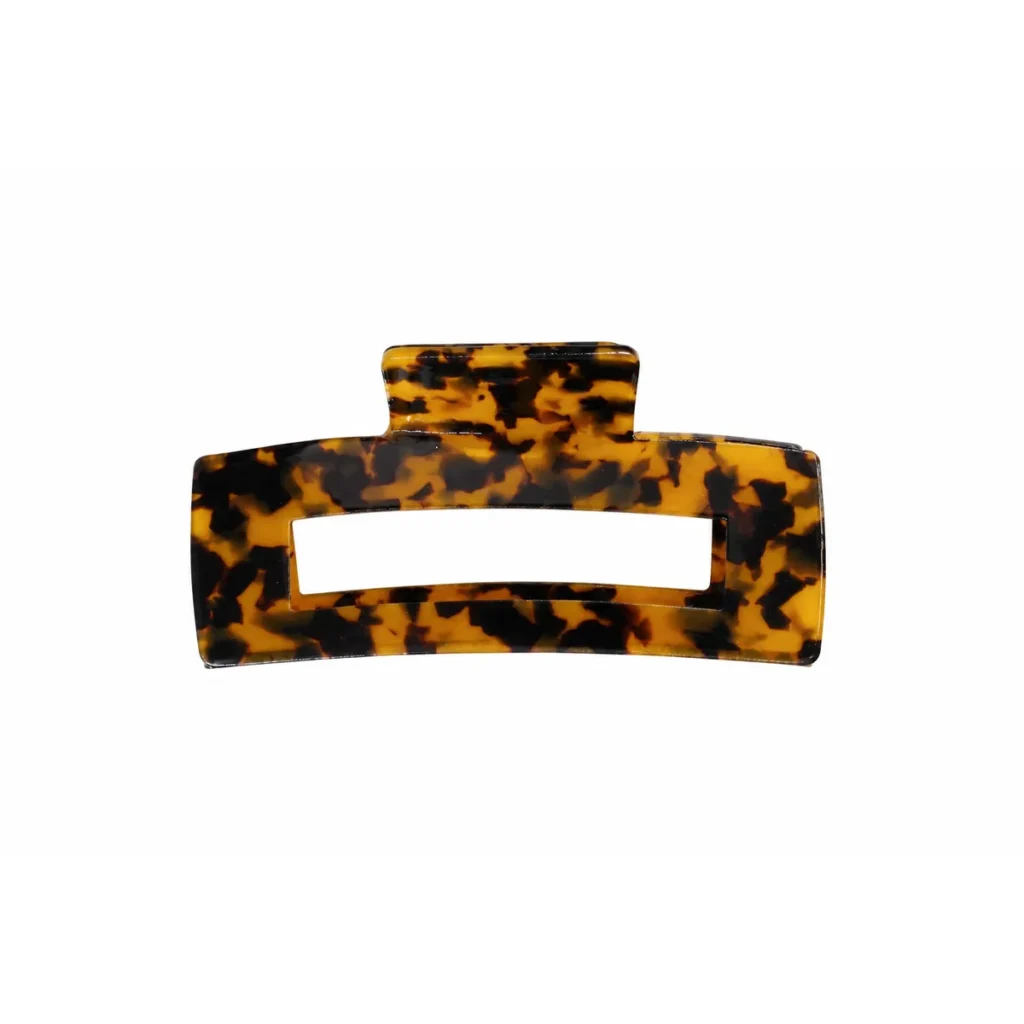
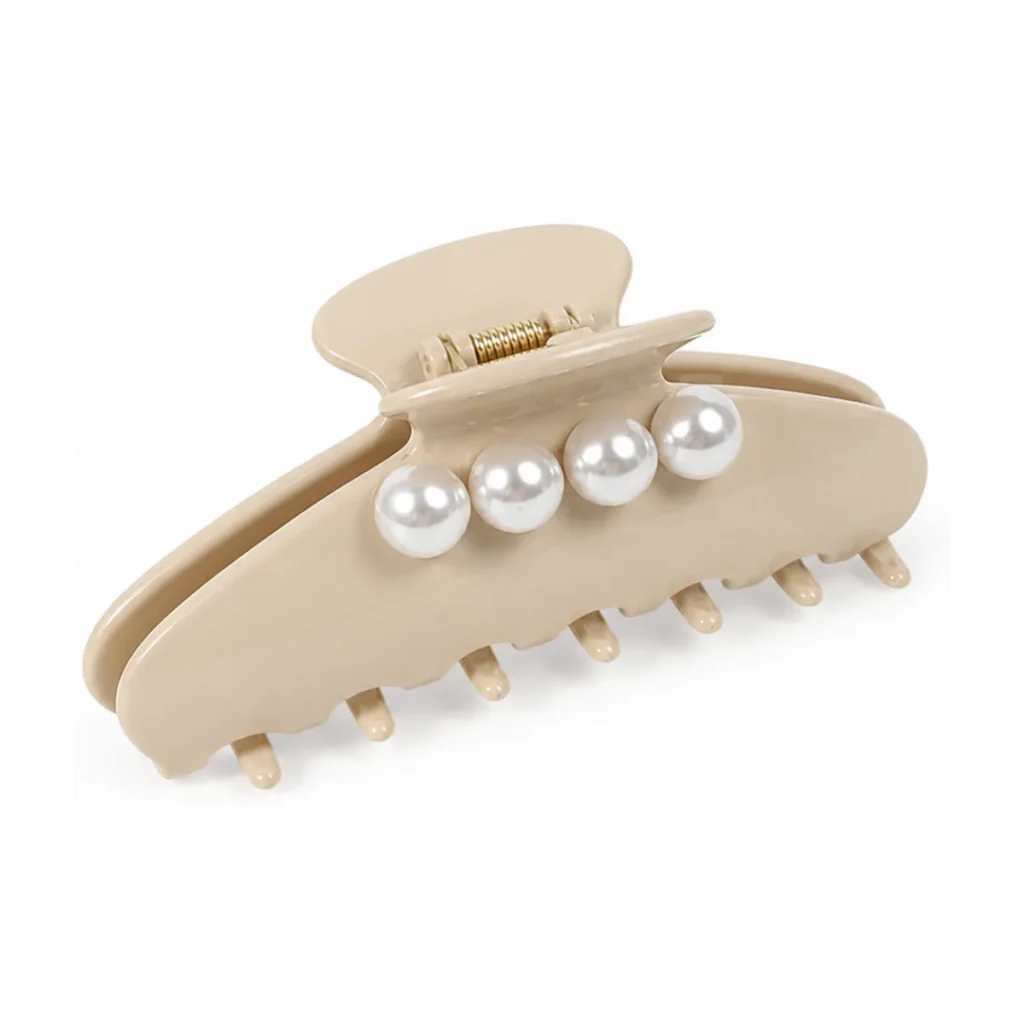
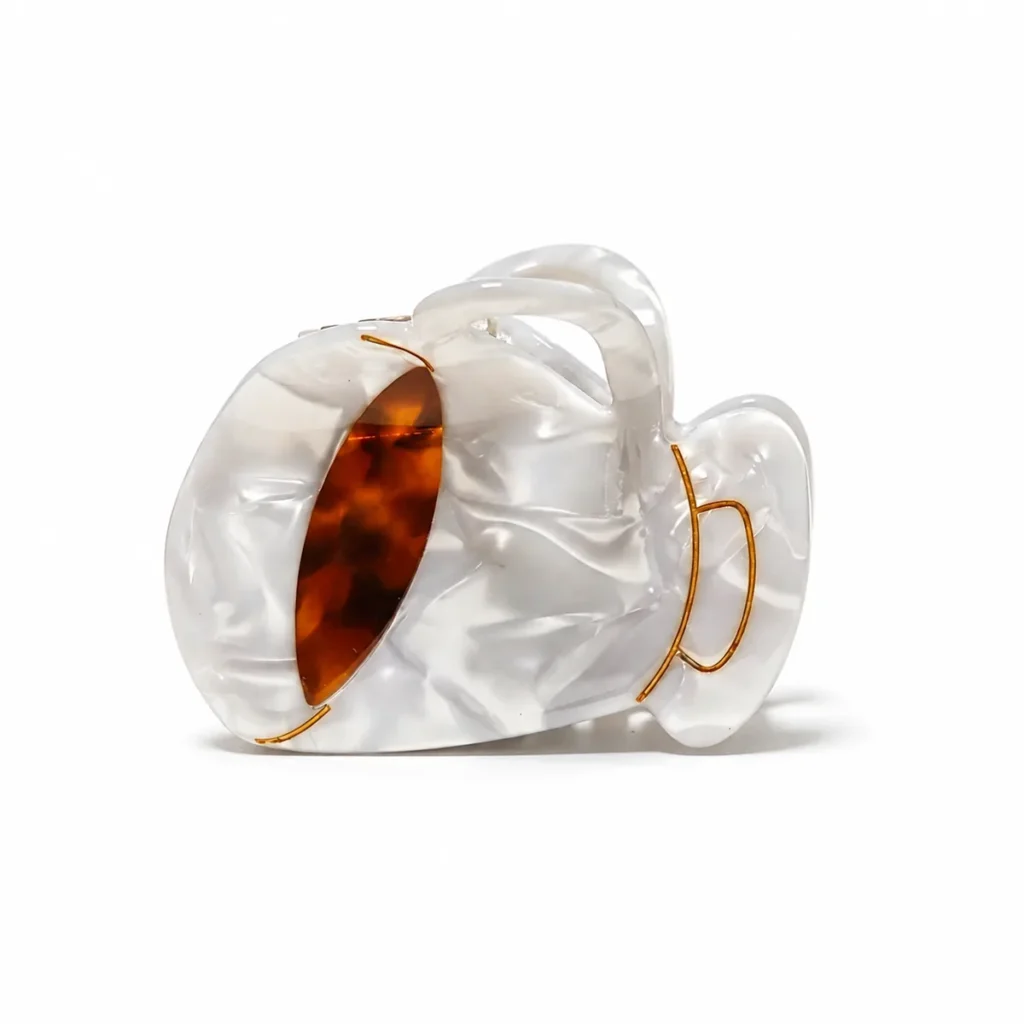
Raise any of these when you ask for a quote. Our OEM page explains the rest of the order flow, or you can contact us with your designs and quantities.
FAQ
Does AQL 2.5 mean 2.5% of my order can be defective?
No. It sets how many defects are tolerated in a random sample before the whole lot fails. On a 500-piece lot, 50 pieces are inspected and a fourth defect fails the lot.
Can I send my own inspector?
Yes. We accept third-party inspection. Book it for when production is finished and most of the goods are packed, and let us know the date early.
Is quality control different for wooden combs?
The same visual inspection and AQL 2.5 sampling apply, and packaging is checked against your artwork proof. The QC lab also has moisture meters, which matter for wood and bamboo in a way they never do for acetate.