A cellulose acetate comb should be specified as a working product, not only as a pattern on a flat sheet. Tooth spacing, body length, back shape and edge finishing decide who can use it; the acetate colour, logo and packaging decide how it will be presented. A buyer who settles those decisions in the right order gets a sample that is easier to judge and a quotation that is easier to compare.
This guide is for brands, salon suppliers, barbershop ranges, gift programmes and retailers sourcing a cellulose acetate comb. It uses verified sizes and constructions from EcoHairFactory’s current comb library, then separates the existing-style route from a fully custom programme.
The Short Answer: Choose the Teeth Before the Pattern
Start with the hair task. Wide teeth suit wet hair, curls and first-pass detangling. Fine teeth suit parting, finishing and controlled grooming. A dual-density comb puts both functions on one body, but it also needs enough length for each section to remain useful.
- Define the user and the main task.
- Select wide, fine or dual-density teeth.
- Choose a body length and back shape that fit the task.
- Confirm a stock acetate sheet or brief a custom material direction.
- Approve tooth tips, edges, logo and packaging on the physical sample.
If the product is for curls or wet hair, do not start from a fine-tooth body simply because the pattern photographs well. If it is for a barber or finishing kit, a very wide tooth field may be equally wrong. The acetate comb collection shows the range of current working geometries before a new profile is developed.
Match Tooth Density to the Job
| Tooth direction | Useful for | Buyer risk | Sample check |
|---|---|---|---|
| Wide tooth | Wet hair, curls, first-pass detangling and products worked through the hair | Too few teeth on a short body, or tips that feel bulky | Move through the intended hair section and check release at the tips |
| Fine tooth | Parting, smoothing, finishing, barber and handbag use | Used on a task that needs detangling or more clearance | Check tooth consistency, scalp contact and control near the back |
| Dual density | Opening a section with wide teeth, then finishing with fine teeth | A body too short to give either section enough working length | Use both halves in sequence and confirm the transition area is smooth |
Tooth labels alone are not a specification. Two wide-tooth combs can feel different because one has a straight narrow back and the other has a deep curved back that fills the palm. Ask for the physical size, tooth layout and intended use together.
Use Real Body Sizes to Set the Range
The current comb library covers pocket, handbag, gift, salon and detangling formats. The measurements below come from live EcoHairFactory product specifications; they are examples of workable bodies, not universal size rules.
| Current body | Verified size | Teeth | Range role |
|---|---|---|---|
| Black pocket comb | 8 cm | Wide | Travel, gift, amenity or beard-length format |
| Half-moon comb | 9.7 cm | Fine | Display-led gift shape with a broad curved back |
| Sculpted pocket comb | 11 cm | Fine | Handbag or finishing format with a waisted grip |
| Curved dual-tooth comb | 11.9 × 4.9 cm | Fine and wide | Compact two-function body; optional fitted sleeve |
| Curved tortoiseshell comb | 12 cm | Wide | Thick hair, curls and detangling with a palm-filling back |
| Rectangular comb | 13 cm | Fine and wide | Conventional anchor SKU for a first range |
| Dressing comb | 15.9 × 3 cm | Fine and wide | Barber and salon work where a slim profile matters |
| Translucent comb | 16 cm | Wide | Wet hair, curls and conditioner distribution |
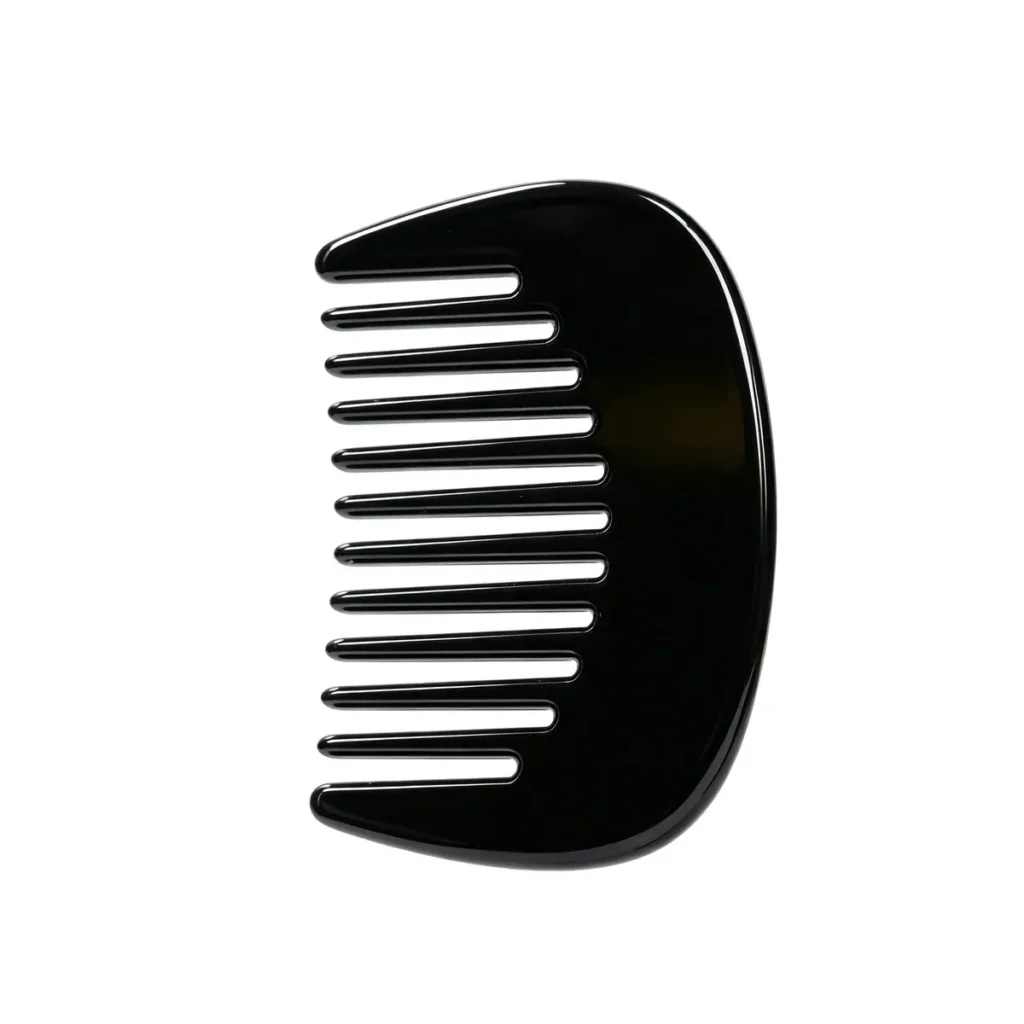
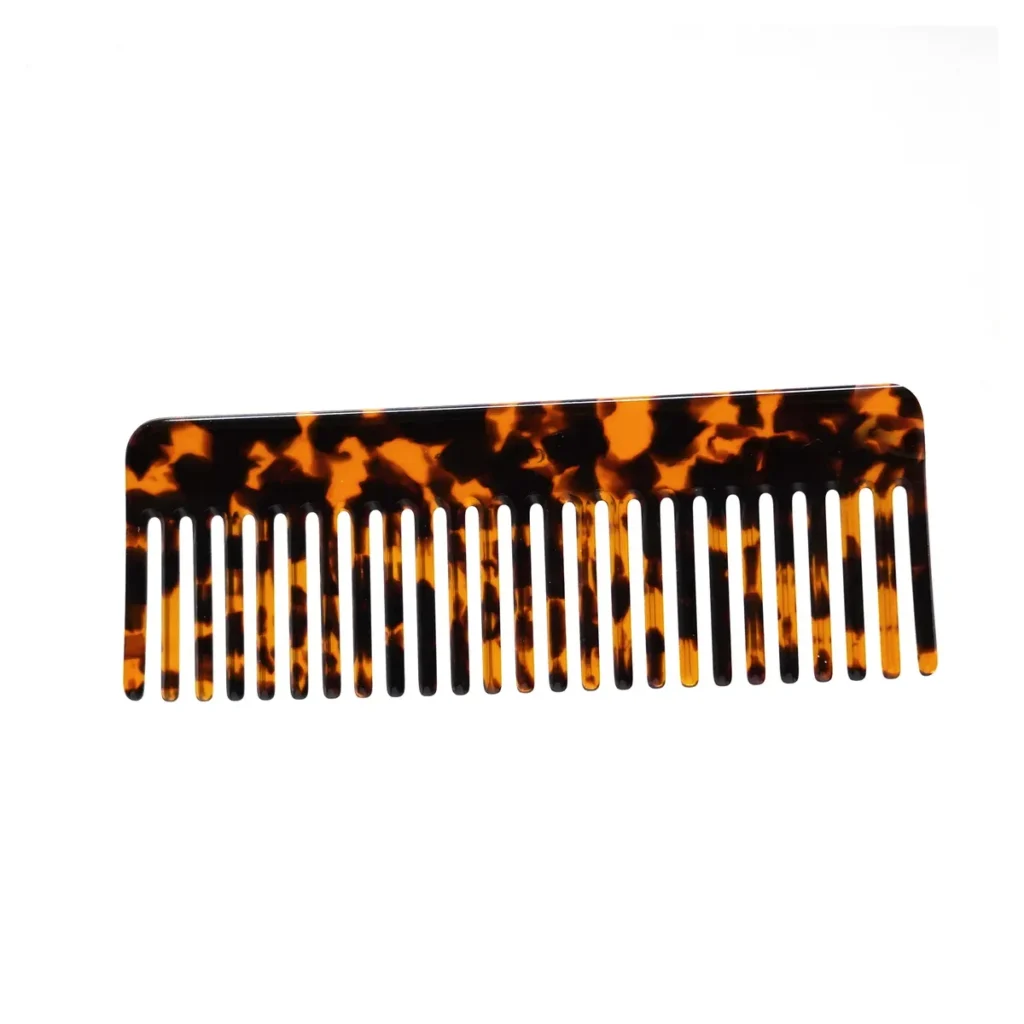
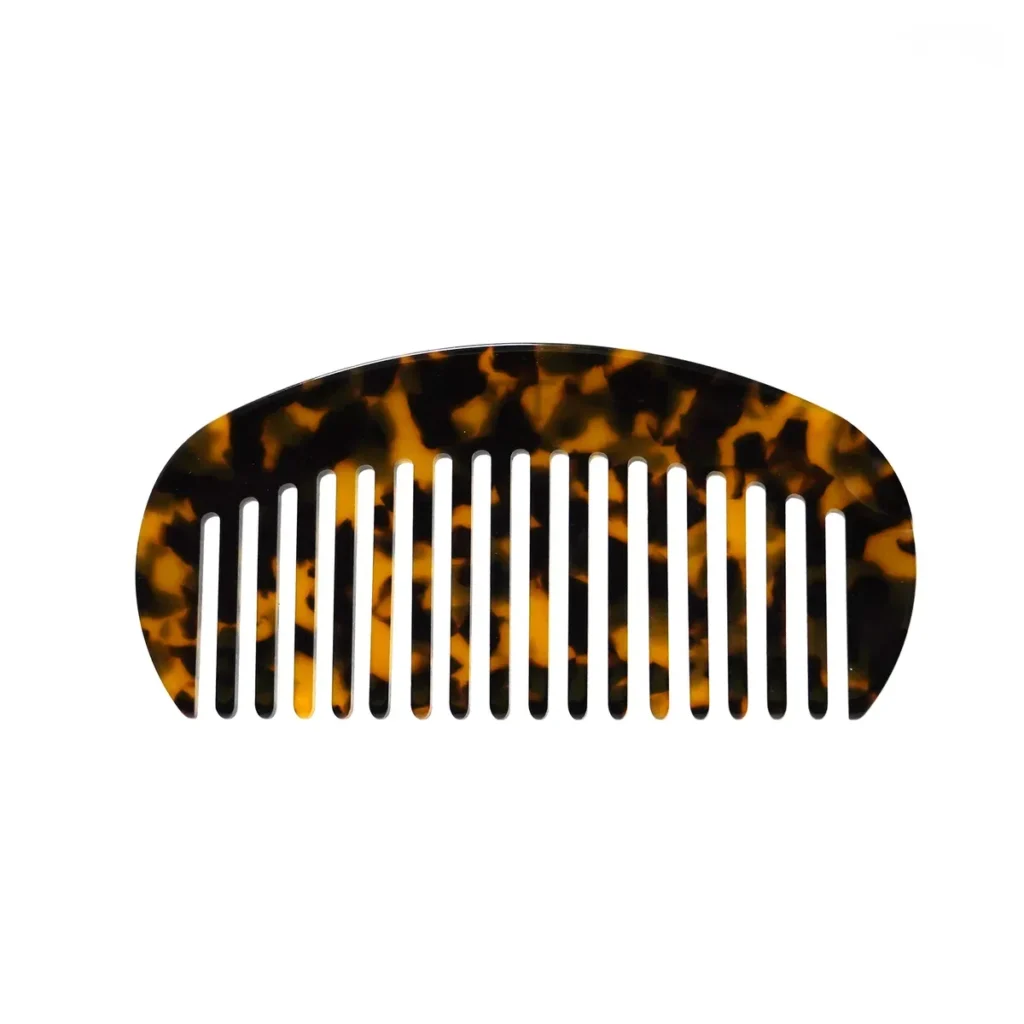
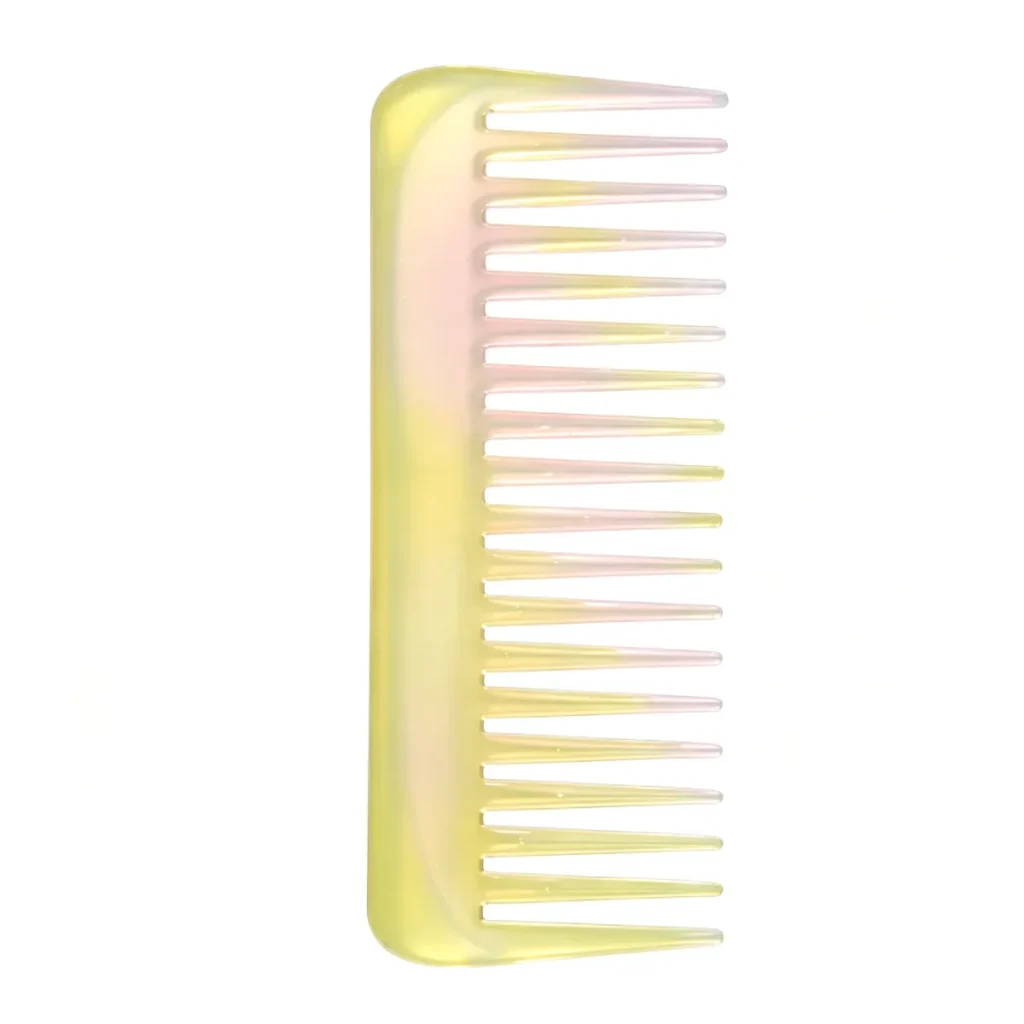
A practical first range usually needs an anchor product and a clear second reason to buy. For example, a conventional 13 cm dual-density comb can carry the volume, while a compact pocket or curved wide-tooth body gives the range a second use case. Four bodies that do the same job only divide the order without improving the assortment.
Understand What Cellulose Acetate Changes
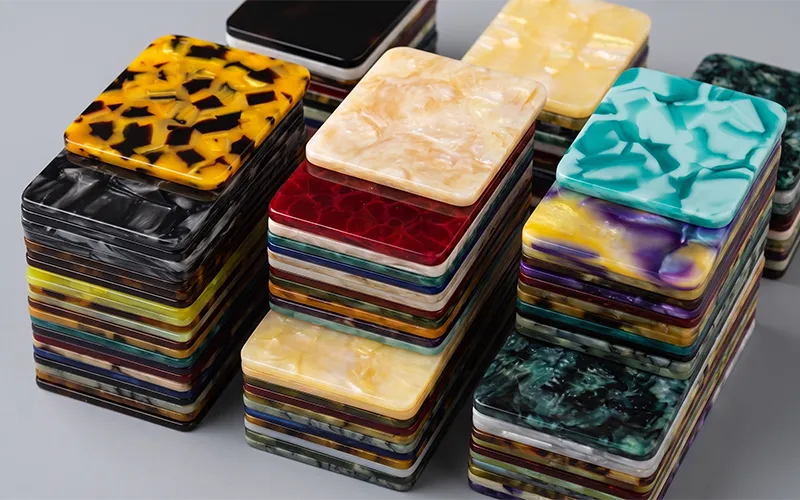
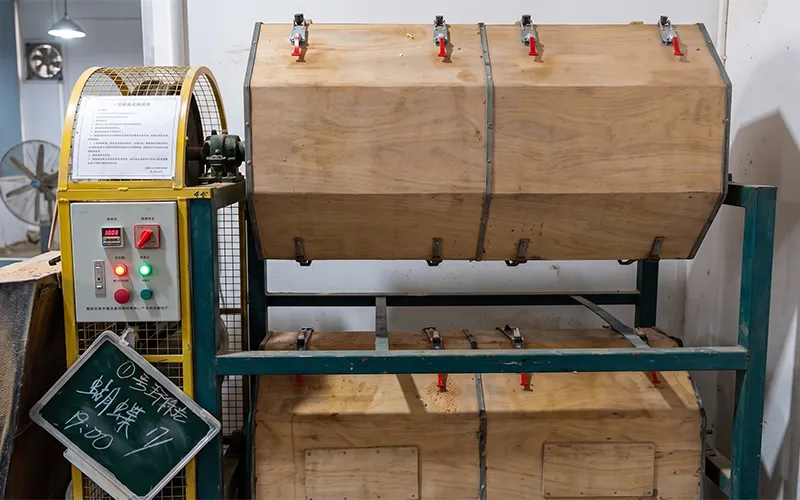
These combs are cut from acetate sheet rather than injection-moulded as one plastic part. That production route lets the coloured pattern run through the material and appear on the tooth edges. It also means that body outline, nesting, cutting and polishing are central to both cost and quality.
Pattern variation is normal in tortoiseshell, marble and chip sheets. A buyer should approve the acceptable family of results, not expect every piece to copy one photograph. Solid black is more consistent and gives a high-contrast surface for branding; a translucent sheet needs extra care because the background changes with material thickness and light.
For a detailed material explanation, see how cellulose acetate hair accessories are made. If environmental wording will appear on packaging, review the limits of biodegradability claims before approving the copy.
Existing Comb or New Custom Profile?
| Route | What stays proven | What the buyer can still brief | Current MOQ guidance |
|---|---|---|---|
| Existing comb style | Current body outline and tooth geometry | Available acetate sheets, logo, sleeve or packaging, subject to the selected item | 1,000 pcs per design |
| New custom profile or tooling | The material and production process can be established, but the new body must be sampled | Outline, dimensions, tooth layout, grip, material direction, branding and pack | From 3,000 pcs per custom design |
The current minimum for combs and brushes is 1,000 pieces per existing design. A programme requiring a new custom profile or tooling starts from 3,000 pieces per design. Quantities should be confirmed against the exact style, colour plan and packaging before the order is placed.
Custom sample fees are non-refundable. They pay for developing and checking a specified sample direction; they are not a deposit that is automatically credited against the bulk order. If two profiles or two tooth systems are requested, list them as separate development directions unless the quotation states otherwise.
Use an existing body when the commercial difference can come from sheet, branding, sleeve or packaging. Develop a new profile when the shape or working geometry is the product advantage. The sampling and approval guide explains what to lock before bulk production.
Plan Logo and Packaging Around the Material
A logo that is clear on solid black may disappear on coarse tortoiseshell or compete with a chip pattern. On a compact comb, the available branding area can also be smaller than the overall dimensions suggest because the teeth, curved back and grip area all remove usable space.
- Send vector artwork and a marked placement reference.
- State the intended physical logo width, not only “small” or “centred”.
- Approve the mark on the selected sheet family, not on a white digital mock-up.
- Decide whether the comb, a fitted sleeve, a carton or a retail card carries the primary branding.
- Keep barcode, material wording and care copy separate from the small product mark.
For translucent or strongly patterned combs, packaging-led branding may be cleaner than forcing a large mark onto the product. The hair accessory packaging guide helps separate product MOQ from packaging MOQ and setup.
Approve the Sample With Observable Checks
| QC area | What to inspect | Why it matters |
|---|---|---|
| Tooth tips | Every tip is smooth, consistent and free from sharp contact | The comb touches hair and scalp at the tips first |
| Tooth spacing | Matches the approved wide, fine or dual-density sample | Spacing defines the working use |
| Edges and back | No rough polishing, visible chips or uncomfortable corners | A handle-free body is controlled from the back and edges |
| Body shape | Profile, curve and dimensions match the approved reference | Small outline changes alter grip, nesting and presentation |
| Pattern range | Variation remains inside the approved material family | Sheet-cut products will not be visually identical |
| Logo | Correct scale, position, contrast and finish | Pattern and translucency can reduce legibility |
| Sleeve or package | Fits without loading or scratching the teeth | A tight pack can damage a product that passed factory inspection |
Keep one approved sample and a written specification together. “Smooth” and “premium” are subjective; a referenced tooth layout, approved edge feel, photographed logo position and named sheet family give inspection something repeatable to compare.
A Ready-to-Send Cellulose Acetate Comb RFQ
- Target user and hair task
- Wide, fine or dual-density tooth direction
- Existing product link or target dimensions and outline
- Stock sheet reference or custom colour and pattern direction
- Quantity per design and per colourway
- Logo artwork, physical size and marked placement
- Sleeve, carton, retail card and barcode requirements
- Destination market and required delivery window
- Sample checks that will decide approval
Send the selected body, tooth direction and quantity plan through the contact page. A useful quotation begins with a working comb brief, not only a colour photograph.
Frequently Asked Questions
What is the MOQ for a cellulose acetate comb?
The current minimum is 1,000 pieces per existing comb design. A new custom profile or tooling programme starts from 3,000 pieces per custom design. Confirm the exact sheet, colour split and packaging with the quotation.
Should I choose wide or fine teeth?
Choose wide teeth for wet hair, curls and first-pass detangling; choose fine teeth for parting, finishing and controlled grooming. Use a dual-density body when both tasks need to fit one product.
Can several acetate patterns use the same comb body?
Current stock sheets can be considered on an existing body, subject to production and quotation. The body profile and the sheet pattern are separate decisions, but a custom sheet can carry its own development and minimum requirements.
Is the custom sample fee refundable?
No. Custom sample fees are non-refundable and cover the work required to develop the agreed sample direction.
Why do acetate combs need careful edge inspection?
The body and teeth are cut from sheet, so the finished edge and tooth tips are part of the product’s function. Consistent polishing affects hair release, scalp contact and how the comb feels in the hand.