Most hair accessory projects are not won or lost at the quotation stage. They are lost at sampling — when a buyer approves something that looks right in a photograph, pays a deposit, and then discovers during production that the bristle type, the number of separate components, or the surface finish was never actually specified. None of those three things are visible in a photo. All three change the unit price.
This page covers what sampling costs, when it is free, how long the whole cycle takes, and — the part almost nobody does properly — what to physically check when the sample lands on your desk.
What Sampling Actually Costs
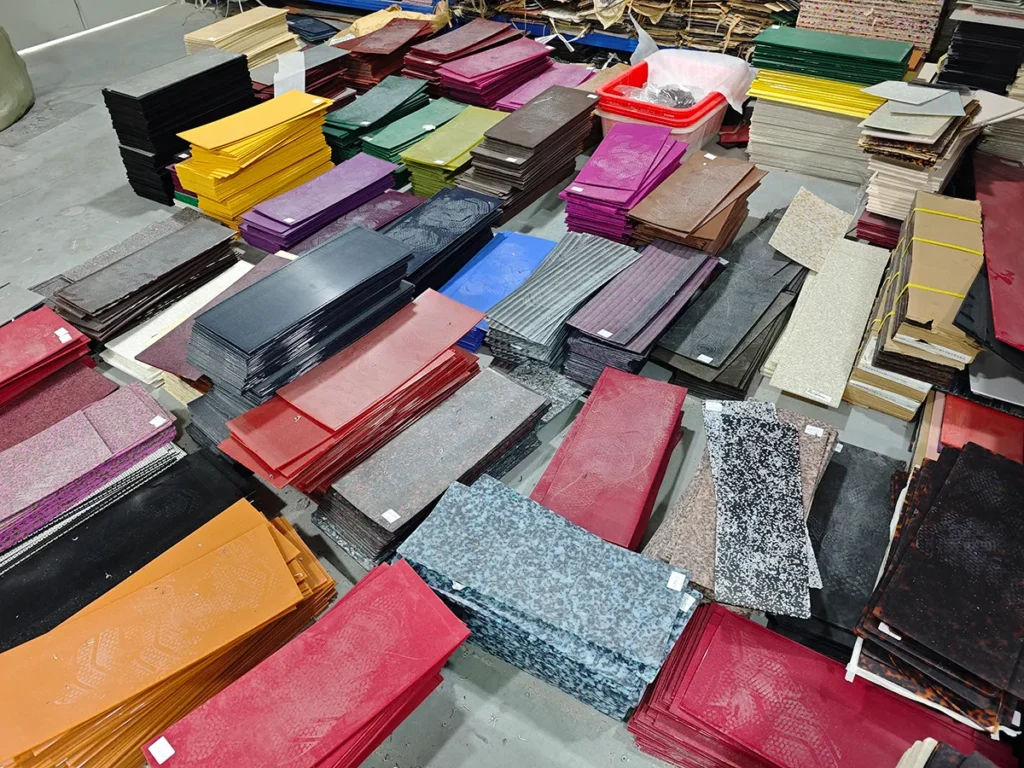
Sample cost is driven by one thing: whether your design can be made with tooling and finishes that already exist on the floor, or whether something new has to be developed for it.
| Sample type | Cost | Typical case |
|---|---|---|
| Existing stock sample | Free — you pay freight only | You want to feel the material, weight and finish quality before committing to anything |
| Existing tooling and standard finish | USD 45 per style | Your design uses a shape we already cut, in a standard acetate sheet, with a standard polish |
| New tooling, non-standard material or extra finishing | RMB 500–1,500 (approx. USD 70–210) | New shape, custom sheet pattern, or an added process such as ink-fill, laser marking or a special finish |
Sample charges are per style, not per piece. A three-colour range of the same shape is one sample charge, not three. The gap between the two paid tiers is not a margin decision. A sample from existing tooling occupies a machine for a few minutes. A sample that needs a new profile, a special sheet or an extra finishing pass has to be scheduled around live production, and often runs two or three times before it is right. You are paying for development time, not for the piece itself.
When Samples Are Free
Anything already in our sample room ships free — you cover the courier charge only. This is the fastest and cheapest way to answer the questions that actually matter early on: how heavy does the piece feel, how does the acetate catch the light, is the spring tension right, does the polish hold up after a week in a handbag.
Our advice is to always take the free stock sample first, even if your final design is different. It costs you a courier charge and tells you more about a supplier than any amount of email. If the material feels wrong in your hand, no amount of custom development will fix it.
Tooling: When You Need It, What It Costs, and Who Owns It
This is where the two main materials behave completely differently, and it is worth understanding before you budget anything.
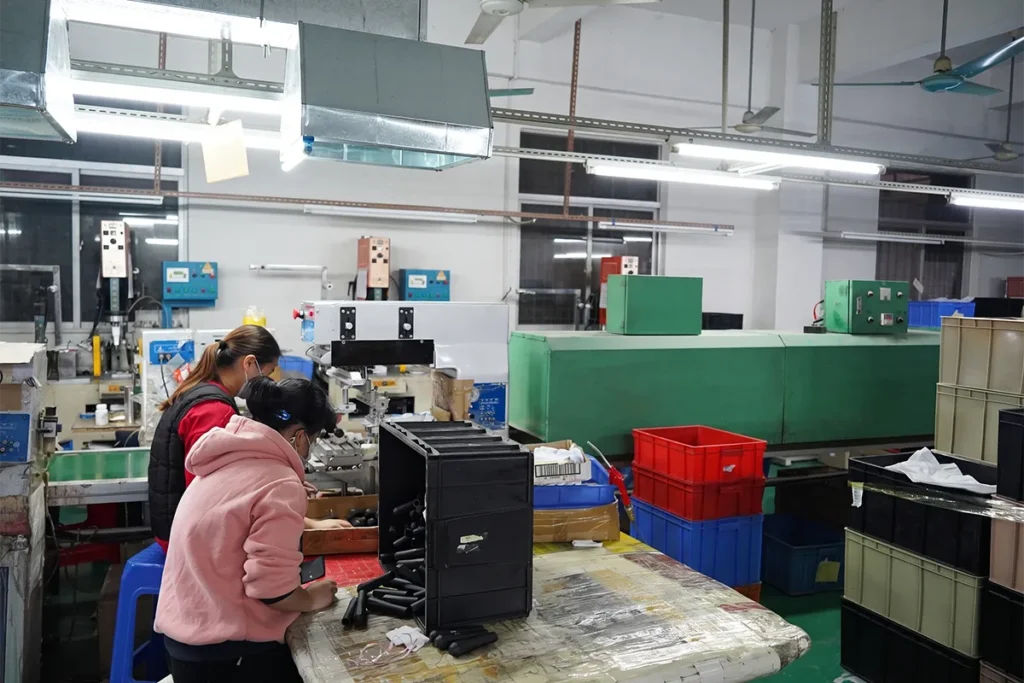
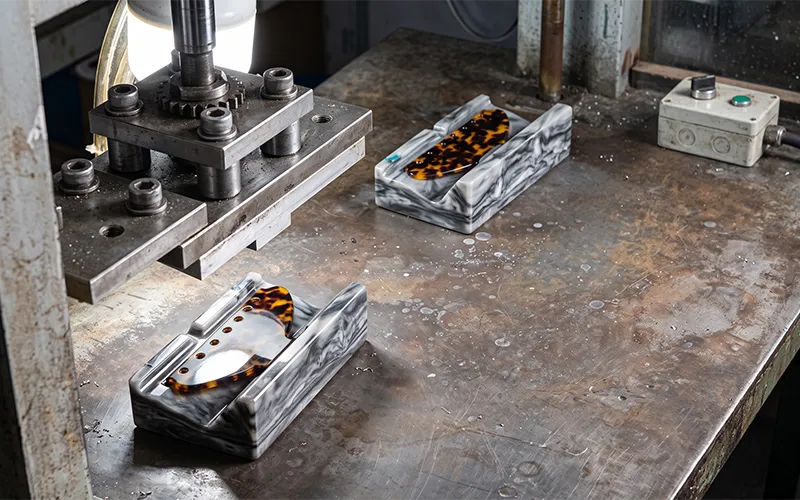
Cellulose acetate needs no injection tooling. Acetate arrives as pressed sheet with the pattern already inside it, and the part is cut out — so a new shape means a new cutting profile rather than a steel injection mould. There is still tooling involved (a cutting die, and a forming mould for curved pieces such as wide headbands), but it sits at a fraction of the cost and lead time of an injection tool. This is why acetate carries a low entry cost and why you can run a small first order without a five-figure tooling bill. The trade-off is covered in detail in our comparison of acetate versus plastic hair clips.
Injection-moulded parts do need a mould. A straightforward mould runs approximately USD 4,200–5,600 per mould (RMB 30,000–40,000). Note that this is the cost of a single mould — a product made of several moulded components needs a tool for each one, which is exactly why the component count question further down this page matters so much to your budget. For anything complex we cannot quote from a photograph; we need a 3D file to cost it properly, and we would rather tell you that than guess and revise later.
Who owns the mould
If you pay for the tooling, the tooling is yours — it is held here and used exclusively for your orders. It does not get quietly reused for another brand with a different logo on the carton. Ask any supplier this question in writing before you pay a tooling deposit, and be wary of an answer that avoids the word “exclusive”. A tool you paid for that turns up in a competitor’s catalogue is one of the more expensive lessons in this industry.
The Timeline From Enquiry to Warehouse
The sequence matters as much as the durations, because two of these stages are controlled by you, not by the factory.
| Stage | Typical duration | Who controls it |
|---|---|---|
| Confirm price, specification and customisation details | Before sampling starts | Both |
| Sampling | 10–20 days (18 is typical) | Factory |
| Your approval | 5 days allowed | You |
| Deposit and production start | On approval | You |
| Production | 35 days | Factory |
| QC and loading | 4 days | Factory |
62 days from approved sample to loaded container, before freight. Shipping time is the only part that changes by destination. One point worth being blunt about: price and customisation details are confirmed before sampling begins, not after. Sampling first and negotiating afterwards is how projects end up with a sample everyone likes and a price nobody agreed to. Once the sample is approved, the deposit is paid and production starts — there is no renegotiation window built into the schedule, because the material has already been committed.
If you want the full commercial sequence around this — spec definition, telling factories from trading companies, payment terms — that is covered in our guide to sourcing hair accessories from China.
Three Things Buyers Almost Never Check
After a couple of decades of sending samples out, the same three specifications get skipped over and over — and each one turns into a dispute at production stage. None of them are visible in a product photograph, which is exactly why they get missed.
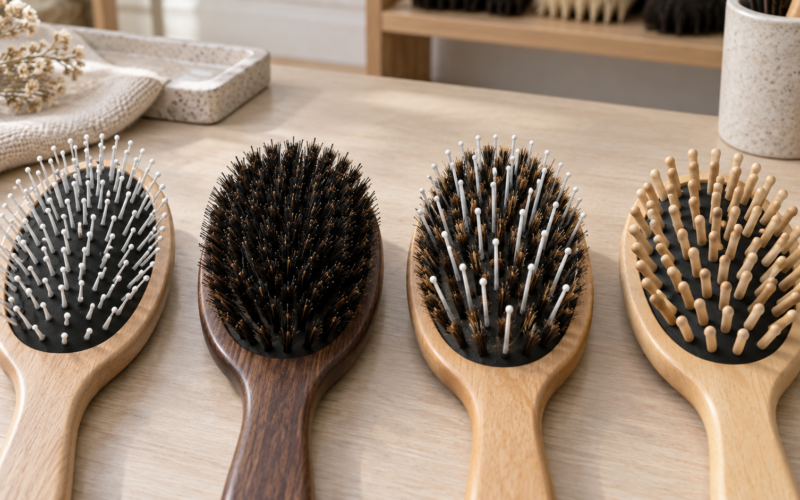
1. Which bristle type you are actually getting
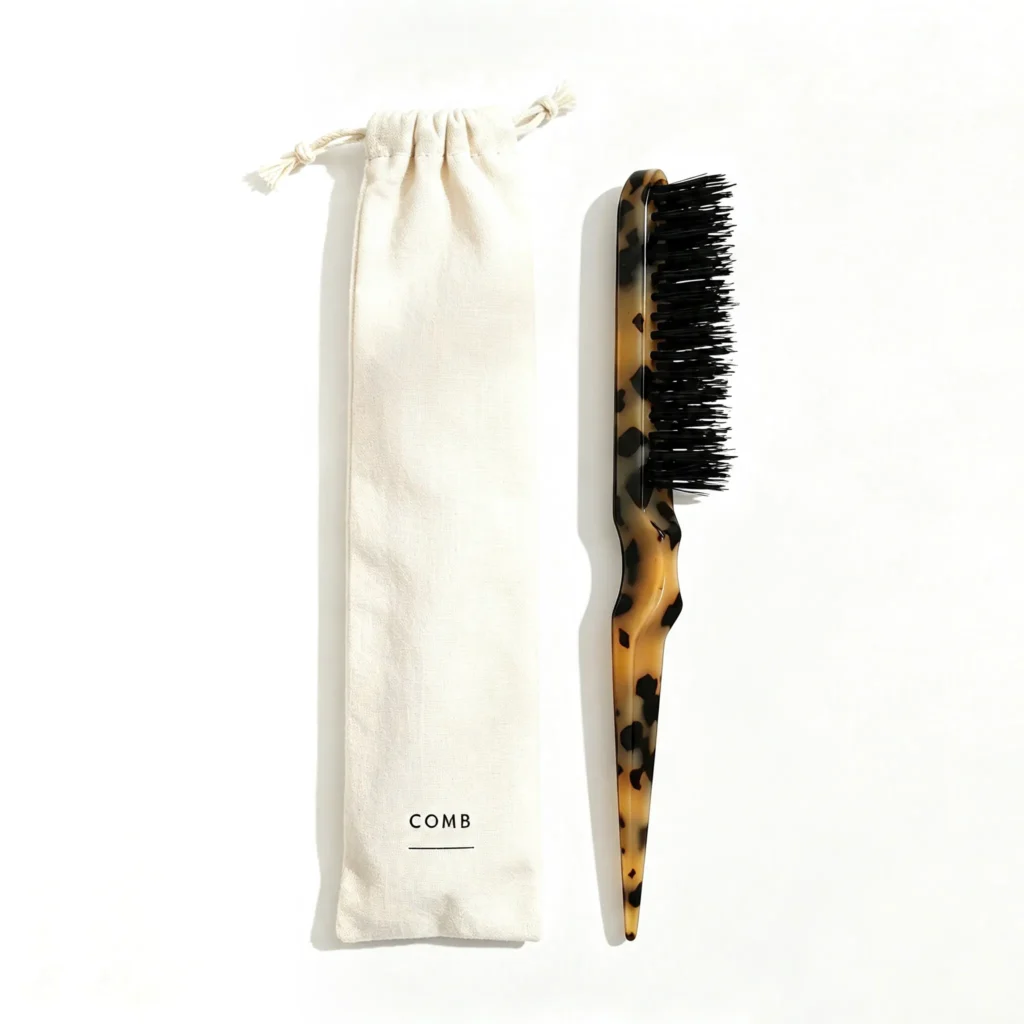
On brushes, “bristle” is not one thing. Nylon, boar, a nylon-boar mix, ball-tipped versus cut-tip, and the stiffness grade are all separate decisions, and they feel completely different in the hand and on the scalp. They also sit at different price points. A brush quoted with nylon and delivered with nylon is not a defect — but if you assumed boar because the photo looked natural, you have a problem that is nobody’s fault and still yours to explain to your customer.
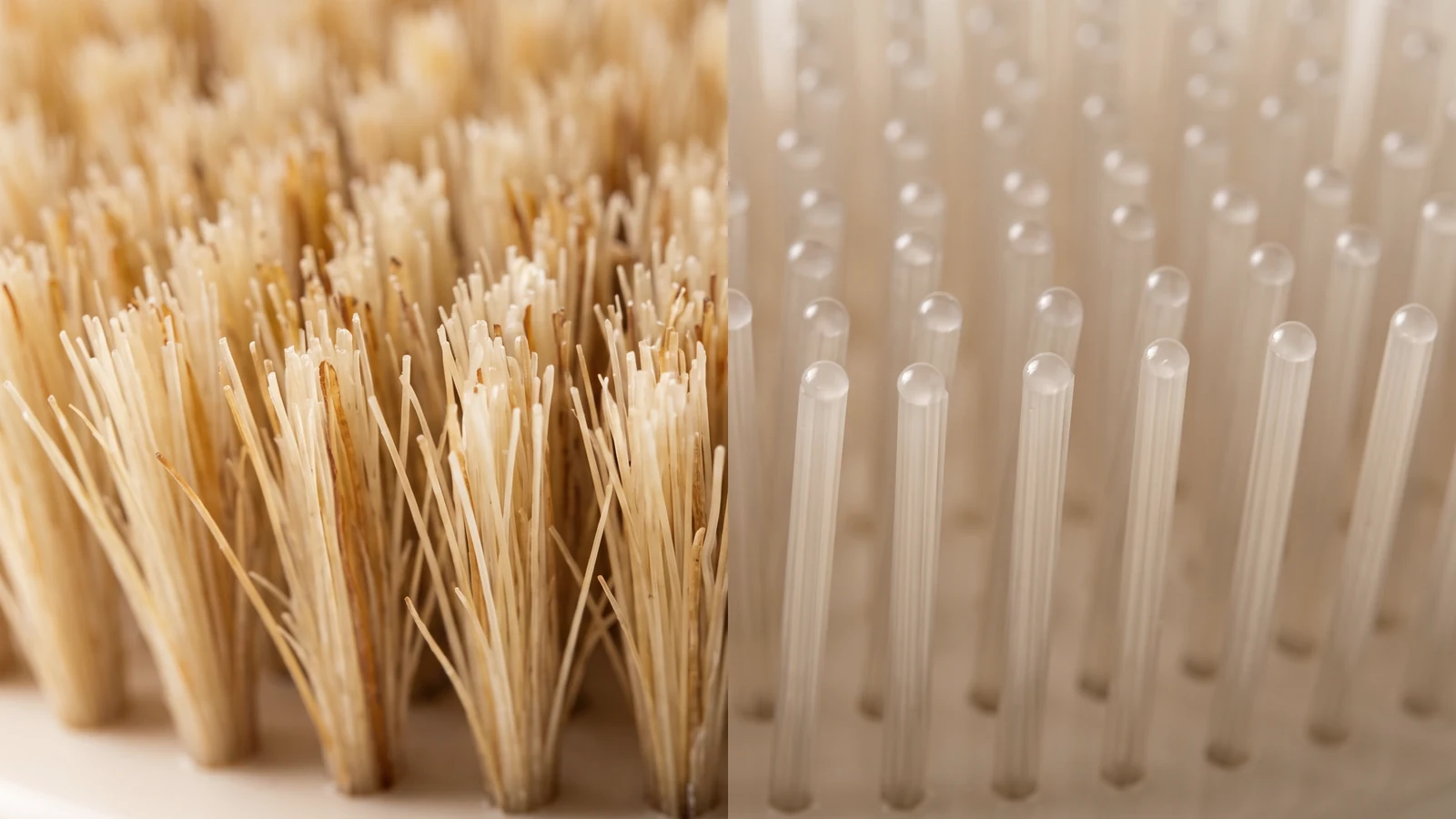
Write the bristle type, the tip treatment and the stiffness into the specification. Not “natural bristle” — the actual material.
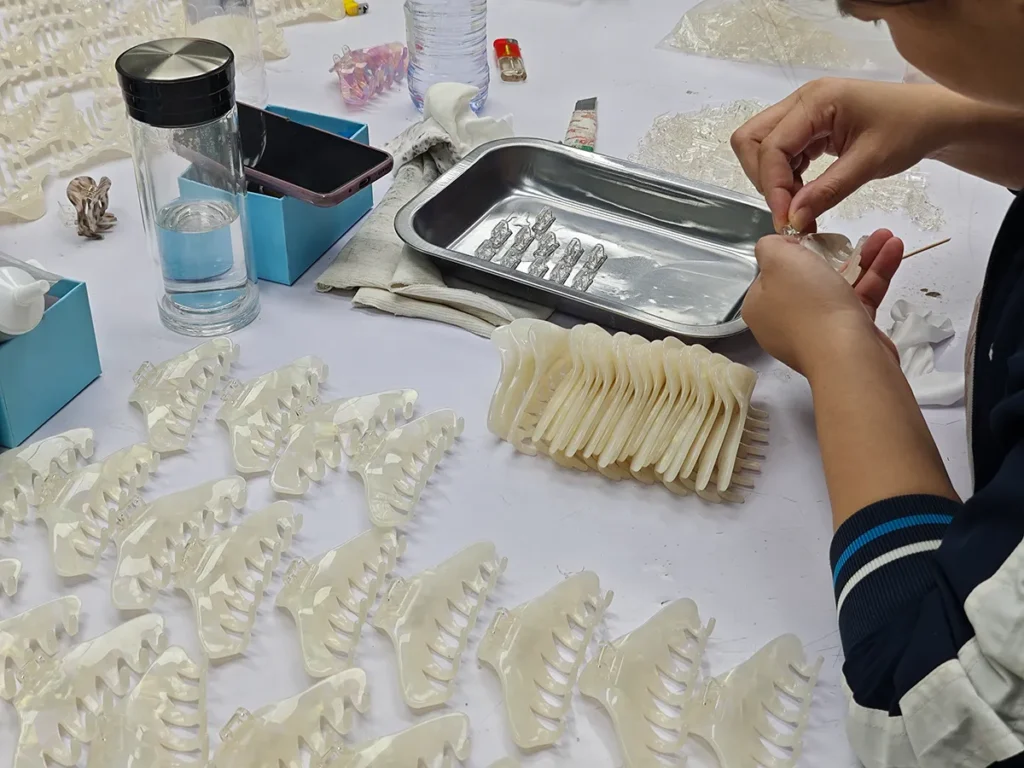
2. How many separate components the product is made from
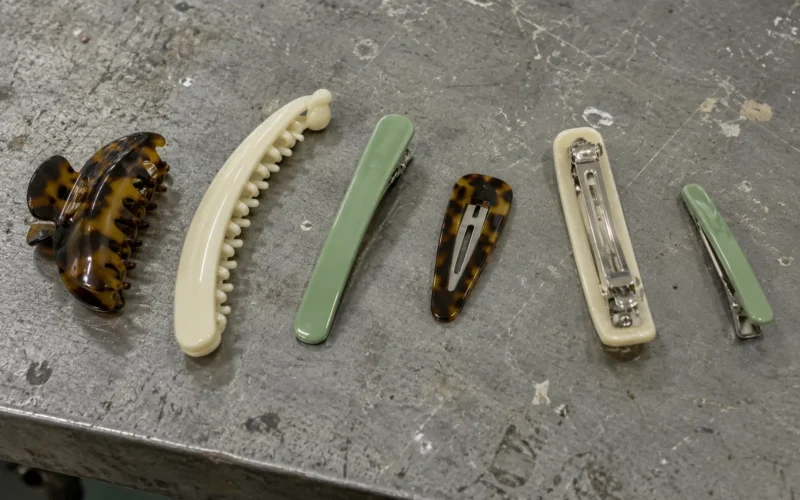
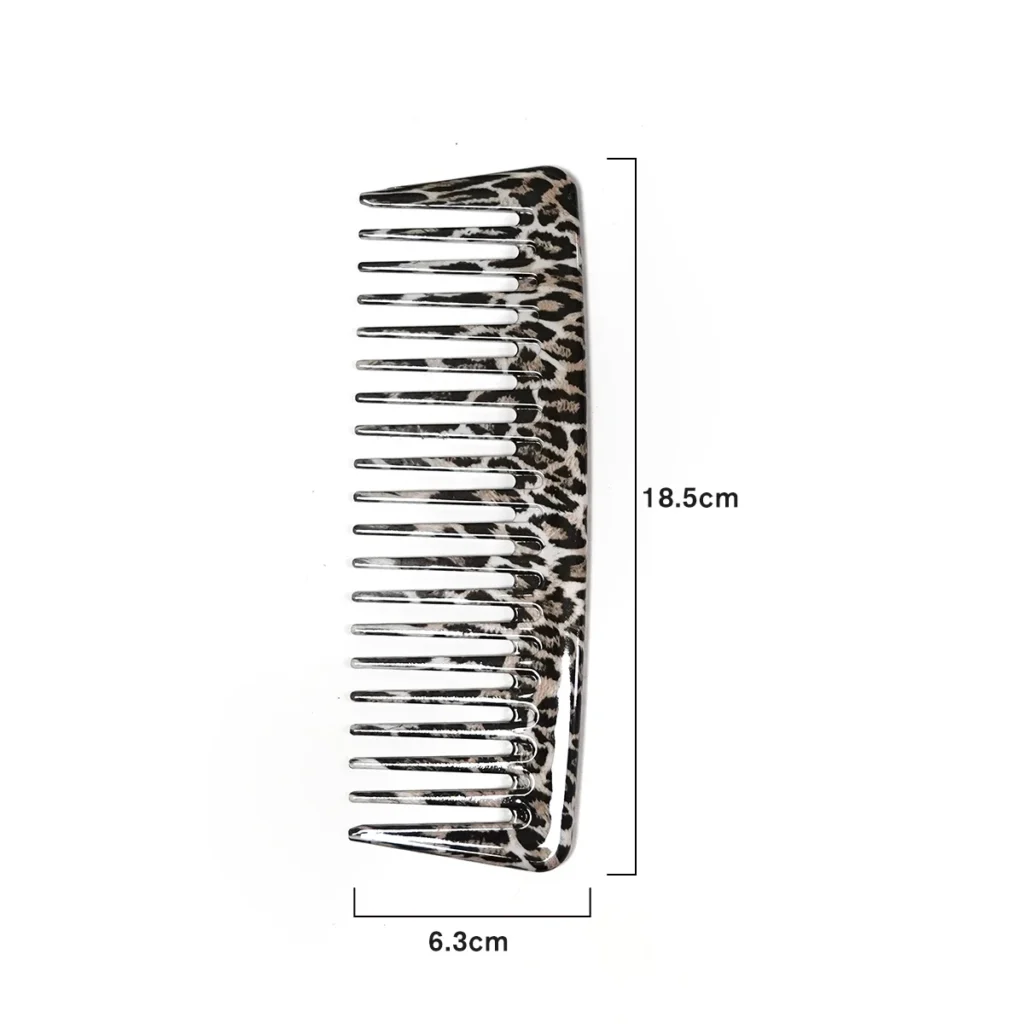
Two combs that look identical can be a single moulded piece or an assembly of three or four parts. Component count drives almost everything downstream: how many tools are needed, how much hand assembly goes into each unit, how many places the product can fail, and what a QC inspector has to check.
This is the single most useful question you can ask when two quotations are far apart and the products look the same. Nine times out of ten, the cheaper one has fewer parts, and that is a legitimate design difference — but you should be choosing it deliberately rather than discovering it after delivery.
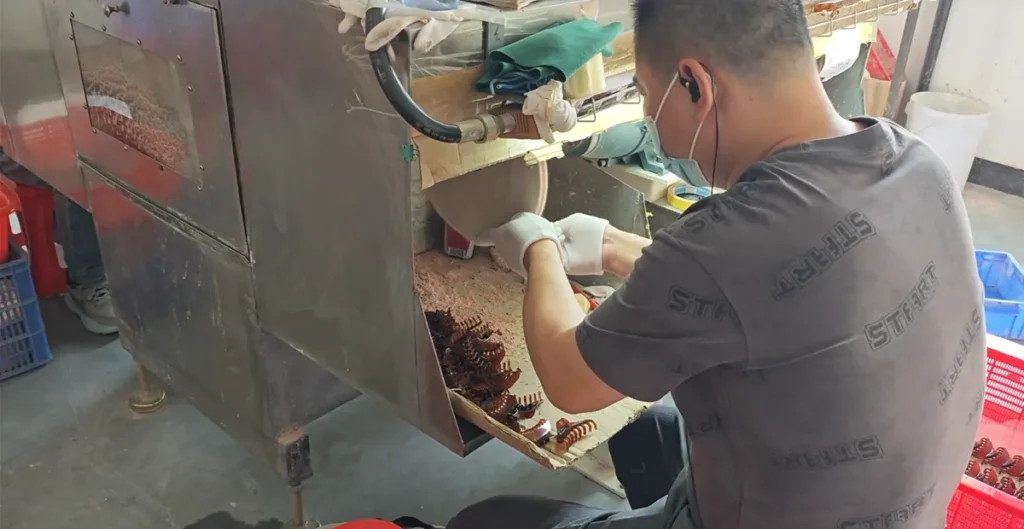
3. The surface finish, specified as a process
“Glossy” is not a specification. Tumble-polished, hand-polished, spray-finished and bake-finished all produce a shine, and they age completely differently. A tumble-polished acetate edge stays smooth for years because the gloss is the material itself. A sprayed finish sits on top of the body and can wear at the contact points — which on a hair clip is precisely where it is handled every day.
Ask which process produces the finish on your sample, and confirm that production will use the same one. This is also the question that most reliably separates a factory from a trading company: a factory answers immediately because it owns the process; an intermediary has to go and ask. Every process named on this page is filmed on our own floor — you can watch them in our factory video library.
A Short Checklist Before You Approve
- Handle it for a week. Open and close a clip daily. Spring failure shows up in days, not in a photograph.
- Check the edges by feel, not by eye. Run a finger along every cut edge. Polish quality is tactile before it is visual.
- Confirm bristle type, component count and finish process in writing. The three above.
- Match the sample against your written spec, line by line. Not against your memory of the conversation.
- Agree what happens if production differs from the sample. Before the deposit, not after.
- Keep a sealed counter-sample. Both sides keep one. It is the only thing that settles a dispute quickly.
Frequently Asked Questions
Is the sample charge refunded against the first order?
Ask before you pay it — policies differ by supplier and by how large the first order is. What matters more than the refund is that USD 45 is not the number that should be driving this decision. If a sample charge is deciding your supplier, the real problem is somewhere else in the quotation.
Can I get a sample in my own colour before committing?
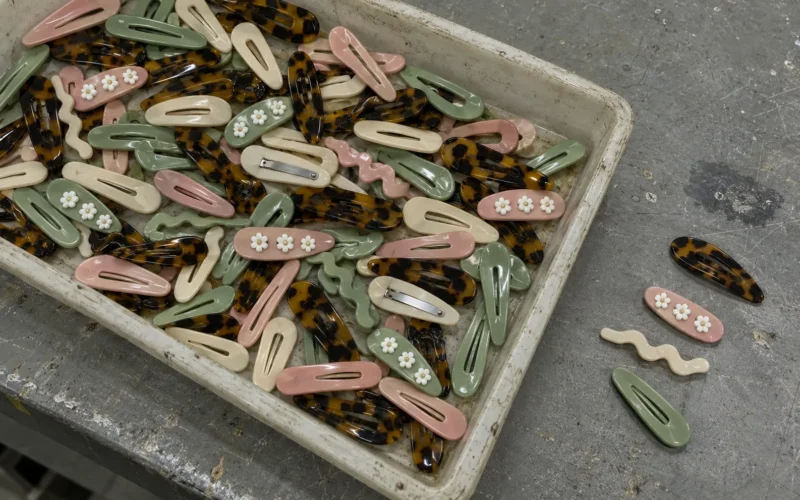
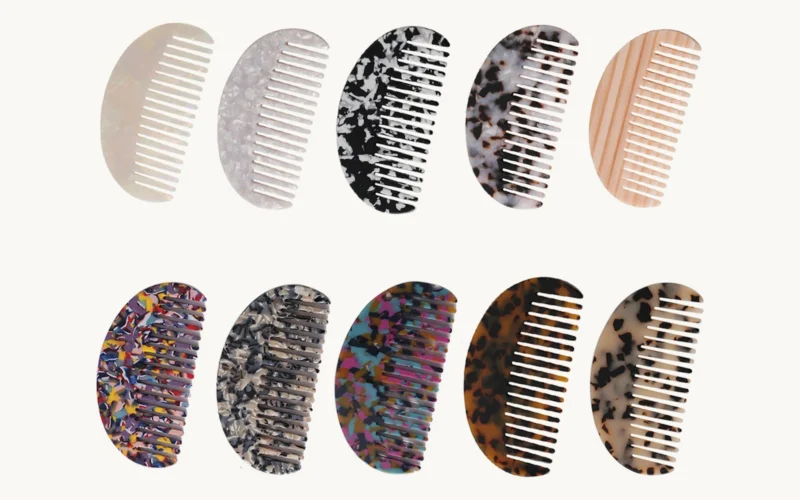
In acetate, colour is not mixed — it is selected from pressed sheet that already exists, so a custom colourway means either choosing from stock patterns or having sheet pressed specially. Stock patterns can be sampled quickly. A custom-pressed sheet adds lead time and sits in the higher sample tier. Our material guide explains how this works across acetate, wood and bamboo.
What is the minimum order after the sample is approved?
For acetate clips, claws and barrettes the minimum is 500 pieces per design. For acetate combs, brushes and hair sticks it is 1,000 pieces per design. Wood and bamboo depend on the product and the finish — tell us the shape and we will give you the real number rather than a placeholder.
How many rounds of sampling are normal?
One round if the specification was written properly, two if there is a finish or colour judgement involved. If you are on round four, the problem is almost always that something was described in words that should have been described with a number, a Pantone reference or a physical reference sample.
Can I send my own reference product to be matched?
Yes, and it is the most reliable brief there is. A physical reference removes every ambiguity that written specifications leave behind — particularly on finish and on spring tension, which are almost impossible to describe in words.
The Short Version
Take the free stock sample first. Confirm price and customisation details before sampling starts, not after. Budget USD 45 per style for standard sampling, and expect tooling only if you are moving into moulded parts. When the sample arrives, check the three things that never appear in a photograph — bristle type, component count and finish process — and get all three written into the specification before the deposit leaves your account.
If you have a design or a reference product ready, send it over with your target quantity and we will come back with a real price and a real sampling lead time.