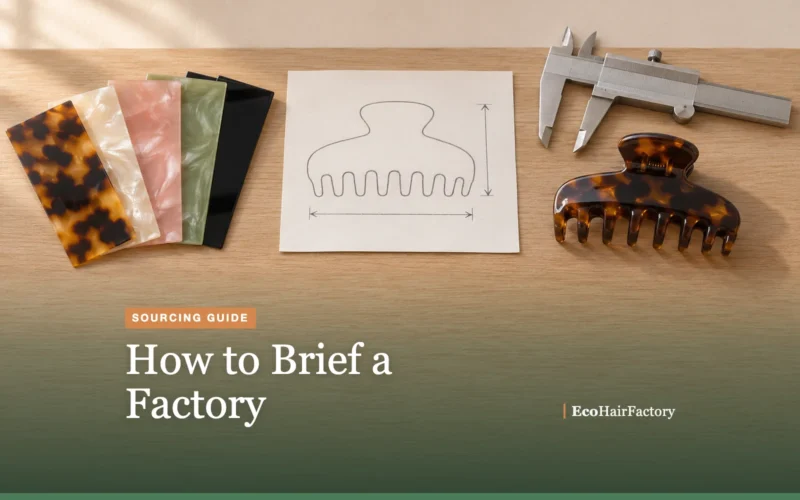
The fastest custom hair clip projects are not the ones with the simplest designs. They are the ones where the first message to the factory already answers the questions the factory would otherwise have to ask: which shape, which colour reference, how big the logo can be, what the packaging must print and where the goods are going. Every missing answer costs a round of emails, and every round of emails costs days before the sample can start.
This guide lists what to send for custom acetate claw clips, hair clips and combs, why each item matters, and the mistakes from recent projects that slowed a launch down.
The brief at a glance
Seven things to put in your first message
- ShapeA stock style code, a photo of a regular shape, or your drawing with the main dimensionsWhy: Decides whether an existing cutting die can be usedIf missing: A new shape needs a new die and starts at 1,000 pieces per design instead of 500 per colour
- ColourA Pantone code or a physical colour sample, plus which stock acetate sheet you likeWhy: Acetate colour is in the sheet itself, so the sheet is chosen firstIf missing: Colour is matched from a screen image and usually needs another sample round
- QuantityQuantity per colour and per designWhy: The minimum counts per colourIf missing: The quotation has to be redone when the colour split changes
- LogoLogo file (vector: AI, EPS or PDF) and its size and positionWhy: Logo method and size depend on the space on the productIf missing: The logo is resized or redrawn after the first sample
- PackagingBag, card or box, artwork, and the text that must be printedWhy: Packaging is quoted and sampled together with the productIf missing: Packaging becomes the last item holding up shipment
- DeliveryDestination, target in-stock date and shipping termsWhy: Sets the freight method and the latest sample approval dateIf missing: The schedule is worked out too late to choose air or sea
- Invoice detailsYour company name and address for the proforma invoiceWhy: Banks and finance teams reject invoices without full detailsIf missing: The deposit is delayed
1. Shape and dimensions: start from what already exists
Acetate clips and claws are cut from sheet with cutting dies. If your design can use a regular shape that already has a die, you avoid the die charge and the minimum stays at 500 pieces per colour, even when you change the colour and add your logo. A new outline needs a new die, quoted per design, and starts at 1,000 pieces per design. Send the overall length and width, the tooth or jaw opening if it matters, and a photo of the closest stock style you have seen. Our mould and tooling guide explains when new tooling is worth it.
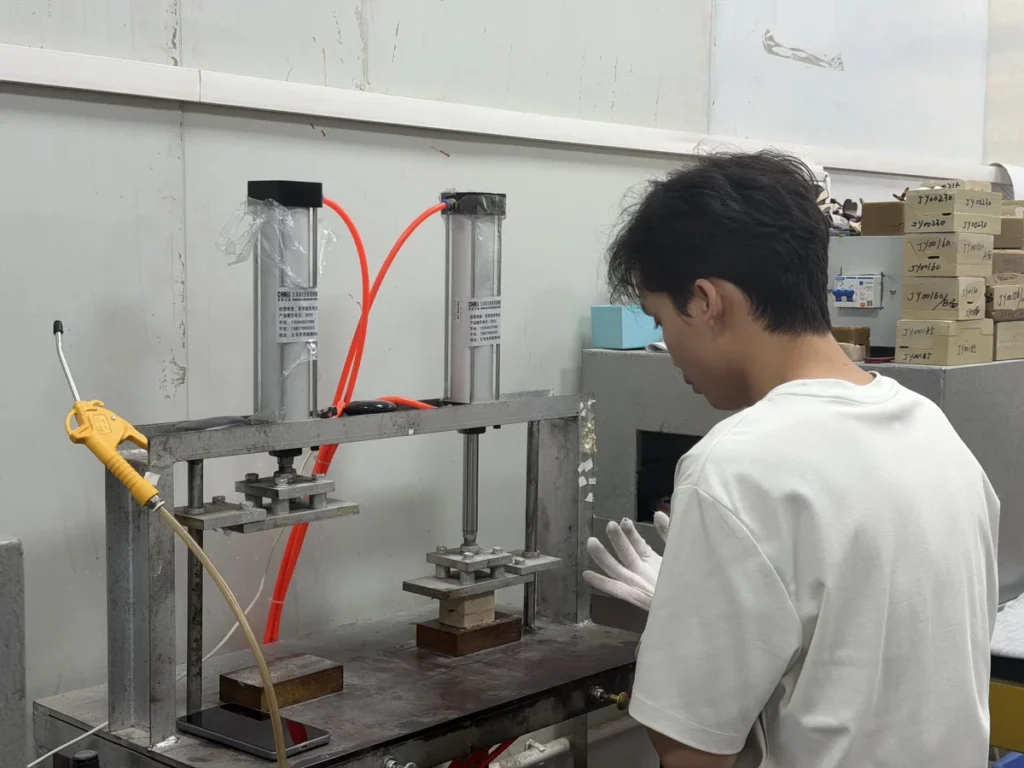
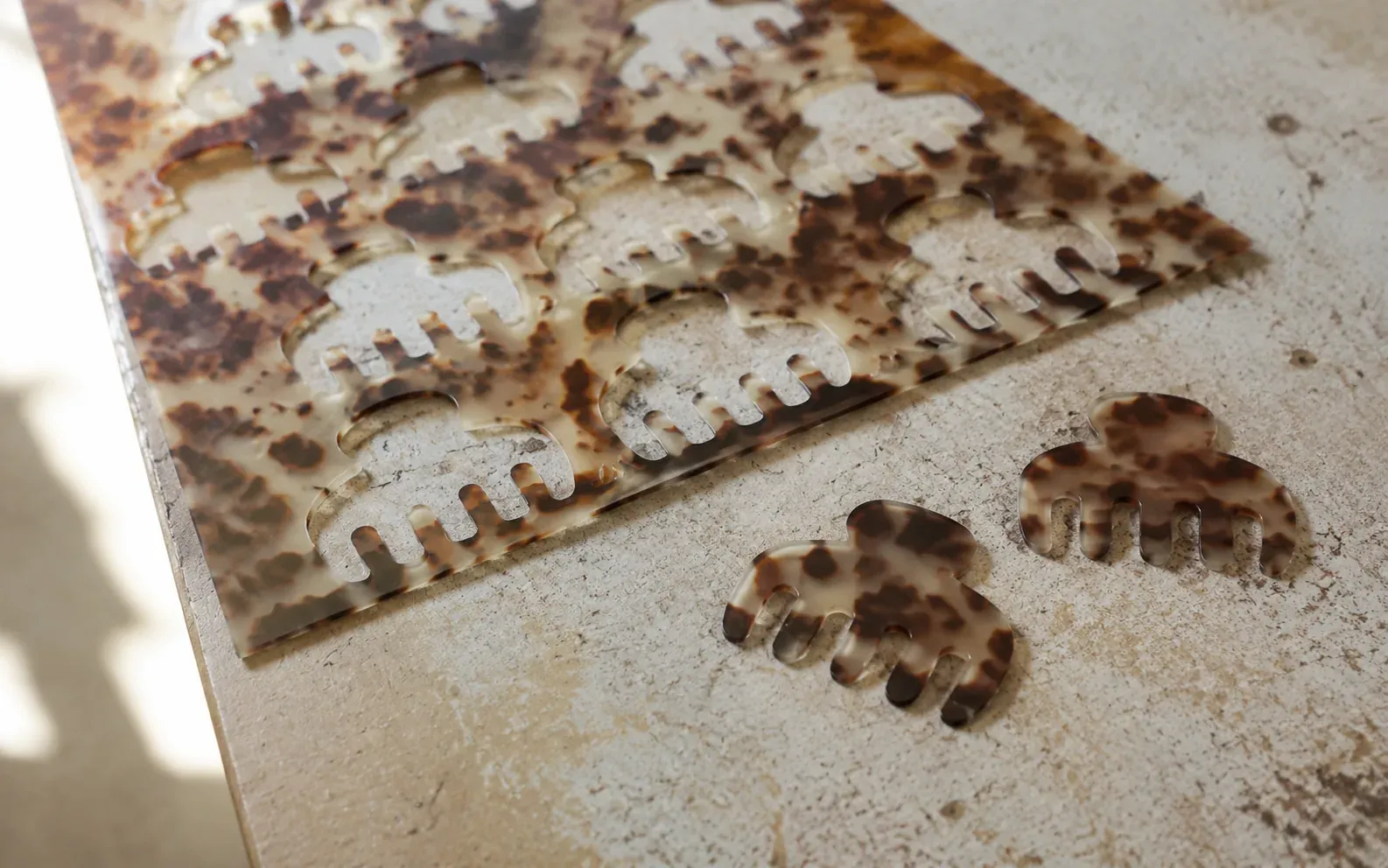
A common example: a brand asked for a fully new serrated-edge design, and we suggested adapting an existing shape instead. That kept the order on the lower minimum and took the die stage out of the schedule, and the sample took about 20 days.
2. Colour: give a reference the factory can hold in its hand
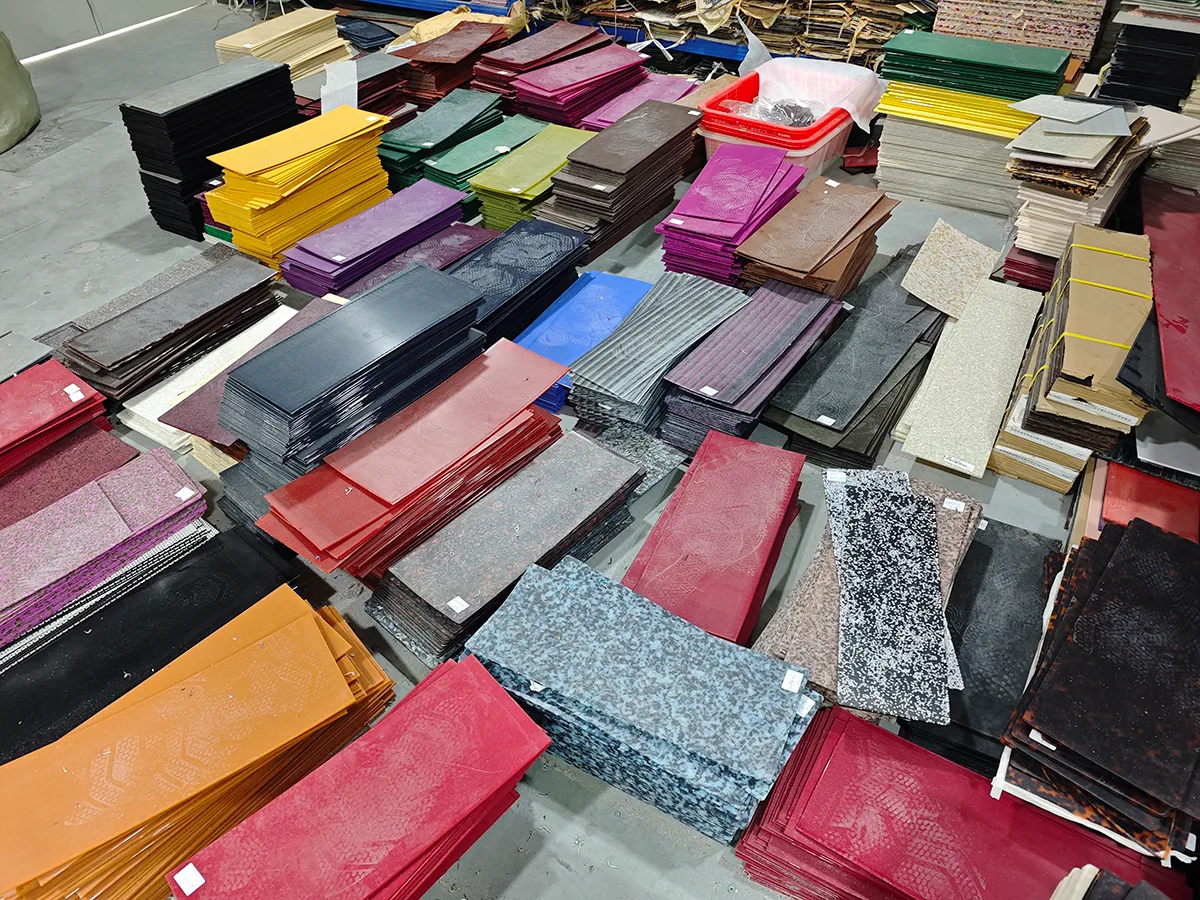
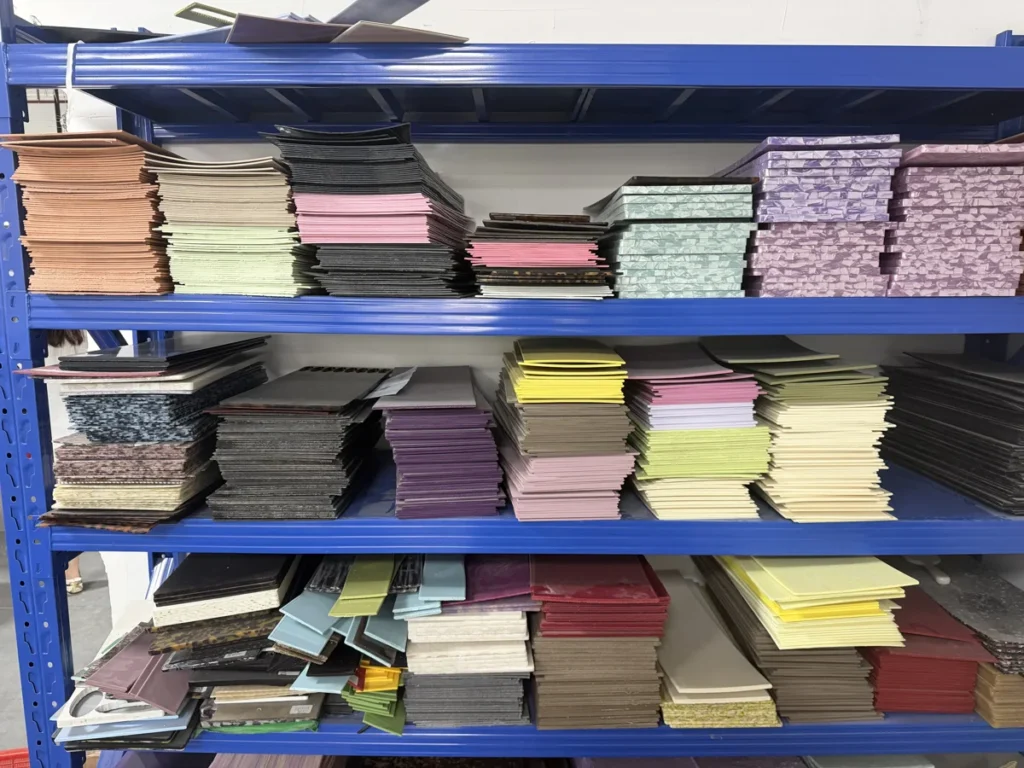
A screen image is a starting point, not a colour standard. Send a Pantone code for solid colours and packaging, or post a physical sample if you have one; for one hairdresser’s own brand we asked for physical colour samples before starting the custom sample. For patterned acetate such as tortoiseshell or marble, choose from the stock sheets, because no two patterns are identical. Matching a Pantone colour does not add production time. A gradient finish needs extra steps and plating adds a few days, so mention either one in the first brief.
3. Logo: send the vector file and the space it has to fit
Logo placement is the item that most often goes round in circles. Send a vector file and tell the factory where the logo goes and how wide it may be. On a comb, the printable area can be very small: on one recent project the logo space was only about 1.5 cm wide, so the client approved a version with the main logo and one with the secondary mark side by side before choosing. On another, the letter spacing was adjusted and a frame on the box was removed over about three weeks of artwork rounds. Settling those details in the brief would have saved most of that time.
Tip: send the logo as a vector file (AI, EPS or PDF), not a screenshot. A logo that has to be redrawn costs an extra artwork round, and the first sample waits for it.
- Simple logo placement is free. 3D renders and full product design are quoted separately.
- Metallic foil is close, not exact. Gold foil colour is accurate to about 90% of the reference, so ask for a pre-production sample with the foil logo if the shade matters.
- Engraved logos filled with colour are done by hand. Even colour across the batch is the main risk, so check the fill closely on the sample.
4. Packaging: list every line that must be printed
Retail packaging is quoted and sampled with the product, so put it in the first brief: the pack type, your artwork and the exact text. Retailers and marketplaces often need an EAN or UPC barcode, a batch number and the manufacturer’s name and address on the box; one UK brand needed all three printed on the base of its box. Say so before the packaging proof, not after. The packaging MOQ and cost guide covers minimums and options.
5. Delivery and paperwork: the details that hold up payment
- Give your full company name and address for the proforma invoice. Two European clients could not pay a deposit until the invoice showed complete company details on both sides; some retail finance teams also need a formal invoice and a supplier registration form.
- State the destination and shipping terms (FOB, DDP or another term) so freight can be quoted with the product.
- Give your in-stock date, and the factory can work the sample and production dates back from it. Our seasonal order calendar shows how.
- Write dates with the month name (27 Oct, not 10.27 or 27.10) in every message and document.
What happens after you send the brief
Typical times, working back from your in-stock date
- Questions or a quotation24 hoursOn working days
- Stock samples3 daysFree for regular styles; you pay the courier
- Custom sample25–45 daysAcetate (wood and bamboo 15–25 days); usually RMB 200–600 per design
- Bulk production30–45 daysAcetate, after sample approval and deposit (wood and bamboo 30–40 days)
One more habit helps: when a sample goes out, agree in the same message what the next step is and by when you will reply. On one recent order the sample was signed for and then nothing happened for weeks, simply because neither side had set the next date. The approved sample becomes the standard for production, as explained in our sampling and approval guide.
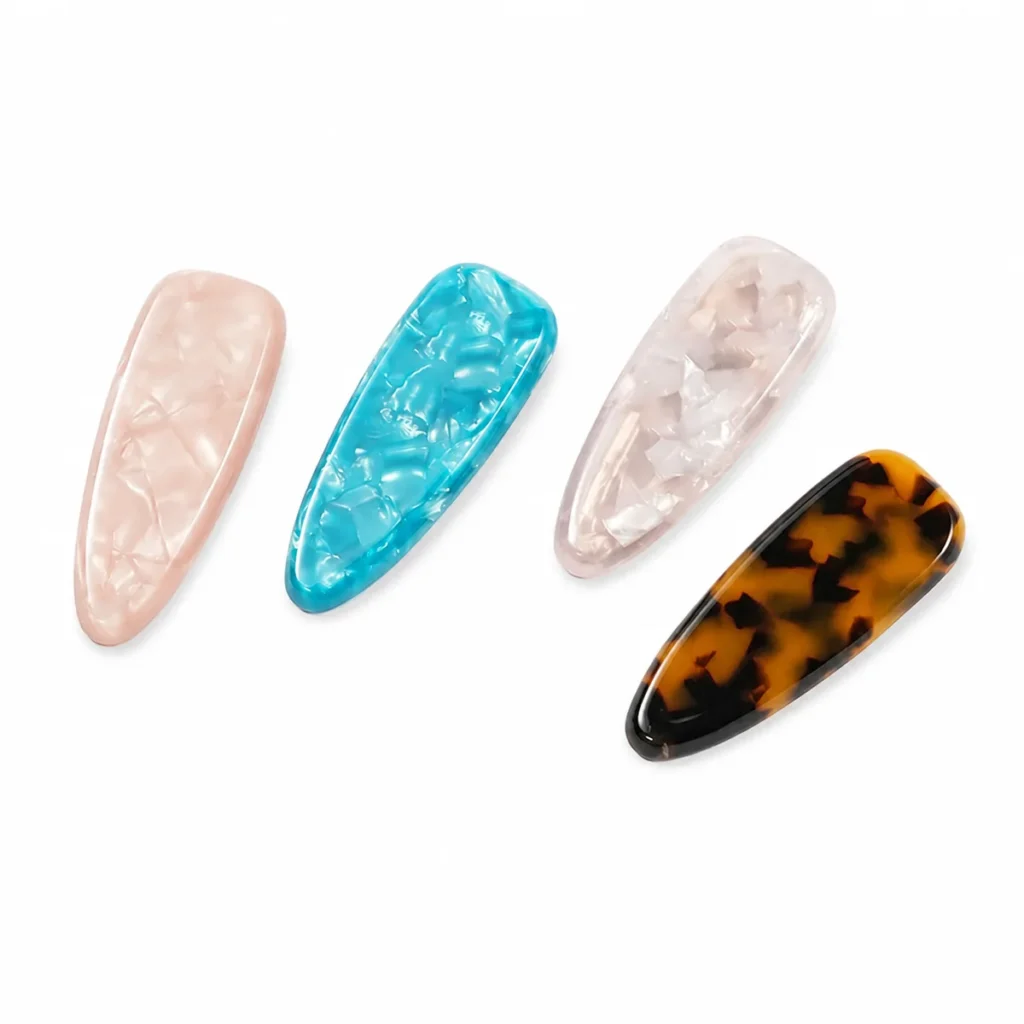
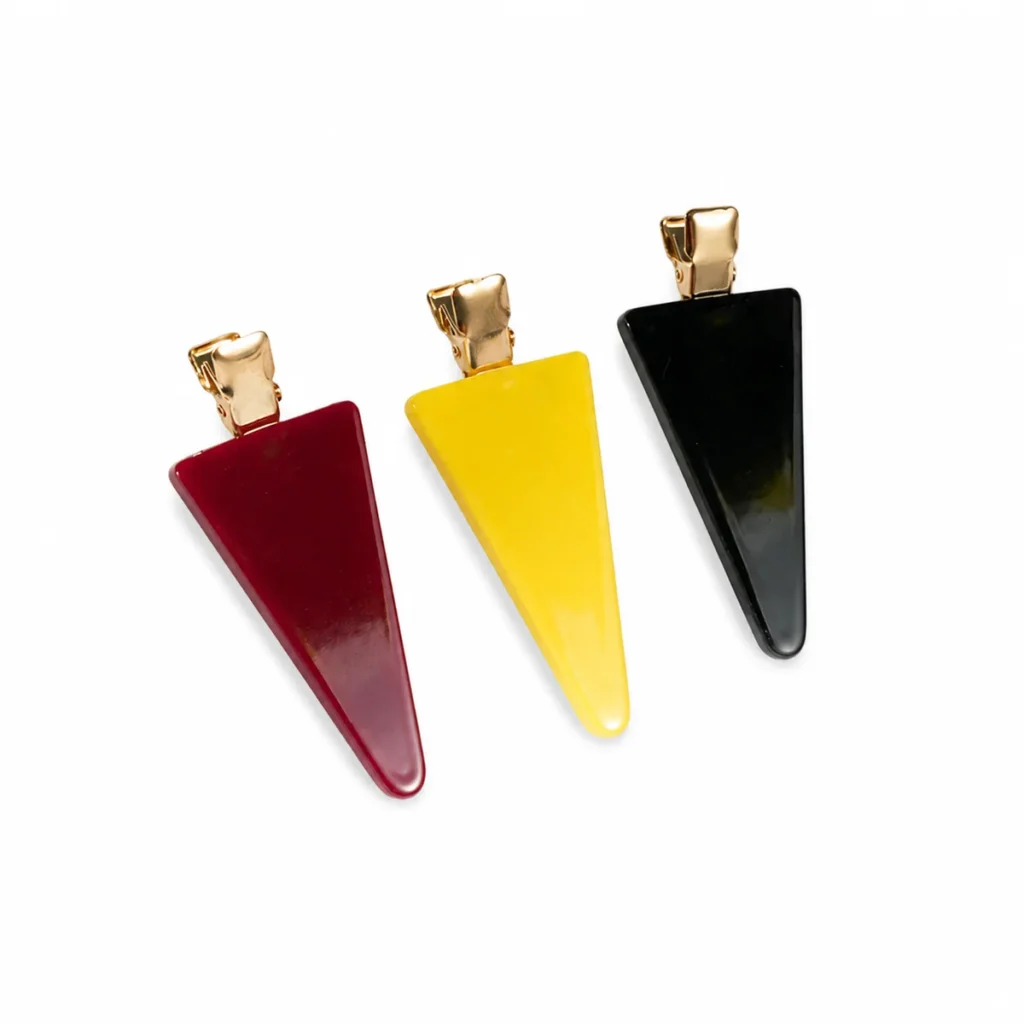
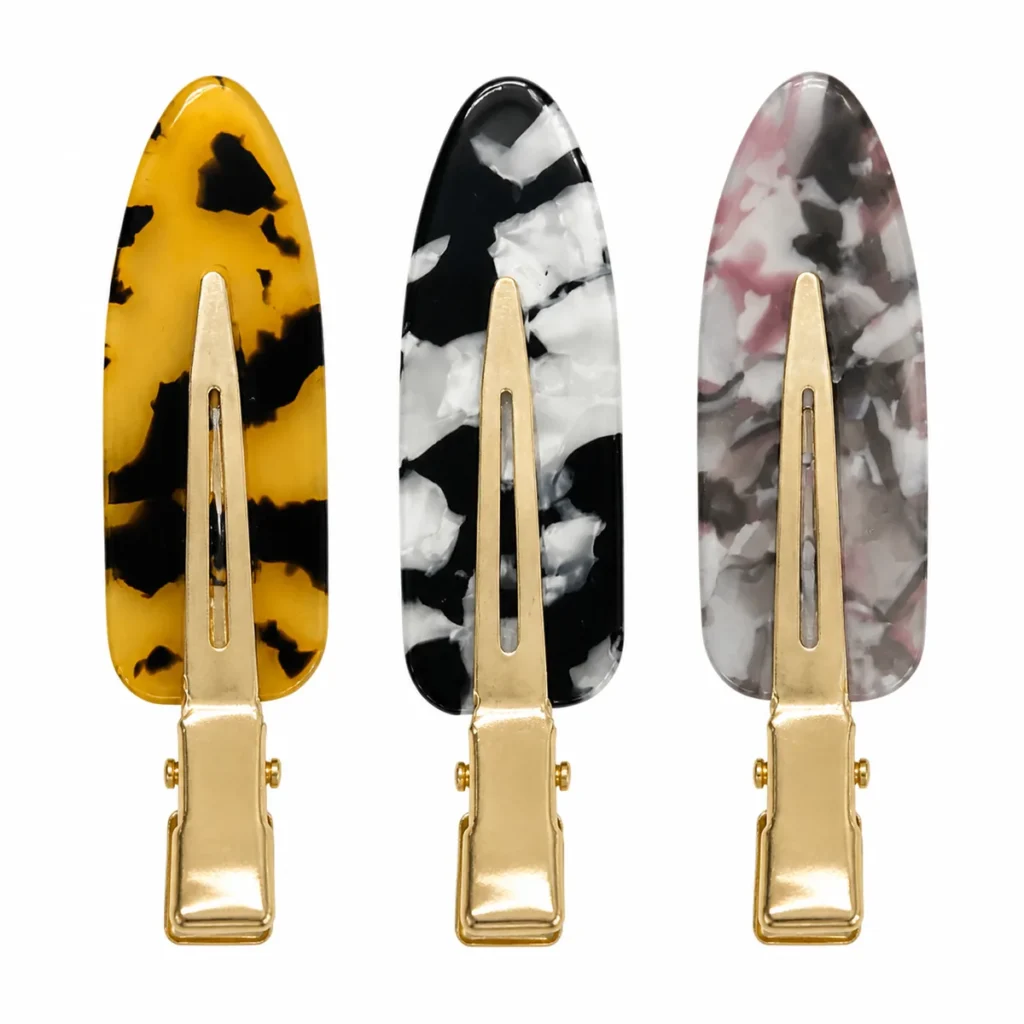
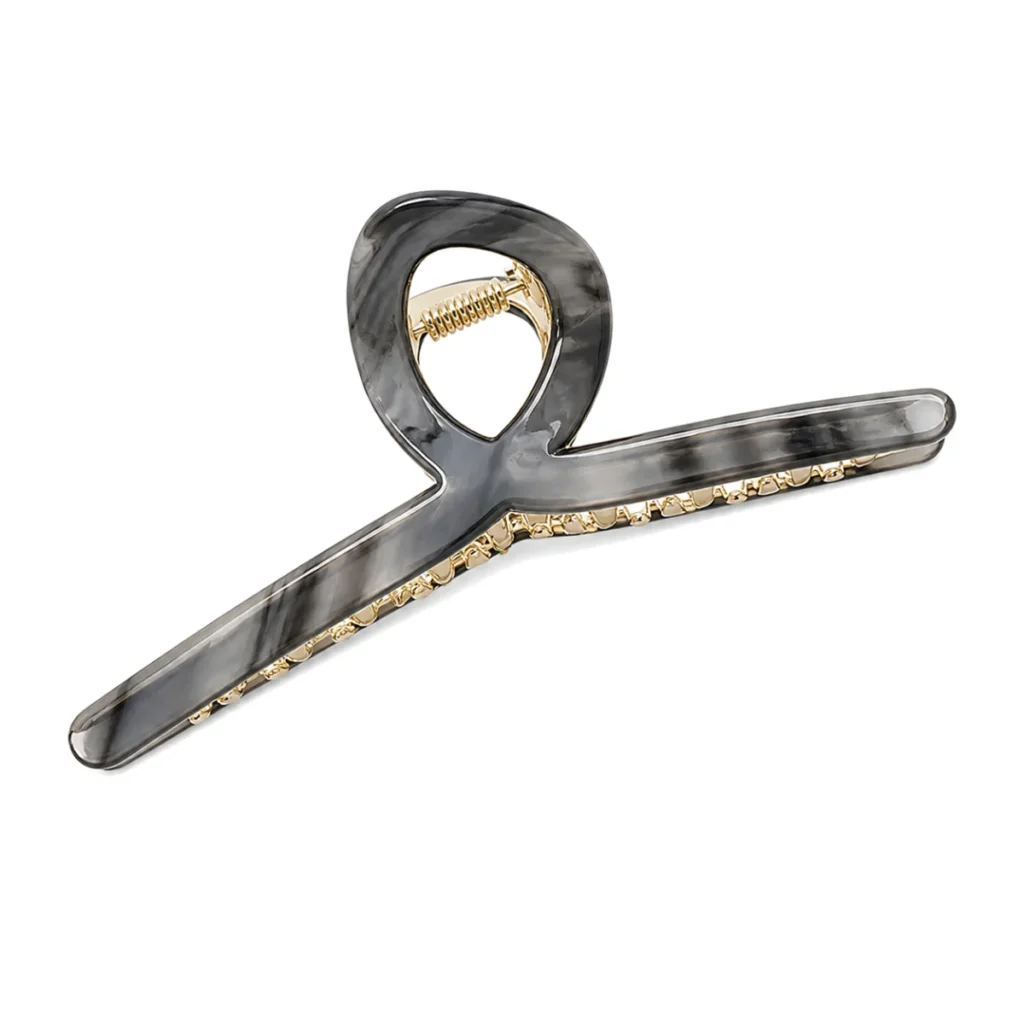
A few of the clips our buyers brief us on most often. Each one is an existing shape, so your colours and logo start at 500 pieces per colour.
Ready to start? Send us your brief with whatever you already have. We will reply with what is missing, the minimum for your colour split and a sample schedule.
Frequently asked questions
What should I send a factory to get a quote for custom hair clips?
The shape (a stock style or your drawing with dimensions), colour references, quantity per colour, your logo file with its size and position, packaging and the text it must print, your destination and target in-stock date, and your company details for the proforma invoice.
Do I need a technical drawing?
Not if you start from a regular shape: a style code or a clear photo with the main dimensions is enough. For a new shape, send a drawing or a physical reference with length, width and any opening that affects how the clip holds hair.
Can you match a Pantone colour on acetate?
Solid colours can be matched to a Pantone reference, and matching does not add production time. Patterned acetate such as tortoiseshell is chosen from stock sheets, because each pattern is unique. A physical colour sample gives the closest result.
Is adding my logo free?
Simple logo placement on an existing shape is free, and it still counts as an existing shape for the 500-piece-per-colour minimum. 3D renders and full product design are quoted separately.