Hair clips look like one product and behave like seven. A claw clip and a snap clip can sit next to each other on the same card, cost roughly the same and do completely different jobs: one holds a whole twist of hair, the other holds a fringe. Buy the wrong type for the customer and no amount of colour or pattern will fix the returns.
This guide goes through the main types of hair clips by how each one actually grips, what it is good at, what it is not built for, and what sizes are realistic. It is written for brands planning a range rather than for choosing one clip for yourself, so each section ends with the thing a buyer most often gets wrong about that type.
The Seven Types at a Glance
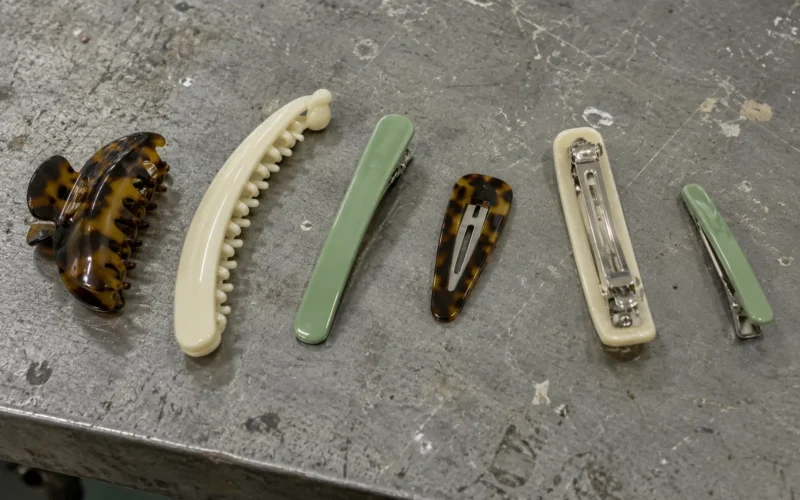
The fastest way to tell clip types apart is to ignore the face and look at the mechanism. Names vary by country and by retailer; the mechanism does not.
| Type | How it holds | Best for | Not built for |
|---|---|---|---|
| Claw clip | Two hinged jaws with interlocking teeth, closed by a spring | A whole twist or bun | A flat, neat section |
| Banana clip | A long, curved claw that closes along the length of the hair | Long or thick hair held vertically | Short hair |
| Duckbill clip | A long flat jaw pressing a section against a sprung base | A flat section, fine hair | Heavy sections |
| Alligator clip | Shorter sprung jaws with interlocking teeth | Gripping a working section hard | All-day wear without marks |
| Snap clip | A curved steel strip that clicks between open and shut | A fringe or a small twist | Carrying weight |
| French barrette | A hinged clasp: a spring bar clamps shut under a curved plate | Thick, heavy sections | A fringe or a very small section |
| Side clip / bar barrette | A slim bar on a spring, snap or pin base, worn to one side | Holding hair back from the face | Holding all of the hair up |
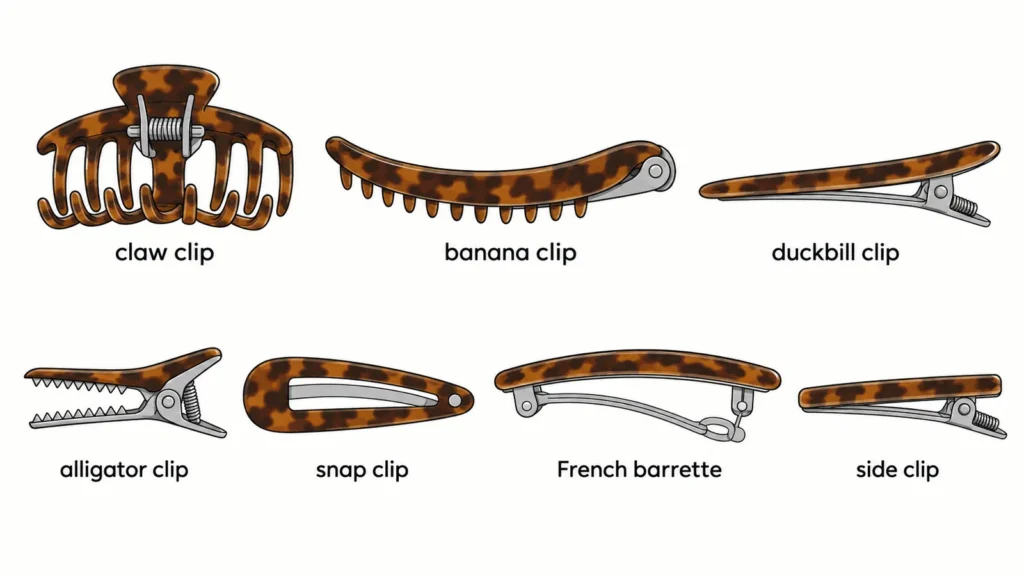
Two families cover most of that table. Claw and banana clips hold with teeth closing on a volume of hair. Everything else holds a flatter section, and the differences between them come down to whether the grip is a flat jaw, teeth, a clicking strip or a hinged bar.
1. Claw Clips
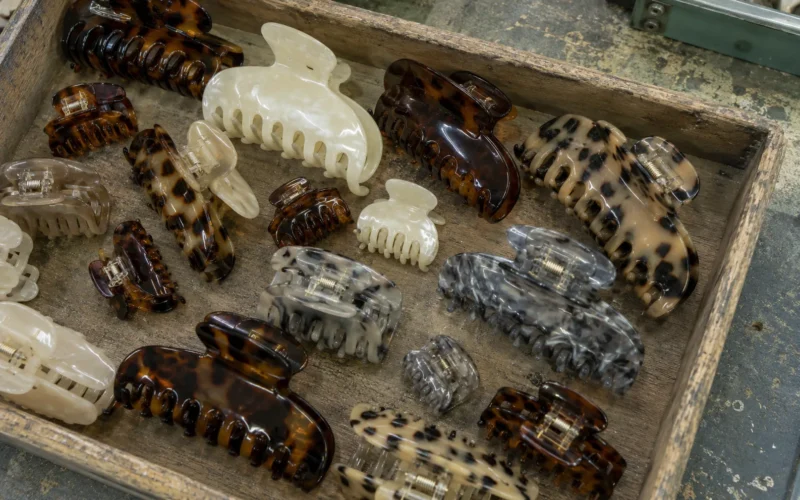
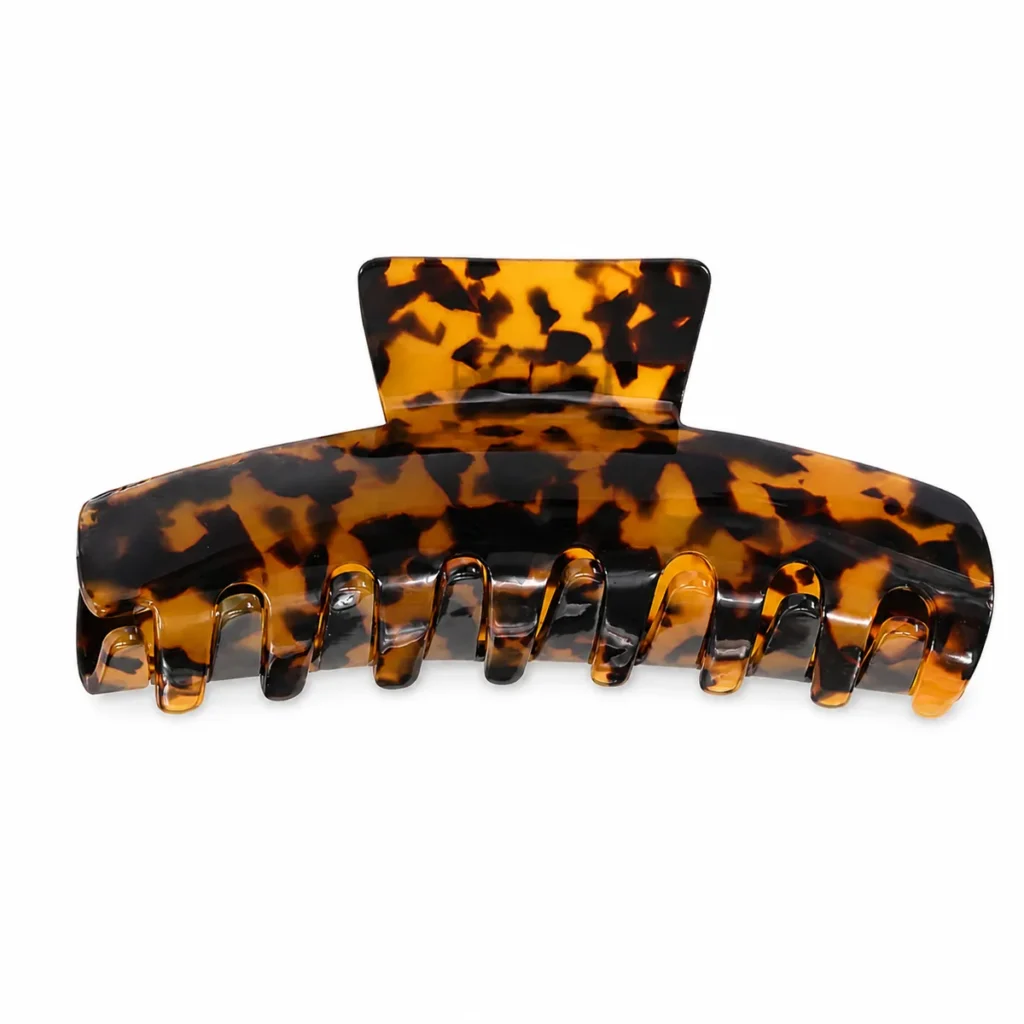
A claw clip has two curved jaws on a hinge, with teeth along each edge that interlock when a spring pulls them shut. It is the clip that holds a twist, a half-up or a whole bun, which is why it is usually the anchor of a range rather than an add-on.
Size is the specification that matters most, and it covers a wider spread than most buyers expect. Across the 83 acetate claw styles in our catalogue, length runs from 4.5 to 14 cm and weight from 10 to 63 g, with the middle of the range around 10.5 cm and 30 g. A 6 cm mini and a 13 cm claw are different products for different hair, not two sizes of one product. The full breakdown, including what moves the price, is in claw clip sizes and cost.
What buyers get wrong: choosing claws from photographs at one scale. Ask for the length and the weight of every style, because a claw that looks substantial on a white background can be a 6 cm mini.
2. Banana Clips
A banana clip is a claw stretched long and curved, so it closes along the length of the hair rather than around a twist. Worn vertically at the back of the head, it holds long or thick hair in a way a round claw cannot. Our large banana claw is 11.5 × 4.5 cm and 27 g, with interlocking teeth along the whole jaw, which is the weight class that holds long hair for a full day.
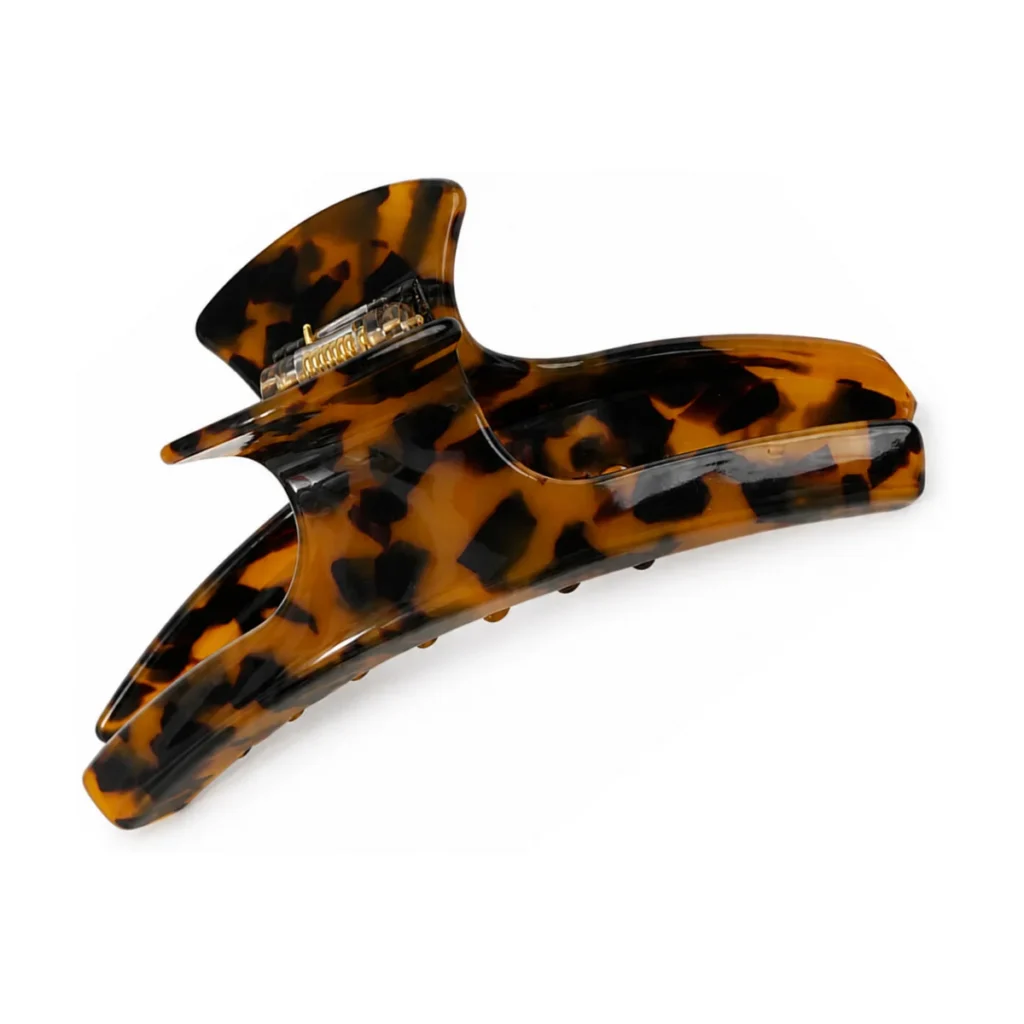
What buyers get wrong: treating the banana clip as a novelty shape. It solves a real problem for long hair, and it is worth stocking alongside round claws rather than instead of them.
3. Duckbill Clips
A duckbill clip has a long, smooth, flat upper jaw that tapers to a rounded tip. It holds by pressing a section of hair flat along that whole jaw instead of biting into it, so it sits close to the head, leaves fewer marks and suits fine hair. The flip side is that there are no teeth doing any work, so a duckbill is only as good as its spring.
Duckbills are also the type with the most naming confusion, which makes them the easiest to mis-order. The springs and bases are bought in from specialist stamping plants, and the decorative face on top is what we cut. Everything that distinguishes a good duckbill from a poor one, and what a quotation for them should contain, is in our duckbill clip guide.
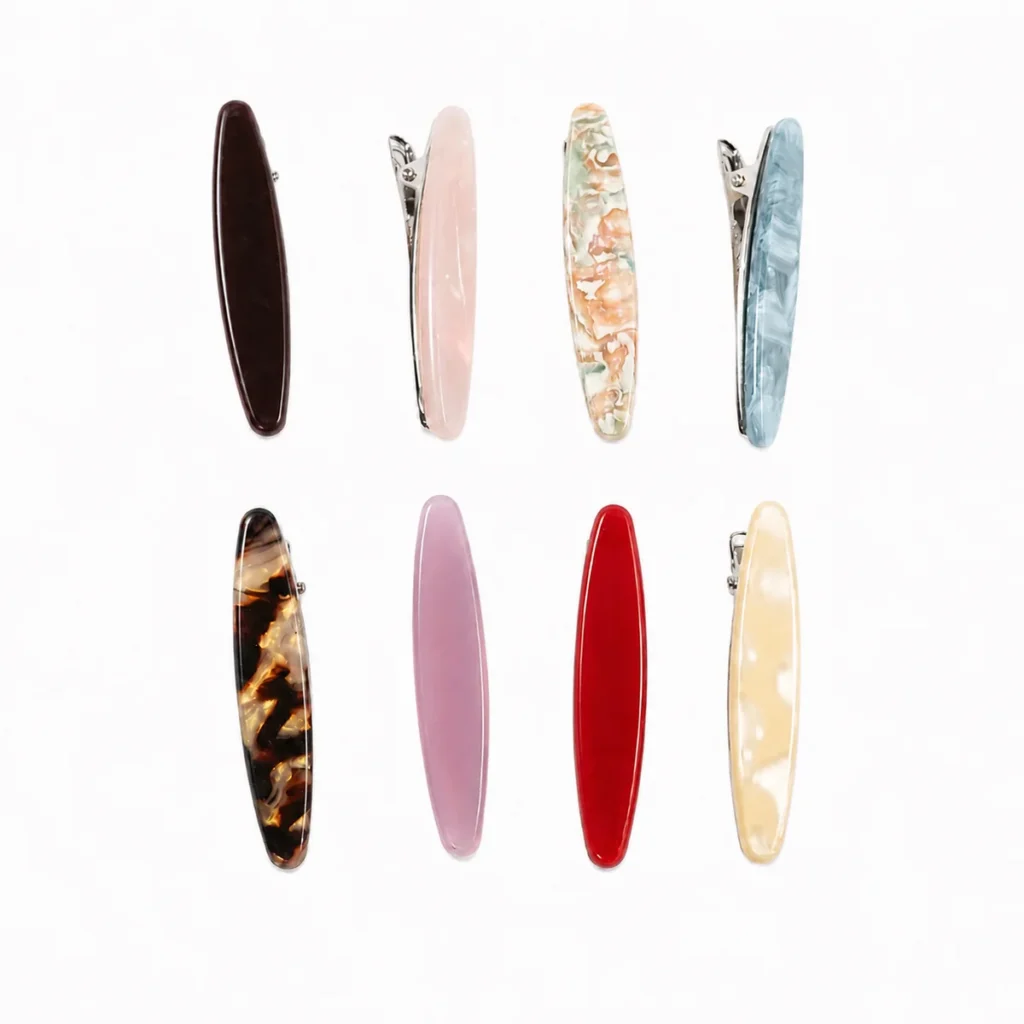
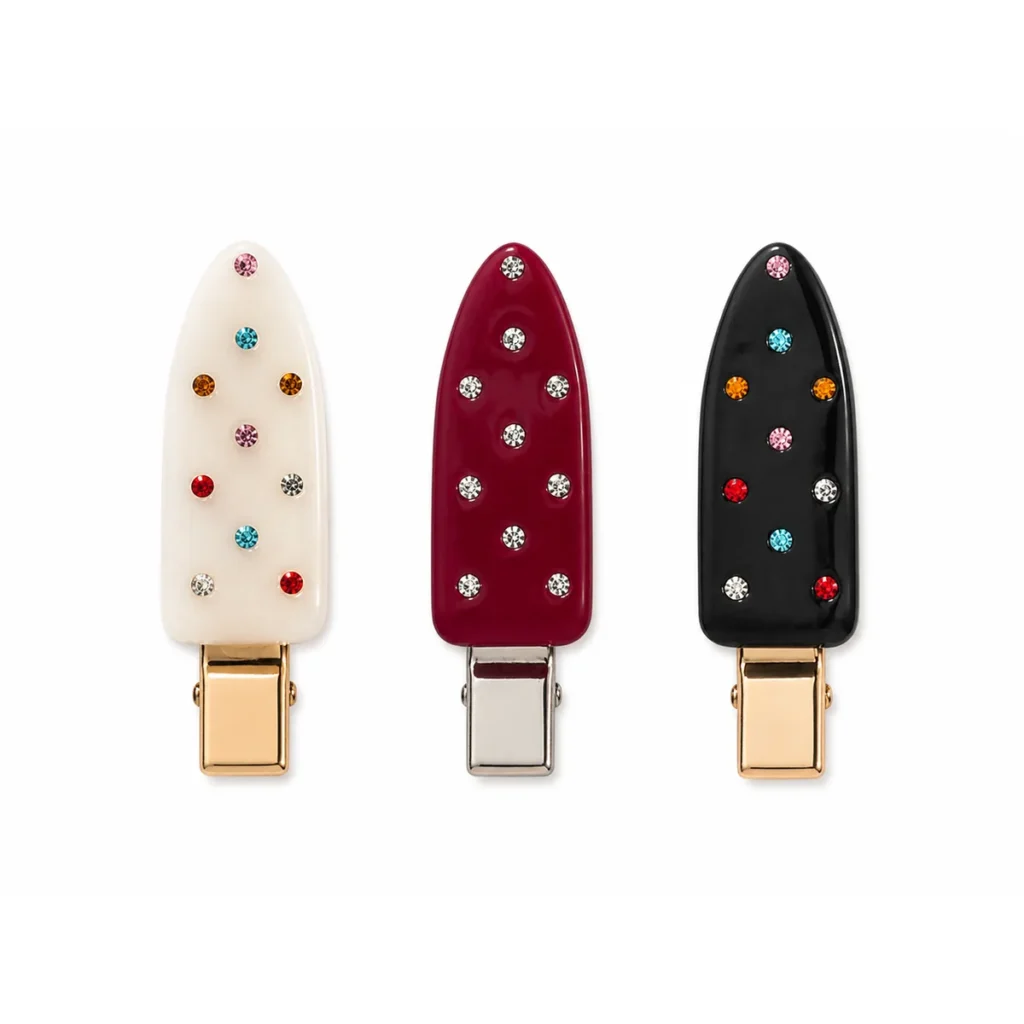
What buyers get wrong: writing “alligator clip” on a brief when they mean a duckbill. The sample can come back with teeth nobody asked for.
4. Alligator Clips
An alligator clip has shorter sprung jaws with interlocking teeth. Where a duckbill presses, an alligator bites, which makes it the stronger grip on a working section and the reason plain alligator clips are a salon sectioning tool. The trade-off is that teeth mark hair and are less comfortable for all-day wear.
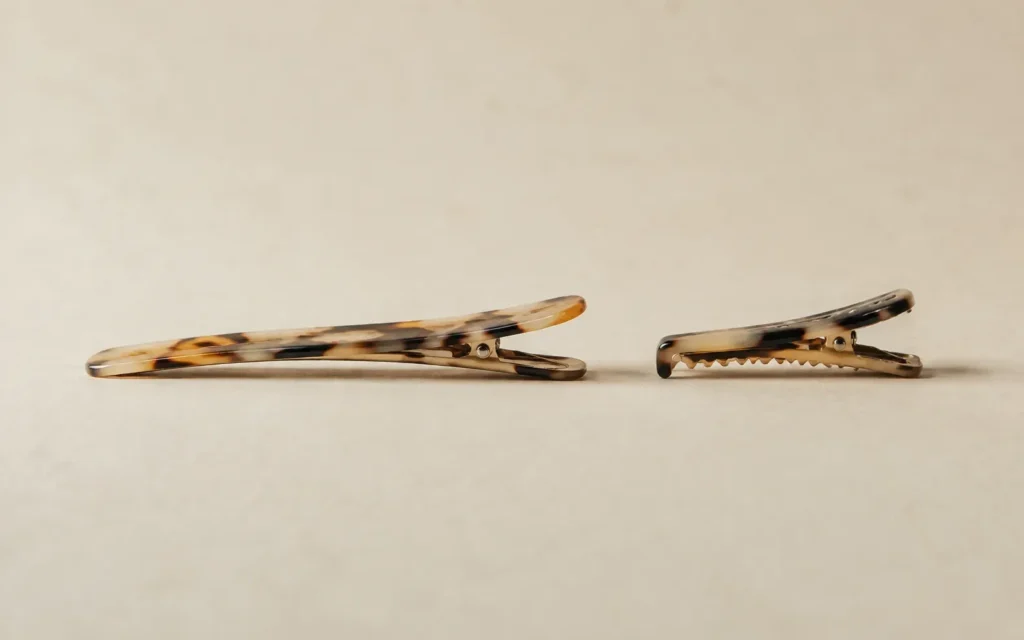
In decorative ranges, the alligator mechanism usually turns up as a base rather than as the whole clip. Our tortoiseshell duckbill clip, for example, is a duckbill-shaped acetate face riveted onto a gold alligator base. That is not a contradiction: the name of a finished clip follows the shape of the face and the jaw the wearer sees, and the base type is a separate line on the specification.
What buyers get wrong: assuming the product name tells you the base. Ask for the base type in writing, separately from the style name.
5. Snap Clips
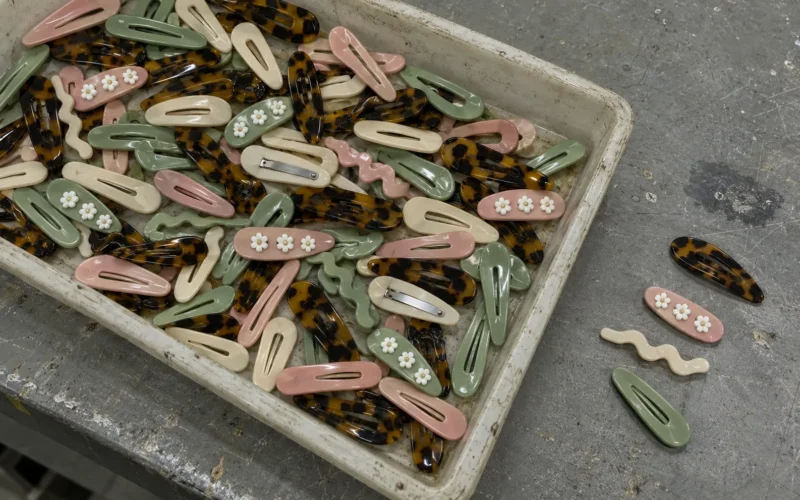
A snap clip, also called a tic-tac or click clip, has no hinge and no teeth. Under the face is a single curved steel strip that flips between two stable positions with a click. It is the clip for a fringe, a small twist or a section pulled off the face, and it is usually worn in pairs or threes. It is not built to carry weight, and a heavy section is what makes a snap clip pop open.
Because the mechanism is so simple, almost all of the quality is in how the face is fixed to the strip: riveted through the acetate, or glued. The details, including why tension should be set to the hair type, are in our snap hair clip guide.
What buyers get wrong: comparing snap clip prices without asking whether the bar is riveted. A glued bar is the most common failure on a cheap snap clip.
6. French Barrettes
A French barrette is built around a hinged metal clasp. The curved decorative plate sits on top of the hair, and a spring-loaded bar underneath swings up and locks shut, clamping a section in one motion. Because it clamps rather than relying on friction or teeth, a French barrette carries a much heavier section than a snap clip of the same length and does not work loose over the day. It is the clip that suits thick, straight to wavy hair.
The clasp is also the part that ages: after years of use the bar can loosen. Where the name comes from, how the sizes run and how to tell a well-made clasp from a poor one are covered in what is a French barrette.
What buyers get wrong: using “barrette” to mean any clip. In a brief, “French barrette” should mean the hinged clasp, and anything else should be named by its mechanism.
7. Side Clips and Bar Barrettes
Side clips and bar barrettes are the slim pieces worn to one side to hold hair back from the face. They are defined more by shape and position than by mechanism, and the same outline can sit on different bases. Our 9 cm bar barrette is a slightly curved acetate bar on a snap mechanism. Our 7 cm side clip is cut from 4 mm sheet on a matte black spring base, and the thickness is what stops the body flexing when it is pressed. Our triangle side clip sits on a gold-tone insert-pin base.
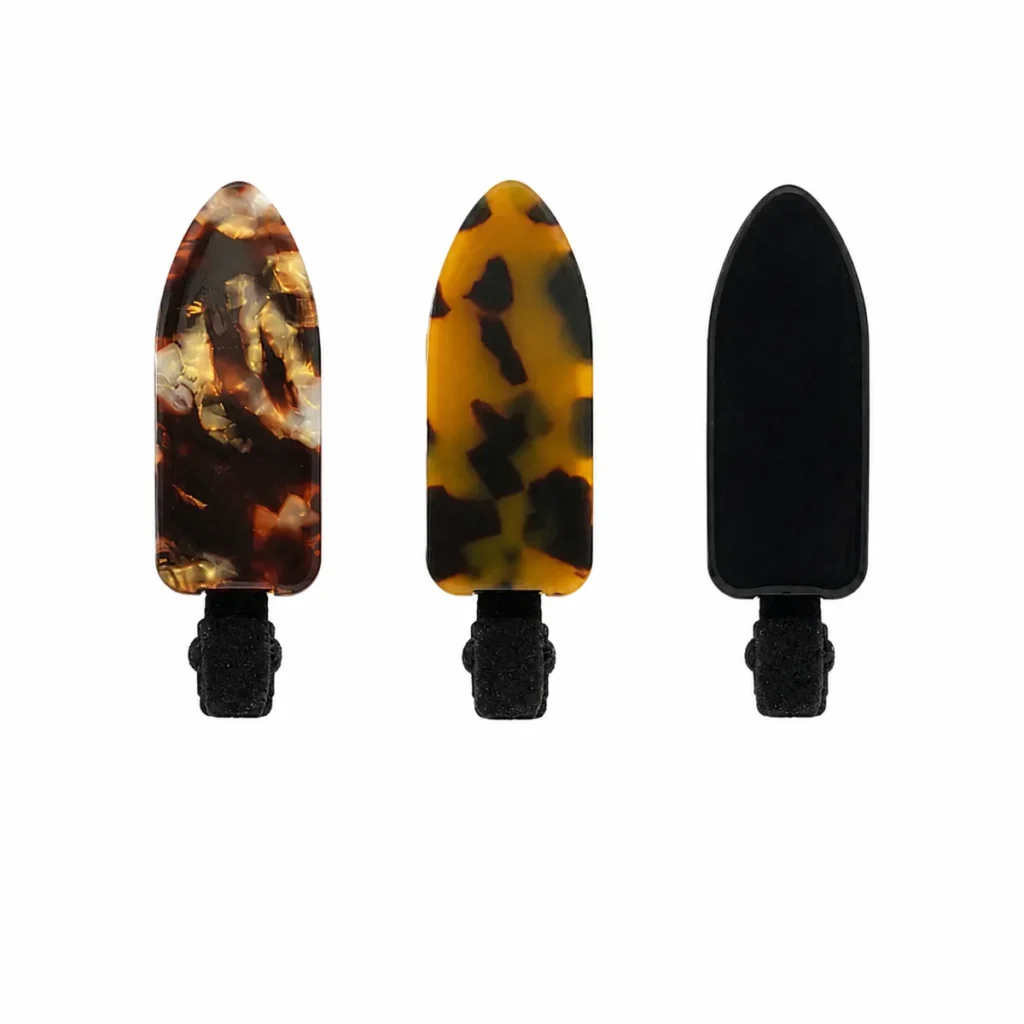
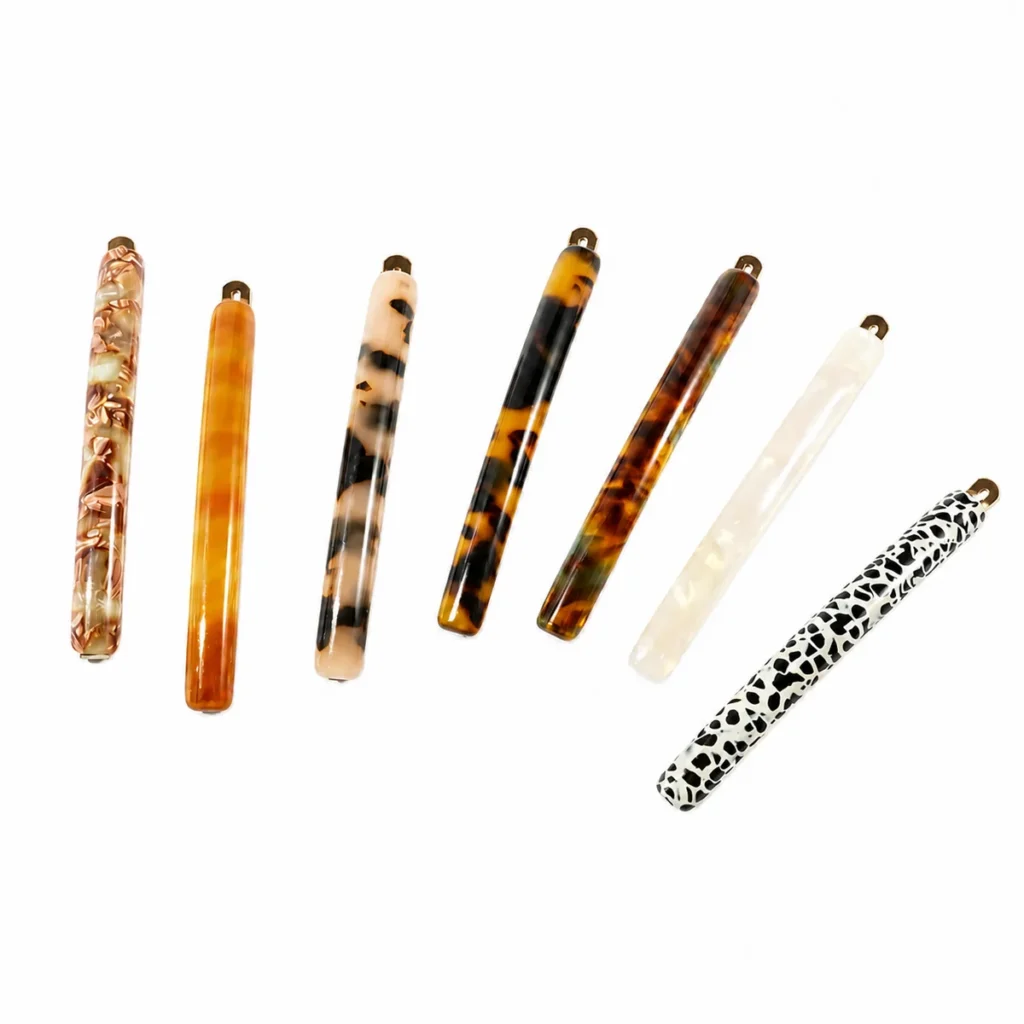
What buyers get wrong: specifying the outline and leaving the base to the factory. On a side clip the base changes the feel, the look from behind and the price, so it belongs in the brief.
Not Clips, but Often Stocked Beside Them
Hair forks and hair sticks do the job of a claw clip with no mechanism at all: the hair is twisted and the prongs are pushed through to lock it. They suit customers who find claws bulky, and they are usually merchandised in the same section. We make them in acetate, and the range is under hair pins and forks.
Which Types to Put in a First Range
Most first ranges do not need all seven. A useful way to decide is to cover the three jobs a customer actually has, rather than the three prettiest faces:
- Hold all of the hair up. A claw clip at a mid size, and a banana clip if your customers have long hair.
- Hold a section back, neatly. A duckbill for fine hair, or a French barrette for thick hair.
- Finish a look. Snap clips or slim side clips, sold in pairs, threes or on a card.
That is three to four designs, not a colour card of one shape. It also spreads a launch across different hair types, which tells you far more after the first season than twelve colourways of a single claw would.
Plan the numbers per design. Our minimum for acetate clips of every type above is 500 pieces per design, and each colourway counts as a design, so a three-type launch in two colourways each is six designs and 3,000 pieces. The reasoning is in MOQ explained. Acetate hair forks and sticks sit in the 1,000-piece tier.
If you already know which types you want, send the list with a target size and hair type for each to our OEM team, and we will quote them together as one order.
One of Each, From Our Range
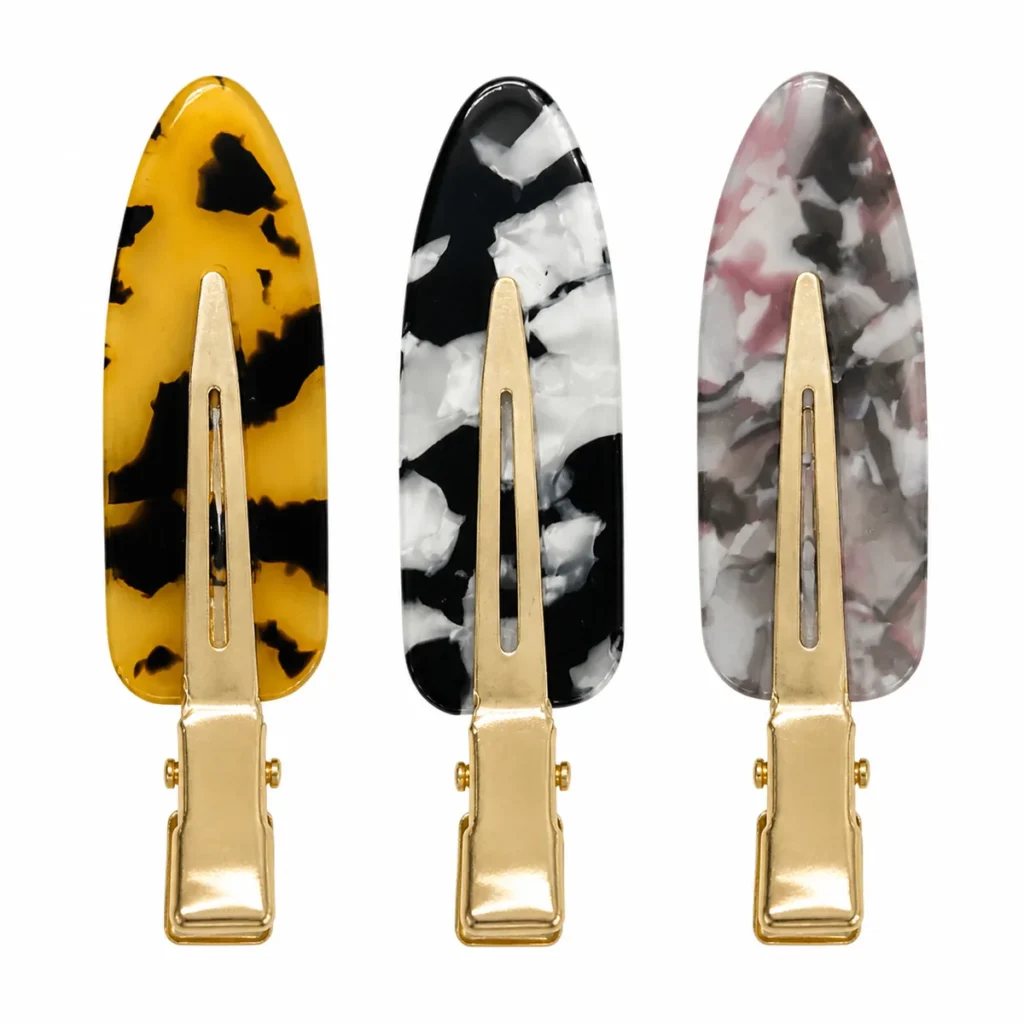
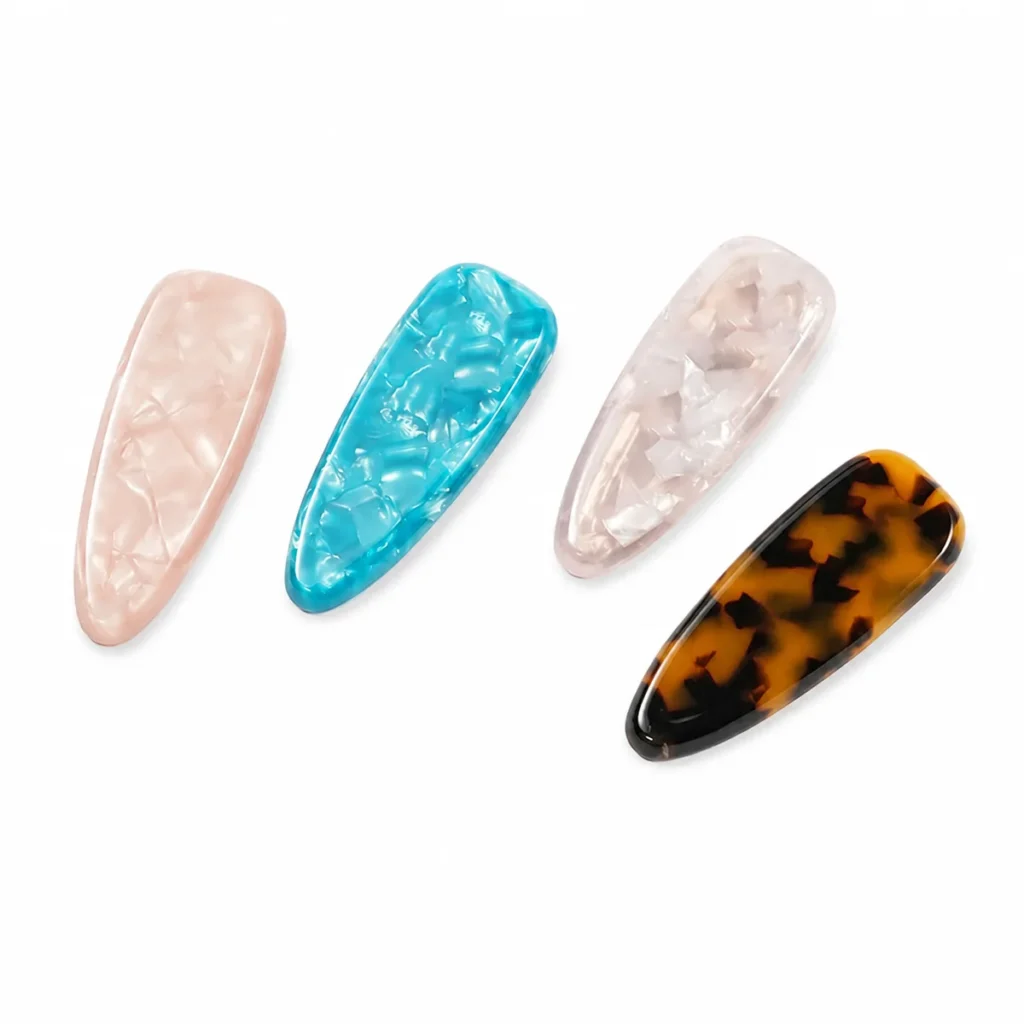
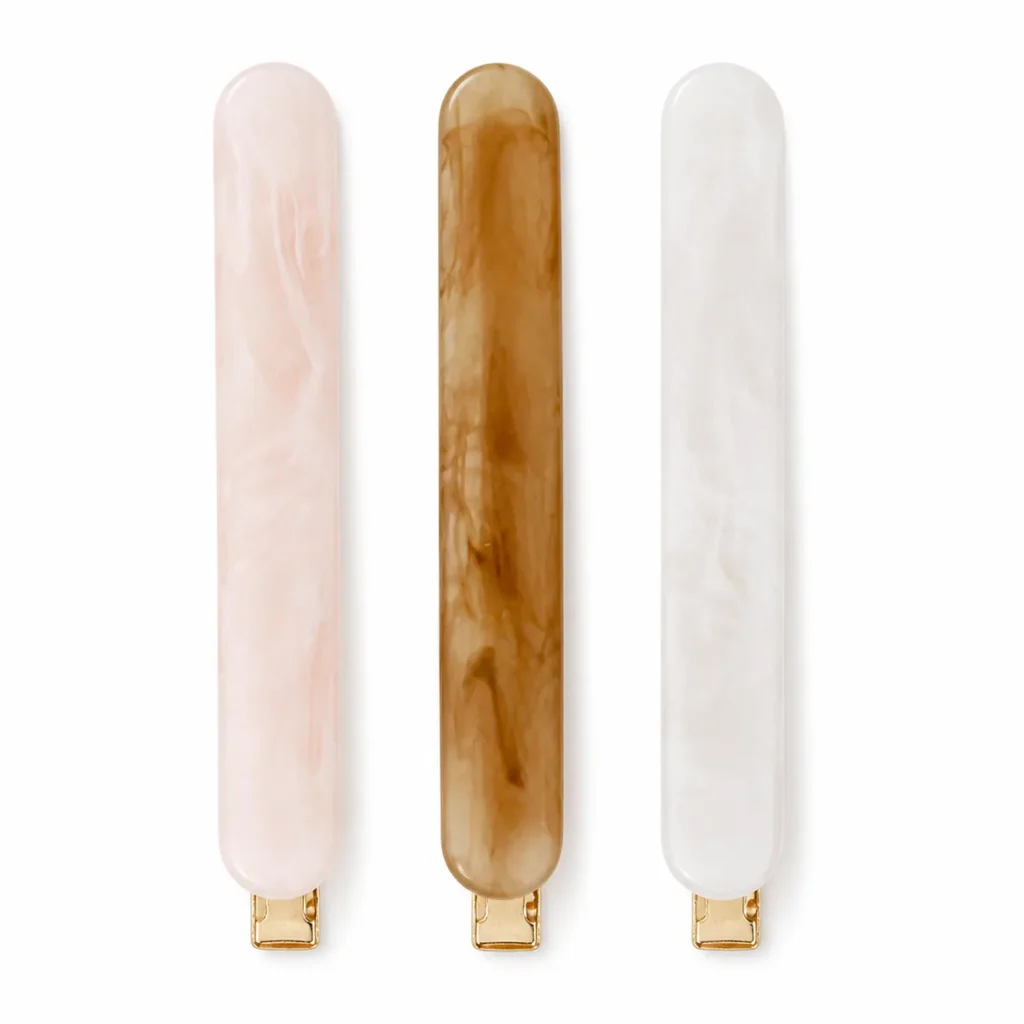
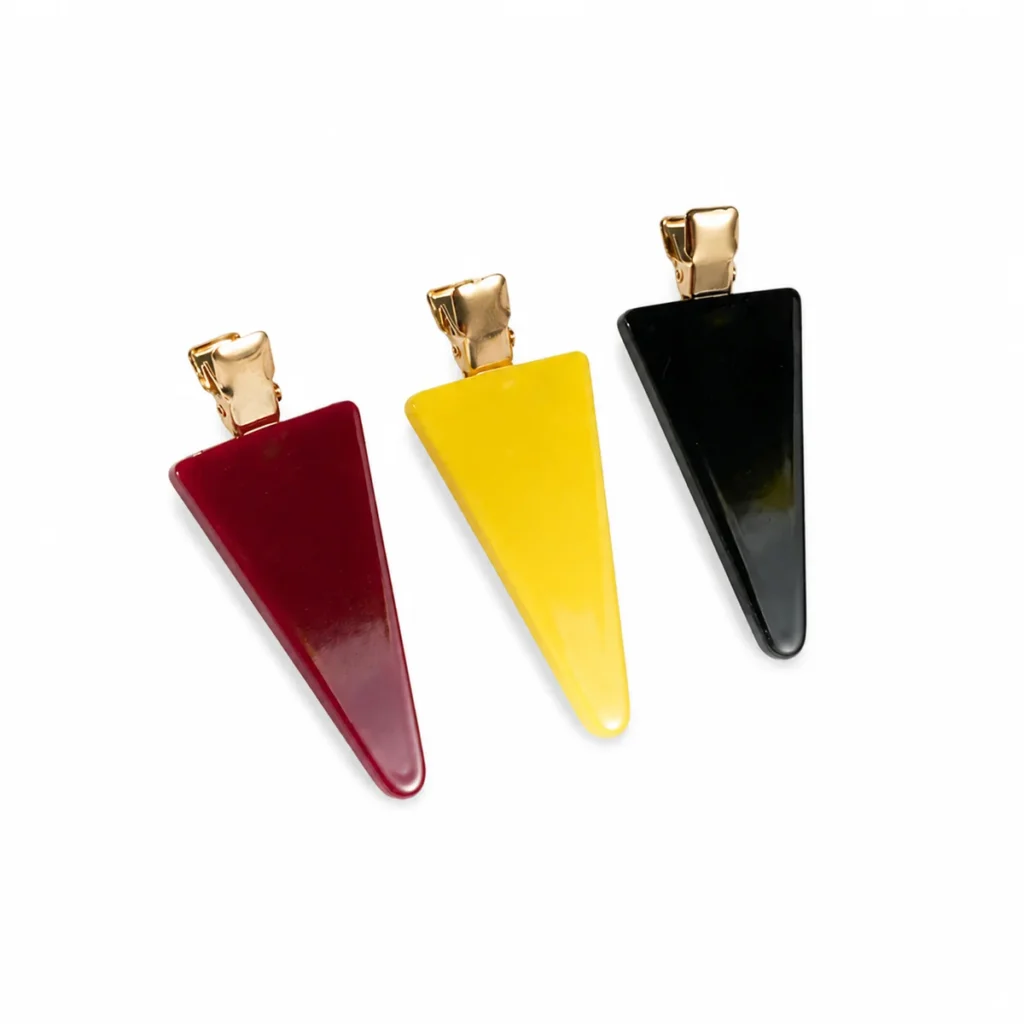
Every clip and barrette we make is listed under hair clips and barrettes, and the full claw range is under claw clips.