A beard comb is one of the cheapest things a grooming brand puts in a kit, and one of the most inconsistently quoted. The same brief sent to four suppliers comes back with four prices that are not comparable, because three of the four specifications that actually drive the cost are usually missing from the brief.
This page is about what to put in that brief. It covers the difference between a comb and a brush and why it matters commercially, what beard lengths actually run to, why tooth spacing cannot be changed after the fact, the one defect that decides how a comb feels against skin, and the five things we need in order to quote a number that survives sampling.
First, Decide Whether You Are Buying a Comb or a Brush
These are sold side by side and described interchangeably in marketing copy, but they are different products, made on different lines, bought by different searches. Getting this wrong at briefing stage is the single most common reason a first sample disappoints.
| Comb | Brush | |
|---|---|---|
| Construction | Teeth cut from one solid piece | Bristle or pins planted into a body |
| What it does | Places hair — parts, shapes, defines a line | Distributes oil and softens texture |
| Beard length it suits | Short to medium, and any beard being shaped | Medium to long, and daily conditioning |
| Tooling | A cutting profile | A body plus a bristle specification |
| Cost driver | Sheet or timber area | Bristle grade and rows |
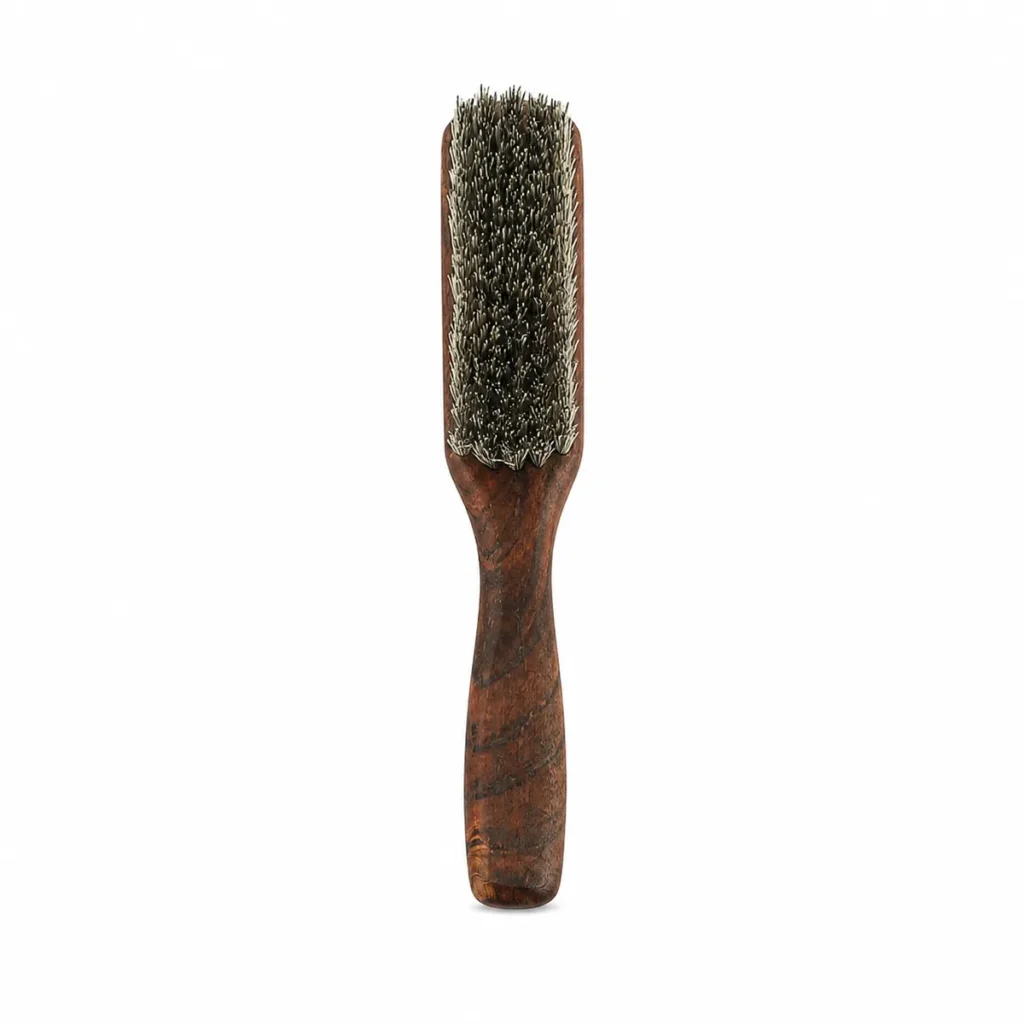
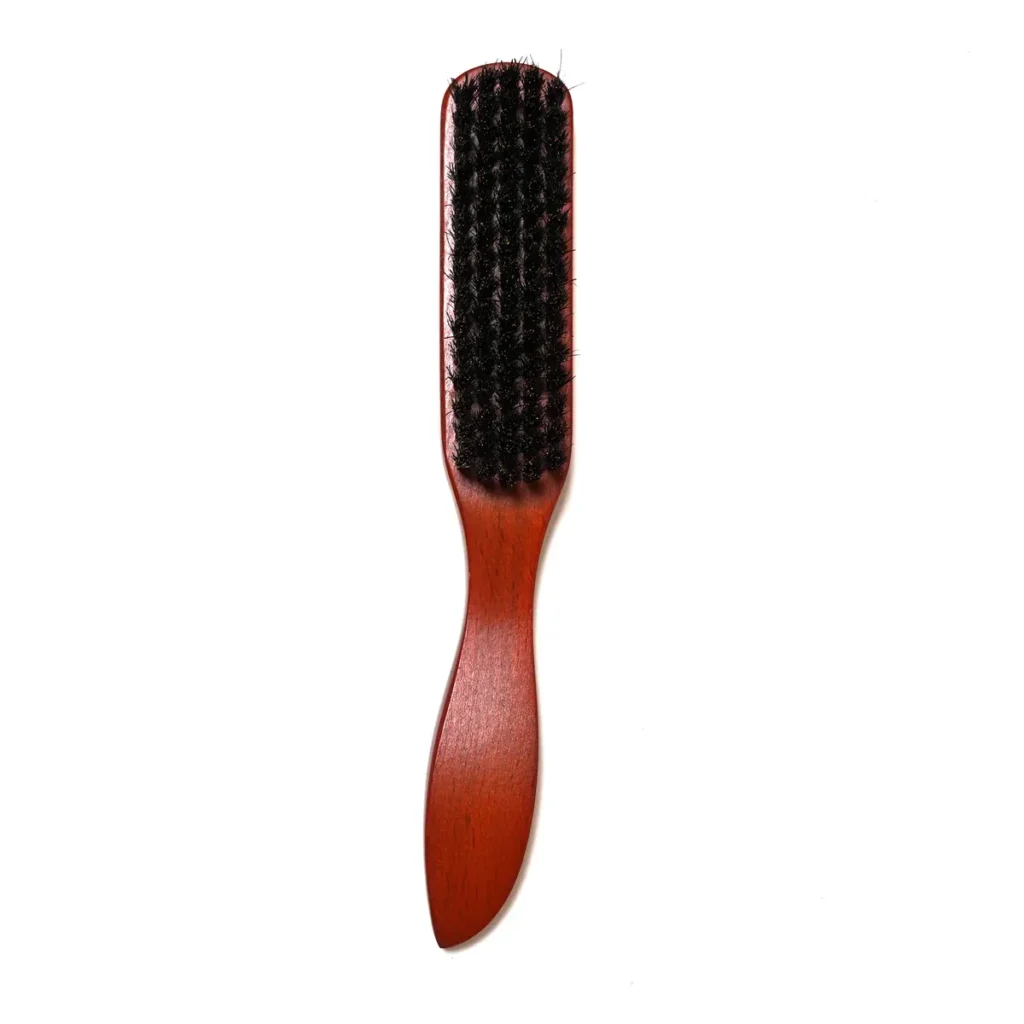
Most grooming ranges carry both, and the honest answer to “which one” is usually both — but as two line items with two specifications, not one. If your customer is shaping a beard line or a moustache, they want a comb. If they are working oil through a long beard, they want a brush. We make both; the beechwood beard brush and the fade brush are the brush side of the same range this page is about.
Length Is the Number That Moves the Price
A comb is cut from sheet or from a timber blank. The body area it consumes is the largest single line in its cost, and length is what drives area. That is why a beard comb and a dressing comb of the same material and the same tooth spacing are not close in price: one uses roughly a third of the material of the other.
The lengths below are the bodies we currently cut, measured on finished pieces rather than taken off drawings.
| Length | Depth | Teeth | What it is for |
|---|---|---|---|
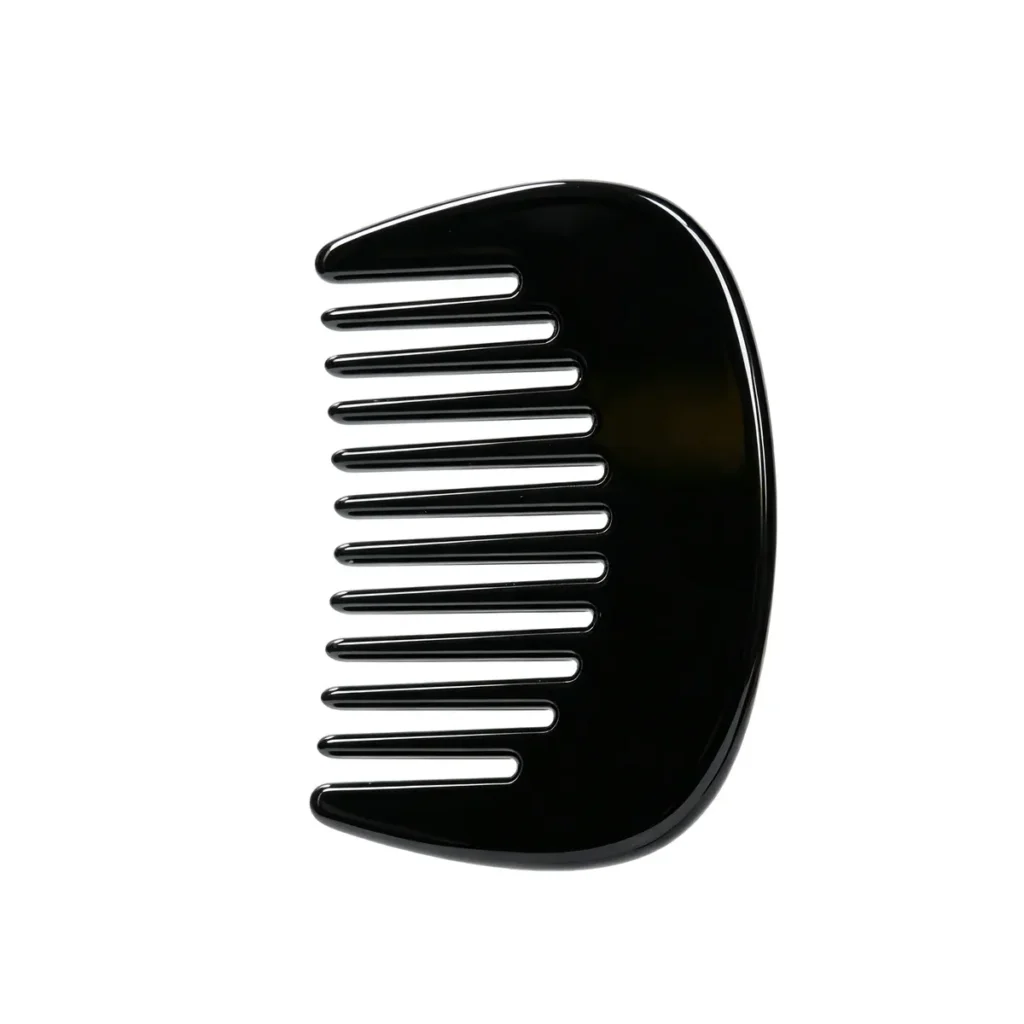
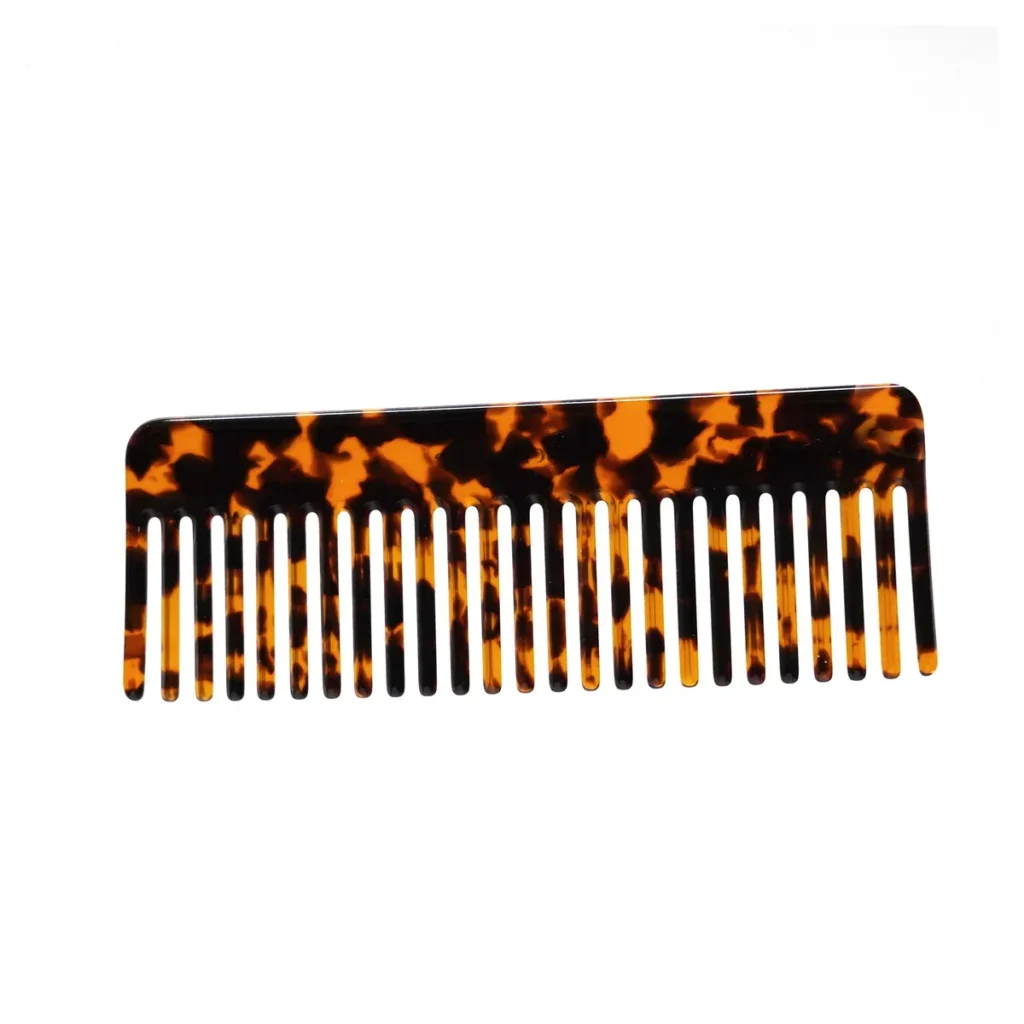
| 8 cm | 5.4 cm | Wide | Pocket and kit. The shortest wide-tooth body we cut |
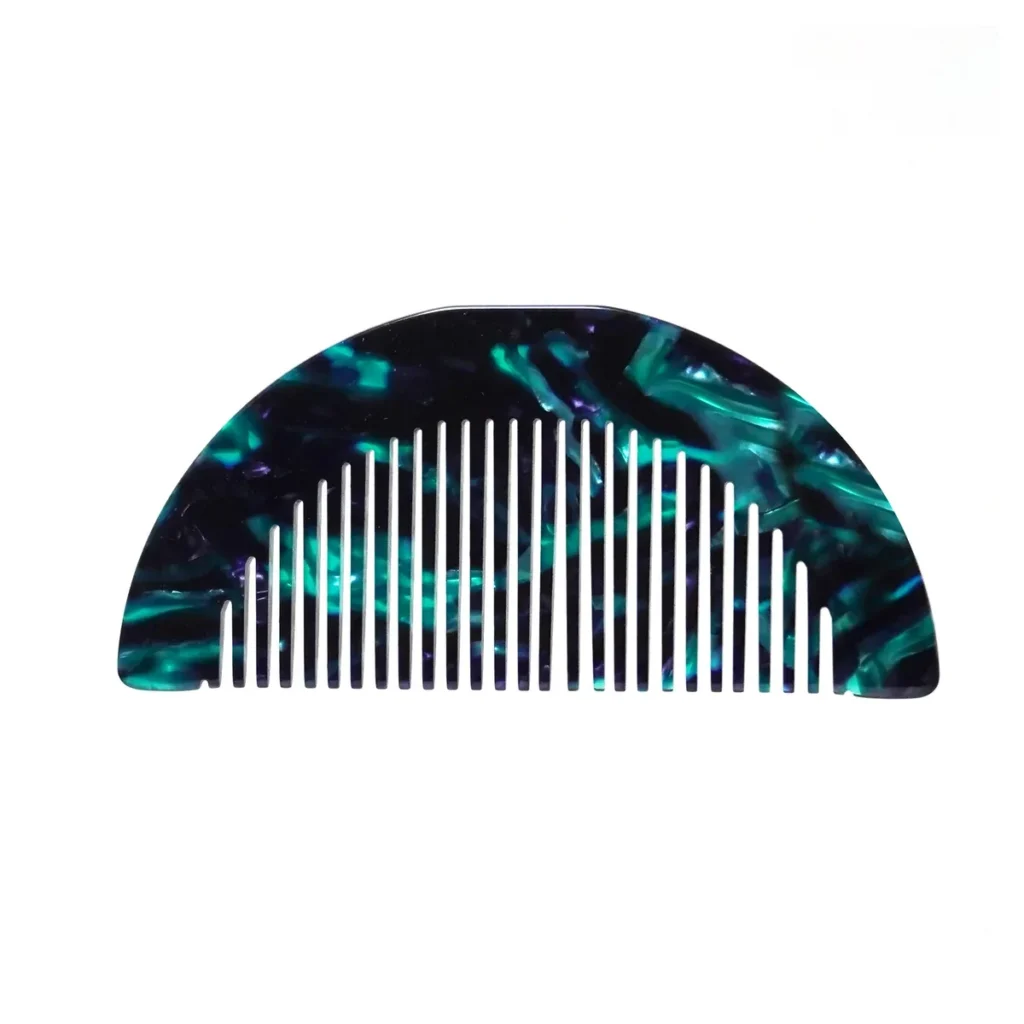
| 9.7 cm | 4.5 cm | Fine | Moustache and short beard detail work |
| 11 cm | 6 cm | Fine | The common beard-comb length; waisted body, no handle |
| 12 cm | 6 cm | Wide | Fuller beards and curly texture; sits in the palm |
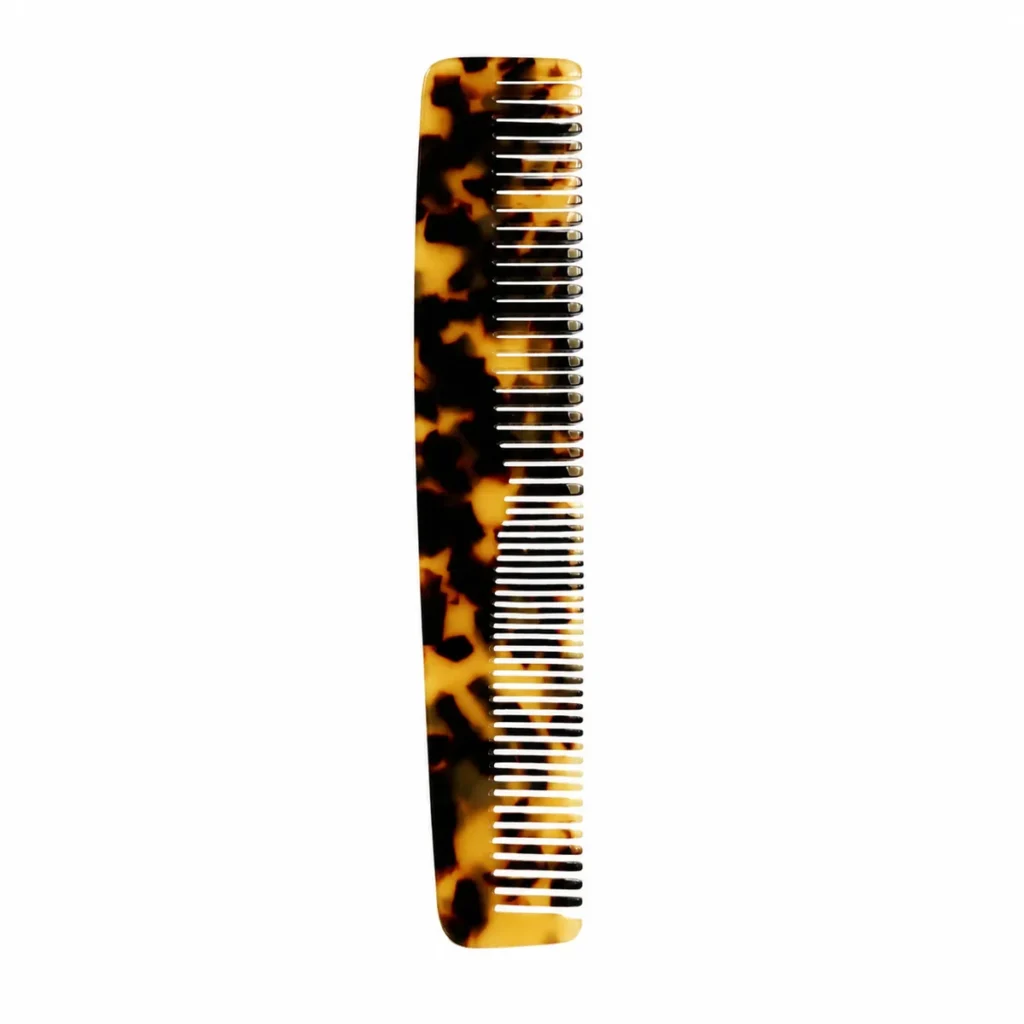
| 13 cm | 4.7 cm | Fine + wide | Two densities on one body, for shaping and detangling |
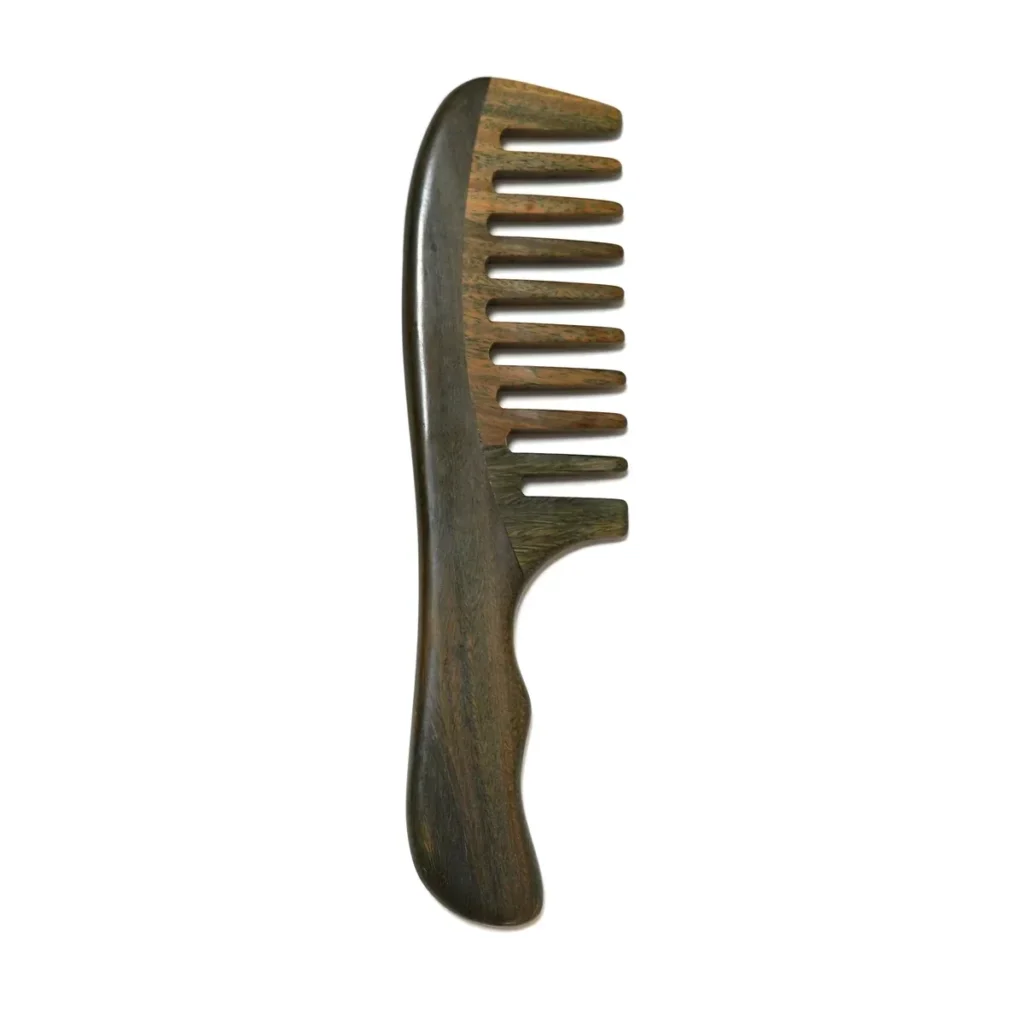
| 15.5 cm | 5.5 cm | Fine or wide | Wood, handle-free; hair and beard both |
| 15.9 cm | 3 cm | Fine + wide | Barber dressing profile — deliberately shallow |
| 20 cm | 5.5 cm | Wide | Full-size hair comb with a shaped handle |
Two practical points come out of that table. The first is that a beard range almost always lands between 8 and 13 cm, and anything above about 15 cm is a hair comb being sold into a beard kit — which customers notice. The second is that depth matters as much as length for how a comb behaves: the 15.9 cm barber profile is only 3 cm deep because a shallow comb lies close to the skin, and a deeper one lifts hair away from it.
Length is also the easiest thing to change. Every body here can be cut longer or shorter than the size we currently tool it at, because the cutter follows the outline in the file. A 10 cm version of a 15.9 cm profile is a new cutting profile, not a new mould. That distinction is the whole reason a size variant is affordable here: there is no steel to cut and no tooling lead time to wait out, so what you pay for is a sample rather than a tool — the order of USD 45 for a comb, against roughly USD 4,200–5,600 for a straightforward injection mould on a plastic part of the same size. What acetate and wood do and do not need is set out in mould costs explained, and what a sample actually costs is in sampling costs.
Tooth Spacing Is Cut, Not Assembled
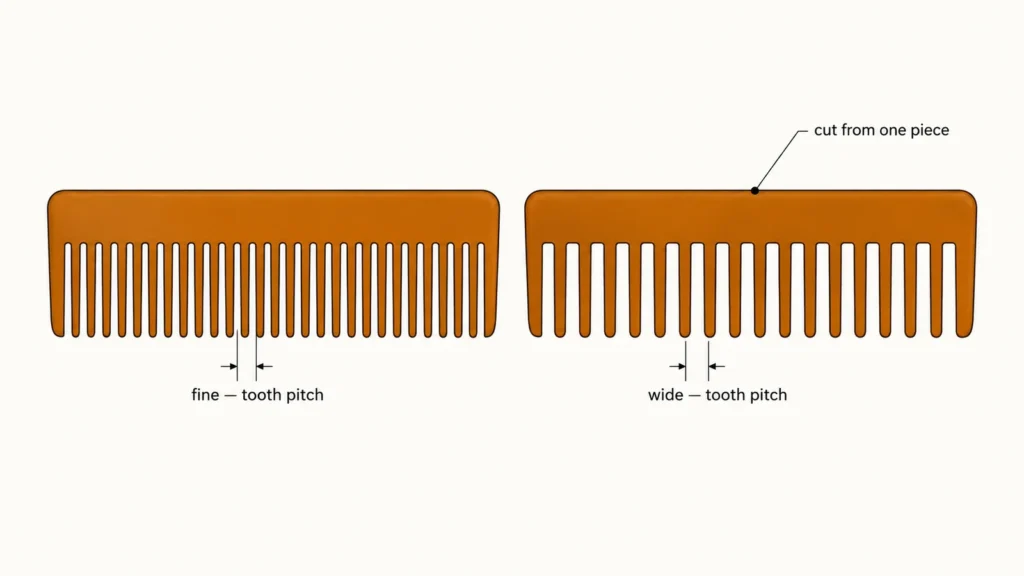
On a comb the teeth are gaps cut out of a solid body. That means spacing is fixed by the cutting profile at the moment the body is designed, and it cannot be adjusted later without a new profile and a new minimum. Buyers who assume spacing is a running change lose weeks finding out otherwise.
For beards the choice is less about hair type than about what the comb is being used for. Fine teeth place a line and hold a parting; they are what a shaping comb needs. Wide teeth pass through coarse or curly growth without dragging, which is what a detangling comb needs. A dual-density body gives both, and it is why the layout keeps turning up in professional ranges — one comb, two jobs, one minimum.
| Spacing | Best at | Fails at |
|---|---|---|
| Fine | Parting, shaping, moustache work, short beards | Coarse or curly growth — it drags and pulls |
| Wide | Curly, coarse, long or wet beards | Holding a clean line; it will not define an edge |
| Fine + wide on one body | Ranges that want to ship one SKU instead of two | Nothing much — but the split point is fixed at design |
The Seam Is the Whole Argument Against Moulded Plastic
A beard comb runs against facial skin, which is the strictest test any comb faces. Injection moulding leaves a parting line where the two halves of the tool met, and on cheap combs it is never fully removed. It runs down the length of every tooth. It is invisible in a product photograph and unmistakable the first time somebody uses it.
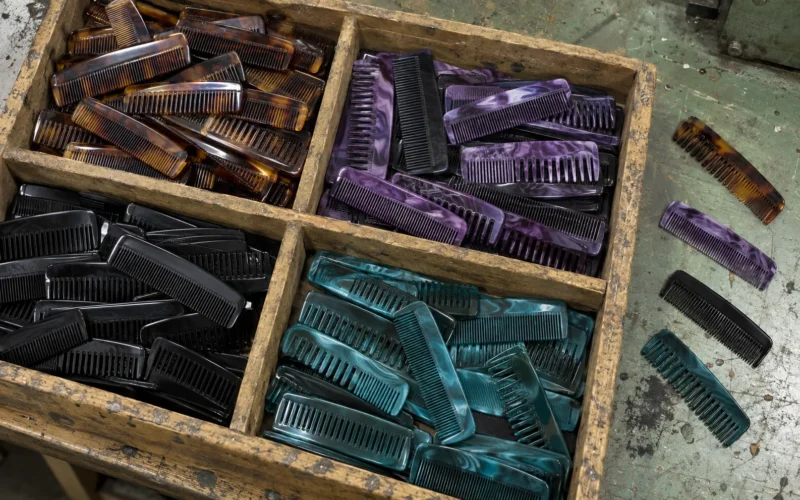
Cellulose acetate and wood are cut from solid stock and then deburred and polished, so there is no parting line to remove — there was never one there. What there can be is a rough cut edge left unfinished, which is a different defect with a different fix, and it is why the finishing step is worth asking a supplier about by name.
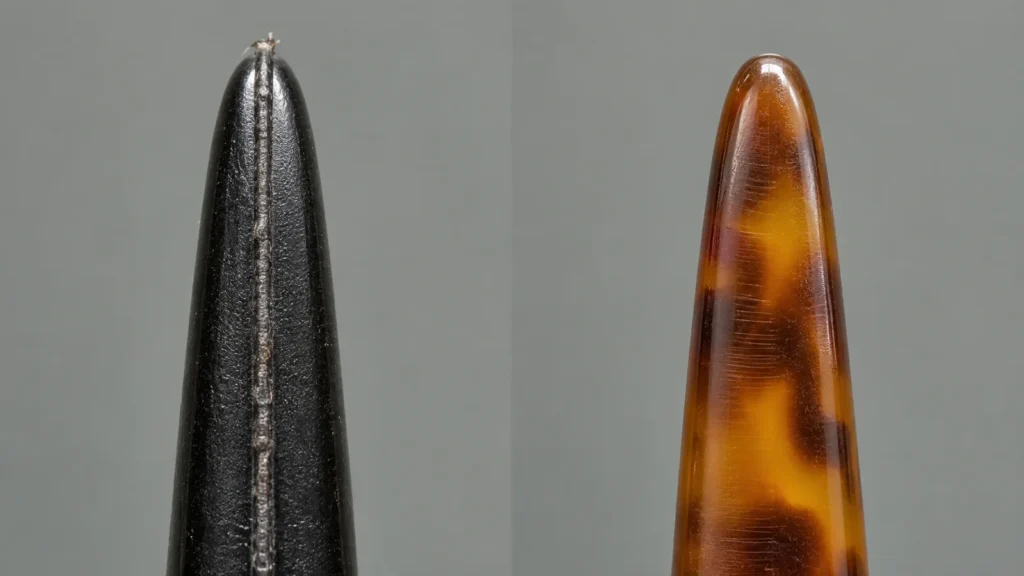
Two checks tell you everything on a single sample, and both take seconds. Run a thumbnail down the inside of a tooth gap — you are feeling for a ridge, and there should not be one. Then look at the tooth tips end on: they should be rounded, not cut flat and left square. A flat tip catches skin and hair on every pass. The wider material argument is in acetate versus plastic.
Thickness: The Specification Most Often Left Off
Outline and thickness are quoted separately, and a brief that states one without the other is not a brief a supplier can price. A thinner sheet always looks cheaper on paper. It does not photograph differently, and the difference arrives the first time a customer flexes a tooth.
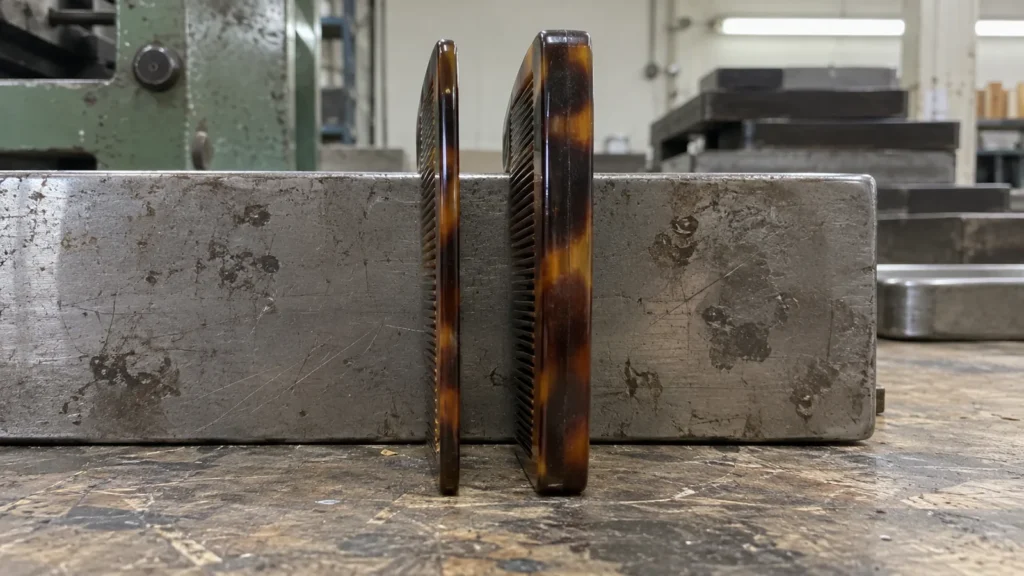
For a beard comb thickness does more work than it does on a hair comb, because the teeth are short and stubby rather than long and springy. Too thin and the teeth feel flimsy against a coarse beard. Too thick and the comb stops being pocketable, which is most of what a beard comb is for. State a number, or state the feel you want and ask us to propose one — either works, silence does not.
Acetate or Wood
Both are cut rather than moulded, so both avoid the seam. They differ in almost everything else, and the decision usually comes down to how the range is positioned and what the minimum needs to be.
| Cellulose acetate | Wood and bamboo | |
|---|---|---|
| Pattern | Runs through the full thickness — chip it and the colour continues | The grain of the timber; no two identical |
| Static | Behaves like a polished solid, better than moulded plastic | Builds no charge at all; the usual reason customers switch |
| With beard oil | Wipes clean; the surface is the material itself | Absorbs a little; most buyers treat that as a feature |
| Branding | Pad print, hot foil, recessed ink-fill | Laser engraving — reads as a lighter mark on dark timber |
| Minimum | 1,000 pcs per design | Varies by shape and finish; quoted with the price |
| Sampling | 15–20 working days | 10–15 working days on an existing profile |
One thing worth saying plainly because it is often sold as two product lines: wood and bamboo are two blanks going through the same tooling, not two separate ranges. If a shape exists in one it can usually be quoted in the other. Round teeth are the exception — they are turned separately and set into the body, and that needs a dense timber rather than bamboo laminate.

Branding, and Where It Actually Fits
The spine is the only usable branding surface on a comb, and on a beard comb it is short. That is the constraint nobody accounts for until artwork arrives: a full brand name that reads well on a 20 cm hair comb will not read at 9 cm. A wordmark or a compact monogram will.
- Pad printing. The default on acetate. Cheapest, and it sits on the surface.
- Hot foil stamping. Photographs best for retail packaging, especially on tortoiseshell.
- Recessed ink-fill. The mark is cut in and filled, so it does not wear off the spine.
- Laser engraving. Wood only. No ink, and on a dark timber it reads as a lighter mark.
Send artwork with dimensions at briefing stage rather than after sampling. We will tell you whether it reads at the size the body allows before anything is committed — and if it does not, the fix is usually a longer body, which is back to the first table on this page.
Minimums and Lead Times
Acetate combs run at 1,000 pieces per design. A design means one body — one outline, one tooth layout, one thickness. Colourways off stock sheet do not each carry their own minimum, so a four-colour launch of one comb is one minimum, not four. Wood is quoted differently: the minimum moves with the shape and the finish rather than sitting at a fixed number, so it comes back with the price.
| Acetate | Wood / bamboo | |
|---|---|---|
| Minimum | 1,000 pcs per design | Varies by shape and finish |
| Sampling | 15–20 working days | 10–15 working days |
| Bulk | 25–45 working days | 25–30 working days |
| A new outline | A cutting profile, quoted from a drawing | A cutting profile, quoted from a drawing |
How those minimums are put together, and why a piece count is not the same thing as a commitment, is covered in MOQ explained. What actually consumes the calendar between an approved sample and a container is in lead times.
What to Send Us for a Real Quotation
Five things. With all five we can quote a number that holds through sampling. With three we can quote a range, which is what most suppliers send back without saying so.
- Length and depth. Even approximate. It is the largest cost line and the one that decides whether you are buying a beard comb or a hair comb.
- Thickness. A number, or a description of the feel you want. The specification most often omitted.
- Tooth layout. Fine, wide, or both on one body — and if both, roughly where the split sits. It is fixed at design, so it cannot be a running change.
- Material and finish. Acetate or timber, and whether you want tumbled gloss or something else. Matt is a separate process and is quoted separately.
- Artwork with dimensions. Not just the logo file. We will tell you whether it reads at the size before you commit.
If you already have a design, send it and you will get a costed schedule rather than a single number. If you do not, send the two or three combs you would put it next to on a shelf — that is usually enough to start from. The full range sits under wooden combs and acetate hair accessories.
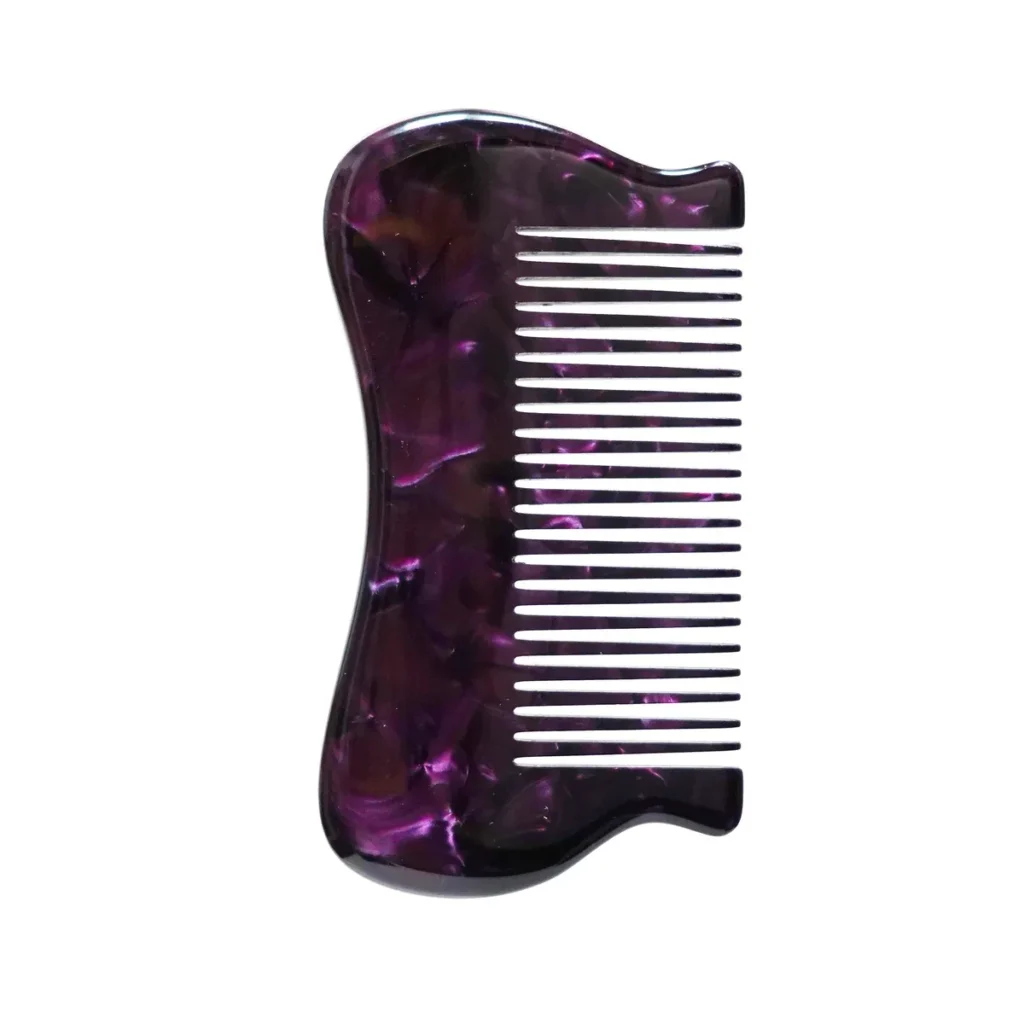
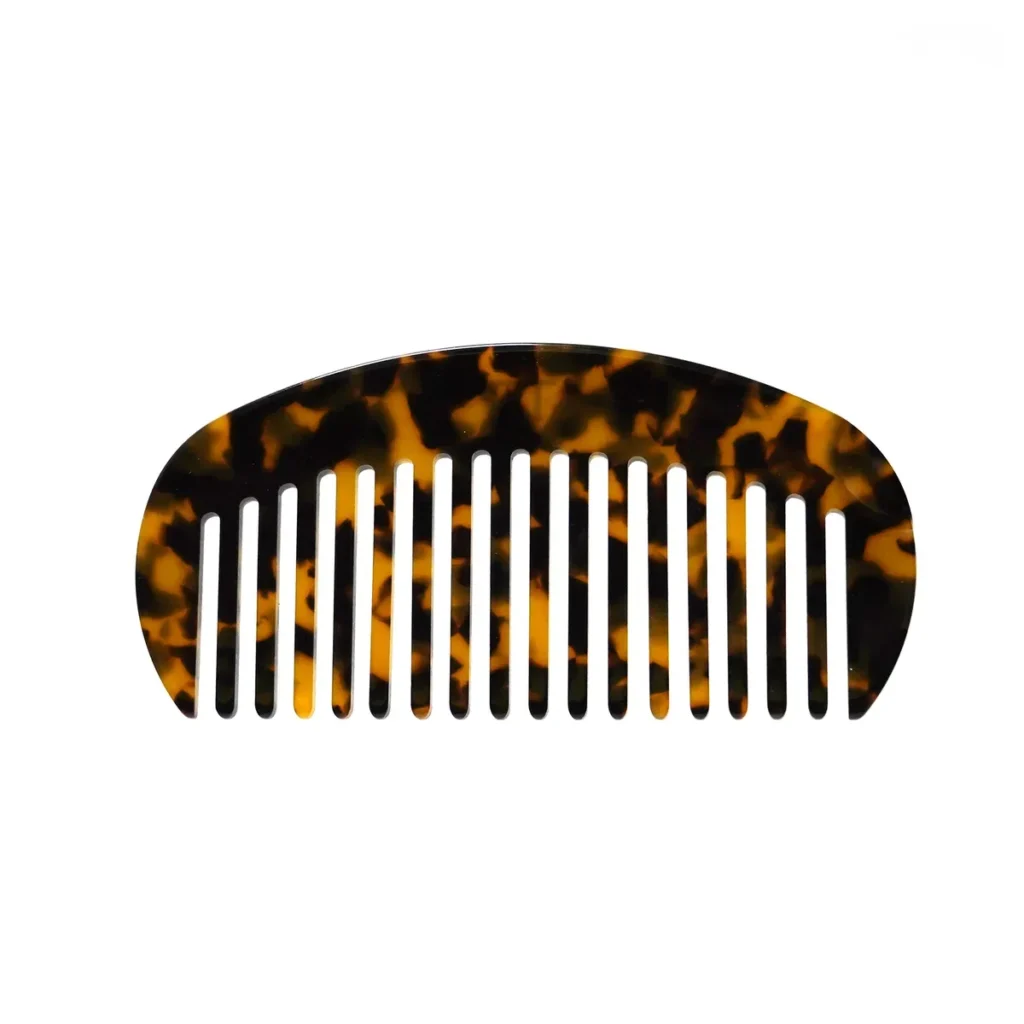
Combs We Make at Beard Lengths